The euro has stubbornly stopped falling despite the French shock; technical signals are worth noting.
2026-10-19 21:26:21
The euro opened sharply lower against the dollar today due to concerns about the French riots and fiscal debt. However, a subsequent drop in oil prices offset the negative impact, allowing the euro to recover. Large-scale protests erupted in France over the weekend, with arson and clashes between police and protesters in several areas. The yield on French 10-year bonds rose by more than 10 basis points, and the Franco-German OAT-Bund spread approached its peak during the Eurozone debt crisis. The CAC40 stock index also came under pressure, indicating that the market had already priced in French sovereign risk. However, the euro did not continue to decline after the lower opening, as the recovery in oil prices effectively alleviated the downward pressure on the euro. The rise in oil prices improved energy trading conditions in the Eurozone, partially offsetting the selling pressure from the political and fiscal risks in France. 
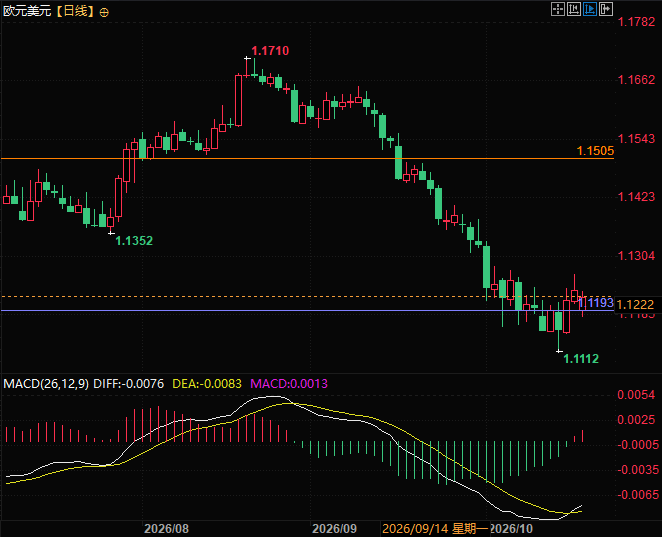 (Euro/USD daily chart, source: FX678) At 21:24 Beijing time, the euro/dollar exchange rate is currently 1.1225/26.
Eurozone fundamentals and institutional views: Country-specific risks predominate, regional crisis has not yet materialized.
According to multiple institutions, the current shock is a single-country risk for France and has not yet spread into a systemic debt crisis in the Eurozone. The Eurozone economy as a whole remains resilient, but there are significant differences between individual countries; inflation is sticky, with wage and service sector inflation declining slowly. The mainstream expectation is that the ECB will likely raise interest rates again in December and then maintain a high-interest-rate platform, with these interest rate expectations providing support for the euro.There are significant differences in the opinions of the institutions:
RBC BlueBay: France faces tail risks in its sovereign debt, with a current deficit of approximately 5%, far exceeding the EU's 3% red line; necessary fiscal reforms such as delayed retirement and tax increases are unlikely to be implemented during the election cycle, easily triggering further social unrest. Goldman Sachs, the IMF, and KBRA rating agencies: A nationwide European debt crisis is unlikely in the short term; French bond auctions still have solid buying support. While the ECB possesses the TPI crisis tool, its activation threshold is strict, and it will not unconditionally bail out French debt.Cross-market perspective: The expectation gap between the US and Europe presents trading opportunities, while the US dollar has the potential for a phase of correction.
In a recent interview, JPMorgan Chase's Jamie Dimon mentioned that while the US economy is currently performing strongly, risks such as sticky inflation, a large government deficit, and overseas geopolitical conflicts continue to accumulate. The market has already fully priced in the short-term resilience of the US economy; if subsequent US economic data weakens marginally, the dollar index may experience a period of correction. On the market front, the euro's opening lower but subsequent stabilization following the significant negative impact from France, coupled with the offsetting effect of oil price recovery, is a noteworthy signal. If the Franco-German bond yield spread does not widen sharply and the risks do not spread to other Eurozone countries such as Italy, the euro/dollar exchange rate is expected to see a recovery.Summary and technical analysis:
If the French 2027 budget negotiations break down and domestic unrest continues to escalate, the French bond yield spread will widen rapidly again, which will suppress the euro's rebound potential. However, oil prices remain the main factor limiting the euro's rise. Technically, the euro/dollar pair has formed a breakout reversal pattern, with 1.1193 being a very strong neckline and a classic bottoming pattern. Therefore, the dollar may continue to weaken. (Euro/USD daily chart, source: FX678) At 21:24 Beijing time, the euro/dollar exchange rate is currently 1.1225/26.
- Risk Warning and Disclaimer
- The market involves risk, and trading may not be suitable for all investors. This article is for reference only and does not constitute personal investment advice, nor does it take into account certain users’ specific investment objectives, financial situation, or other needs. Any investment decisions made based on this information are at your own risk.