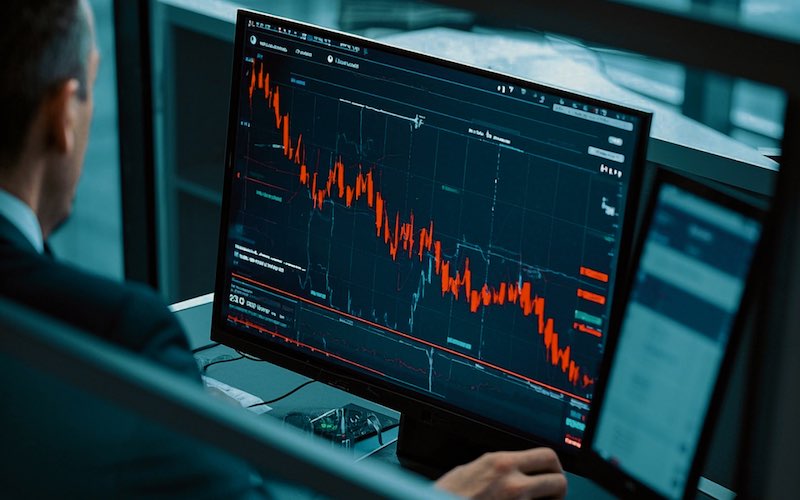
AI risks, coupled with oil price uncertainties, have led to a continued weakening of the US dollar.
2026-10-21 20:04:23
Persistent market concerns about the risks in the artificial intelligence sector continue to weigh on the attractiveness of the US dollar. As AI-related market anxieties persist, the overall situation of the US dollar has become more fragile.  Yesterday, the US dollar weakened briefly due to initial news of progress in the Middle East situation. This volatility also prompted investors to reassess the potential impact of geopolitical easing expectations on dollar assets. Now, if oil prices decline further, the risk of impact on the dollar is increasing. Dollar trading continues with a weak tone. Intraday buying was weak, and the willingness of bulls to actively push up the dollar has clearly cooled. In our view, this stems from the lingering effects of AI-related concerns, and the fact that previously overly bullish dollar positions and short-term valuation bubbles are being digested. However, according to short-term valuation indicators, the dollar's valuation is no longer significantly high. Among G10 currencies, the British pound, Norwegian krone, and Australian dollar are slightly overvalued relative to the dollar; the Canadian dollar and Swiss franc are roughly within a reasonable valuation range; the euro, Japanese yen, Swedish krona, and New Zealand dollar remain undervalued. It is worth noting that all of these currencies are within 1.5 standard deviations, indicating limited valuation divergence and no strong valuation signals. Yesterday's market also confirmed that lower oil prices are bearish for the dollar. Unconfirmed reports of progress in Middle East negotiations briefly caused Brent crude oil prices to fall, pushing the dollar index down to 101.50. With improved oil supply, high oil prices are increasingly reliant on geopolitical risks. Once regional conflicts de-escalate, the oil premium will quickly disappear. Therefore, if there are signs of genuine easing tensions, the foreign exchange market may begin pricing in a sharp drop in oil prices. Over the past week or so, the dollar's reaction to oil price fluctuations may have shifted. Rising concerns about tech stocks have somewhat weakened market confidence in the Federal Reserve maintaining a hawkish stance. Investors are lowering their expectations for the duration of high interest rates, and in the face of non-data-driven factors like a sharp drop in oil prices, short-term interest rates will have more room to shift towards a dovish stance. We acknowledge that the weakening dollar environment has further tilted the risk balance towards the dollar's downside. However, even so, we still believe the dollar will decline gradually and orderly, rather than experiencing a sharp depreciation. There are no major negative fundamental factors that could trigger a dollar collapse; the overall backdrop of Fed policy, oil prices, and interest rates continues to support the dollar. No major US economic data was released today. Yesterday's unexpected decline in housing starts further confirms the deteriorating housing market. As a crucial pillar of the US economy, continued weakness in the real estate sector will prompt new considerations for the Federal Reserve's policy. Market focus today will be on whether there are any new developments in the US-Iran negotiations.
- Risk Warning and Disclaimer
- The market involves risk, and trading may not be suitable for all investors. This article is for reference only and does not constitute personal investment advice, nor does it take into account certain users’ specific investment objectives, financial situation, or other needs. Any investment decisions made based on this information are at your own risk.