Midterm Election Follow-up: Impressive Economic Figures Fails to Win Over Public Opinion
2026-10-26 21:02:22
The US midterm elections on November 3rd are a crucial test of Trump's economic and foreign policy for his second term. While the House and Senate are currently controlled by Republicans, market odds are clearly biased towards the Democrats: current odds show a 93% probability of a House victory and a 65% probability of a Senate victory, with market benchmarks gradually shifting towards a Democratic sweep of both houses. The initial optimistic market pricing was based on Republicans retaining both houses and Trump continuing his loose monetary policy of tax cuts and deregulation, continuously benefiting high-valuation sectors like AI and finance, as well as precious metals. However, as the odds have shifted, with a Democratic sweep of both houses becoming the new benchmark scenario, the market is starting to price in the risks of hindered fiscal expansion and increased AI regulation. This is a key reason for the recent pressure on technology growth stocks and precious metals like gold. It's important to distinguish that Democratic control of Congress can only block new legislation; executive powers such as tariffs and foreign policy remain with the president and will not completely reverse existing policies. This vote is essentially a vote by voters on "Trump economics" and his foreign policy narrative. While macroeconomic data is resilient, people's livelihoods are hampered by high prices. Trump is also actively positioning foreign policy issues as a bargaining chip for his pre-election performance. 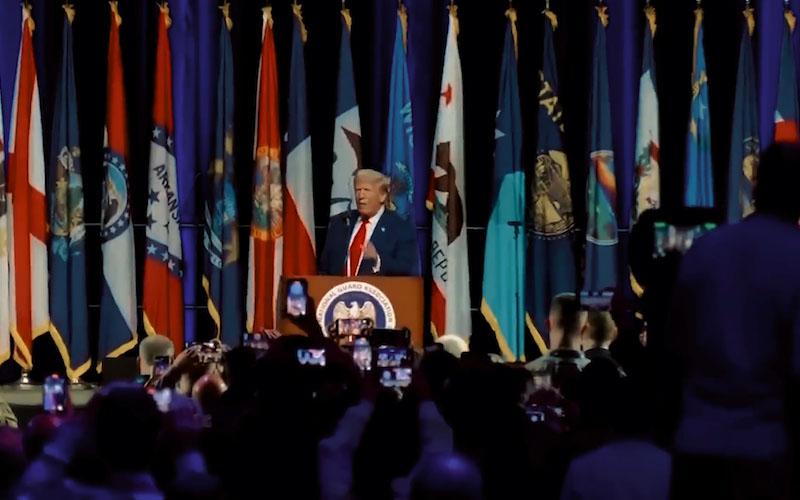
Pre-election diplomatic narrative: controlling conflict, leaving room for contingencies, and packaging performance expectations.
Trump's foreign policy strategy is very clear: maintain control of the conflict before the election, retain all options, postpone major military action until after the election, and simultaneously offer energy and diplomatic incentives to demonstrate to voters his ability to control the situation and stabilize oil prices. Iran is the core of this narrative. Trump stated that he would not attack Iran at present, but the conflict would soon come to an end, and he was not worried that Iran would resume uranium enrichment within months; he defined the situation as a binary choice: either resolve the Iranian issue or reach an agreement, and the United States would win either way, with large-scale strikes more likely to be postponed until after the election. US forces in the Middle East have completed their deployment and can launch a large-scale operation, unlike previous limited harassment, within 96 hours of receiving orders. Many US officials also agree that escalation of action is more likely to be implemented after the election. Trump claimed that the US possesses key intelligence and holds the initiative in the Iran conflict, while promising voters that oil prices will drop significantly after the war ends, offsetting the negative perception caused by the current high oil prices. Morgan Stanley's commodities team, led by Martijn Rats, cautioned that a ceasefire does not guarantee an immediate drop in oil prices. Supply shocks have already spread to the production side, and the risk premium associated with the Strait of Hormuz is unlikely to dissipate quickly. Chang'an Futures added that pre-election restraint was to avoid a surge in oil prices impacting votes, but post-election military escalation is a high-risk scenario, increasing oil price volatility and presenting an alternative path of prioritizing negotiations. Beyond the Iran issue, Trump released positive news regarding the Russia-Ukraine negotiations, stating that trilateral talks between the US, Russia, and Ukraine would begin soon, with both sides willing to negotiate, and that the continued inflow of Russian crude oil into the global market aligns with US interests. Officials revealed that the talks are expected to be held in Abu Dhabi or Switzerland within two weeks, with Russia focusing on security guarantees and Ukraine hoping for a subsequent trilateral summit. Multiple investment banks and geopolitical think tanks agree that the focus of these talks is on restarting the process, but the deep differences in demands between the two sides suggest that only a partial ceasefire is likely, and the boost to oil prices and risk assets will be short-lived and limited in its sustainability. Data from the U.S. Central Command shows that the U.S. has assisted Gulf states in shipping over 1.5 billion barrels of crude oil this summer, demonstrating its control over Middle Eastern energy shipping routes. Trump's public support for Netanyahu aims to solidify his pro-Israel voter base, even though his aides are already contacting other potential Israeli partners. UBS comments: The data used to support Netanyahu has a stronger political propaganda element; Gulf oil-producing countries have independent pricing demands, and the U.S. cannot completely control oil prices; supporting Netanyahu is aimed at securing votes but is unlikely to reshape the Middle East landscape.Macroeconomic Report Card: Growth Relies on AI Capital Expenditure and Household Consumption
The US economy remains resilient, with its annualized real GDP growth averaging 2.2% over the past six quarters, ranking among the top in the G7. Growth is primarily driven by household consumption and corporate capital expenditure fueled by AI computing power and data centers. Tax cuts and relaxed regulations have supported corporate profits, with the S&P 500 rising 28% from its inception to the end of September, and asset appreciation in turn supporting domestic demand. BlackRock believes that AI capital expenditure is the core support for the resilience of US stocks and maintains its overweight position in US equities. However, this growth model is highly dependent on relaxed regulations, and a change in Congress will constrain the pace of AI expansion. Shawn Snyder of Potomac Fund Management predicts that high mortgage rates, high oil prices, and Fed tightening will weaken consumption over the next 6-12 months, dragging down the economy. JPMorgan Chase adds that the expansion of AI computing power itself will also add inflationary pressure.Key pain point: Highly sticky inflation, wages lagging behind price increases.
Inflation is the biggest headwind in this election. September's CPI rose 3.7% year-on-year, continuing to exceed the 2% target. Since taking office, prices across the US have risen by a cumulative 5.4%, with gasoline prices increasing by 39%. The Middle East energy shock, coupled with tariff increases, has raised the average import tax rate from 2.4% to 11%, continuously pushing up imported inflation. Despite Trump's repeated calls for interest rate cuts, the Federal Reserve still raised rates to 3.75%-4.00% in September, prioritizing inflation as its primary focus. Goldman Sachs estimates that current tariff costs are borne by US consumers at 22%, and could reach as high as 67% if this continues. Nuveen's Saira Malik points out that the price pressure from oil prices and tariffs is directly reflected in polls and election odds. Morgan Stanley's economics team raised its inflation forecast, maintaining the possibility of a December rate hike, indicating that the Federal Reserve will not easily change course due to political demands.The job market appears to be in tight balance, but the constraint comes from the supply of labor.
Employment is exhibiting a particularly tight balance, with an average monthly increase of 68,000 non-farm payroll jobs, higher than the same period in 2025, and the unemployment rate remaining stable in the 4.1%-4.5% range. However, the tightness is not due to strong demand, but rather to a shrinking labor supply caused by tightened immigration and an aging population. Wage growth is weak, with hourly wages rising by only 0.1% month-on-month, and purchasing power continuing to decline. Robert Sockin of PGIM stated that the root cause of the sluggish wages is insufficient labor mobility and a decline in workers' bargaining power, which are long-term structural problems. Wells Fargo warns that the quality of new jobs is weak, and the unemployment rate could rise significantly if demand weakens.Debt Concerns: Rising Interest Payment Pressure Puts Pressure on Long-Term Debt
The total federal debt reached $40.4 trillion, an increase of approximately $4 trillion during the term, with the debt-to-GDP ratio falling from a peak of 133% to 121%. However, the massive debt has brought a heavy interest burden, with the 10-year Treasury yield once exceeding 5%, and interest payments continuing to rise, becoming a structural constraint on long-term debt. JPMorgan Chase analysis suggests that the Democratic victory is more about preventing a new round of large-scale tax cuts than actively reducing the deficit, leaving debt pressures long-term. The debt ceiling and shutdown risks are concentrated in the late 2027 to early 2028 period. A divide exists in public opinion: data and personal feelings are disconnected, with weak consumer confidence and a clear disconnect between statistical economic resilience and residents' personal experiences. The Michigan Consumer Sentiment Index has been declining since 2025, falling nearly 33% cumulatively since the inauguration, hitting a record low in May. Oil prices are the main reason for weakening confidence, with pessimism spreading among bipartisan voters; at the same time, new characteristics have emerged in the market: confidence and consumer behavior are decoupled, but it remains a leading indicator of voter trends. Morgan Stanley's strategy team reviewed historical data, noting that ruling parties tend to lose more seats during periods of rising oil prices, and that high gasoline prices in this round are a major drag on the Republican Party. Morningstar believes that while the consumer confidence index's reference value for asset pricing is declining, it can still guide election results.Scenario: If the Democratic Party wins both houses of Congress
If the Democrats control both the House and Senate, Trump will be in a lame-duck state: tax cuts, tariff increases, and large-scale industrial subsidies will be difficult to pass, and debt ceiling and budget negotiations will increase; foreign actions related to Iran and Russia/Ukraine will be subject to congressional hearings and funding constraints. Trump can still rely on executive orders to advance trade, diplomacy, and military arrangements, but investigations and checks and balances will increase significantly. In terms of market performance, expectations for fiscal stimulus are cooling, and the fiscal premium on long-term bonds is easing marginally, but regulatory risks in the AI and financial sectors are rising. The Federal Reserve will remain independent, and the interest rate path will still be determined by fundamentals such as inflation and geopolitics. JPMorgan Chase's benchmark assessment is that executive power remains in the hands of the president, but large-scale fiscal bills are unlikely to pass. Bank of America Hartnett warns that increased regulation could lead to a roughly 10% correction in US stocks. UBS believes that the Democratic Party's majority in seats is likely limited, making it difficult to implement disruptive policies, with checks and balances concentrated at the budget and hearing levels. Morningstar warns that election trading has a low probability of success and is not suitable for heavy betting; clean energy and defensive consumer sectors will benefit relatively, while the financial and some industrial sectors will be under pressure. Institutional consensus: Even if the Democrats win both houses of Congress, a stalemate is highly likely, making radical new policies unlikely. The market's main focus will shift from expectations of fiscal expansion back to inflation, oil prices, and Federal Reserve policy. Risk warning: Institutional views are based on probabilistic projections only. Sudden attacks from Iran, the conclusion of Russia-Ukraine peace talks, and higher-than-expected inflation could all alter the baseline scenario.- Risk Warning and Disclaimer
- The market involves risk, and trading may not be suitable for all investors. This article is for reference only and does not constitute personal investment advice, nor does it take into account certain users’ specific investment objectives, financial situation, or other needs. Any investment decisions made based on this information are at your own risk.