Lagarde will step down early on February 7. Who will succeed her at the European Central Bank?
2026-10-29 21:00:25
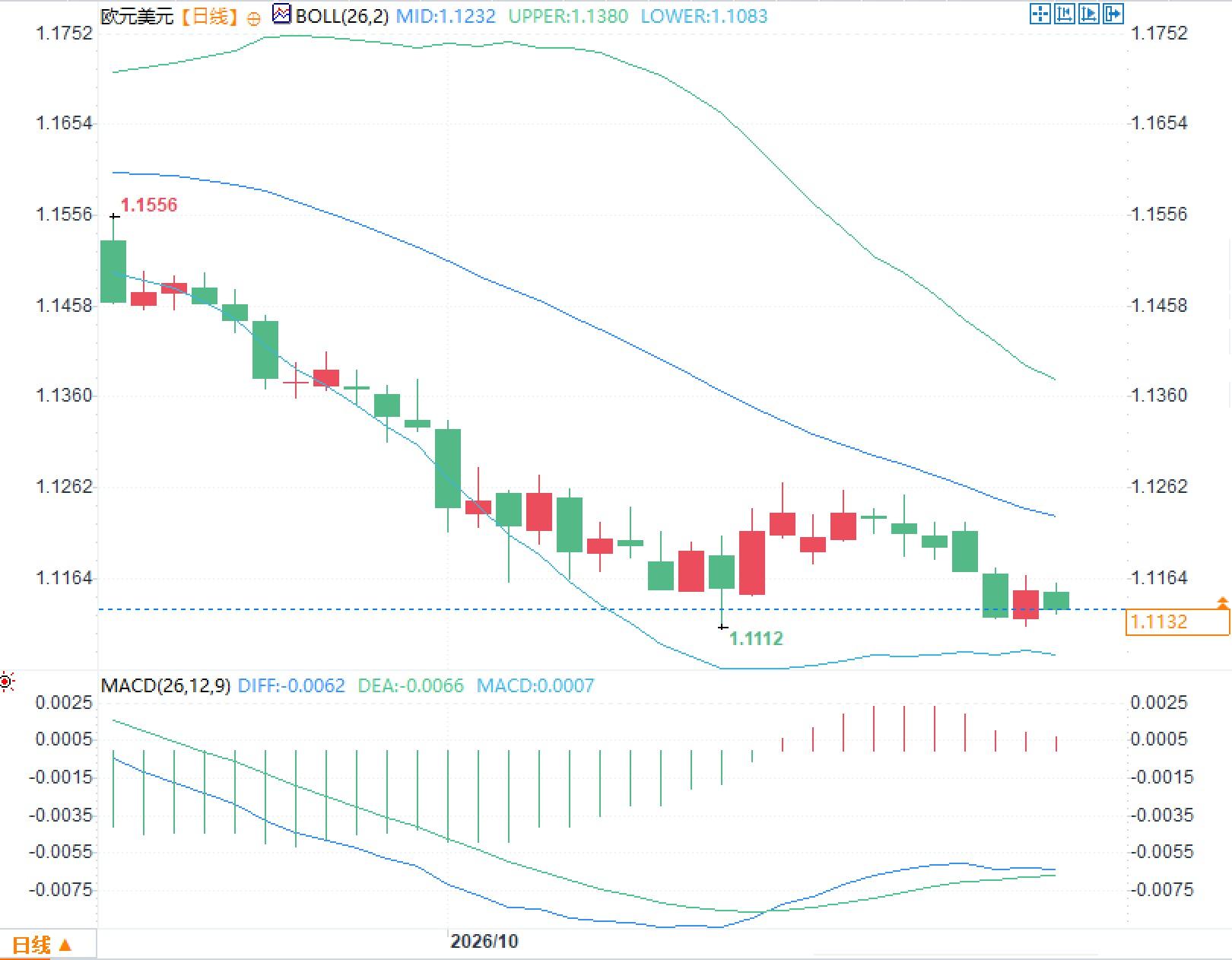
On Thursday, October 29, European Central Bank President Christine Lagarde announced at the policy meeting that she will step down early, on February 7, 2027, approximately nine months earlier than her originally scheduled end date of the end of October 2027. Following the announcement, the euro traded around 1.114 against the US dollar, fluctuating by about 0.1% during the day. The yield on French 10-year government bonds recently touched above 5%, the first time since 2002, and is currently in the range of approximately 4.91% to 4.93%, significantly widening the spread with German government bonds. The ECB deposit facility rate remained at 2.5%, and the market expected it to remain unchanged at this meeting, as officials weighed the impact of rising energy prices and bond market volatility on inflation and financing conditions. 
Early departure policy and personal considerations
Christine Lagarde's term began in November 2019. She is the second president in the European Central Bank's 28-year history to resign early, the first being Wim de Isenberg, who left after a five-year term. Lagarde had previously stated that when she reached an agreement with French President Emmanuel Macron, she expected to serve for about five years, not eight. In a statement to the other members of the Governing Council, she emphasized her desire for greater autonomy, as she felt unable to remain neutral on developments in France. In July, she told the media that European voices needed to be heard in the French presidential debates, but that she would not run for president. The ECB statement indicated that her successor would be appointed by the European Council, and the process had begun. Lagarde is also considered a candidate for the chairmanship of the World Economic Forum, whose Governing Council will vote later this month, and sources say the appointment is virtually certain.Inflationary pressures and fiscal constraints coexist
The European Central Bank (ECB) is currently in a rate hike cycle to prevent energy price increases driven by the conflict with Iran from being passed on to other prices and wages. The deposit facility rate will be raised to 2.5% in September 2026, following a previous rate hike in June. Officials must weigh the ongoing risks of inflation against tightening financing conditions. French public finances are under increasing pressure, with long-term borrowing costs hitting 5% last week, a more than two-decade high, and the spread relative to German government bonds widening to its highest level since the crisis. This is pushing up borrowing costs for households and businesses, developments that Lagarde has pointed out will dampen growth and inflation. Economist Holger Schmiding stated that Lagarde's departure does not change the ECB's policy outlook or its approach to handling French risks. Executive Board member Isabelle Schnabel will leave her post a year early in January to join the International Monetary Fund, and Chief Economist Philippe Lane's term will expire in May, leading to simultaneous changes in several positions on the Governing Council.Succession competition and policy framework continuity
The Dutch government supports former Dutch central bank governor Klaus Knot, while Spain supports Pablo Hernández de Cos, general manager of the Bank for International Settlements and former governor of the Bank of Spain. Both are experienced central bankers and are considered leading candidates by the market. De Cos currently heads the Bank for International Settlements, while Knot previously led the Dutch central bank for a long time and was involved in financial stability matters. European Council President António Costa stated that the succession process has been initiated immediately and is being expedited. Schmiding pointed out that EU leaders may seek to reach a package agreement on relevant positions before the mid-December summit to ensure appointments are completed before the French presidential election. Regarding the policy framework, the European Central Bank continues to emphasize data reliance and meeting-by-meeting assessments, with inflation outlook, potential inflation dynamics, and the strength of policy transmission forming the core of its decision-making. Institutional behavior is more likely to transcend individual tenure, and the successor, regardless of the final selection, must operate within the existing governance structure.Market pricing and risk premium logic
The euro's limited reaction to the news indicates relatively stable market expectations for policy continuity. French bond yields retreated after breaking 5% last week, but remain significantly higher than at the beginning of the year, with widening spreads reflecting the pricing of fiscal sustainability and political uncertainty. Rising energy prices affect the path of real interest rates through import costs and inflation expectations; the ECB needs to maintain a balance between curbing second-degree effects and avoiding excessive tightening. Bond market volatility has already impacted economic activity through financing conditions, factors officials have previously considered. If Lagarde were to succeed her as Chairman of the World Economic Forum, she would have greater say on global economic issues; however, the ECB leadership transition must be completed within a framework of institutional independence.Frequently Asked Questions
Question 1: Why did Lagarde choose to step down before the French presidential election? Answer: She clearly desired greater freedom of expression, was unable to remain neutral on French developments, and wanted to ensure the European Council could finalize the successor appointment before the election, reducing the potential impact of political uncertainty on the central bank leadership. Question 2: How will the succession competition affect the ECB's policy continuity? Answer: The main candidates are all senior central bankers, and institutional behavior typically extends beyond individual terms. Economists like Schmidt believe that the policy outlook and the way French risks are handled will not fundamentally change due to the leadership change. Question 3: What does the rise in French bond yields mean for Eurozone financing conditions? Answer: Yields approaching 5% and widening spreads push up borrowing costs for households and businesses, suppressing growth and inflation through financing channels. The ECB needs to simultaneously assess the related risks in the face of energy price shocks.- Risk Warning and Disclaimer
- The market involves risk, and trading may not be suitable for all investors. This article is for reference only and does not constitute personal investment advice, nor does it take into account certain users’ specific investment objectives, financial situation, or other needs. Any investment decisions made based on this information are at your own risk.