Oil prices surged 14% in a single month; is $118 Brent crude just the beginning?
2026-10-31 10:46:24
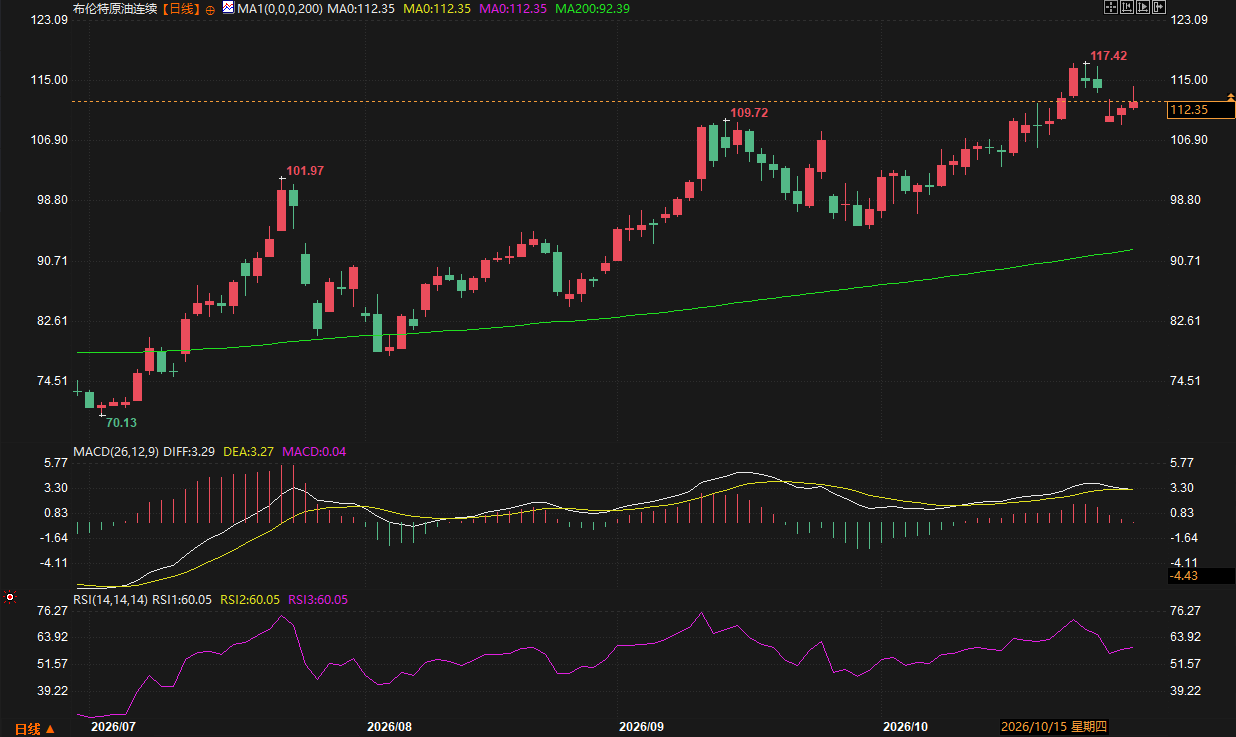
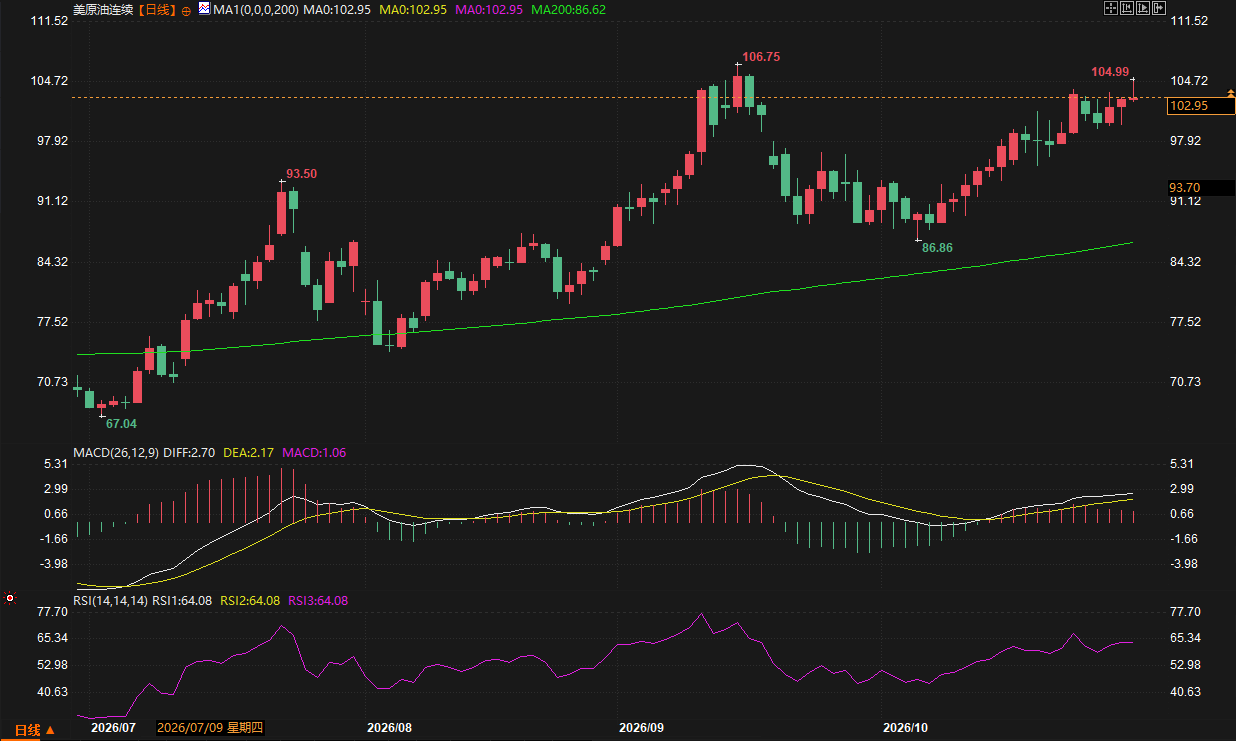
International oil prices led the gains among major global assets in October, with Brent crude rising 13.6% and WTI crude surging 15.2%, both closing at multi-month highs. At the end of the month, a series of events, including the attack on oil tankers in the Strait of Hormuz and the evacuation of non-essential Saudi personnel by the United States, led to a rapid increase in supply risk premiums and significantly increased market volatility. 
 Economic Data and Event Summary A flurry of events at the end of the month were the main drivers. An oil tanker was attacked by an explosive device planted by a small boat in the Strait of Hormuz, the first known attack of its kind in the strait since February. The US Embassy in Riyadh announced the evacuation of non-essential government employees and their families starting October 23, mentioning Houthi attacks on civilian airports and other facilities. The Houthis previously claimed responsibility for attacks on the Rastanura, Rabigh, and Abqaiq refineries, while the Saudi-led coalition stated it intercepted a cruise missile. Meanwhile, a Qatari mediation delegation returned to Tehran, and mediation efforts continued. Notably, data from multiple ship tracking agencies showed that Saudi Arabia's crude oil exports in October increased compared to September. The approaching US midterm elections were seen as an amplifier of market sentiment. Analyst and Institutional Views Summary A well-known foreign media outlet, citing BOK Financial's trading department, stated that traders will continue to monitor Middle Eastern oil outflows and potential escalation of actions. Major overseas institutions stated in their monthly briefings that oil price volatility may further intensify in the coming weeks due to the combined effects of geopolitical and election factors. Even if the conflict eases, oil prices are expected to remain in a higher range than before the conflict, with a reference range of $70 to $90. Overall, institutions tend to believe that the risk premium is unlikely to be fully squeezed out in the short term. The core logic of the oil market in October was the systemic increase in the price center due to supply risks. The divergence between event-driven factors and export data indicates that market pricing uncertainty remains high. After the elections conclude in early November, whether the risk premium can be maintained will be a key observation point for whether oil prices can hold their high range.
Crude Oil: Main Month of Rally Driven by Supply Risks
October's price movements can be summarized as follows: Oil prices continued the upward trend of the third quarter in October. Brent crude rose steadily from around $99 at the beginning of the month, briefly reaching near $118 mid-month, and closing above $112 at the end of the month; WTI crude also rebounded to around $104. Since July, oil prices have consistently traded above their long-term moving averages. After a pullback to around $86 in September, prices stabilized and rebounded again, with October's gains resulting in a double-digit monthly increase. Refined oil products also performed strongly, with diesel and gasoline prices rising accordingly, while only natural gas bucked the trend and declined. Economic Data and Event Summary A flurry of events at the end of the month were the main drivers. An oil tanker was attacked by an explosive device planted by a small boat in the Strait of Hormuz, the first known attack of its kind in the strait since February. The US Embassy in Riyadh announced the evacuation of non-essential government employees and their families starting October 23, mentioning Houthi attacks on civilian airports and other facilities. The Houthis previously claimed responsibility for attacks on the Rastanura, Rabigh, and Abqaiq refineries, while the Saudi-led coalition stated it intercepted a cruise missile. Meanwhile, a Qatari mediation delegation returned to Tehran, and mediation efforts continued. Notably, data from multiple ship tracking agencies showed that Saudi Arabia's crude oil exports in October increased compared to September. The approaching US midterm elections were seen as an amplifier of market sentiment. Analyst and Institutional Views Summary A well-known foreign media outlet, citing BOK Financial's trading department, stated that traders will continue to monitor Middle Eastern oil outflows and potential escalation of actions. Major overseas institutions stated in their monthly briefings that oil price volatility may further intensify in the coming weeks due to the combined effects of geopolitical and election factors. Even if the conflict eases, oil prices are expected to remain in a higher range than before the conflict, with a reference range of $70 to $90. Overall, institutions tend to believe that the risk premium is unlikely to be fully squeezed out in the short term. The core logic of the oil market in October was the systemic increase in the price center due to supply risks. The divergence between event-driven factors and export data indicates that market pricing uncertainty remains high. After the elections conclude in early November, whether the risk premium can be maintained will be a key observation point for whether oil prices can hold their high range.QA
Q1: What was the core driver of the October oil price surge? Supply risk premium was the main factor. The combined effects of the attacks on oil tankers in the Strait of Hormuz, attacks on Saudi facilities, and the evacuation of US personnel caused the market to reprice the risks associated with transportation routes, further amplifying trading sentiment ahead of the midterm elections. Q2: Is there a contradiction between Saudi export growth and rising oil prices? Not entirely. Current pricing reflects expectations of future supply disruptions, not current realities. Continued export growth could actually foreshadow a subsequent decline in the risk premium. Q3: Why did institutions raise their lower oil price range? Geopolitical conflicts have altered the market's long-term assessment of supply stability. Even if the conflict eases, security costs and insurance premiums will support a higher price center compared to pre-war levels. Q4: What is the biggest variable going forward? The progress of reconciliation and post-election policy direction. If the US-Iran negotiations make substantial progress, the risk premium may compress rapidly; conversely, any new attacks on facilities could push prices up again. Q5: What does the divergence between refined oil and natural gas indicate? The rise in diesel and gasoline prices, following the rise in crude oil prices, reflects the same supply logic; the decline in natural gas prices indicates that their pricing is more determined by regional supply and demand, and there is no single narrative within the energy sector.- Risk Warning and Disclaimer
- The market involves risk, and trading may not be suitable for all investors. This article is for reference only and does not constitute personal investment advice, nor does it take into account certain users’ specific investment objectives, financial situation, or other needs. Any investment decisions made based on this information are at your own risk.