Is the dollar bulls crowded out, triggering a euro-dollar profit-taking move?
2026-11-04 21:14:25
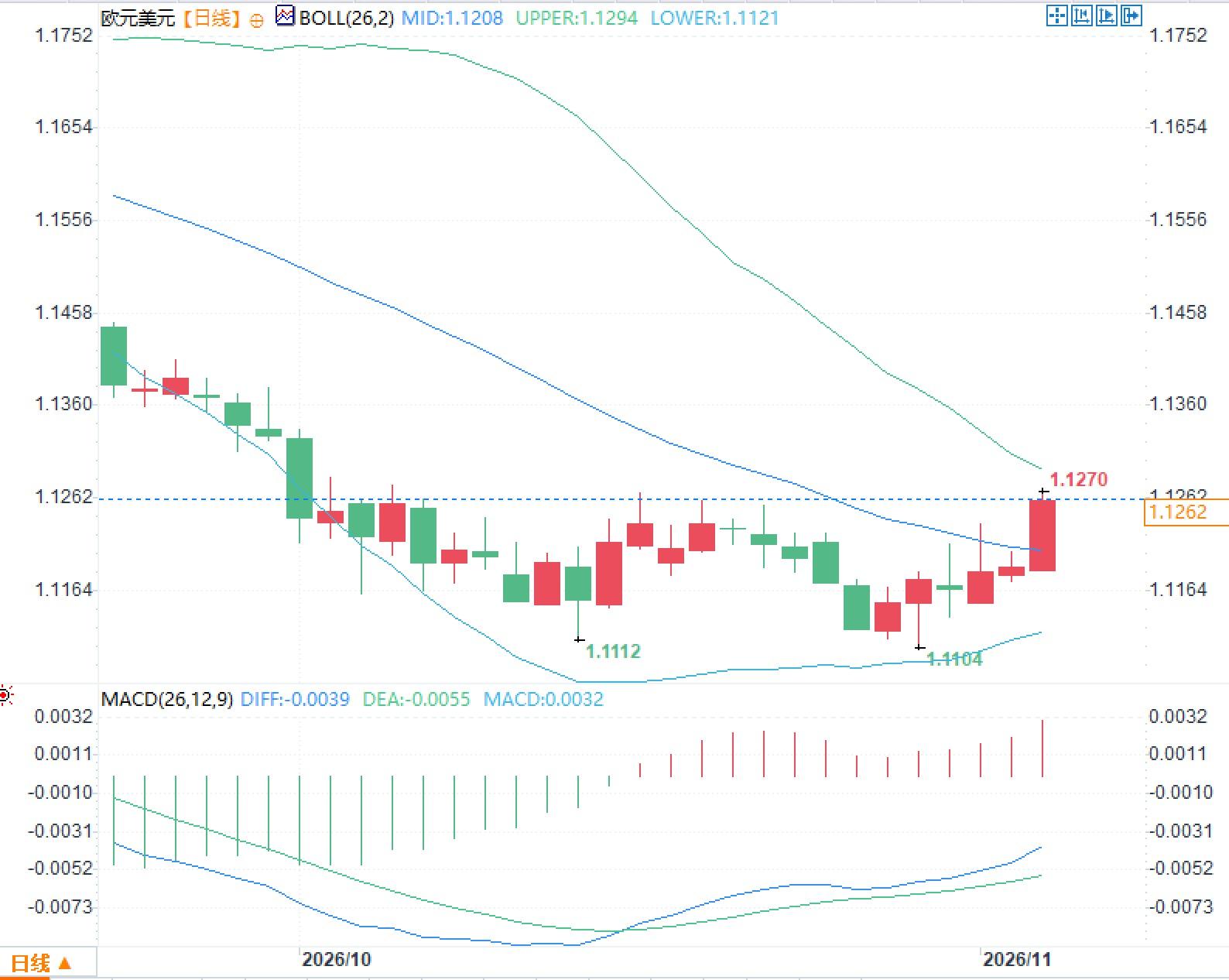
On Wednesday, November 4th, the euro rebounded significantly against the US dollar, currently trading around 1.126, up from the previous trading day's closing level, while the US dollar index also weakened. This volatility stemmed primarily from a market reassessment of the fiscal outlook following the clarity of the US midterm election results. The Democratic Party's control of both the House and Senate is expected to push for stronger fiscal constraints, while previous long positions in the US dollar were relatively crowded and highly sensitive to changes in macroeconomic conditions. Meanwhile, the European Central Bank kept its deposit rate unchanged at 2.50% at its October meeting. President Christine Lagarde stated that a rate hike was discussed during the meeting, and if subsequent data confirms the current inflation assessment, the policy direction will be relatively clear. The vote on the French budget revenue portion was postponed due to procedural reasons; the full budget vote is scheduled for November 17th. The progress of negotiations between the US and Iran and the upcoming US economic data will be the focus of attention going forward. 
US Midterm Election Results and Adjustments to Dollar Fiscal Expectations
Following the US midterm election results, the Democratic Party's control of both houses of Congress has prompted a reassessment of the fiscal policy path. Previously, the market widely anticipated some degree of fiscal expansion, but the election results pointed to a more restrictive approach, putting pressure on the US dollar. This adjustment, coupled with the relatively concentrated long positions in the US dollar this year, has made the exchange rate more sensitive to macroeconomic signals. Market focus has shifted from the election itself to the interaction between subsequent policy implementation and economic growth data. If US economic data shows a change in growth momentum, it may further affect the relative performance of the US dollar, while expectations of fiscal constraints are transmitted to the foreign exchange market through yield and risk appetite channels. Historical experience shows that after a change in congressional control, the market tends to prioritize pricing the uncertainty of policy continuity rather than a single direction of stimulus or tightening.ECB policy signals and factors supporting the euro
The European Central Bank (ECB) kept its deposit rate at 2.50% at its October meeting, in line with broad expectations. However, Christine Lagarde revealed after the meeting that the Governing Council had discussed the option of raising interest rates but ultimately decided to wait for more information. She pointed out that if the current inflation assessment is confirmed by subsequent data, the policy direction will be relatively clear. The market currently prices in a 72% probability of a rate hike in December, which provides some support for the euro. The impact of energy price fluctuations on eurozone inflation remains a core variable. If price pressures persist, it may strengthen the logic of policy tightening; conversely, if the energy shock eases, it may delay action. Lagarde's statement emphasized data dependence rather than a pre-committed path, so the market is focusing on the upcoming inflation and growth indicators. Differences in fiscal conditions within the eurozone also form a backdrop, with the budget processes of countries like France indirectly affecting the overall policy environment.French budget process and Eurozone fiscal integration
The vote on the French budget revenue portion, originally scheduled for soon, has been delayed due to the progress of deliberations, with the full budget vote still set for November 17. This process is seen as a test of the government's ability to implement fiscal consolidation. If the vote passes smoothly and maintains the deficit reduction target, it could alleviate market concerns about French bond spreads and support the euro; however, a rejection or significant concessions weakening the consolidation plan could exacerbate pressure on the bond market and impact the euro. Previous postponements of the vote reflect internal parliamentary disagreements on balancing spending and revenue. Progress in fiscal consolidation not only affects France's sovereign financing costs but also influences overall monetary conditions in the Eurozone through risk premiums. The market is currently observing this event alongside European Central Bank policy signals, focusing on whether it will alter the assessment of Eurozone growth and inflation.The Interplay Between Geopolitical Negotiations and US Data
The progress of negotiations between the US and Iran has become another key variable influencing the US dollar. A diplomatic breakthrough could alleviate inflation concerns and adjust interest rate hike expectations, putting pressure on the dollar. If negotiations escalate, initial safe-haven demand might support the dollar, but subsequent growth concerns could dominate market reactions. The negotiations are currently in the exchange of views phase, with differences in the two sides' positions, and energy prices are highly sensitive to this process. Meanwhile, upcoming US economic data will recalibrate market pricing of the Federal Reserve's policy path. If the data shows a change in the alignment of growth and inflation, it could alter the relative interest rate expectations between the dollar and the euro. These factors, combined with fiscal expectations following the US midterm elections, mean that the euro/dollar exchange rate fluctuations reflect a rebalancing of multiple fundamental signals rather than a single driver.Frequently Asked Questions
Question 1: Why did the US midterm election results put pressure on the US dollar? Answer: Post-election market expectations of increased fiscal constraints made previously crowded long dollar positions more sensitive to changes in macroeconomic conditions, leading to downward pressure on the exchange rate. This process reflects pricing in policy uncertainty rather than being driven by a single economic data point. Question 2: How should we interpret the ECB's signals regarding its December policy? Answer: Lagarde stated that interest rate hikes were discussed and the direction was relatively clear, with the market pricing in approximately a 72% probability, but emphasized data dependence. The final action still depends on whether subsequent inflation and growth data confirm the current assessment. Question 3: What is the main impact path of the French budget vote on the euro? Answer: The vote tests the government's fiscal consolidation capabilities. A successful passage can alleviate pressure on bond spreads, while rejection or concessions could exacerbate financing costs and transmit to the euro. The process and ECB signals jointly influence market assessments.- Risk Warning and Disclaimer
- The market involves risk, and trading may not be suitable for all investors. This article is for reference only and does not constitute personal investment advice, nor does it take into account certain users’ specific investment objectives, financial situation, or other needs. Any investment decisions made based on this information are at your own risk.