Risk aversion in the Strait of Hormuz fuels safe-haven demand, causing the US dollar to regain its upward momentum.
2026-11-05 21:18:32
A series of oil tanker fires in the Strait of Hormuz have heightened geopolitical risk aversion, coupled with the ongoing strikes in France dragging down the euro, and multiple factors have combined to boost the US dollar. The Bank of England's hawkish interest rate hikes have strengthened the pound, highlighting the relative weakness of the euro. The short-term negative sentiment brought about by the US midterm elections has also been gradually digested by the market, and funds are once again embracing dollar assets. 
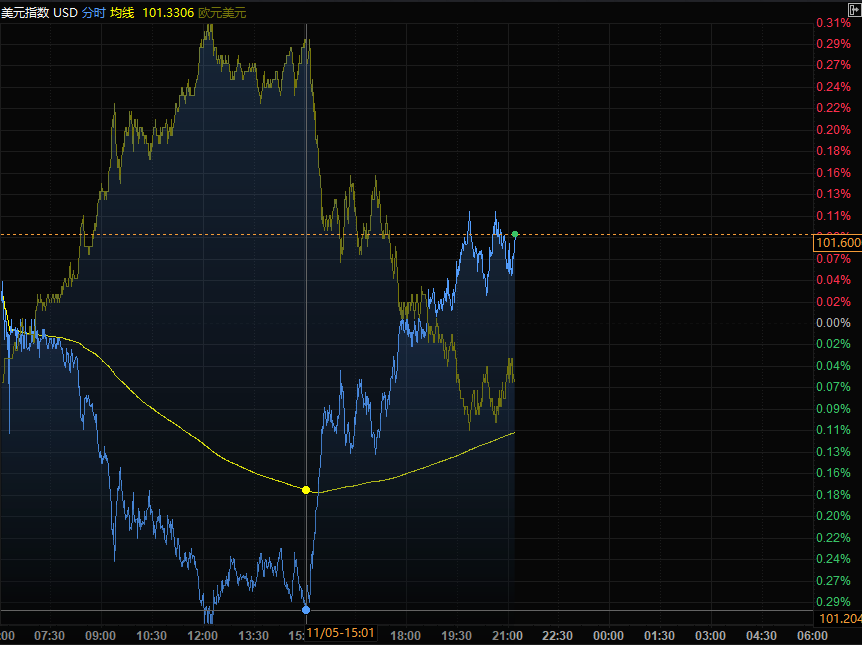 (USD and EUR intraday chart, source: FX678)
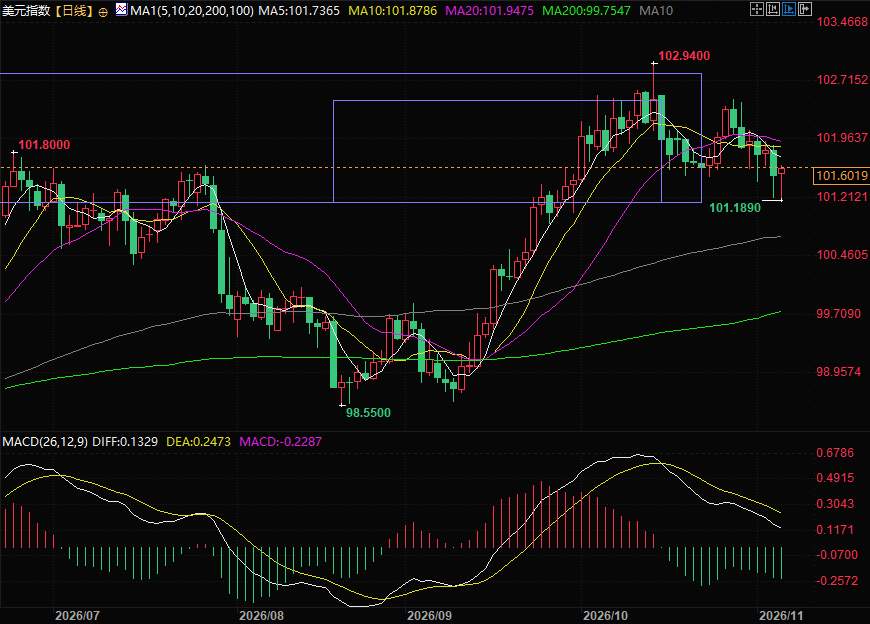 (US Dollar Index Daily Chart, Source: FX678) At 21:14 Beijing time, the US Dollar Index is currently at 101.58.
Frequent tanker accidents in the Taiwan Strait have supported the US dollar due to geopolitical risk aversion.
The escalating tensions in the Strait of Hormuz have provided support for the US dollar amid geopolitical risk aversion. The Iranian Navy reported that another oil tanker struck a mine and caught fire east of the Strait of Hormuz in the early hours of November 5th. Just hours earlier, the Iranian Islamic Revolutionary Guard Corps Navy reported two other oil tankers catching fire in separate incidents. According to the military-affiliated Defapress news agency on November 5th, the Iranian Navy stated that the tanker was traveling through the southern waterway, which Tehran considers unauthorized and unsafe. The statement also mentioned that this ship, like other recently involved tankers, had its identification and navigation systems disabled. Iran reiterated its warning that the strait is currently highly risky and that non-compliant vessels without prior coordination are prohibited from passing through. This series of incidents has heightened maritime security tensions. The ongoing disagreement between Iran and the United States over the right of way and safety guidelines for this crucial waterway has fueled market concerns about disruptions to oil supply, leading to a surge in safe-haven buying and providing significant support for the US dollar.Nationwide strikes escalate in France, fiscal risks suppress euro rebound.
A nationwide wave of strikes and demonstrations has swept across France, with healthcare workers, air traffic controllers, railway workers, postal workers, and large groups of teachers taking to the streets to protest high living costs, dilapidated educational facilities, and austerity plans. Authorities have deployed 70,000 police officers to maintain order. The ongoing social unrest has further amplified market concerns about France's fiscal risks. Fitch had previously downgraded France's A+ sovereign rating outlook to negative. France's economy contracted by 0.1% in the third quarter, and government debt is approaching 120% of GDP, making it difficult to reduce the fiscal deficit. The current wave of strikes means that the Macron government will find it even more difficult to implement austerity measures, and the political deadlock exacerbates the difficulty of fiscal consolidation. The euro's earlier rebound, driven by short covering, has come under pressure, with EUR/USD encountering concentrated selling pressure in the 1.1200-1.1250 range. French risks have once again become a core drag on the euro in the medium term.The Bank of England resumed interest rate hikes after many years, delaying the pace of inflation decline.
The Bank of England raised interest rates by 25 basis points to 4.00% as expected, the first rate hike since August 2023. All nine Monetary Policy Committee members unanimously voted in favor of the increase, with member Mann advocating for a one-off 50 basis point hike to 4.25%. The Bank raised its GDP growth forecast but lowered its after-tax real labor income outlook for 2026 and 2027, putting pressure on wage prospects. The overall inflation path was revised upward, with the baseline scenario of CPI falling back to the 2% target pushed back to the third quarter of 2028, while also providing an adverse risk scenario where CPI could reach as high as 6.2%. The Bank adjusted its forward guidance, abandoning the fixed path statement and instead reassessing the evidence at each meeting, suggesting the possibility of another rate hike, but with a significantly higher threshold for further action. The committee believes there is currently limited evidence that rising energy prices have transmitted a second round of inflation, but inflation risks are clearly skewed to the upside, and stronger-than-expected economic activity data supports this tightening. Following the decision, the pound rose approximately 30 points against the dollar, reaching 1.3482.A weaker euro coupled with weaker US fundamentals has opened up upside potential for the US dollar.
The British pound strengthened in tandem with the US dollar, with the euro's weakness being a key driver of the dollar's recent rise. Eurozone inflation data fell short of bullish expectations; while overall inflation rose, core inflation remained unchanged, failing to provide the expected boost to the euro. The market widely anticipates that the ECB's December rate hike may mark the end of this tightening cycle, limiting the euro's upward potential. The CFTC short-covering momentum that previously supported the euro's rebound has gradually subsided, with funds continuing to withdraw from euro assets, indirectly pushing the dollar index higher. Coupled with the gradual digestion of the emotional impact of the US midterm elections, the market has returned to the US fundamentals: September JOLTS job openings significantly exceeded expectations, indicating a robust labor market and strong US economic resilience, leaving the Federal Reserve with room for further rate hikes. Although the Democrats control Congress, Trump holds veto power, requiring a two-thirds majority in both the House and Senate to overturn a veto. The political deadlock is unlikely to substantially damage US assets, and the short-term dollar pullback caused by the election is merely a temporary disturbance, reopening the dollar's upward channel. (USD and EUR intraday chart, source: FX678) (US Dollar Index Daily Chart, Source: FX678) At 21:14 Beijing time, the US Dollar Index is currently at 101.58.
- Risk Warning and Disclaimer
- The market involves risk, and trading may not be suitable for all investors. This article is for reference only and does not constitute personal investment advice, nor does it take into account certain users’ specific investment objectives, financial situation, or other needs. Any investment decisions made based on this information are at your own risk.