Gold's rebound stalled after hitting a two-week high; what secrets lie behind the rise in US Treasury yields?
2026-11-05 21:46:31
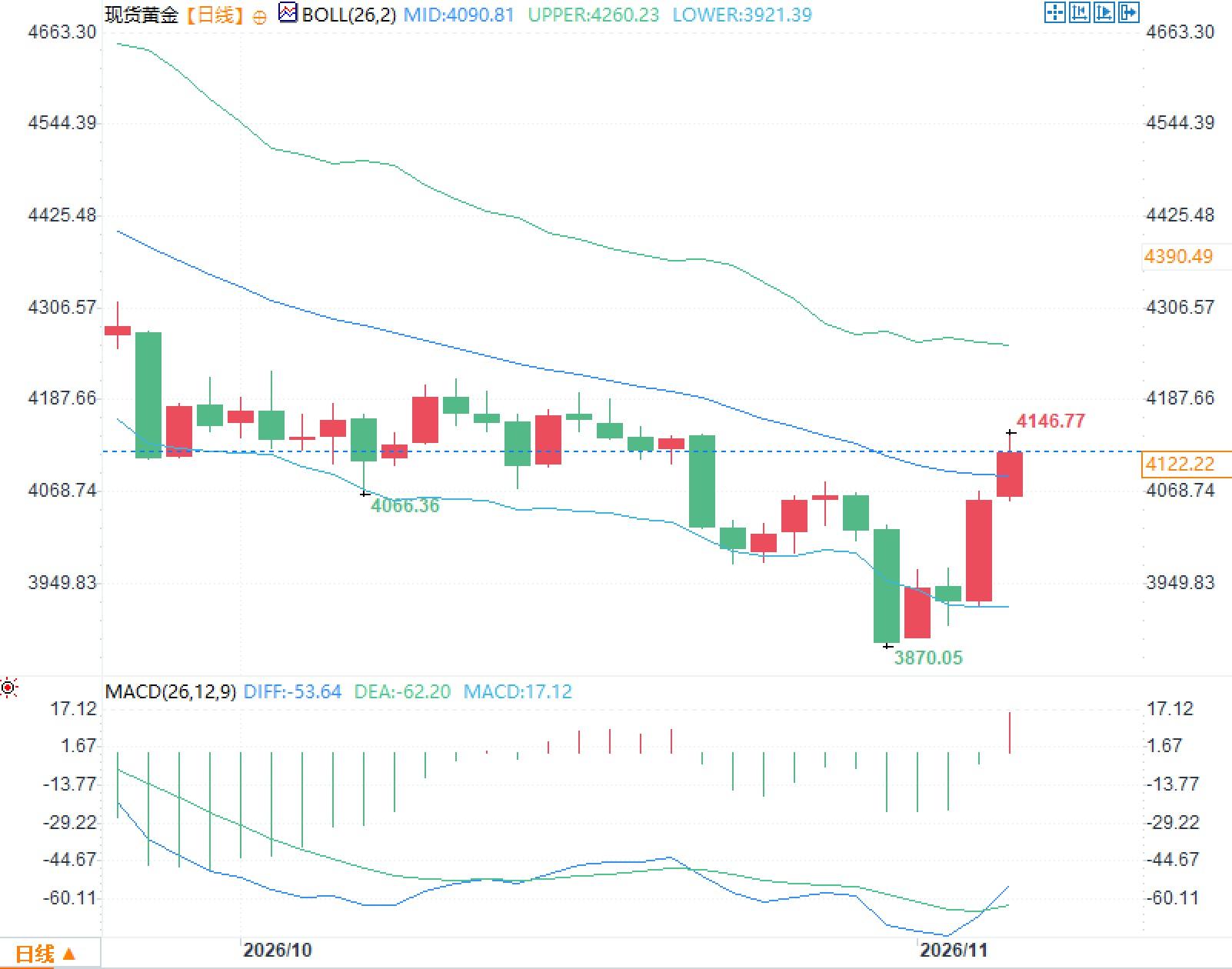
On Thursday, November 5th, spot gold stalled after a significant rebound in the previous trading day. Wednesday saw sharp market volatility driven by the US midterm election results, with gold rising approximately 3.64% and crude oil prices falling sharply. Entering Thursday, the US dollar index and US Treasury yields rebounded somewhat, weakening the upward momentum in precious metals. Spot gold is currently trading around $4120 per ounce, having reached a daily high of $4146, its highest level in nearly two weeks. The US dollar index is trading around 101.60, recovering somewhat from its intraday low of 101.20; the US 10-year Treasury yield rose to approximately 4.89%, recovering from around 4.83% earlier. 
Political reassessment following midterm elections and its correlation with asset prices
The US midterm election results show that the Democratic Party controls both the Senate and the House of Representatives, creating a divided government. The market interprets this result as potentially increasing the difficulty of passing large-scale tax cuts or spending bills, thereby easing concerns about the fiscal outlook, boosting Treasury bond buying and lowering yields, putting some pressure on the dollar. Meanwhile, the market is focused on the possibility that a Democratic-led Congress might restrict funding for actions related to the Middle East conflict and increase pressure to end the conflict. The conflict has entered its ninth month, and oil prices have remained high. On Wednesday, West Texas Intermediate crude oil prices fell sharply by about 8%, and Brent crude also declined significantly, partially easing inflation concerns. The decline in oil prices, lower yields, and a weaker dollar have collectively supported gold, driving it to record a significant single-day gain recently. The expectation of a divided government reduces uncertainty about further fiscal expansion, which to some extent improves the macroeconomic backdrop for gold, as a lower real interest rate environment is conducive to holding non-yielding assets.The impact of a rebounding dollar and yields on the opportunity cost of gold.
On Thursday, the dollar index and Treasury yields rose in tandem, thus limiting the gold rally. As a non-yielding asset, the opportunity cost of holding gold is closely related to real interest rates and the dollar's performance. When Treasury yields rise, the relative attractiveness of holding gold rather than interest-bearing assets decreases. The current 10-year yield has risen to around 4.89%, a slight pullback from recent highs but still remaining at a relatively high level. The dollar index rebounded from a low of 101.20 to 101.60, weakening the appeal of dollar-denominated precious metals to non-dollar holders. These factors explain why gold failed to maintain its strength after hitting a two-week high. Gold prices are highly sensitive to changes in the dollar and real yields; the current rebound reflects more of a short-term correction in macroeconomic sentiment than a fundamental shift in fundamentals.The Fed's policy path and the continued constraints of inflation stickiness
The Federal Reserve's hawkish stance is the main source of pressure on gold. Although oil prices fell sharply after the election, their absolute levels remain significantly higher than before the conflict, and inflation risks have not completely subsided. The Fed is committed to pulling inflation back to its 2% target, and the market widely expects interest rates to remain high for an extended period. According to futures market pricing, the probability of a December rate hike is approximately 79%. Higher borrowing costs exert downward pressure on non-yielding precious metals by increasing opportunity costs. While oil price volatility provides a short-term buffer, the medium- to long-term inflation path still depends on the progress of the conflict and supply and demand fundamentals. In this environment, gold prices need a substantial easing of expectations for Fed tightening to gain more sustained support.Institutional Views and Upcoming Employment Data
OCBC strategists Sim Mo Xiong and Christopher Wong expressed cautious optimism that gold may be finding its footing, but emphasized that further gains would likely require a easing of expectations surrounding Federal Reserve tightening and a continued recovery in investment demand. They are continuously monitoring real yields, the direction of the US dollar, oil prices, and exchange-traded fund flows to assess the sustainability of buying interest. The market's current focus is on Friday's US non-farm payroll report; the strength or weakness of the employment data could influence market pricing in interest rate paths, thereby impacting the macroeconomic environment for gold.Frequently Asked Questions
Question 1: Why did the midterm election results push up gold prices in the short term? Answer: Post-election market expectations that a divided government would limit fiscal expansion lowered Treasury yields and weakened the dollar. Simultaneously, oil prices fell sharply due to easing conflict-related concerns, collectively reducing the opportunity cost of holding gold and driving a price rebound. Question 2: Why did the gold rebound stall on Thursday? Answer: The dollar index and 10-year Treasury yields rebounded from their lows, increasing the opportunity cost of holding non-yielding assets and putting downward pressure on precious metals, causing prices to hover near two-week highs. Question 3: How do Fed policy expectations constrain gold? Answer: The market is pricing in a high probability of a December rate hike, and expectations of higher interest rates for an extended period persist. Meanwhile, oil prices remain above pre-conflict levels, maintaining inflation concerns. These factors limit gold's continued upward potential through the real interest rate channel.- Risk Warning and Disclaimer
- The market involves risk, and trading may not be suitable for all investors. This article is for reference only and does not constitute personal investment advice, nor does it take into account certain users’ specific investment objectives, financial situation, or other needs. Any investment decisions made based on this information are at your own risk.