Crude Oil Trading Alert: Geopolitical premiums have subsided, and WTI crude oil is caught in a tug-of-war between bulls and bears around the $90 mark, awaiting a directional move.
2026-11-09 09:18:28
On Monday during Asian trading hours, WTI crude oil prices fell after a near-flat performance in the previous session, briefly dropping to around $89.60 before recovering to around $90.45. The core driver of the price weakness was the latest statement from US President Donald Trump: further US military action against Iran is "highly unlikely" unless substantial progress is made in negotiations on Iran's nuclear program and the reopening of the Strait of Hormuz. Trump also acknowledged that the unpopular Middle East conflict has driven up crude oil and gasoline prices and played a key role in the Republican Party's recent historic midterm election defeat. 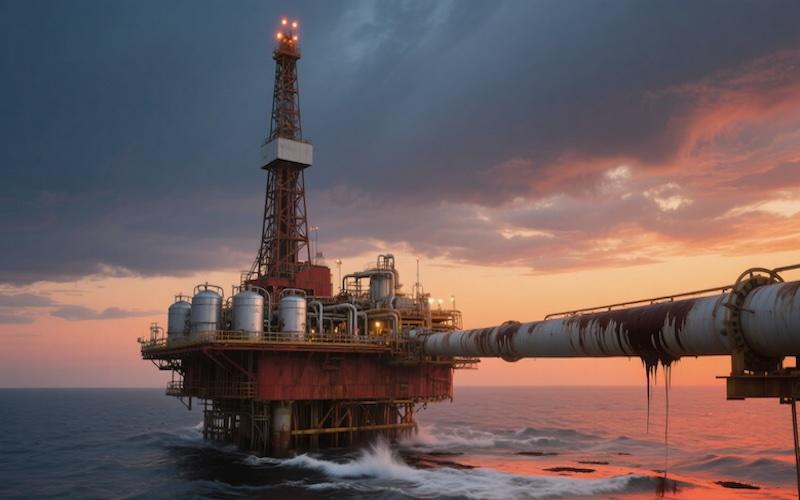 Trump stated that any decision depends on whether Iran signs a strong agreement, and hinted that additional military action may no longer be necessary. Despite previous hints of resuming large-scale strikes after the midterm elections, the US has not yet launched any major military action. Iran, on the other hand, warned that it would respond to any future strikes, targeting US and Israeli assets. The two sides continue their game of "talks without breaking down, struggles without war." Substantial progress has emerged in regional diplomacy. Iraqi Foreign Minister Fuad Hussein stated in an interview with Al Jazeera that Iraq has reached an understanding with the US to resume oil exports through the Strait of Hormuz via a shipping route near Oman. Hussein also revealed the heavy cost of the conflict—Iraq has already lost $60 billion due to the war with Iran and the disruption of oil exports. However, high-level officials remain skeptical about the prospects of negotiations: US Secretary of State Marco Rubio downplayed expectations of an immediate breakthrough, stating bluntly that Iran's current negotiating demands are "unacceptable." Market sentiment has therefore exhibited a typical tug-of-war between bulls and bears. On the one hand, the reduced risk of escalation and the understanding on resuming flights in Hormuz have led to a continued decline in the previously accumulated geopolitical premium. On the other hand, Iran's hardline stance, Rubio's cautious statements, and the reality that "the agreement has not yet been finalized" make it difficult to completely clear up supply-side uncertainties. The $90 mark has thus become the core battleground between bulls and bears—last week, oil prices fell sharply due to market expectations that the Democrats would push for a swift end to the conflict, and the extent to which this expectation is realized is being repriced. Technically, the WTI daily chart shows a "wide-range oscillation at high levels, with a downward shift in the center of gravity": after a sharp drop last week due to political expectations, a corrective rebound has begun this week following Trump's conciliatory statements, but the rebound is limited, and the $90 mark constitutes a short-term watershed between bulls and bears. Resistance is seen at the high point of the escalation phase, while support is seen at the low of $86.50 formed last week. In terms of momentum, the decline in geopolitical premium and profit-taking by bulls are jointly suppressing upward movement, while repeated negotiations and Iranian warnings are providing intermittent support. On the 4-hour chart, the short-term rebound remains an event-driven technical correction, lacking sustained buying support. Only a firm hold above $91 and a decisive break above the $90 psychological level could open up further upside potential . Conversely, if the rebound weakens and breaks below $90, oil prices will likely retest last week's low of $86, increasing the risk of a confirmed pullback.
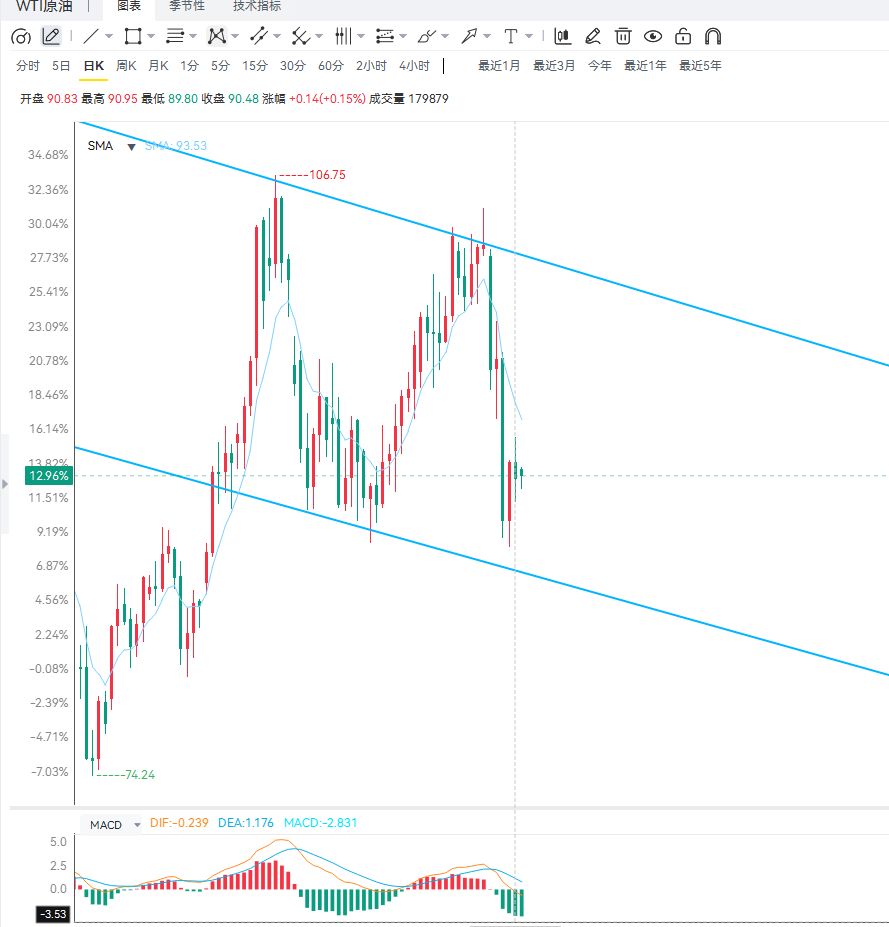 Editor's Summary: The core contradiction in WTI crude oil prices currently lies in the balance between the diminishing geopolitical premium resulting from the "reduced risk of conflict escalation + understanding on the resumption of flights in Hormuz" and the supply uncertainty caused by "Iran's hardline stance + Rubio's cautious statements + the lack of a finalized agreement." The $90 mark is the dividing line between bullish and bearish sentiment, with the current price of $90.45 hovering in a fragile equilibrium above this level. In the medium term, if Iran signs a strong agreement and the resumption of flights in Iraq proceeds smoothly, there is room for further downward movement in oil prices, and the previous lows will be tested. If negotiations break down or military action resumes, the geopolitical premium will quickly return, and oil prices are expected to return to the highs seen during the conflict escalation. Close attention should be paid to Iran's official responses, Rubio's subsequent statements, and the actual progress of the resumption of flights in Hormuz—these three factors will determine the direction of the next phase.
Trump stated that any decision depends on whether Iran signs a strong agreement, and hinted that additional military action may no longer be necessary. Despite previous hints of resuming large-scale strikes after the midterm elections, the US has not yet launched any major military action. Iran, on the other hand, warned that it would respond to any future strikes, targeting US and Israeli assets. The two sides continue their game of "talks without breaking down, struggles without war." Substantial progress has emerged in regional diplomacy. Iraqi Foreign Minister Fuad Hussein stated in an interview with Al Jazeera that Iraq has reached an understanding with the US to resume oil exports through the Strait of Hormuz via a shipping route near Oman. Hussein also revealed the heavy cost of the conflict—Iraq has already lost $60 billion due to the war with Iran and the disruption of oil exports. However, high-level officials remain skeptical about the prospects of negotiations: US Secretary of State Marco Rubio downplayed expectations of an immediate breakthrough, stating bluntly that Iran's current negotiating demands are "unacceptable." Market sentiment has therefore exhibited a typical tug-of-war between bulls and bears. On the one hand, the reduced risk of escalation and the understanding on resuming flights in Hormuz have led to a continued decline in the previously accumulated geopolitical premium. On the other hand, Iran's hardline stance, Rubio's cautious statements, and the reality that "the agreement has not yet been finalized" make it difficult to completely clear up supply-side uncertainties. The $90 mark has thus become the core battleground between bulls and bears—last week, oil prices fell sharply due to market expectations that the Democrats would push for a swift end to the conflict, and the extent to which this expectation is realized is being repriced. Technically, the WTI daily chart shows a "wide-range oscillation at high levels, with a downward shift in the center of gravity": after a sharp drop last week due to political expectations, a corrective rebound has begun this week following Trump's conciliatory statements, but the rebound is limited, and the $90 mark constitutes a short-term watershed between bulls and bears. Resistance is seen at the high point of the escalation phase, while support is seen at the low of $86.50 formed last week. In terms of momentum, the decline in geopolitical premium and profit-taking by bulls are jointly suppressing upward movement, while repeated negotiations and Iranian warnings are providing intermittent support. On the 4-hour chart, the short-term rebound remains an event-driven technical correction, lacking sustained buying support. Only a firm hold above $91 and a decisive break above the $90 psychological level could open up further upside potential . Conversely, if the rebound weakens and breaks below $90, oil prices will likely retest last week's low of $86, increasing the risk of a confirmed pullback. Editor's Summary: The core contradiction in WTI crude oil prices currently lies in the balance between the diminishing geopolitical premium resulting from the "reduced risk of conflict escalation + understanding on the resumption of flights in Hormuz" and the supply uncertainty caused by "Iran's hardline stance + Rubio's cautious statements + the lack of a finalized agreement." The $90 mark is the dividing line between bullish and bearish sentiment, with the current price of $90.45 hovering in a fragile equilibrium above this level. In the medium term, if Iran signs a strong agreement and the resumption of flights in Iraq proceeds smoothly, there is room for further downward movement in oil prices, and the previous lows will be tested. If negotiations break down or military action resumes, the geopolitical premium will quickly return, and oil prices are expected to return to the highs seen during the conflict escalation. Close attention should be paid to Iran's official responses, Rubio's subsequent statements, and the actual progress of the resumption of flights in Hormuz—these three factors will determine the direction of the next phase.
- Risk Warning and Disclaimer
- The market involves risk, and trading may not be suitable for all investors. This article is for reference only and does not constitute personal investment advice, nor does it take into account certain users’ specific investment objectives, financial situation, or other needs. Any investment decisions made based on this information are at your own risk.