Trump's statement that "it might not be necessary" initially convinced the market, causing gold prices to rise more than 1% and recover the $4,100 mark.
2026-11-09 09:28:27
In a telephone interview on Sunday (November 8), US President Trump stated that the likelihood of the US ordering a new attack on Iran is extremely low, provided that negotiations aimed at ending the conflict make progress and Iran signs a "very strong agreement." Meanwhile, attacks on ships near the Strait of Hormuz continue, but market sentiment eased significantly due to Trump's remarks. International oil prices fell by more than 1% in early trading on Monday, alleviating inflation concerns and providing upward momentum for gold prices. As of 09:25, spot gold had risen nearly 1% to around $4112.34 per ounce on Monday (November 9). 
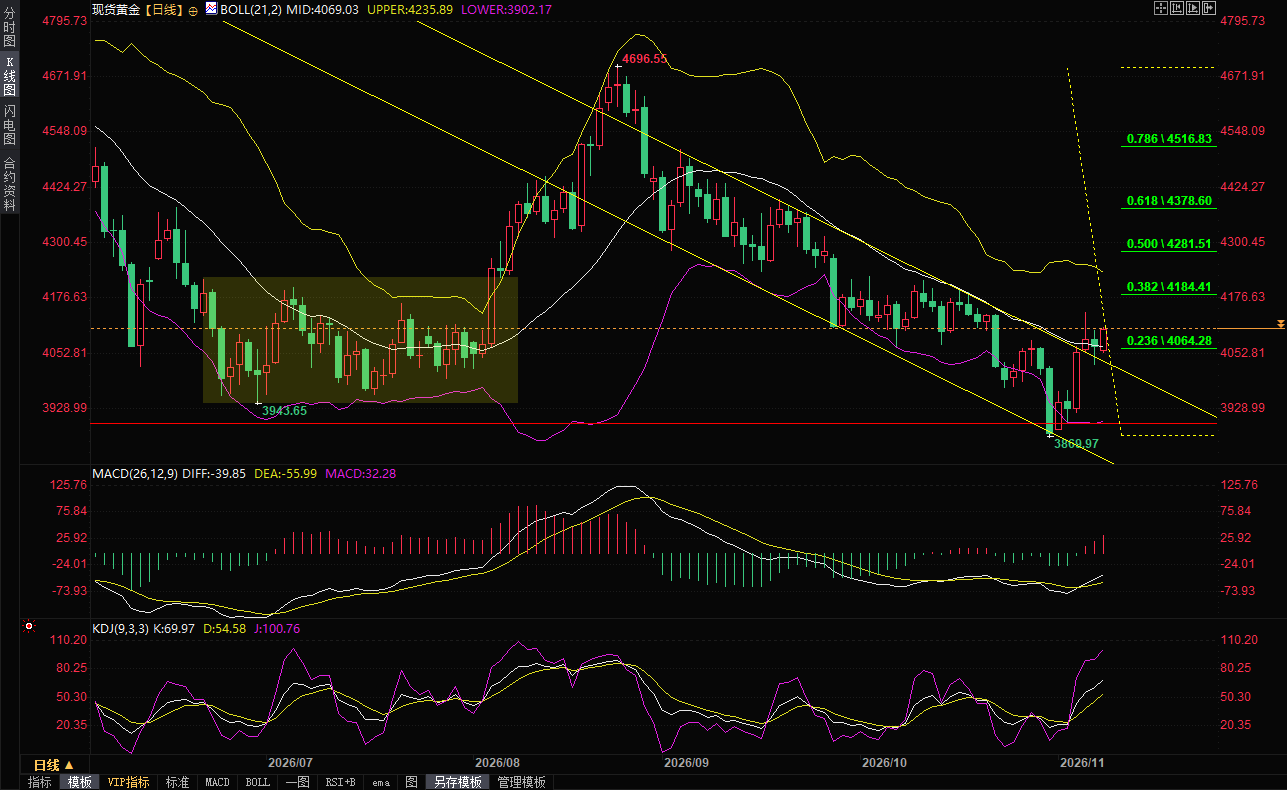 (Spot gold daily chart, source: EasyTrade) At 09:26 Beijing time, spot gold is currently trading at $4111.17 per ounce.
Trump downplays the possibility of military escalation and emphasizes that the agreement is key.
In an interview, Trump repeatedly emphasized that a new round of large-scale strikes was "highly unlikely" to be a necessary option. He pointed out that the answer depended on whether Iran signed a very strong agreement, adding, "The answer is, it's very likely there won't be any need for that." Trump also revealed that if negotiations broke down and strikes resumed, the US had identified potential infrastructure targets, including 38 bridges, claiming, "We could actually destroy them in an hour." This statement came shortly after the US midterm elections. Previously, markets had worried that the election results might trigger a larger-scale US military operation against Iran. Currently, there are no signs that the US military is preparing for a large-scale offensive, but tensions between the two sides in the Strait of Hormuz have not completely eased. Iran had previously warned that it would strike US and Israeli targets if attacked. Iranian state television suggested that the explosions in the south, including on Qeshm Island, might be related to Iranian military activities rather than US airstrikes. Tasnim News Agency reported that two missiles hit Qeshm Island, but official damage figures have not been confirmed. The US had previously admitted to carrying out a limited defensive strike on the island on November 2.Risks to shipping across the strait remain; both sides report attacks on their vessels.
Despite softening diplomatic signals, the risks to the Strait of Hormuz, a global energy lifeline, remain. Both the US and Iran have reported attacks on ships in or near the strait, restricting exports of energy and other commodities. Iran claims two ships struck mines and a third caught fire; the US says its air force rendered a ship inoperable in the Gulf of Oman. This "fighting while negotiating" situation makes it difficult to completely dispel market concerns about supply disruptions, but also means that any substantial progress in an agreement can quickly translate into price volatility.Gold prices found support while oil prices fell, easing inflation concerns.
Boosted by Trump's remarks, market concerns about further deterioration of the Middle East situation eased somewhat. Spot gold rose nearly 1% on Monday, reaching a high of around $4110.35 per ounce. Weaker oil prices directly reduced inflationary pressures, providing momentum for a gold price rebound. Meanwhile, a recovery in Indian physical gold demand also provided additional support. However, gains were limited. Strong US non-farm payroll data reinforced market expectations that the Federal Reserve will maintain higher interest rates for a longer period, and pressure on the dollar and real interest rates continues to constrain gold's upside potential. International oil prices fell more than 10% last week and continued their decline at the beginning of the week, reflecting a partial fading of geopolitical premiums.Editor's Summary
Trump's direct linking of a new round of military action to a "strong agreement" sends a clear signal of diplomatic priority, reducing the probability of a sharp escalation of the conflict in the short term. Shipping risks and localized attacks in the Strait of Hormuz continue, and supply disruptions have not been completely eliminated. Gold benefited from easing safe-haven demand and falling oil prices, but strong employment data and interest rate expectations continue to exert downward pressure. The focus will shift to the specific terms of the agreement brokered by Qatar and other parties, and whether passage through the strait will truly return to normal. Any substantial progress or setbacks could quickly impact energy and precious metal prices.Frequently Asked Questions
Q: What specific content might Trump's "strong deal" include? A: Based on public statements and previous positions of both sides, the core of the agreement is expected to revolve around issues such as limiting Iran's nuclear program, reopening the Strait of Hormuz, and unfreezing sanctions and assets. The US emphasizes that the nuclear issue must enter initial negotiations and demands full access to the Strait; Iran, on the other hand, has put forward several conditions, including lifting sanctions, unfreezing assets, and war reparations. The disagreement between the two sides remains on the order of "what to do first," with mediators such as Qatar pushing for steps to build mutual trust. Whether the agreement can be implemented depends on whether the US accepts some of Iran's core demands and whether Iran makes verifiable concessions on the nuclear issue. Q: Why did gold prices rise after Trump's statement, but the increase was limited? A: Trump's downplaying of the risks of military escalation directly alleviated safe-haven demand in the Middle East, and the decline in oil prices further reduced inflation concerns, both supporting gold prices. The recovery in Indian physical demand also provided additional buying. However, strong US non-farm payroll data reinforced expectations of "higher and longer" interest rates, putting downward pressure on gold due to the dollar and real interest rates, preventing prices from rising significantly. The market is currently caught in a tug-of-war between geopolitical easing and macroeconomic interest rate pressures. Q: How much impact will the attacks on ships in the Strait of Hormuz have on global energy supply? A: The Strait is a key passage for about one-fifth of global oil trade. The ongoing ship attacks and mine-laying risks have restricted some exports, pushing up freight and insurance costs. If the conflict escalates to the point of a de facto closure of the Strait, oil prices could surge sharply. Currently, the "limited confrontation" has not caused a full disruption, but the market remains highly sensitive to supply risks. Any progress in the agreement that restores normal passage will significantly alleviate premiums. Q: How will the US midterm election results affect Trump's policy toward Iran? A: After the Republican defeat in the election, there were concerns that Trump might use military action to divert attention. His latest statements indicate that in the short term, he prefers to maintain pressure through diplomacy and limited strikes rather than an immediate large-scale escalation. At the same time, the US still retains military options and has identified targets, showing that its policy remains flexible. The composition of the new Congress may further constrain the political space for large-scale military action. Q: How should investors view the subsequent trends in gold and oil? A: In the short term, the progress of the agreement and the passage of the Strait are the core variables. If negotiations achieve a substantial breakthrough, oil prices may fall further, and gold prices may lose some geopolitical support; if negotiations break down or attacks escalate, safe-haven demand will push gold prices higher again and support oil prices. At the macro level, the Fed's interest rate path and non-farm payroll and inflation data remain the dominant factors. Investors need to simultaneously monitor diplomatic developments and US economic data, avoiding unilateral bets on geopolitical easing. (Spot gold daily chart, source: EasyTrade) At 09:26 Beijing time, spot gold is currently trading at $4111.17 per ounce.
- Risk Warning and Disclaimer
- The market involves risk, and trading may not be suitable for all investors. This article is for reference only and does not constitute personal investment advice, nor does it take into account certain users’ specific investment objectives, financial situation, or other needs. Any investment decisions made based on this information are at your own risk.