Trump says he won't attack Iran, gold prices rebound; geopolitics and CPI are key factors in the short term.
2026-11-09 18:00:27
On Monday (November 9), during the Asian and European sessions, international gold prices continued to rebound, with the intraday increase once exceeding 1.5%, reaching a high of 4134, but failing to break the high point of the previous day's rebound. The direct trigger for the rebound was the rapid easing of geopolitical tensions in the Middle East. 
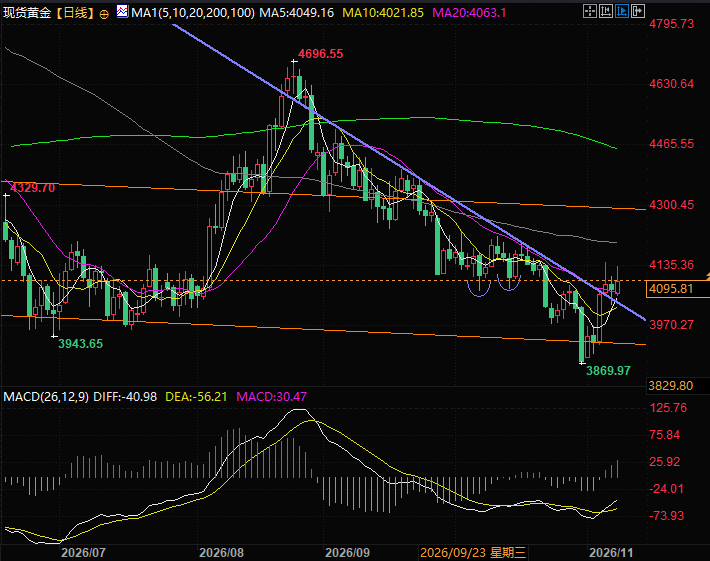 style=cursor:pointer; alt=图片点击可在新窗口打开查看 onclick=javascript:window.open(this.src); /> (Spot gold daily chart, source: EasyTrade) At 17:57 Beijing time, spot gold is currently trading at $4096 per ounce.
Trump's remarks easing Middle East anxieties led to a decline in both oil prices and the dollar, which in turn spurred a rebound in gold prices.
US President Trump publicly stated that the probability of the US resuming military strikes against Iran is extremely low as long as US-Iran negotiations continue. This statement quickly eased market panic regarding potential disruptions to oil supplies through the Strait of Hormuz, causing international oil prices to fall sharply, dropping nearly 1.5% at one point during the session. Weaker oil prices directly lowered global inflation expectations, leading the market to downgrade its assessment of "high interest rates remaining for a long time," thus reducing the opportunity cost of holding non-interest-bearing gold. Coupled with a slight weakening of the US dollar index, the attractiveness of dollar-denominated gold to overseas buyers increased, and these two forces combined to drive a rapid rebound in gold prices. However, this round of oil price declines is only a temporary easing, and the geopolitical game has not completely ended. Both the US and Iran continue to report attacks on ships in the Strait, indicating that the root of the conflict has not been resolved. A senior UAE official also warned that it is difficult for the US and Iran to reach a comprehensive agreement quickly, and the Middle East will remain in a state of instability for a long time. If subsequent negotiations break down, the risk of conflict will resurface, oil prices will surge again, and the current positive logic supporting gold prices will be reversed.Non-farm payroll data exceeded expectations but failed to significantly impact gold prices: structural vulnerabilities lurk beneath the booming job market.
Last Friday's US October non-farm payroll data significantly exceeded market expectations, with 165,000 new jobs added and the unemployment rate falling to 4.1%. Logically, strong employment should reinforce expectations of interest rate hikes and suppress gold prices, but gold did not experience a deep correction. The core reason lies in the current unique situation of the US labor market: low hiring, low turnover, and low layoffs coexist, revealing significant fragility beneath its apparent resilience. Many job seekers can only accept part-time positions, and the proportion of long-term unemployed is rising. The media's eye-catching headlines about the better-than-expected non-farm payrolls are insufficient to prove that the economic boom can continue. The market did not simply follow the employment data and unilaterally bet on interest rate hikes, allowing gold prices to withstand the negative pressure.The Federal Reserve's focus has shifted to inflation, limiting the potential for a short-term gold price rebound due to expectations of interest rate hikes.
The structural imbalances in the employment sector, coupled with the White House losing both houses of Congress, have created opportunities for the Federal Reserve to reduce its intervention in the White House and thus focus its policy efforts more intently on inflation. CME FedWatch shows that the market's expectation of a December rate hike by the Fed has risen to 79%, with this week's upcoming US CPI and PPI figures being key short-term indicators. If inflation figures are strong, the dollar and US Treasury yields will strengthen again, further fueling rate hike expectations, and this round of gold's rebound will quickly come under pressure. Until the inflation results are released, rate hike expectations will continue to suppress the upside potential of gold prices.Summary and Technical Analysis:
In summary, the easing of tensions between the US and Iran has led to a decline in oil prices and the US dollar, opening a short-term recovery window for gold. However, expectations of a Fed rate hike firmly cap the upside potential for gold. Against the backdrop of ongoing geopolitical negotiations and unresolved inflation data, the upside for gold is limited, and a one-sided upward trend is unlikely; it is probable that it will maintain a volatile pattern in the short term. The key to gold's future performance remains the US-Iran conflict; continued easing will continue to benefit gold's rebound. In addition, if the US economy shows signs of fatigue and weakening growth, this will be another important factor driving gold prices higher. Technical Analysis: Gold recently formed a reversal pattern by breaking through the bottom, achieving its downward target and breaking through the downward pressure to complete the trend reversal. After testing the upper resistance for two consecutive days, if the price decline is limited and can remain above 4050, the overall trend will be bullish, with support around 4050. If gold continues its strong performance in the near term, it has a chance to challenge the 4300 area. style=cursor:pointer; alt=图片点击可在新窗口打开查看 onclick=javascript:window.open(this.src); /> (Spot gold daily chart, source: EasyTrade) At 17:57 Beijing time, spot gold is currently trading at $4096 per ounce.
- Risk Warning and Disclaimer
- The market involves risk, and trading may not be suitable for all investors. This article is for reference only and does not constitute personal investment advice, nor does it take into account certain users’ specific investment objectives, financial situation, or other needs. Any investment decisions made based on this information are at your own risk.