The British pound rose against the US dollar amid fluctuations. How do institutions view the market trend in the future?
2026-11-09 16:26:27
The pound rose to around 1.3400 against the dollar in European trading on Monday (November 9). The Bank of England's hawkish rate hike provided some support for the pound against the dollar. 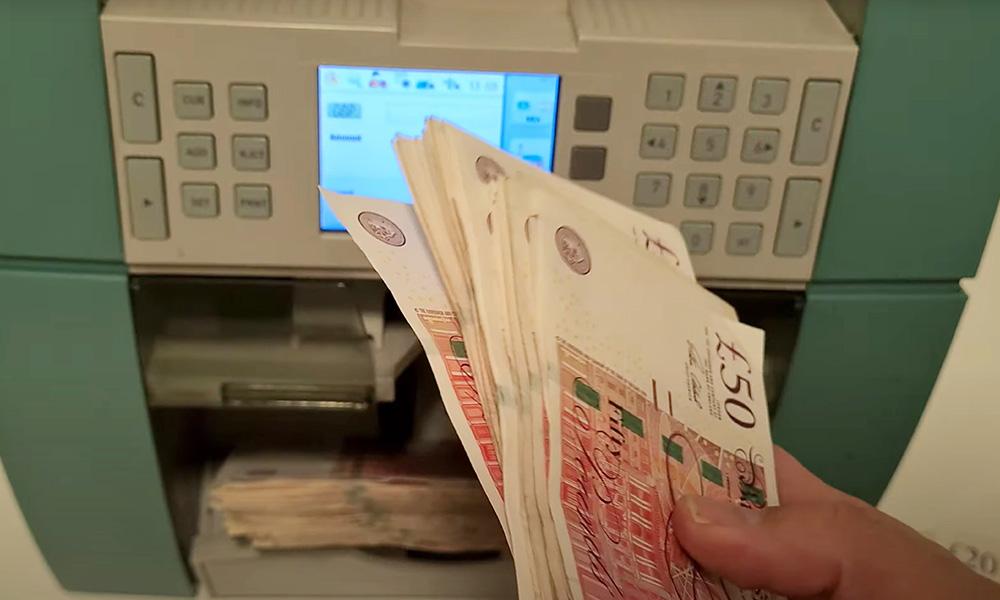
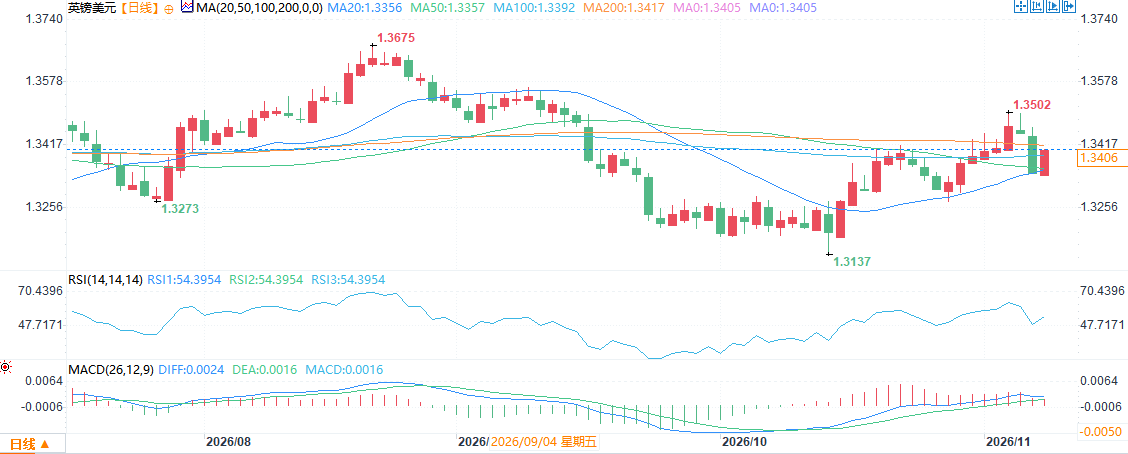 (GBP/USD daily chart, source: FX678) At 16:20 Beijing time, GBP/USD was trading at 1.3406/07.
Bank of England decision: Interest rates raised to 4%, first in over three years; eight voters support the move.
The Bank of England decided to raise its benchmark interest rate by 25 basis points to 4.00%, its first rate hike in over three years. Analysts pointed out that the decision received strong support within the committee, with all eight members in favor, and one member even favoring a 50 basis point increase, highlighting the still hawkish stance. The 4% rate brings the UK rate to the upper end of the 3.75% to 4.00% range with the Federal Reserve – the interest rate differential advantage no longer widens, and the pound lacks new drivers for upward movement. This is the key context for understanding the exchange rate's "only slight rebound after the rate hike."Pele stated that the Middle East conflict is the main factor, and the drop in oil prices "clearly" affects his outlook for the future.
Governor Bailey emphasized that the Middle East conflict, which is driving up energy prices, is the main factor determining future interest rates. Bailey added that the market reaction to the US midterm elections and the subsequent drop in oil prices would not have changed the decisions already made, but he acknowledged that it "clearly" influenced his view on the future. In its growth and inflation forecasts, the Bank of England raised its growth expectations for this year and next year to 1.6% and 1.3% respectively, stronger than the forecasts from the Office for Budget Responsibility. Bailey's statement implies that the policy path is highly conditional on the Middle East situation—if the conflict is resolved and oil prices fall, the need for further interest rate hikes will decrease; if the conflict continues, the tendency to raise interest rates will persist.Inflation forecast: around 5% by mid-2027, suggesting further interest rate hikes unless the conflict is resolved.
Some institutions have pointed out that the Monetary Policy Committee's statement that "it expects inflation to reach around 5% by mid-2027 and hinted at further interest rate hikes unless the Middle East conflict is resolved" indicates that geopolitical developments remain a key conditional factor in the Bank of England's policy path. The Bank of England has limited tolerance for inflation; the 5% peak expectation means that even with current interest rates at 4%, policy is not yet in the discussion of easing—but the conditional clause "unless the conflict is resolved" also leaves room for a pause.Pill's dovish shift: No predetermined interest rates for next year, carry trades face revaluation.
Committee member Pill emphasized that there were no predetermined interest rates for next year and rejected any pre-determined upward path starting in the spring, marking a shift from the previously implied tightening bias to a more dovish stance. The possibility that bank interest rates might remain unchanged or even decline if growth stagnates, and the focus on profit margin squeeze as a key determinant, reinforced downside risks for the pound. This conditional stance links future policy to corporate pressures and growth dynamics, prompting the market to reduce expectations of continued rate hikes and reassess carry trades supporting the pound.Institutional Views
UBS expects the pound to rise to 1.38 against the dollar by the end of December 2026. The bank believes that continued better-than-expected UK economic data, coupled with large short positions in the pound, will provide upside potential once investors begin unwinding their positions. UBS anticipates the Bank of England to begin a short-term rate hike cycle in November and raise rates again in the first quarter of 2027, which will help support the pound. Looking further ahead, the bank sets a target of 1.39 in March 2027, with a potential rise to 1.41 in the second half of the year. The main risk is a stronger US economy or a larger-than-expected number of Fed rate hikes, which could suppress the pound's rise. Current resistance is around 1.38, while support is in the 1.33-1.32 range. Rabobank expects its 3-month and 6-month targets to be 1.31, but lowers its 12-month target to 1.30. The bank's head of foreign exchange strategy points out that the market is currently overpricing the magnitude of the Bank of England's rate hikes, with the central expectation being at most one more hike in this cycle after the November rate increase. The pound will face significant downward pressure if investors begin to lower their expectations for UK interest rates. Rabobank believes that while the UK fiscal plan provides some support, the interest rate advantage relative to the US dollar may gradually diminish, especially given the Federal Reserve's continued high interest rates; the pound may remain under pressure in 2027. (GBP/USD daily chart, source: FX678) At 16:20 Beijing time, GBP/USD was trading at 1.3406/07.
- Risk Warning and Disclaimer
- The market involves risk, and trading may not be suitable for all investors. This article is for reference only and does not constitute personal investment advice, nor does it take into account certain users’ specific investment objectives, financial situation, or other needs. Any investment decisions made based on this information are at your own risk.