The Bank of Japan minutes signaled a December rate hike, with the USD/JPY pair hovering near the upper end of its trading range.
2026-11-10 15:12:31
The dollar edged higher against the yen to around 157.95 in early European trading on Tuesday. The Bank of Japan's hawkish stance may limit the pair's upside, while traders remain highly wary of potential intervention by Japanese authorities in the currency market. The US Consumer Price Index (CPI) data to be released later in the day will be the market focus. 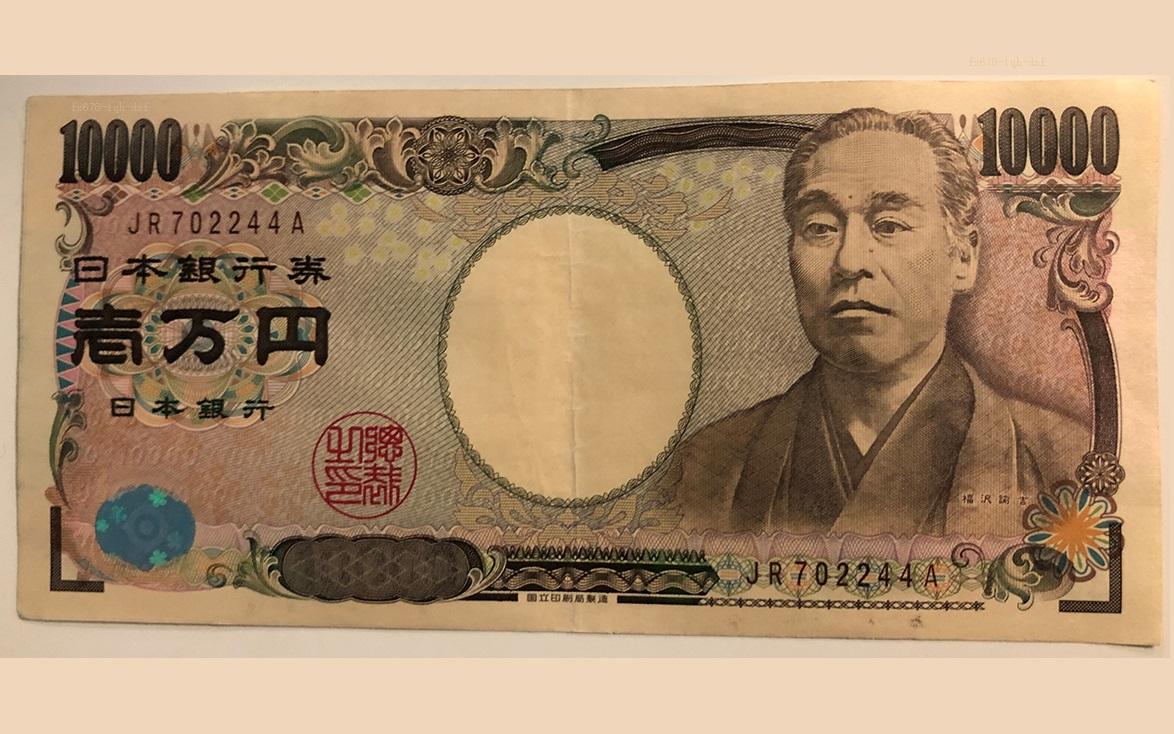 According to the summary of the October policy meeting released on Tuesday, members of the Bank of Japan's board of directors believed that a near-term interest rate hike was necessary, suggesting a high probability of action in December. One member stated, "The central bank should decide on the next policy rate hike when possible, without being overly cautious." This wording reinforced market expectations that the normalization of Japan's monetary policy is continuing. Quarterly data released by the Japanese Ministry of Finance on Monday showed that Japan intervened in the foreign exchange market on three trading days between July 30 and August 3. The largest intervention occurred on July 30, totaling 7.98 trillion yen (approximately US$50.36 billion), exceeding the previous record of 6.28 trillion yen set on April 30. The intervention by Japanese officials may boost the yen against the dollar in the short term, which also constitutes a policy constraint on the dollar's upward movement against the yen. Traders will closely watch the US inflation data released on Tuesday. Economists expect the overall CPI to rise 0.3% month-on-month in October, and the core CPI to rise 0.2% month-on-month. Any signs of rising inflation could strengthen expectations of a Fed rate hike in December and boost the dollar. It should be noted that this report does not include the year-on-year CPI reading for October, which is related to the statistical implications of the government shutdown a year ago. Investors should be aware of this peculiarity when interpreting the data. Rabobank analysts pointed out that the yen has been the best-performing currency this year, "the second-best performing G10 currency in the past six months." The bank acknowledged that "this strong ranking was supported by large-scale foreign exchange market intervention over three trading days in the summer (including joint support with the US Treasury)," but the yen has also recently appreciated on its own. The bank specifically observed that "on a one-month perspective, the yen has outperformed the dollar, and the market shows a clear reluctance to push the USD/JPY exchange rate to the 158.70 area, which coincides with the 200-day simple moving average." Regarding policy, the bank noted that "although the sell-off in the Nikkei 225 index over the weekend lowered market expectations for a December rate hike by the Bank of Japan, the strong performance of September wage data supports the possibility of further tightening next month and next year." Based on this, the bank believes that "USD/JPY may fall to the 155.00 area in a three-month perspective." The bank added that "another factor for a turnaround in the yen could be a more robust tone in the Japanese government bond market," which "is expected to provide a more supportive backdrop for the yen in the coming months." From a funding and fiscal perspective, the bank emphasized that "Japan's fundamental deficit is better than the G7 average, and there is speculation that large Japanese asset management institutions may be inclined to repatriate funds due to rising Japanese government bond yields," which will have a positive impact on the yen. Regarding the Federal Reserve, Daly's speech was more hawkish than usual, with her FXS speech tracking score at 8/10 , higher than the historical average of 6.4/10. She emphasized that inflation "must be the top priority," despite the jobs report being described as positive and wage growth "not robust"; statements that real wages are declining, inflation has been high for too long, and policy "must" be further tightened suggest a tendency for further interest rate hikes. The FXS Fed Sentiment Index rose 0.95 points to 143.10 , indicating that the overall communication tone remains firmly in hawkish territory, well above the 100 neutral line. Technically, the USD/JPY pair is slightly bearish on the daily chart, trading below the 100-day simple moving average (159.00) and closely above the 20-day Bollinger Band middle line. The Bollinger Bands have narrowed, with the price hovering near the middle line; the Relative Strength Index (RSI) is around 51 , indicating neutral momentum, suggesting that recent downward pressure is consolidating rather than accelerating. On the upside, initial resistance is at the 20-day Bollinger Band upper line around 158.90 , above which the 100-day moving average at 159.00 forms strong resistance; a break above this level is needed to alleviate the current corrective bias. On the downside, initial support is located at the Bollinger Middle Band around 157.95 , with deeper support at the lower Bollinger Band around 156.95 . A daily close below this lower boundary would open up room for a deeper pullback within a larger range. On the 4-hour chart, the price is repeatedly fluctuating around the Bollinger Middle Band near 157.95. The narrowing Bollinger Bands indicate compressed volatility, suggesting a consolidation phase before a short-term directional move. The 158.90-159.00 range represents significant resistance that must be overcome. A break above this level would alleviate the downward pressure; however, a break below the 157.95 middle band and a test of 156.95 would deepen the pullback and potentially trigger further pricing in expectations of intervention.
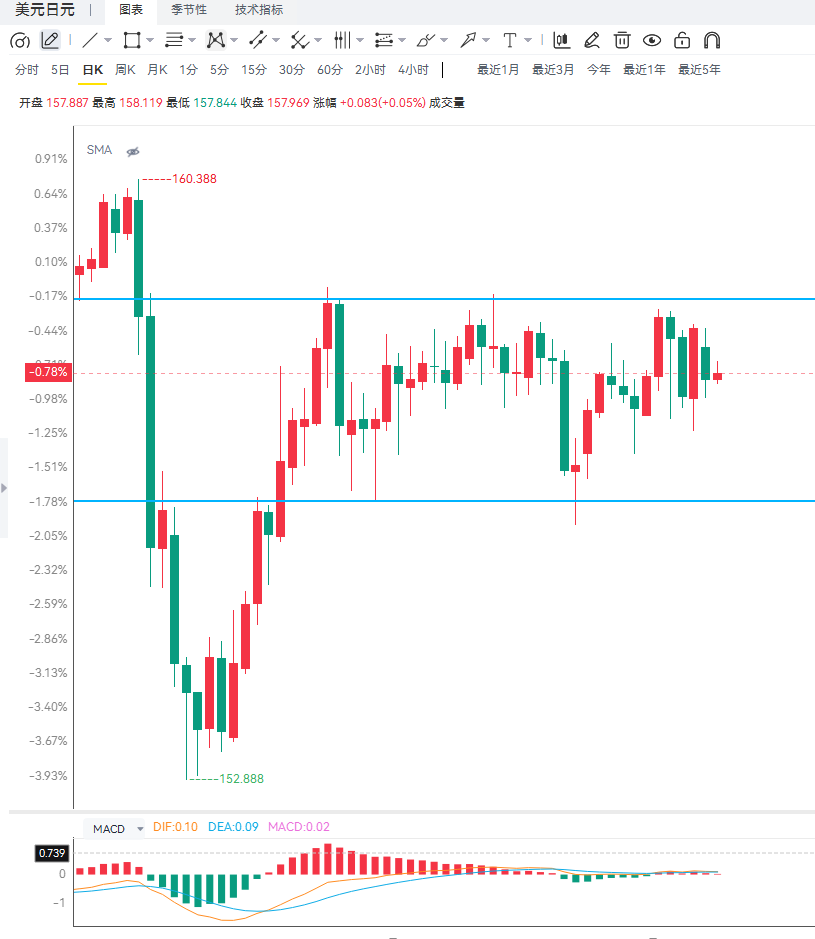 Editor's Summary: The core contradiction in the USD/JPY exchange rate is the hedging between the "Yen policy floor established by the Bank of Japan's minutes signaling a December rate hike and the record 7.98 trillion yen intervention" and the "Federal Reserve's hawkish tone (and the possibility of CPI reinforcing rate hikes) . The dense resistance at 158.90-159.00 and the support at 157.95-156.95 form a short-term consolidation range. In the medium term, if the Bank of Japan's December rate hike materializes and rising Japanese government bond yields drive capital inflows, the yen is expected to move towards the 155.00 area given by Rabobank. If the US CPI exceeds expectations and pushes up the dollar, the exchange rate may rise to 159.00 and test the intervention threshold. Key attention should be paid to Tuesday's actual US CPI reading (note the unique metric of lacking year-on-year figures), whether the Japanese authorities will intervene verbally or in practice again, and the direction of the Nikkei index and Japanese government bond yields.
According to the summary of the October policy meeting released on Tuesday, members of the Bank of Japan's board of directors believed that a near-term interest rate hike was necessary, suggesting a high probability of action in December. One member stated, "The central bank should decide on the next policy rate hike when possible, without being overly cautious." This wording reinforced market expectations that the normalization of Japan's monetary policy is continuing. Quarterly data released by the Japanese Ministry of Finance on Monday showed that Japan intervened in the foreign exchange market on three trading days between July 30 and August 3. The largest intervention occurred on July 30, totaling 7.98 trillion yen (approximately US$50.36 billion), exceeding the previous record of 6.28 trillion yen set on April 30. The intervention by Japanese officials may boost the yen against the dollar in the short term, which also constitutes a policy constraint on the dollar's upward movement against the yen. Traders will closely watch the US inflation data released on Tuesday. Economists expect the overall CPI to rise 0.3% month-on-month in October, and the core CPI to rise 0.2% month-on-month. Any signs of rising inflation could strengthen expectations of a Fed rate hike in December and boost the dollar. It should be noted that this report does not include the year-on-year CPI reading for October, which is related to the statistical implications of the government shutdown a year ago. Investors should be aware of this peculiarity when interpreting the data. Rabobank analysts pointed out that the yen has been the best-performing currency this year, "the second-best performing G10 currency in the past six months." The bank acknowledged that "this strong ranking was supported by large-scale foreign exchange market intervention over three trading days in the summer (including joint support with the US Treasury)," but the yen has also recently appreciated on its own. The bank specifically observed that "on a one-month perspective, the yen has outperformed the dollar, and the market shows a clear reluctance to push the USD/JPY exchange rate to the 158.70 area, which coincides with the 200-day simple moving average." Regarding policy, the bank noted that "although the sell-off in the Nikkei 225 index over the weekend lowered market expectations for a December rate hike by the Bank of Japan, the strong performance of September wage data supports the possibility of further tightening next month and next year." Based on this, the bank believes that "USD/JPY may fall to the 155.00 area in a three-month perspective." The bank added that "another factor for a turnaround in the yen could be a more robust tone in the Japanese government bond market," which "is expected to provide a more supportive backdrop for the yen in the coming months." From a funding and fiscal perspective, the bank emphasized that "Japan's fundamental deficit is better than the G7 average, and there is speculation that large Japanese asset management institutions may be inclined to repatriate funds due to rising Japanese government bond yields," which will have a positive impact on the yen. Regarding the Federal Reserve, Daly's speech was more hawkish than usual, with her FXS speech tracking score at 8/10 , higher than the historical average of 6.4/10. She emphasized that inflation "must be the top priority," despite the jobs report being described as positive and wage growth "not robust"; statements that real wages are declining, inflation has been high for too long, and policy "must" be further tightened suggest a tendency for further interest rate hikes. The FXS Fed Sentiment Index rose 0.95 points to 143.10 , indicating that the overall communication tone remains firmly in hawkish territory, well above the 100 neutral line. Technically, the USD/JPY pair is slightly bearish on the daily chart, trading below the 100-day simple moving average (159.00) and closely above the 20-day Bollinger Band middle line. The Bollinger Bands have narrowed, with the price hovering near the middle line; the Relative Strength Index (RSI) is around 51 , indicating neutral momentum, suggesting that recent downward pressure is consolidating rather than accelerating. On the upside, initial resistance is at the 20-day Bollinger Band upper line around 158.90 , above which the 100-day moving average at 159.00 forms strong resistance; a break above this level is needed to alleviate the current corrective bias. On the downside, initial support is located at the Bollinger Middle Band around 157.95 , with deeper support at the lower Bollinger Band around 156.95 . A daily close below this lower boundary would open up room for a deeper pullback within a larger range. On the 4-hour chart, the price is repeatedly fluctuating around the Bollinger Middle Band near 157.95. The narrowing Bollinger Bands indicate compressed volatility, suggesting a consolidation phase before a short-term directional move. The 158.90-159.00 range represents significant resistance that must be overcome. A break above this level would alleviate the downward pressure; however, a break below the 157.95 middle band and a test of 156.95 would deepen the pullback and potentially trigger further pricing in expectations of intervention. Editor's Summary: The core contradiction in the USD/JPY exchange rate is the hedging between the "Yen policy floor established by the Bank of Japan's minutes signaling a December rate hike and the record 7.98 trillion yen intervention" and the "Federal Reserve's hawkish tone (and the possibility of CPI reinforcing rate hikes) . The dense resistance at 158.90-159.00 and the support at 157.95-156.95 form a short-term consolidation range. In the medium term, if the Bank of Japan's December rate hike materializes and rising Japanese government bond yields drive capital inflows, the yen is expected to move towards the 155.00 area given by Rabobank. If the US CPI exceeds expectations and pushes up the dollar, the exchange rate may rise to 159.00 and test the intervention threshold. Key attention should be paid to Tuesday's actual US CPI reading (note the unique metric of lacking year-on-year figures), whether the Japanese authorities will intervene verbally or in practice again, and the direction of the Nikkei index and Japanese government bond yields.
- Risk Warning and Disclaimer
- The market involves risk, and trading may not be suitable for all investors. This article is for reference only and does not constitute personal investment advice, nor does it take into account certain users’ specific investment objectives, financial situation, or other needs. Any investment decisions made based on this information are at your own risk.