World Gold Council: During the gold price correction window, central banks in many countries are making intensive purchases.
2026-11-11 11:34:30
Following a period of active trading in the third quarter, central banks around the world continued to increase their official gold reserves, taking advantage of the decline in gold prices. Major Asian countries have increased their gold reserves for two consecutive years, and several other countries, including the Czech Republic, Uzbekistan, and Poland, also conducted gold purchases in October. Data from the World Gold Council shows that global central bank gold purchases in the third quarter increased significantly year-on-year. This continued allocation by official institutions provides important underlying support for gold prices, but this force is not yet sufficient to establish an absolute bottom.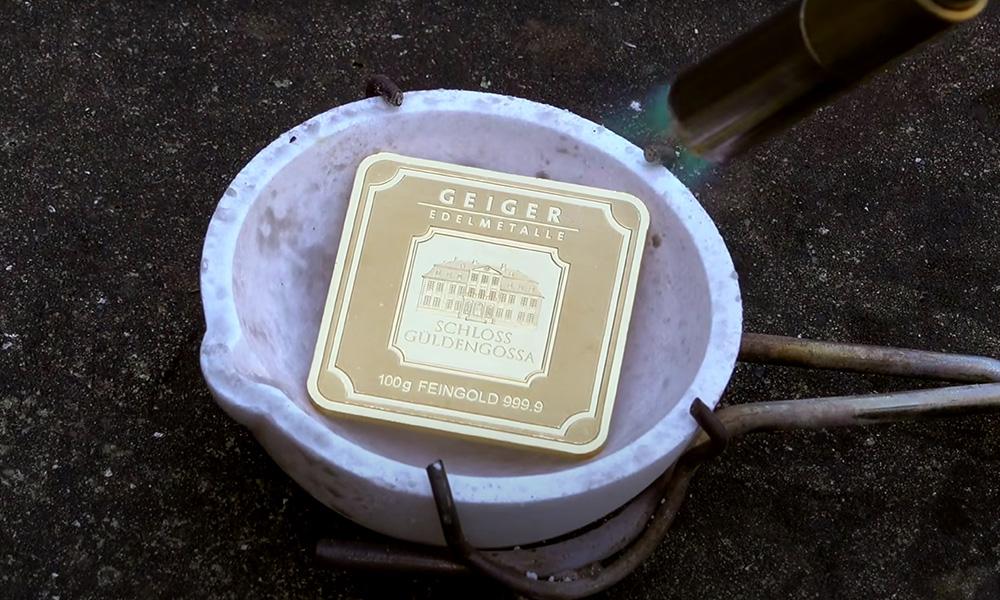
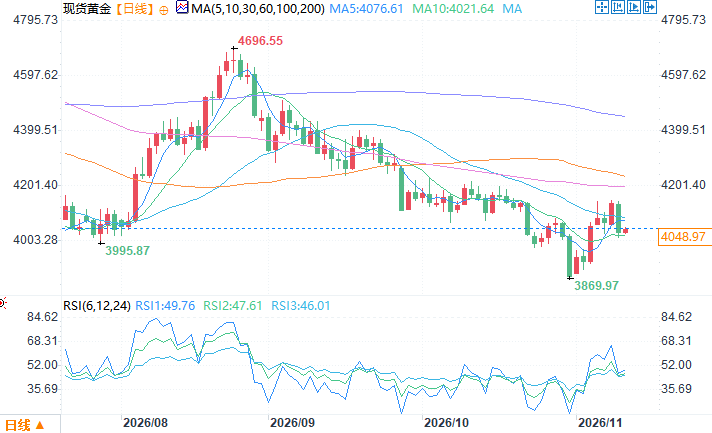 Spot gold daily chart source: FX678. At 11:32 AM Beijing time on November 11th, spot gold was trading at $4045.37 per ounce.
In October, central banks in several countries released gold purchase data, with the reserves of a major Asian country approaching the size of France's.
Krishan Gopaul, senior analyst for Europe, the Middle East and Africa at the World Gold Council, disclosed details of central bank gold purchases in October via social media. He stated that a major Asian country purchased 26 tons of gold in October, bringing its official gold reserves to 2,435 tons, just 2 tons shy of France's reserves, placing it on par with major developed countries in terms of reserve size. Besides major Asian countries, many emerging market central banks also maintained their buying pace. The Czech central bank purchased 2.5 tons of gold in October, bringing its total gold reserves to 90 tons, just 10 tons short of its 100-ton reserve target. The Central Bank of Uzbekistan purchased 7 tons of gold in October, bringing its net gold purchases this year to 63 tons, increasing its total gold reserves to 453 tons. The Polish central bank also completed a purchase of 27 tons of gold in October, officially reaching its 700-ton reserve target.Poland achieves its interim target; central bank governor signals continued gold purchases.
Poland has already met its previously set target of 700 tons of gold reserves, but Polish central bank governor Adam Glapinski has not ruled out the possibility of further increases. He said, "After achieving the 700-ton target, we still need to calmly assess the future direction, but I don't think there's any reason to stop gold purchases. I believe the size of gold reserves should grow in tandem with the country's overall foreign exchange reserves." This means that even after achieving the old target, Poland still has the potential to further expand its gold reserves.Gold purchases surged 40% year-on-year in the third quarter, with central bank buying having a dual impact on gold prices.
The concentrated gold purchases in October continued the buying spree that lasted throughout the summer. A previous report from the World Gold Council showed that global central banks purchased a total of 321 tons of gold in the third quarter, a 42% increase year-on-year, significantly higher than the five-year quarterly average of 227 tons. Second-quarter purchase data was also slightly revised upwards, confirming the strength of the official gold buying wave. Analysts from the association stated that central bank gold purchases in the third quarter exceeded market expectations, and the survey results also reflected the strategic allocation intentions of central banks worldwide. They expect gold demand to remain strong in the fourth quarter. The report also cautioned that central bank purchasing behavior is somewhat sensitive to gold prices, and purchases are more likely to occur during periods of price correction. This behavior can provide some support for gold prices and mitigate market volatility, but this correlation is not stable, and central bank gold purchases should not be considered an unbreakable floor for gold prices.Conclusion
Amidst high interest rates suppressing gold prices, global central banks are taking advantage of price corrections to continuously allocate gold reserves. Major Asian countries, Poland, and Uzbekistan, among others, are consistently increasing their holdings, with some countries retaining room for further increases even after achieving their interim reserve targets. Central bank buying is a significant long-term support for gold, but short-term gold price movements will still be more driven by the Federal Reserve's monetary policy and the strength of the US dollar; one cannot solely rely on central bank gold purchases to determine the bottom of the market. Spot gold daily chart source: FX678. At 11:32 AM Beijing time on November 11th, spot gold was trading at $4045.37 per ounce.
- Risk Warning and Disclaimer
- The market involves risk, and trading may not be suitable for all investors. This article is for reference only and does not constitute personal investment advice, nor does it take into account certain users’ specific investment objectives, financial situation, or other needs. Any investment decisions made based on this information are at your own risk.