The US dollar extended its gains against the Canadian dollar, rising to its highest level since mid-October.
2026-11-11 12:18:29
The US dollar extended its gains against the Canadian dollar in Asian trading on Wednesday (November 11), currently trading around 1.4200, its highest level since mid-October, after reaching a high of 1.4209 overnight. The pair continued to rise as the latest inflation report solidified market expectations for a Federal Reserve rate hike in December, keeping the dollar strong. According to the CME FedWatch tool, the market is currently pricing in a roughly 100% probability of a rate hike next month. 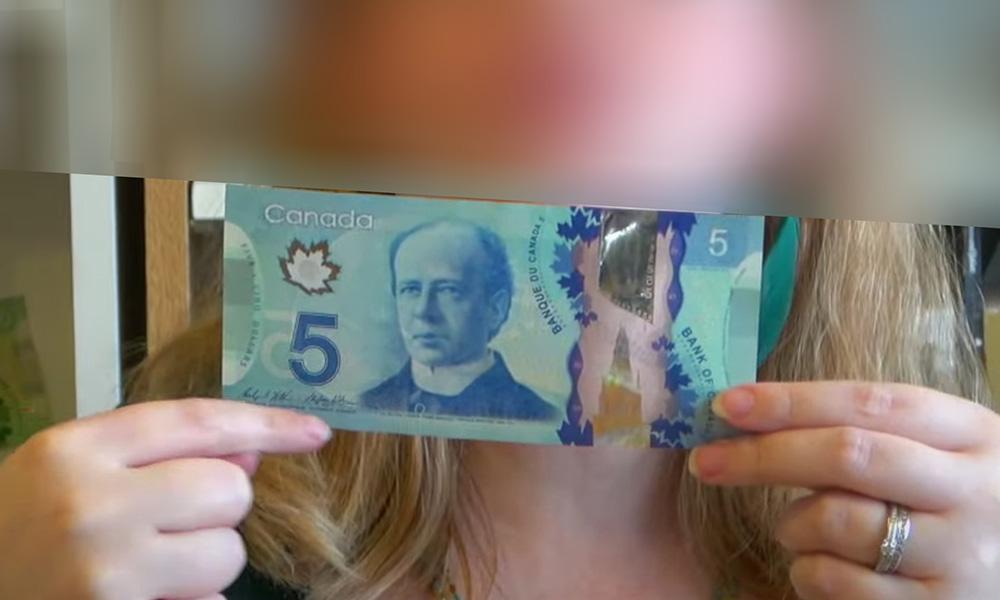
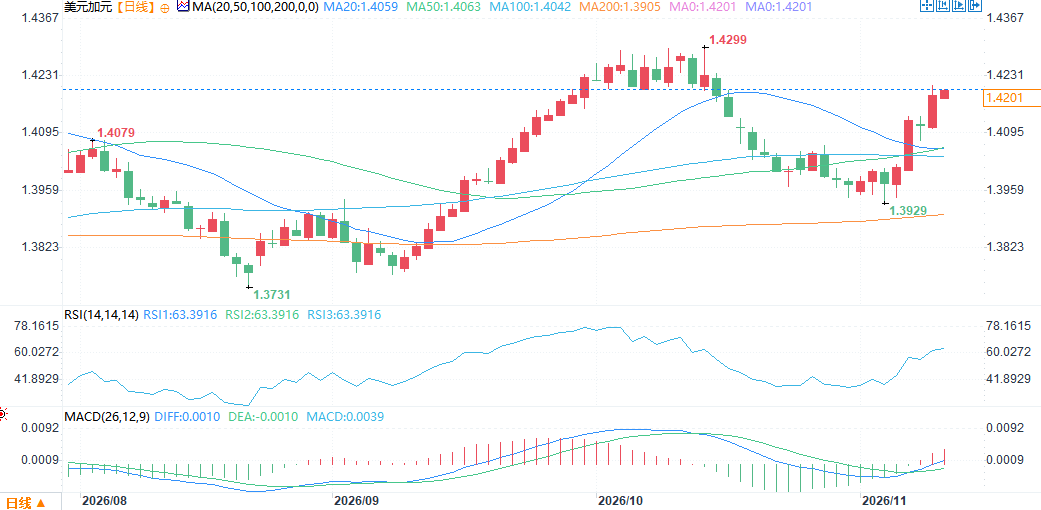 (USD/CAD daily chart, source: EasyForex) At 12:17 Beijing time, USD/CAD was trading at 1.4202/04.
US Dollar Support: Overall CPI of 0.4% and core CPI of 0.3% exceeded expectations, raising the probability of a December rate hike to 100%.
The U.S. Bureau of Labor Statistics released its October Consumer Price Index (CPI) data, showing that the overall CPI rose 0.4% month-over-month, higher than the market expectation of 0.3%, although it slowed from September's 0.6%. The core CPI, excluding food and energy, rose 0.3% month-over-month, unchanged from September, but higher than the expected 0.2%. Due to the impact of last year's government shutdown, the report omitted year-over-year data for October. The key implication of this data is that both the overall and core indicators exceeded expectations, indicating that inflationary pressures have not cooled as quickly as the market had previously anticipated, especially with service prices remaining sticky. The market reacted quickly; the CME FedWatch tool showed that the probability of a December rate hike rose to 100%, with a 25 basis point hike being the most likely, and the tail probability of a 50 basis point hike also increasing. This shift directly supported the dollar, as it strengthened expectations of interest rate differentials between the Federal Reserve and other major central banks. The dollar strengthened against the Canadian dollar for the second consecutive day, reflecting investors' repricing of the U.S. policy rate path. In the short term, if subsequent inflation data continue to show stickiness, the US dollar's interest rate advantage is likely to be further consolidated, thus limiting the Canadian dollar's upside potential. Traders need to closely monitor subsequent employment and inflation data to assess whether the pace of interest rate hikes will accelerate further.Dollar Headwinds: Easing US-Iran Diplomatic Relations Weaken Safe-Haven Demand
While positive inflation data provides support for the US dollar, rising hopes for a diplomatic solution to the US-Iran conflict may weaken the dollar's safe-haven premium, creating headwinds. President Trump recently hinted that further military strikes against Iran may no longer be necessary, and Secretary of State Rubio also stated at the G7 meeting that large-scale military action is no longer needed. Meanwhile, Congressional Democrats are considering using the upcoming government funding deadline to push the Trump administration towards a peaceful resolution. These developments indicate that the safe-haven demand previously driven by geopolitical tensions is weakening. As a traditional safe-haven currency, the US dollar often benefits from escalating conflicts, but expectations of de-escalation will reduce its safe-haven appeal, thus limiting the upside potential of the USD/CAD pair. Market sentiment shifting from a "conflict premium" to "diplomatic optimism" may lead to funds flowing from the dollar to risk assets or other currencies. If the de-escalation continues, the dollar's short-term momentum may be partially offset, and the upward slope of the USD/CAD pair is expected to slow. Investors need to weigh inflation-driven expectations of interest rate hikes against the receding safe-haven demand due to geopolitical easing; these two opposing forces determine the currency pair's trading range.Canadian Dollar Support and Drag: Rising oil prices provide support, but easing expectations may depress oil prices.
The Canadian dollar, highly correlated with commodities, may find support from rising oil prices, which to some extent limits the upside potential of the USD/CAD pair. WTI crude oil has rebounded after two consecutive days of declines and is currently trading above $86 per barrel. The recovery in oil prices directly benefits Canadian exports and the current account, thus supporting the Canadian dollar. However, oil prices themselves are also facing pressure from easing tensions between the US and Iran. Trump's suggestion that additional military strikes may no longer be necessary has fueled optimism about a diplomatic solution; Congressional Democrats are considering using the funding deadline to push for an end to the conflict. This combination means that the support from oil prices for the Canadian dollar is two-way—the current rebound provides short-term support, but if expectations of easing push oil prices down again, the commodity support for the Canadian dollar will weaken, and the upside potential for USD/CAD may open up. The Canadian economy is sensitive to energy prices, and every change in oil prices will affect the Canadian dollar's performance through trade terms. Traders need to monitor both oil prices and geopolitical developments to determine whether the support for the Canadian dollar is sustainable. If oil prices fall due to expectations of easing, the Canadian dollar may come under pressure, further strengthening the relative advantage of the US dollar.Institutional Interpretation: Goolsby's Hawkish Remarks Support the US Dollar
Chicago Fed President Goolsby emphasized that the latest CPI was "nearly worrying," that service inflation "has not fallen," and pointed out the existence of "real inflation problems" that the Fed "will have to deal with," sending a clear signal of willingness to tighten further if necessary, even though the labor market is described as "robust and stable." This combination of persistent inflation concerns and a resilient labor force directly supports the dollar and opposes expectations of impending policy easing. Goolsby's remarks echo previous hawkish signals from officials such as Waller and Logan, further solidifying policy expectations supporting the dollar. In the short term, if more officials echo similar sentiments, the upward momentum of the USD/CAD pair is likely to continue.in conclusion
The Canadian dollar weakened against rising oil prices, while the USD/CAD pair strengthened for the second consecutive day to around 1.4200. The core driver was the better-than-expected US October CPI figures of 0.4% overall and 0.3% core, reinforcing expectations of a December rate hike and providing support for the US dollar through interest rate differentials. However, easing tensions between the US and Iran weakened safe-haven demand, creating headwinds for the dollar. The commodity-linked Canadian dollar may find support from rising oil prices, but easing expectations could also depress oil prices, making the support for the Canadian dollar two-way. Goolsby's hawkish remarks—CPI figures described as "almost worrying" and highlighting "real inflation"—reinforced a "higher and longer" policy path, supporting the dollar and creating headwinds for the Canadian dollar. Short-term direction depends on the tug-of-war between oil prices and progress in US-Iran diplomacy: if oil prices fall due to easing expectations, the upside potential for USD/CAD opens up; if oil prices recover due to supply disruptions, the Canadian dollar will get a breather. (USD/CAD daily chart, source: EasyForex) At 12:17 Beijing time, USD/CAD was trading at 1.4202/04.
- Risk Warning and Disclaimer
- The market involves risk, and trading may not be suitable for all investors. This article is for reference only and does not constitute personal investment advice, nor does it take into account certain users’ specific investment objectives, financial situation, or other needs. Any investment decisions made based on this information are at your own risk.