The US dollar rebounded strongly against the Canadian dollar as expectations of a Federal Reserve rate hike intensified.
2026-11-11 14:44:28
The US dollar strengthened against the Canadian dollar for the second consecutive trading day on Wednesday in Asian trading, trading around 1.4190 . The pair's rise stemmed from the dollar's continued strength following the latest inflation report – which solidified market expectations for a Federal Reserve rate hike in December. According to the CME Group's FedWatch tool, the market is currently pricing in approximately a 91% probability of a rate hike next month. 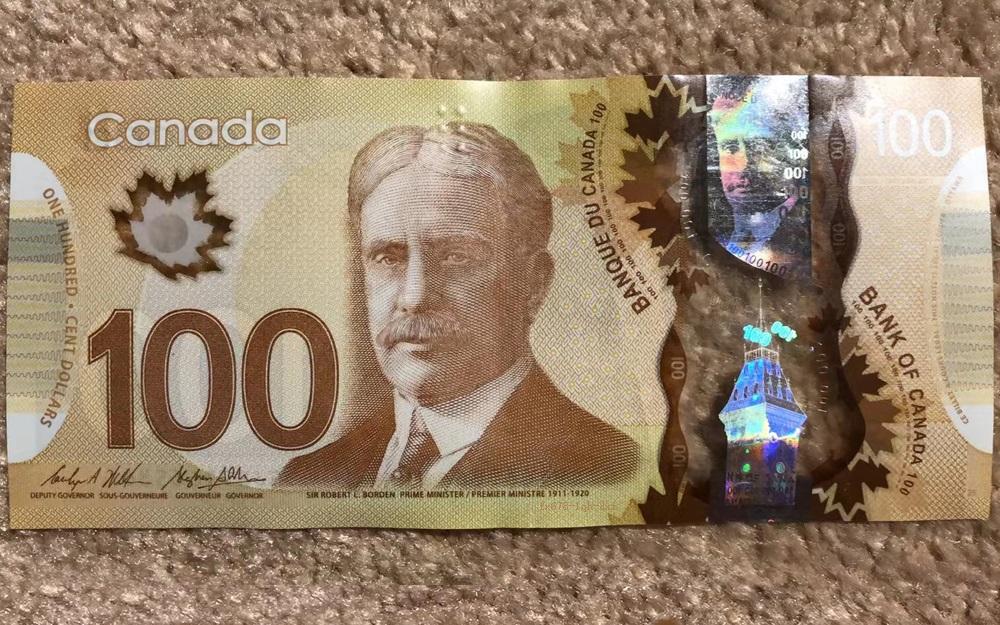 The U.S. Consumer Price Index (CPI) rose 0.4% month-over-month in October, exceeding the expected 0.3%, although this was a slowdown from September's 0.6% increase. The core CPI, excluding food and energy prices, rose 0.3% month-over-month, unchanged from September and above the expected 0.2%. Due to last year's government shutdown, the Bureau of Labor Statistics omitted the annual data for October. Despite the hawkish inflation data, the dollar may face headwinds due to reduced safe-haven demand as hopes for a diplomatic solution to the U.S.-Iran conflict rise. U.S. President Trump hinted that further military strikes against Iran may no longer be necessary; U.S. Secretary of State Marco Rubio stated at the G7 summit that large-scale warfare is no longer needed. Meanwhile, congressional Democrats are weighing the use of the upcoming government funding deadline to push the Trump administration toward a peaceful resolution. The upside for the dollar against the Canadian dollar may be limited as the commodity-linked Canadian dollar may receive support from rising oil prices. WTI crude oil rebounded after two consecutive days of declines, trading around $85.70 per barrel at the time of writing. However, with signs of easing tensions between the US and Iran, oil prices may still depreciate. Fed Chair Goolsby's remarks were noticeably more hawkish, with his FXS speech tracking score at 8/10 , significantly higher than the historical average of 6.8/10, highlighting growing concerns about persistent price pressures. He emphasized that the latest CPI was "near troubling," that services inflation "has not declined," and that there are "real inflation problems" that the Fed "will have to deal with"—demonstrating a clear willingness to tighten further if necessary, even though the labor market is described as "robust and stable." Persistent inflation concerns combined with a resilient labor force are supporting the dollar and opposing any impending policy easing. The FXS Fed Sentiment Index rose 1.69 points to 145.61 , further confirming that the overall policy tone remains firmly hawkish, well above the 100 neutral threshold. Against the backdrop of a high score on the speech, this index change suggests the market should price in a "higher and longer" Fed path, which is generally constructive for the dollar and headwinds for risk-sensitive currencies. Technically, the USD/CAD pair accelerated its upward movement on the daily chart after the CPI data release, currently trading at 1.4190, approaching the previously marked upper Bollinger Band resistance at 1.4205 , with only about 15 pips between them. This level is a watershed for determining whether this upward trend can continue: a successful break and hold above 1.4205 would open up further upside potential; a pullback would see the exchange rate return to the support cluster of 1.4045-1.4060 (where the middle Bollinger Band and the 100-day simple moving average intersect) and the range between 1.4205. Deeper support lies at the lower Bollinger Band around 1.3910 ; a break below this level would signify a breakdown of the upward structure. On the daily chart, the exchange rate has risen for two consecutive days from the 1.4045-1.4060 range, consistently raising the lows, indicating a potential continuation of the short-term bullish trend. However, the 1.4205 level, as the upper limit of this range, remains a strong resistance level until confirmed by a breakout. On the 4-hour chart, the upward slope may slow as the exchange rate approaches 1.4205, requiring observation for signs of momentum weakening or divergence. A break above 1.4205 followed by a pullback that holds could confirm the breakout's validity. Regarding the Canadian dollar, the sustainability of its recent rebound remains constrained by the negative impact of the widening USD/CAD interest rate differential. In summary, rising oil prices are the only short-term support for the Canadian dollar, but if the easing of tensions between the US and Iran continues and oil prices fall, this support will disappear, increasing the probability of a breakout above 1.4205.
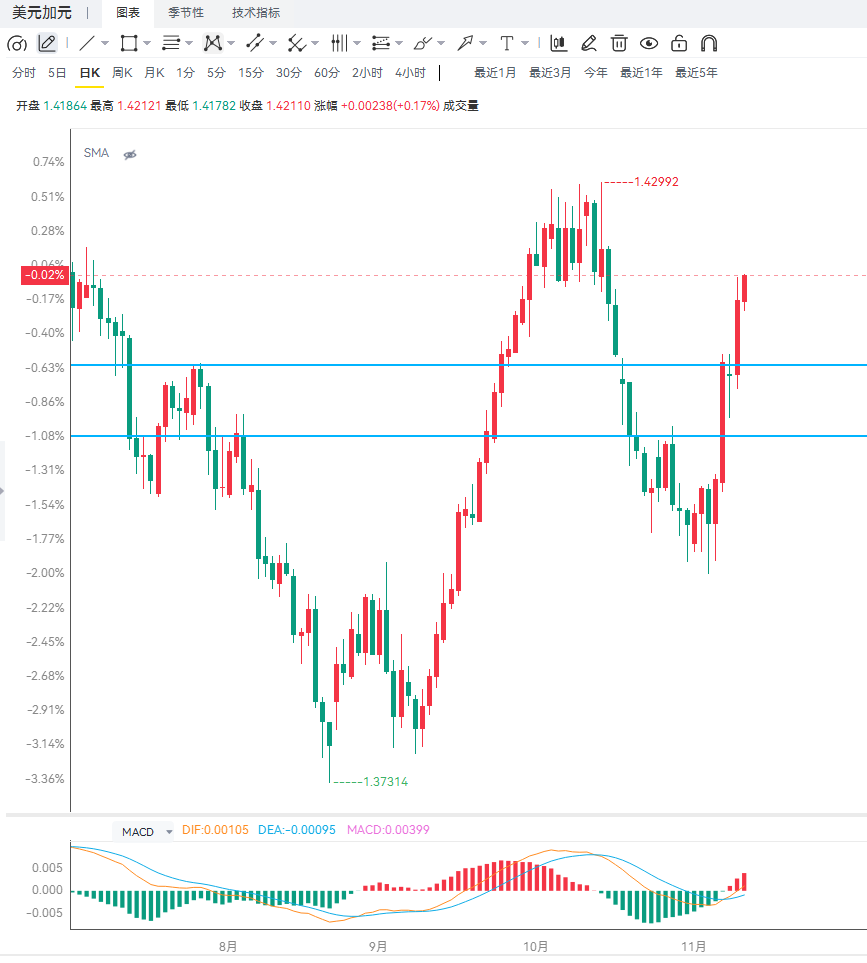 Editor's Summary: The core driver of the USD/CAD exchange rate has completely shifted to the strong dollar logic of a 91% probability of a Fed rate hike in December, with a possibility of a 50 basis point increase. The two consecutive days of gains following the CPI data are a direct result of this pricing. The 1.4205 Bollinger Upper Band is the watershed for whether this upward trend can continue. Below it is the support cluster of moving averages and the middle band at 1.4045-1.4060, and further below that is the lower band at 1.3910. In the medium term, if the Fed delivers on its rate hike, even a 50 basis point hike, the probability of the exchange rate breaking through 1.4205 and continuing its upward trend is high. If a substantial breakthrough in US-Iran diplomacy leads to a continued rise in oil prices, providing support for the Canadian dollar, the exchange rate will likely encounter resistance and fall back near 1.4205. Key factors to watch include the evolution of the USD/CAD interest rate differential (previously noted as the Canadian dollar's strength lacking fundamental confirmation), oil prices, progress in US-Iran negotiations, and statements from Fed officials regarding a 50 basis point increase.
The U.S. Consumer Price Index (CPI) rose 0.4% month-over-month in October, exceeding the expected 0.3%, although this was a slowdown from September's 0.6% increase. The core CPI, excluding food and energy prices, rose 0.3% month-over-month, unchanged from September and above the expected 0.2%. Due to last year's government shutdown, the Bureau of Labor Statistics omitted the annual data for October. Despite the hawkish inflation data, the dollar may face headwinds due to reduced safe-haven demand as hopes for a diplomatic solution to the U.S.-Iran conflict rise. U.S. President Trump hinted that further military strikes against Iran may no longer be necessary; U.S. Secretary of State Marco Rubio stated at the G7 summit that large-scale warfare is no longer needed. Meanwhile, congressional Democrats are weighing the use of the upcoming government funding deadline to push the Trump administration toward a peaceful resolution. The upside for the dollar against the Canadian dollar may be limited as the commodity-linked Canadian dollar may receive support from rising oil prices. WTI crude oil rebounded after two consecutive days of declines, trading around $85.70 per barrel at the time of writing. However, with signs of easing tensions between the US and Iran, oil prices may still depreciate. Fed Chair Goolsby's remarks were noticeably more hawkish, with his FXS speech tracking score at 8/10 , significantly higher than the historical average of 6.8/10, highlighting growing concerns about persistent price pressures. He emphasized that the latest CPI was "near troubling," that services inflation "has not declined," and that there are "real inflation problems" that the Fed "will have to deal with"—demonstrating a clear willingness to tighten further if necessary, even though the labor market is described as "robust and stable." Persistent inflation concerns combined with a resilient labor force are supporting the dollar and opposing any impending policy easing. The FXS Fed Sentiment Index rose 1.69 points to 145.61 , further confirming that the overall policy tone remains firmly hawkish, well above the 100 neutral threshold. Against the backdrop of a high score on the speech, this index change suggests the market should price in a "higher and longer" Fed path, which is generally constructive for the dollar and headwinds for risk-sensitive currencies. Technically, the USD/CAD pair accelerated its upward movement on the daily chart after the CPI data release, currently trading at 1.4190, approaching the previously marked upper Bollinger Band resistance at 1.4205 , with only about 15 pips between them. This level is a watershed for determining whether this upward trend can continue: a successful break and hold above 1.4205 would open up further upside potential; a pullback would see the exchange rate return to the support cluster of 1.4045-1.4060 (where the middle Bollinger Band and the 100-day simple moving average intersect) and the range between 1.4205. Deeper support lies at the lower Bollinger Band around 1.3910 ; a break below this level would signify a breakdown of the upward structure. On the daily chart, the exchange rate has risen for two consecutive days from the 1.4045-1.4060 range, consistently raising the lows, indicating a potential continuation of the short-term bullish trend. However, the 1.4205 level, as the upper limit of this range, remains a strong resistance level until confirmed by a breakout. On the 4-hour chart, the upward slope may slow as the exchange rate approaches 1.4205, requiring observation for signs of momentum weakening or divergence. A break above 1.4205 followed by a pullback that holds could confirm the breakout's validity. Regarding the Canadian dollar, the sustainability of its recent rebound remains constrained by the negative impact of the widening USD/CAD interest rate differential. In summary, rising oil prices are the only short-term support for the Canadian dollar, but if the easing of tensions between the US and Iran continues and oil prices fall, this support will disappear, increasing the probability of a breakout above 1.4205. Editor's Summary: The core driver of the USD/CAD exchange rate has completely shifted to the strong dollar logic of a 91% probability of a Fed rate hike in December, with a possibility of a 50 basis point increase. The two consecutive days of gains following the CPI data are a direct result of this pricing. The 1.4205 Bollinger Upper Band is the watershed for whether this upward trend can continue. Below it is the support cluster of moving averages and the middle band at 1.4045-1.4060, and further below that is the lower band at 1.3910. In the medium term, if the Fed delivers on its rate hike, even a 50 basis point hike, the probability of the exchange rate breaking through 1.4205 and continuing its upward trend is high. If a substantial breakthrough in US-Iran diplomacy leads to a continued rise in oil prices, providing support for the Canadian dollar, the exchange rate will likely encounter resistance and fall back near 1.4205. Key factors to watch include the evolution of the USD/CAD interest rate differential (previously noted as the Canadian dollar's strength lacking fundamental confirmation), oil prices, progress in US-Iran negotiations, and statements from Fed officials regarding a 50 basis point increase.
- Risk Warning and Disclaimer
- The market involves risk, and trading may not be suitable for all investors. This article is for reference only and does not constitute personal investment advice, nor does it take into account certain users’ specific investment objectives, financial situation, or other needs. Any investment decisions made based on this information are at your own risk.