2027 Major Upheavals in Crude Oil and Gold: A Comprehensive Analysis of ING Bank's Five Scenarios – Opportunities and Pitfalls Coexist
2026-11-12 11:12:28
ING Bank's latest report, "The Five Major Risks to the Global Economy in 2027," comprehensively outlines potential market-disrupting scenarios for next year, ranging from the bursting of the AI bubble, a resurgence of double-dip inflation, weather and infrastructure shocks, geopolitical easing, to further volatility in the bond market. These risks are not merely macroeconomic narratives, but key variables directly determining the supply and demand of crude oil, the safe-haven appeal of gold, and the trends of the US dollar, the euro, and emerging market currencies. For investors trading gold, crude oil, and forex, understanding the triggering conditions and transmission paths of these scenarios is far more important than simply predicting the direction. The report reveals both downside risks and highlights the "peace dividend" and policy shift windows in some scenarios, providing a clear scenario framework for trading strategies in 2027. 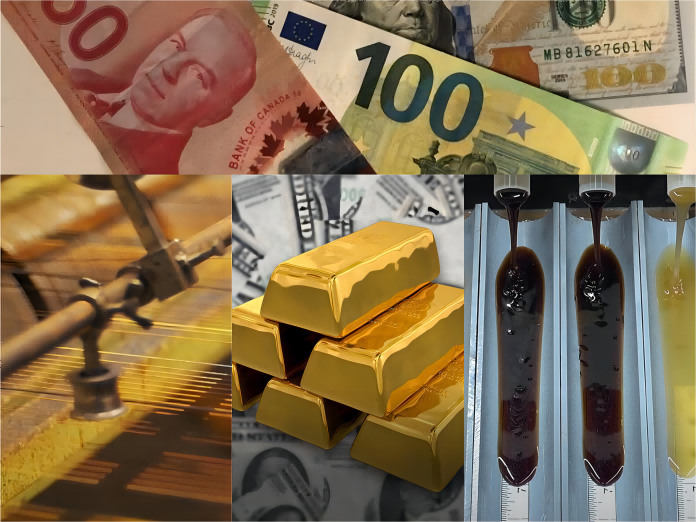
The Bursting of the AI Bubble: Opportunities in Oil and Gold Amid the Shadow of a US Recession
ING's primary concern is a deep correction in US tech stocks, particularly AI-related sectors. If enterprise AI adoption falls short of expectations, declining model costs lead to reduced capital expenditures, and rising financing costs further exacerbate the situation, the US stock market could evolve from a correction into a deep bear market. Since 2026, approximately one-third of US growth has come from AI-related investments; a further 30% stock market pullback would wipe out approximately $24.5 trillion in household wealth. Given that current consumption is highly dependent on high-income groups, the investment side (data centers and non-tech capital expenditures) will be more directly impacted. For traders, this scenario points to a significant slowdown or even recession in the US economy. Oil demand is under pressure, and Brent crude prices are likely to fall; gold, on the other hand, benefits from safe-haven demand and expectations of accelerated Fed rate cuts, while the dollar index weakens. Historically, after tech bubble bursts, non-tech investment also declines significantly; therefore, monitoring the pace of the Fed's policy shift will be a crucial catalyst for both oil bears and gold bulls.The large-scale development of second-degree inflation: the foreign exchange market game between energy prices and central bank policy.
ING's current baseline assessment is that the secondary effects of the European energy shock are manageable, and the central bank is expected to cut interest rates by the end of 2027. However, if this assessment is incorrect, core inflation will continue to exceed the target. Possible pathways include: businesses running out of buffer time, rising natural gas prices spreading to food and services, a tightening labor market due to immigration restrictions, increased wage bargaining power, and escalating tensions in the Middle East pushing oil prices above $130/barrel. Increased government subsidies could alleviate short-term growth pressures but could also push up medium-term inflation. For oil traders, this is a typical supply-price stickiness scenario, making oil prices more likely to rise than fall; for gold, high inflation provides support, but more aggressive interest rate hike expectations will increase holding costs, requiring caution regarding short-term pullbacks. The foreign exchange market faces the possibility of a stronger dollar due to the Fed delaying rate cuts or restarting rate hikes, putting pressure on the euro and risk currencies. Trading should focus on the correlation between energy prices and wage data.Weather and critical infrastructure failures: Commodity volatility caused by supply chain disruptions
This decade has seen frequent supply shocks, and ING believes the inflation cycle is shortening. Two major shocks that could occur in 2027 are extreme weather (a strong El Niño pushing up agricultural prices, and low water levels in the Panama Canal disrupting shipping) and critical infrastructure failures in Europe (cyberattacks or cascading failures causing several days of disruption to power, payment, or cloud services). Short-term power outages will have limited impact on GDP, but repeated and unpredictable disruptions will undermine confidence, forcing businesses to increase resilience investments and further raise costs. Given the existing energy shocks, such events could keep overall European inflation around 4% until 2028. Crude oil and natural gas prices will fluctuate more due to supply chain disruptions, and agricultural product prices may also experience impulsive increases; gold's safe-haven appeal will be strengthened, while currencies such as the euro and pound sterling will face both growth and inflationary pressures. Traders need to include weather and cyber risks in their monitoring lists, especially maintaining flexible positions in European energy and shipping-related assets.Geopolitical easing: Energy peace dividends and a reversal in risk assets
If the Republican Party weakens after the US midterm elections, and the Trump administration focuses more on historical legacies, pushing for an early resolution to the Ukraine conflict and a broader agreement with Russia, while simultaneously de-escalating tensions in the Middle East (including negotiations with Iran), energy prices could experience a significant and sustained decline. A falling risk premium coupled with improved supply will lead to a sharp drop in oil and European natural gas prices; after remaining high in the first quarter of 2027, inflation may quickly fall below 2% in the summer, prompting the Federal Reserve and the European Central Bank to accelerate their interest rate cuts. This scenario poses a clear downside risk to oil traders, who should be wary of a rapid pullback due to the disappearance of the "peace premium"; gold, as a safe-haven asset, will be under pressure; and the foreign exchange market will shift towards risk appetite, with the dollar potentially weakening due to expectations of interest rate cuts, while the euro and emerging market currencies will receive support. Key points to watch are the level of pressure Washington exerts on Kyiv and Moscow, and the progress of Middle East negotiations.Increased volatility in bond markets: Global financial pressures amid soaring yields
ING's interest rate strategy team believes that if US growth accelerates to 3%-4%, the fiscal deficit worsens further, or inflation remains stubborn, the 10-year US Treasury yield could reach 6%. Regardless of whether the driving factor is demand or inflation, higher and more volatile yields will put pressure on the global financial system, particularly challenging highly leveraged AI-related entities and European public finances. The French interest rate spread could exceed 200 basis points and spread to countries like Italy, posing a dilemma for the European Central Bank: it may shift to a more dovish stance if inflation allows, or stop quantitative tightening, but the threshold for initiating transmission protection tools is high. For traders, this scenario implies slower growth and pressure on risk assets. The US dollar may strengthen temporarily due to safe-haven demand and high yields, while gold faces pressure from rising real interest rates; oil demand is also suppressed. Focusing on cross-asset correlations after the US Treasury yield breaks through key levels, and the drag on the euro from widening European interest rate spreads, is a key trading theme for 2027. In summary, ING's five scenarios include both clear downside risks and windows created by policy and geopolitical shifts. Gold, crude oil, and forex traders should establish a multi-scenario framework, focusing on tracking AI capital expenditures, energy price transmission, geopolitical negotiations, and US Treasury yields, rather than betting on a single direction. Volatility in 2027 is highly likely to exceed benchmark expectations; proactive position sizing and risk management are the true trading advantages.- Risk Warning and Disclaimer
- The market involves risk, and trading may not be suitable for all investors. This article is for reference only and does not constitute personal investment advice, nor does it take into account certain users’ specific investment objectives, financial situation, or other needs. Any investment decisions made based on this information are at your own risk.