Walsh emphasized the importance of AI to the economy but warned it could be "disappointing."
2026-11-17 01:54:30
On Monday (November 16), Federal Reserve Chairman Kevin Warsh systematically elaborated on the profound potential impact of artificial intelligence on the US economy at a high-level conference hosted by the San Francisco Fed. He highly affirmed the potential leap in productivity and growth dividends that this technology could bring, but also clearly warned that if expectations are not met or the employment impact is too great, the economy may face the risk of slowdown or even rising unemployment. 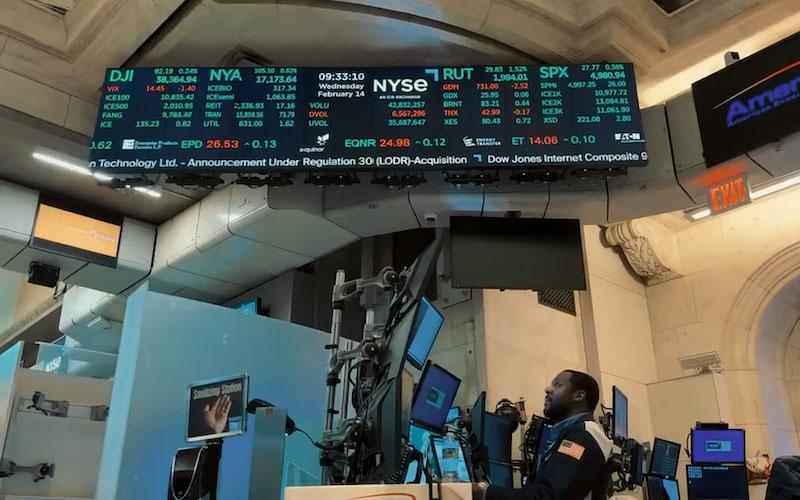 In his opening remarks at the "Productivity and Jobs Working Group," which he personally established, Warsh pointed out that AI "will have a significant impact on the economy and provide important insights for future monetary policy." He emphasized, "While I am not here to make predictions, in this era of challenges and opportunities, my stance on American leadership is not entirely neutral." Since assuming the presidency of the Federal Reserve in May 2026, Warsh has consistently considered AI a core variable in his policy framework. He has repeatedly stated publicly that this technology has the potential to significantly improve total factor productivity and ultimately exert downward pressure on inflation, thus providing greater room for maneuver in monetary policy. This San Francisco meeting marked his first visit to a regional Federal Reserve bank and the first publicly presented forum among the five working groups he established during his tenure. In his prepared remarks, Warsh described AI as "a completely new force in economic life and society," noting that it has already begun to change the way economic activity is conducted. He specifically mentioned that unlike past general-purpose technologies such as the internal combustion engine and electricity, AI may "super-accelerate the generation of ideas," changing the methods and speed of innovation. If knowledge generation is widely democratized, economic growth is expected to continue to exceed the long-term average. He outlined three main scenarios: First, the optimistic scenario: AI leads to a significant increase in productivity, with economic benefits widely shared between workers and capital owners. In this scenario, real GDP growth will continue to exceed the long-term average, while employment remains close to full employment. Second, the negative scenario: Automation leads to the replacement of many jobs rather than their replacement, and the unemployment rate may rise to levels inconsistent with full employment, resulting in a substantial labor market shock. Third, and the "disappointing" scenario he specifically pointed out: "After significant capital investment and inflated stock market valuations, expected returns may decline, stock valuations may fall, leading to an economic slowdown and a significant increase in unemployment. Over time, the economy will recover, but without productivity gains." This warning directly addresses the vulnerabilities already evident in the current market. In recent years, massive capital expenditures surrounding AI (especially data center construction) have become a major engine supporting US economic growth and have also driven a significant increase in tech stock valuations. Warsh's statement is tantamount to a reminder to the market: if the speed of technology implementation or commercial returns falls short of expectations, the investment bubble accumulated in the early stages may, in turn, drag down the real economy. Federal Reserve staff have begun stress tests and scenario simulations for these situations, although Warsh repeatedly emphasized that these are merely "illustrative scenarios, not predictions." Warsh also mentioned the potential for AI to be exploited by "bad actors," posing risks to critical infrastructure, and raised a more strategic question: "Without AI, can you still be considered a superpower?" This reflects the current US policy orientation of deeply linking technological leadership with national competitiveness. Monday's meeting included several panel discussions with business leaders, economists, and academics, culminating in a fireside chat between Warsh and the working group leader, prominent venture capitalist Marc Andreessen. Andreessen, a staunch supporter of artificial intelligence, echoed Warsh's overall optimistic tone. Analysts pointed out that Warsh deliberately avoided discussing recent interest rate paths and the latest inflation data, consistent with his "quieter Fed" style since taking office—reducing forward guidance and focusing on actual policy implementation. At the same time, he placed AI at the core of the long-term monetary policy framework, demonstrating his push for the Fed to recalibrate its analytical tools and policy framework in an era of technological change. Regardless of which scenario ultimately comes to fruition, this discussion, personally spearheaded by the central bank's top leader, marks the Federal Reserve's formal inclusion of AI into the core agenda of macroeconomic and monetary policy.
- Risk Warning and Disclaimer
- The market involves risk, and trading may not be suitable for all investors. This article is for reference only and does not constitute personal investment advice, nor does it take into account certain users’ specific investment objectives, financial situation, or other needs. Any investment decisions made based on this information are at your own risk.