The former leader of massive quantitative easing has shifted! Haruhiko Kuroda warns: Bank of Japan interest rates may break through neutral level.
2026-11-17 14:04:31
On Tuesday (November 17) during Asian trading hours, the USD/JPY pair fluctuated slightly lower, currently down 0.2% to around 159.10, a four-day low. In addition to the previous risk of intervention, new variables have been added to expectations regarding Japan's monetary policy. Former Bank of Japan Governor Haruhiko Kuroda stated in an interview that if inflationary pressures intensify further, the Bank of Japan will need to accelerate interest rate hikes, with the policy rate even needing to rise above the neutral rate level. He warned of imported inflation due to the conflict with Iran and criticized the government's food tax reduction plan, saying it would actually push up prices. Although Kuroda is no longer involved in policy decision-making, these remarks have strengthened market expectations for a rise in the Bank of Japan's terminal interest rate. The two-year Japanese government bond yield is most sensitive to this expectation, and the market generally expects the Bank of Japan to raise interest rates in December. 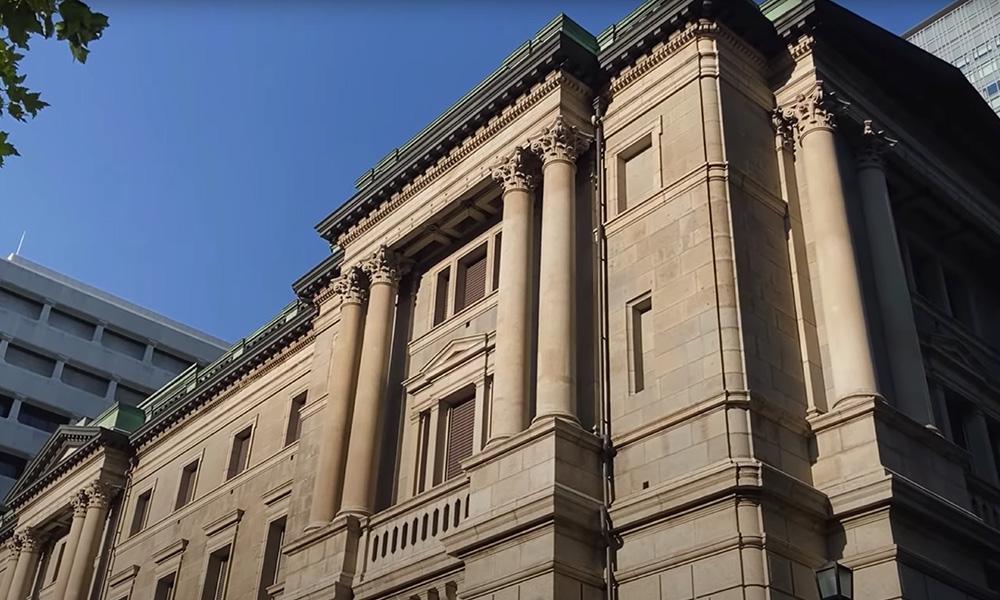
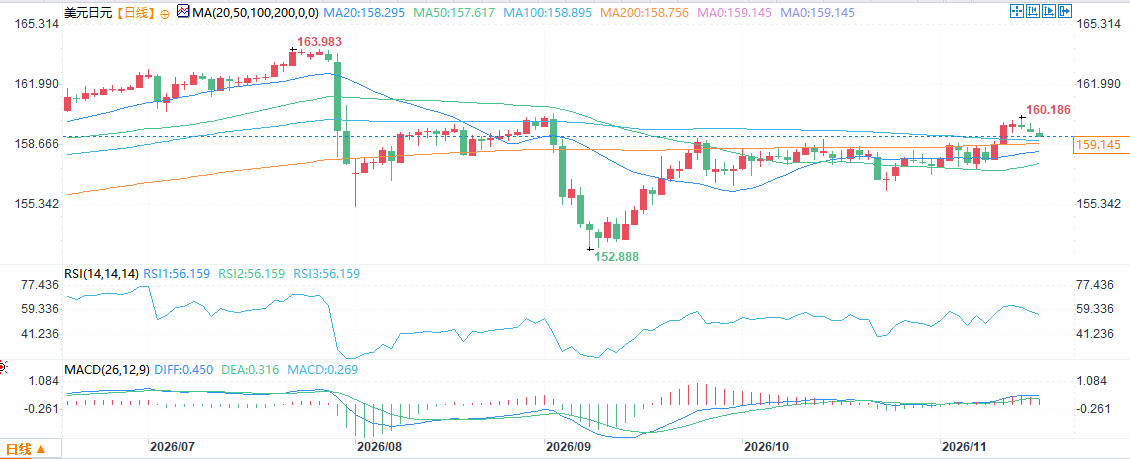 (USD/JPY daily chart, source: EasyForex) At 14:02 Beijing time, USD/JPY was trading at 159.11/12.
Key takeaway: Worsening inflation could push interest rates below neutral levels.
As a key architect of Japan's ultra-loose monetary policy era, Haruhiko Kuroda's recent remarks are quite contrasting. He emphasized that the interest rate path depends entirely on the actual performance of inflation; if the inflation situation worsens further, not only will it be necessary to accelerate the pace of interest rate hikes, but the policy rate may even need to be raised above the neutral rate. The neutral rate refers to the equilibrium level where policy neither stimulates nor inhibits the economy. He highlighted geopolitical risks: Japan is highly dependent on imports of oil, raw materials, and food; cost increases from conflicts related to Iran will significantly exacerbate imported inflation. If energy prices surge again, it will directly support the aforementioned hawkish scenario. Mainstream economists currently expect the terminal interest rate of this rate hike cycle to be around 1.75%, while Kuroda's remarks provide significant support for a higher terminal interest rate expectation of 2.5%. It is important to note that Kuroda has stepped down and no longer has actual policy-making power; his statements have limited direct binding force. However, as a long-standing figurehead of loose monetary policy, his shift to a hawkish stance carries strong market signaling significance and may prompt investors to reassess the upper limit and speed of the Bank of Japan's normalization path.Fiscal and Monetary Policies Conflict: Criticism of Food Tax Cuts May Push Up Inflation
Japanese Prime Minister Sanae Takaichi plans a two-year food consumption tax reduction program, amounting to approximately 10 trillion yen, aimed at alleviating the cost of living pressures on the public. Haruhiko Kuroda has explicitly criticized this, arguing that with Japan's current unemployment rate at only 2.4% and the economy nearing its capacity limits, large-scale tax cuts under these circumstances will stimulate price increases rather than real economic growth. He further argues that fiscal stimulus, while pushing up inflationary pressures, will force the Bank of Japan to take more aggressive interest rate hikes to offset additional upward price risks. This statement clearly highlights the potential contradiction between Japan's fiscal and monetary policies as a December rate hike approaches. Expansionary fiscal policy may offset the effects of monetary policy tightening, increasing the difficulty for the central bank to achieve its inflation target of a controlled decline. Kuroda's criticism is essentially a reminder to the market that if fiscal expansion and monetary normalization are not coordinated, it could ultimately force policy interest rates to rise higher and last longer, thereby exacerbating asset price and exchange rate volatility.View on the economic contraction in the third quarter: It is a temporary fluctuation.
Japan's GDP contracted in the July-September period, mainly due to severe weather and a significant weakening of household consumption. Haruhiko Kuroda believes this economic weakness is likely temporary and should not be over-interpreted as a signal of a substantial weakening in demand. He points out that short-term fluctuations should not alter the assessment of the medium-term inflation trajectory, and policy should remain focused on price stability rather than overreacting to single-quarter data. The interview also revealed a historical detail: as early as 2016, when the -0.1% negative interest rate policy was introduced, Kuroda had already judged that the space for further deep negative interest rates was very limited, and financial institutions could not withstand a sustained shock from deep negative interest rates. This review explains the boundaries of policy choices at that time and also suggests that the current path from negative interest rates to normalization is itself based on a long-term assessment of the financial system's capacity to withstand such pressure. In his view, short-term fluctuations in economic data are insufficient to shake the fundamental logic of interest rate hikes.Market Impact Analysis
On the bond side, short-term Japanese government bonds (JPY) are most sensitive to expectations of rising terminal interest rates. The two-year JPY yield is currently close to 1.88%. If the market further raises its forecast for the end of this round of rate hikes, short-term yields will face significant upward pressure, and the yield curve may steepen further or shift upwards overall. On the exchange rate side, Kuroda's comments have increased expectations of tightening by the Bank of Japan, providing potential support for the yen. However, the final exchange rate trend will still need to be compared with the Federal Reserve's policy path, and changes in the US-Japan interest rate differential will remain the dominant factor. The market currently widely expects the Bank of Japan to raise interest rates at its December meeting. Kuroda's remarks will amplify the market's pricing in "more than one rate hike," potentially prompting investors to incorporate more rate hikes and higher terminal interest rates into their expectations. Overall, his statement reinforces the narrative of continued policy normalization, which is beneficial to the yen and puts pressure on JPY prices in the short term. However, the actual impact will depend on subsequent official data and the actual actions of the current policymakers.Summarize
Haruhiko Kuroda, who spearheaded Japan's massive quantitative easing, has now warned of inflation risks, suggesting that interest rates need to break through the neutral level. While not directly determining policy, this has significantly strengthened market expectations for higher final interest rates, while also pointing out that fiscal stimulus could force the central bank to tighten. In the short term, the focus will be on the Bank of Japan's December meeting; the two-year Japanese government bond yield and the yen will react to changes in expectations of final interest rates. The energy inflation risk from the Iranian conflict is a crucial external variable for whether this hawkish scenario will materialize. (USD/JPY daily chart, source: EasyForex) At 14:02 Beijing time, USD/JPY was trading at 159.11/12.
- Risk Warning and Disclaimer
- The market involves risk, and trading may not be suitable for all investors. This article is for reference only and does not constitute personal investment advice, nor does it take into account certain users’ specific investment objectives, financial situation, or other needs. Any investment decisions made based on this information are at your own risk.