From UK Inflation to Global Central Bank Perspectives
2026-11-18 21:24:31
UK inflation has now risen to its highest level in a year, driven by increased fuel costs due to the Middle East conflict. Official data from the Office for National Statistics (ONS) shows that the Consumer Price Index (CPI) rose to 3.6% in October, up from 3.5% in September. Since the summer, the cost of living has continued to rise, and analysts warn that further increases in household energy bills could push inflation up further in the coming months. Below, we examine the core drivers of this round of price increases and what this means for consumers: 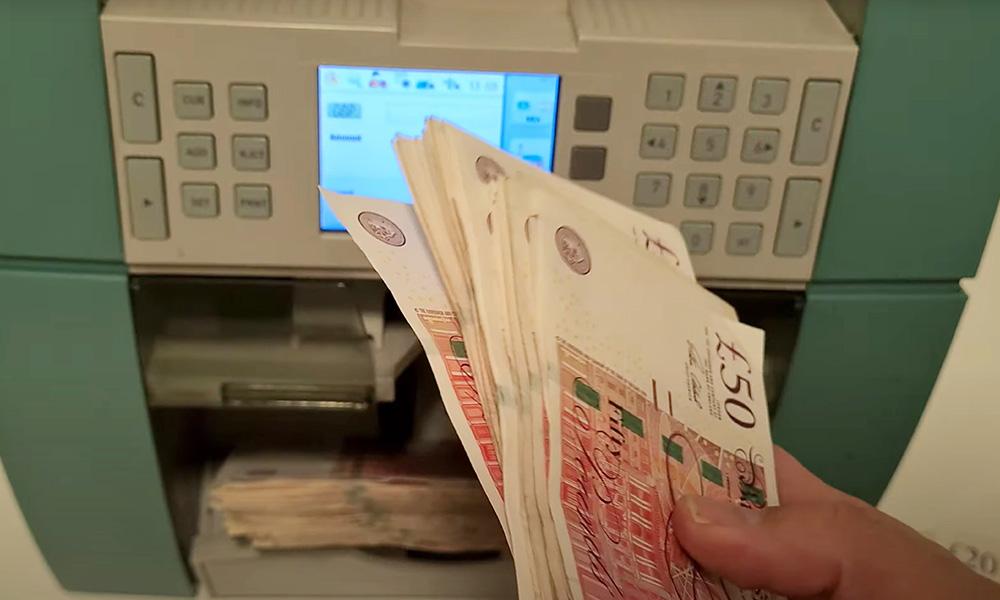
What is inflation?
Inflation describes the phenomenon of rising prices for goods and services. The inflation rate represents the speed at which prices rise. An inflation rate of 3.6% in October means that goods that cost £100 a year ago now cost £103.60. This figure is higher than September's 3.5%, indicating a further acceleration in the rate of price increases.Reasons for the rise in inflation last month
The UK Office for National Statistics stated that the primary driver of inflation was the transport sector, particularly fuel prices. Data shows that, influenced by the ongoing tensions in the Middle East, petrol prices rose by an average of 5.2 pence per liter from September to October. Diesel prices rose by 7 pence per liter in October, reaching an average of 199.5 pence, a record high since the Office for National Statistics began compiling this data in 1996. However, following the US midterm elections, oil prices fell, and both petrol and diesel prices declined in November. New tobacco tax regulations took effect at the beginning of the month, and tobacco price increases also contributed to inflation. Tobacco prices rose by 5.2% that month and 12.4% year-on-year, the highest increase in nearly two years.Are all commodity price increases accelerating?
This is not the case; inflation for some goods remained stable or even declined. Inflation for food and non-alcoholic beverages fell from 1.2% to 0.8%, the lowest since September 2021. Amid fierce price competition in UK supermarkets, food inflation fell to 0.2% month-on-month. Prices for some goods fell year-on-year, such as chocolate, which saw a 2.9% decrease. Clothing and footwear prices fell 0.5% year-on-year, the lowest since March. The UK housing market cooled further in September, with house prices falling 0.5% month-on-month, the largest monthly drop this year; property transactions declined for the third consecutive month, with the decline spreading to England, Scotland, and Wales. In England, seven out of nine regions saw month-on-month house price declines. London was under the most significant pressure, with inner London house prices falling sharply by 7.2% year-on-year, the largest year-on-year drop since August 2009.The future trend of inflation
Markets widely expect inflation to continue rising. The Bank of England stated earlier this month that inflation will deviate further from its 2% target, potentially peaking near 5%. The central bank believes that rising energy prices will continue to be transmitted along the supply chain to the entire economy. Inflation is highly likely to accelerate in January, when household energy bills are expected to surge. Cornwall Insight predicts that the UK Energy Regulatory Authority's (Ofgem) energy price cap will increase by 26% on January 1st, bringing the annual bill to £2,166, an increase of £443 from the October-December range, returning to the highest level since 2023. Investec economist Ellie Henderson commented: "October inflation hit a one-year high, significantly exceeding the Bank of England's 2% target. The trend is also not optimistic; according to our forecasts, this is not yet the peak of this round of inflation." She expects CPI to exceed 4% in the first quarter of next year. However, many economists, including her, believe that the peak inflation is likely to be lower than the 5% target given by the Bank of England, mainly due to the recent decline in wholesale energy prices.What does this rise in inflation mean for interest rates?
Earlier this month, the Bank of England's Monetary Policy Committee (MPC) voted to raise the benchmark interest rate from 3.75% to 4%. Policymakers indicated that if inflation fails to fall, they may continue to raise rates to bring inflation back to the 2% target. Bank of England Deputy Governor Clare Lombardy stated last week that if inflation continues to rise, another rate hike is possible in the near term. Current pricing in UK financial markets suggests that the benchmark interest rate could rise to the 4.75%-5% range by the end of next year. Some economists believe that the Bank of England is highly likely to raise rates again at its December meeting. Suren Thiru, chief economist at the Institute of Chartered Accountants in England and Wales (ICAEW), said, "This data almost completely negates the dovish stance of policymakers, making a December rate hike almost inevitable, confirming the assessment that higher borrowing costs are needed to suppress inflation." However, analysts at Nomura Securities believe that the Bank of England may postpone the rate hike until February of next year.How do other countries view this inflation?
The US and the Eurozone have already been discussed in previous articles. The Bank of Japan has shifted its focus from "creating inflation" to "managing inflation." The central bank confirmed that underlying inflation, after removing short-term disturbances, has stabilized at the 2% target, and policy has entered a normalization phase. Governor Kazuo Ueda released hawkish signals, believing that the current financial environment remains loose and that interest rate hikes should continue gradually to prevent inflation from overshooting. He also stated that the Bank of Japan will closely monitor wage increases in next spring's labor-management negotiations, as whether wages can continue to rise is a core basis for the subsequent pace of interest rate hikes. The Bank of Japan is concerned about the upward risk of inflation from rising energy prices in the Middle East and a weaker yen, but the pace of interest rate hikes is inclined to be gradual, not rapid and aggressive tightening. Polish Monetary Policy Committee member Dabrowski expressed a dovish stance, believing that there is no need to raise interest rates at present, and the benchmark interest rate is likely to remain unchanged for 1-2 quarters. Poland's October inflation was 3.5%, just touching the upper limit of the central bank's 1.5%-3.5% target range, compared to 4.1% in September. The central bank judged that inflation is expected to fall back to the target range this year, but risks remain. Meanwhile, the domestic economic recovery is weaker than previously estimated, and interest rate hikes will further suppress economic activity. From a trading perspective, this statement has suppressed Polish bond yields in the short term and limited the upside potential of the zloty, but with inflation close to the upper limit of the target, a subsequent rebound in energy and food prices remains a potential risk. The Reserve Bank of Australia raised interest rates by 25 basis points to 4.85% in November, with a hawkish assessment of inflation risks. Driven by the Middle East conflict pushing up fuel prices and tight domestic production capacity, Australia raised its inflation forecast, expecting inflation to remain above 3% until the end of 2027, before returning to the 2-3% target range by mid-2028. The central bank also mentioned that AI-related investments have pushed up some costs, highlighting the upside risk of inflation, and retains the option of further tightening. The Swedish central bank raised interest rates by 25 basis points to 2.00% in November. Although the current nominal inflation reading is low, the underlying inflation pressure is higher after excluding temporary fiscal subsidies. The central bank judges that the economic recovery coupled with disruptions to the energy supply chain could lead to inflation rising above 2% next year. If the inflation path remains unchanged, there is still room for further interest rate hikes. The Bank of Canada, on the other hand, is in a wait-and-see mode. October's overall CPI was 3.1%, with core inflation close to the 2% target. The central bank judges that inflation will remain around 3% for most of 2027 and return to 2% in 2028. Its policy stance remains cautious, with no clear plans for interest rate hikes at present. In short, among the G7 developed economies, the US, the Eurozone, the UK, Australia, and Sweden are all dealing with inflation rebounds caused by energy transmission; Japan is in a normalization cycle of moderate interest rate hikes; while countries like Poland in Central and Eastern Europe, with inflation hovering around the target and relatively weak economies, are choosing to remain on hold, creating a global divergence between aggressive inflation control and waiting for confirmation of a decline.- Risk Warning and Disclaimer
- The market involves risk, and trading may not be suitable for all investors. This article is for reference only and does not constitute personal investment advice, nor does it take into account certain users’ specific investment objectives, financial situation, or other needs. Any investment decisions made based on this information are at your own risk.