Eurozone PMI holds steady at 51.7: Can Germany's strong performance continue to offset the risk of recession in France?
2026-11-23 18:00:32
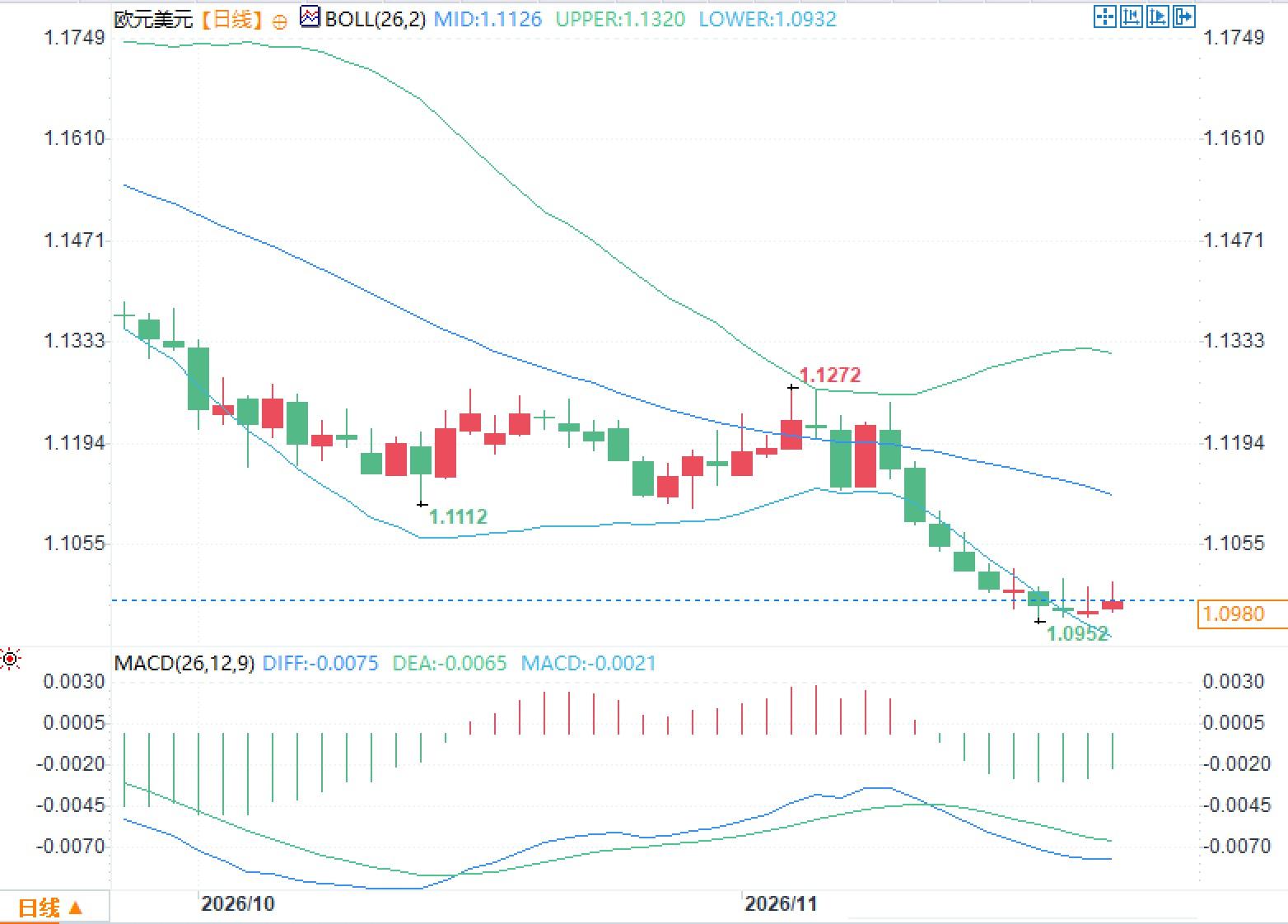
On Monday, November 23, Eurozone private sector activity data was released, with the composite Purchasing Managers' Index (PMI) holding steady at 51.7, marking the fifth consecutive month in expansion territory, indicating that overall economic growth maintained a stable pace. Germany performed strongly, with its composite index rising to 55.0, the highest level since March 2022, effectively offsetting the impact of further contraction in French activity. Meanwhile, the Eurozone's inflation rate remained at 4% in October, driven primarily by rising energy prices. The market expects the European Central Bank to implement its third 25-basis-point interest rate hike this year in December, and to signal a possible continuation of tightening measures. The euro fluctuated around 1.098 against the US dollar on the day, with the market focusing on the impact of the divergent fundamentals on the regional outlook. 
Eurozone overall growth resilience assessment
S&P Global's Eurozone Composite Purchasing Managers' Index (PMI) remained at 51.7 in November, slightly below market expectations of a modest increase, but still above the 50-point threshold separating expansion from contraction. The manufacturing index rose to 52.9, while the services index fell to 51.2. Chris Williamson, chief business economist at S&P Global Market Intelligence, noted that the data signals stable growth in the Eurozone in November, with the overall economy likely to advance at a quarterly growth rate close to 0.3% in the fourth quarter. New export orders continued to expand, although the pace slowed to its slowest in three months. Manufacturer orders grew stronger than those of service sector companies. Overall employment in Eurozone businesses remained largely flat, while business confidence declined for the fourth consecutive month, reaching its lowest level since May. The European Commission had previously raised its Eurozone growth forecasts for 2026 and 2027 to 1.2%, emphasizing the region's resilience under external pressures, but stressed that issues such as strained public finances and declining competitiveness could not be ignored.The economic divide between Germany and France has widened significantly.
Germany's private sector growth accelerated, with the composite index rising to 55.0 from 53.4 in October, the manufacturing index rising to 55.0, and the services index rising to 54.0. Phil Smith, deputy director of economics at S&P Global Market Intelligence, said that manufacturing continued to be supported by export orders, and demand in the services sector also saw its strongest improvement in over a year, suggesting a broadening of the recovery. France's composite index fell to 46.2, its lowest in six months, the manufacturing index fell to a 12-month low of 47.9, and the output index fell to 44.5, its lowest since February 2025. Joe Hayes, senior chief economist at S&P Global Market Intelligence, pointed out that the data increases the likelihood of France entering a technical recession in the fourth quarter, with weak domestic demand and customers hesitant to invest in projects ahead of election uncertainty. French businesses are nearing their worst level of pessimism about the outlook for the next year since 2012 (excluding the pandemic months). The performance gap between the two countries is the widest in six years, and growth in other economies in the region has slowed to its slowest pace in six months.Leading Factors in Manufacturing and Pressure on the Service Sector
Manufacturing outperformed services, supported by large-scale defense investment and AI-related spending, with manufacturers more optimistic about the outlook. Services, however, were dragged down by political uncertainty and high living costs, putting pressure on many consumer-facing businesses and causing confidence to decline. Williamson emphasized that this divergence masks underlying concerns beneath the overall resilience. The outlook for the next year weakened for the fourth consecutive month, with manufacturers' optimism rising while services' weakened. The Eurozone as a whole maintained expansion despite external factors such as inflationary pressures from the Middle East conflict, tariffs, and extreme weather, but consumer demand was suppressed. European Commissioner for Economic Affairs Valdis Dombrovskis warned that the region cannot take its resilience for granted and needs to pay attention to the risks of public finance pressures and declining competitiveness in some member states.Inflation dynamics and the impact of monetary policy
Eurozone inflation is currently at 4%. Williamson noted that lower oil prices and weak demand in November dampened overall price pressures, with output price inflation falling to its slowest pace since August. Labor market indicators are soft, and if the slowdown in price growth continues, it could alleviate some concerns about the persistence of high inflation. However, surveys still send a clear hawkish signal, suggesting that inflation will remain well above the ECB's 2% target in the coming months. Tighter monetary policy is a drag, with the ECB planning its third 25-basis-point rate hike this year in December, and officials recently hinting that the rate hike process may continue. The Purchasing Managers' Index (PMI), as an early monthly indicator, can effectively reveal economic trends and turning points. While mapping it to quarterly GDP presents some challenges, it provides an important reference for assessing the policy path.Frequently Asked Questions
Question 1: What does it mean that the Eurozone Composite Purchasing Managers' Index (PMI) remained stable at 51.7? Answer: This index remains in expansion territory, indicating that private sector activity has grown for the fifth consecutive month, and the overall economy is progressing at a quarterly growth rate close to 0.3%. However, the divergence between strong growth in Germany and contraction in France has widened. Question 2: What impact does the economic divergence between Germany and France have on the regional outlook? Answer: Germany's composite index rose to 55.0, a near four-year high, offsetting France's drop to a six-month low of 46.2. This gap is the widest in six years and could drag down overall growth balance and affect policy coordination. Question 3: How do current inflation and monetary policy interact? Answer: Inflation remains at 4%, although partially alleviated by oil prices and demand constraints, it is still above the 2% target. The European Central Bank is expected to raise interest rates again in December, and tighter policy is becoming a drag on growth.- Risk Warning and Disclaimer
- The market involves risk, and trading may not be suitable for all investors. This article is for reference only and does not constitute personal investment advice, nor does it take into account certain users’ specific investment objectives, financial situation, or other needs. Any investment decisions made based on this information are at your own risk.