Why is TD Securities still bearish on the Australian dollar despite rising inflation in Australia?
2026-11-26 11:30:32
The Australian dollar strengthened against the US dollar to around 0.6635 during Asian trading hours on Thursday (November 26). The Australian Bureau of Statistics released October CPI data: the monthly CPI rose 0.5%, compared to 0.8% previously; the year-on-year CPI rose 4.9%, higher than the market expectation of 4.8%; the core cutoff mean CPI accelerated, reaching its fastest pace since 2024. Despite the rebound in inflation, the labor market has shown signs of weakening. The market still believes the Reserve Bank of Australia's next move will be an interest rate cut, but the timing has been repeatedly postponed. The probability of a rate cut in June has fallen from almost fully priced in to 75%, and the market expects the first rate cut to occur no earlier than August. The foreign exchange market reacted mildly to the announcement of the new US tariff proposal, which proposes to impose tariffs on 14 major trading partners. 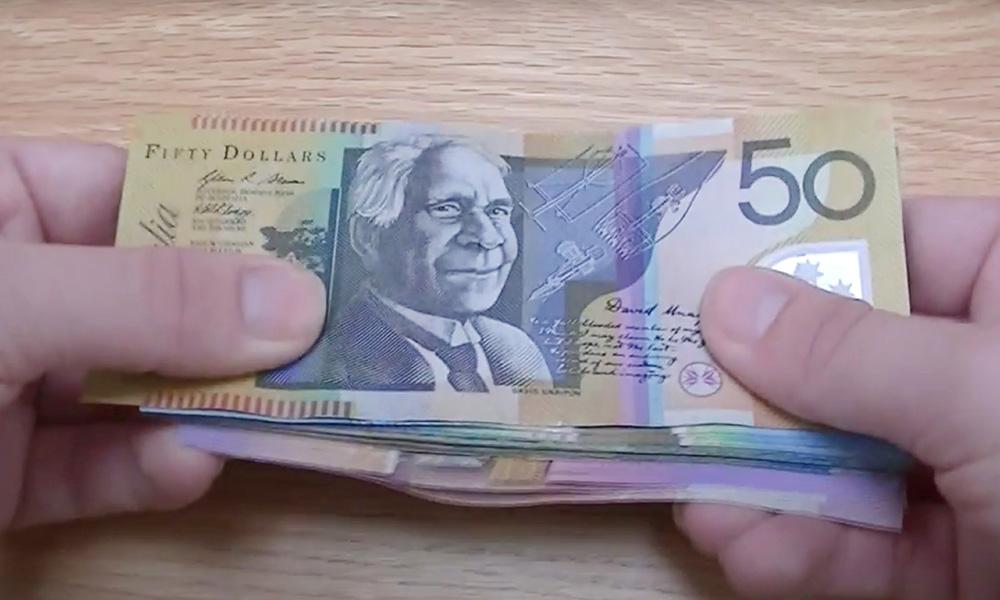
 (Australian dollar against US dollar daily chart, source: EasyForex) At 11:26 Beijing time, the Australian dollar was trading at 0.6637/38 against the US dollar.
TD Securities: Inflation is rising, but does not support further interest rate hikes.
TD Securities stated that the latest inflation data has put the Reserve Bank of Australia (RBA) in a dilemma. The annual, momentum, and trend-based cut-off mean CPI figures are all higher than the RBA's forecasts, indicating a spread of price pressures. The 3-month annualized cut-off mean CPI reached 4%, and the 6-month annualized figure reached 3.8%, both exceeding the RBA's expected path of 3.6% for the fourth quarter of 2026. This suggests that inflation is not driven by a single factor, but rather is sticking across a wider range of goods and services. The firm also noted that about one-third of the October CPI increase came from fuel prices, and since oil prices have clearly fallen this month, the overall CPI in November is likely to cool significantly. Even so, TD Securities emphasizes that speculation about a rate cut in the first half of 2026 is premature, and expects the RBA to maintain interest rates unchanged for an extended period in 2027 to consolidate the gains in lower inflation. In terms of trading views, institutions recommend buying Australian bonds on dips when bond yields rise, while preferring to short the Australian dollar through cross-currency pairs. Given the weakening macroeconomic outlook and slowing domestic demand, it is unlikely that the Reserve Bank of Australia will restart its rate hike cycle, and the Australian dollar will still face downward pressure in the medium term. Any rebound caused by inflation data may be used as an opportunity to add to short positions.US inflation remains resilient, with the probability of a Fed rate hike in December nearing 50%.
US inflation continues to exhibit strong stickiness, coupled with hawkish comments from several officials, meaning the market has almost fully priced in further tightening by the Federal Reserve. The CME FedWatch tool shows a 98.1% probability of a 25 basis point rate hike in December, nearly fully priced in. New York Fed President Williams explicitly emphasized that the Fed "still has a lot of work to do" in pushing inflation back to its 2% target, and expects inflation to remain around 3.5% in 2026, with a true return to 2% possibly not until 2028. Even with a robust job market, restrictive monetary policy will need to be maintained for a considerable period. The strong US dollar environment directly limits the Australian dollar's rebound against the US dollar, making it difficult for the exchange rate to generate sustained upward momentum even with positive local Australian data.Market trend summary: Inflationary benefits could not offset the strong pressure from the US dollar.
Australia's better-than-expected CPI data did prevent the Australian dollar from falling further in the short term and provided some stabilization, but it was far from enough to drive a trend-driven rebound. The current market logic presents a typical "internal and external hedging" pattern: on one hand, persistently high domestic inflation continues to lock in expectations of interest rate cuts in the first half of 2026, supporting the Australian dollar in the short term; on the other hand, the Federal Reserve's hawkish interest rate hike expectations and high-interest-rate path are pushing up the US dollar, creating stronger downward pressure. Between the two, the US dollar's dominant role is more pronounced. Going forward, the market will focus on US inflation and employment data, commodity price trends, and the Australian domestic labor market report. Given the continued strength of the US dollar and the lack of a significant shift in global risk appetite, any rebound in the Australian dollar is likely to encounter selling pressure at higher levels. Therefore, a strategy of managing high-level pressure and range-bound trading is more suitable than a one-sided long position. (Australian dollar against US dollar daily chart, source: EasyForex) At 11:26 Beijing time, the Australian dollar was trading at 0.6637/38 against the US dollar.
- Risk Warning and Disclaimer
- The market involves risk, and trading may not be suitable for all investors. This article is for reference only and does not constitute personal investment advice, nor does it take into account certain users’ specific investment objectives, financial situation, or other needs. Any investment decisions made based on this information are at your own risk.