The dollar continued its downward momentum, while the pound's bottoming out was supported by strong economic data.
2025-12-03 18:03:49
On Wednesday (December 3), during the Asian and European sessions, the British pound showed a clear upward trend against all major currency pairs except for those related to the Australian dollar. Specifically, the pound rose 0.43% against the US dollar, trading around 1.3268, continuing the easing rebound following the UK budget announcement.
Despite rising market expectations for an interest rate cut by the Bank of England at its December 18 monetary policy meeting, the pound still managed to rise, demonstrating its strength in the short term, supported by multiple positive factors.
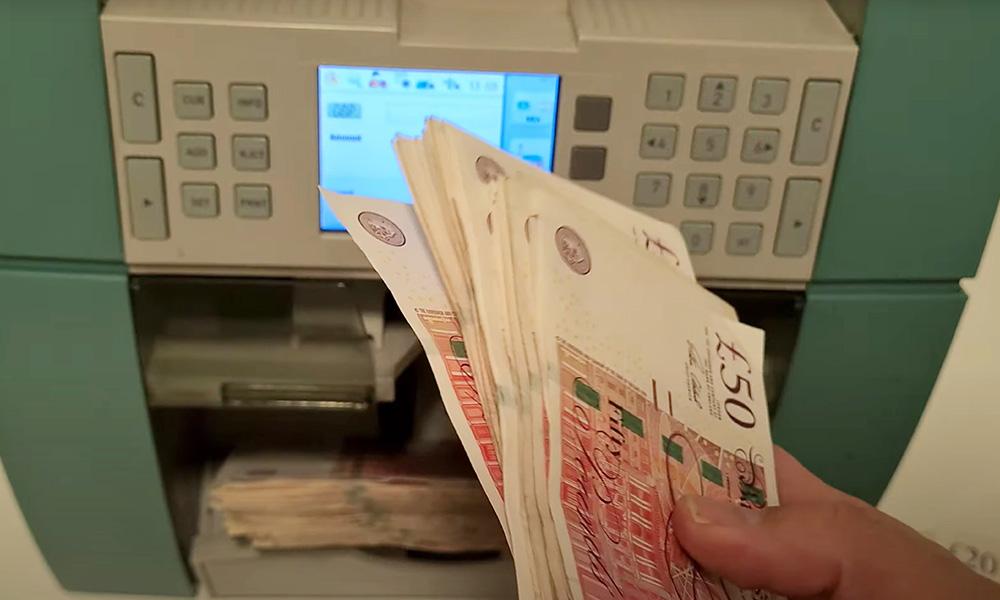
One of the core domestic reasons for the pound's rise stems from the aftermath of the UK budget. Chancellor of the Exchequer Rachel Reeves announced an annual tax increase of £26 billion in the budget, with the funds to be used to fill fiscal gaps and reserve funds for contingency buffers. This move highlights the government's proactive approach to high debt and strengthens market confidence in the UK's fiscal sustainability.
The UK's Office for Budget Responsibility (OBR) has raised its 2025 economic growth forecast to 1.5%, significantly higher than the previous forecast of 1%, providing fundamental support for the pound.
More importantly, the UK's November SPGI services PMI unexpectedly came in at 51.3, exceeding market expectations of 50.5. This not only continued the expansionary momentum from October's 52.3, but also confirmed the resilience of the service sector, which accounts for more than 80% of GDP, in a high-interest-rate environment.
Meanwhile, the manufacturing PMI rose to 50.2, marking the first expansion in fourteen months, indicating an initial trend of coordinated recovery in the public and private sectors, adding important leverage for a "soft landing" of the UK economy.
It is worth noting that the Bank of England warned in its semi-annual Financial Stability Report released on Tuesday that the UK financial system faces increased threats this year due to inflated valuations of companies in the artificial intelligence sector, high-risk lending, and high debt levels in many countries.
Governor Andrew Bailey further emphasized the importance of financial stability, but this warning did not stop the pound's rebound, with the market focusing more on positive signs of economic recovery and fiscal improvement.
Latest data shows that in the three months to September, the UK's ILO unemployment rate climbed to 5%, a four-year high; while the October CPI showed a moderate upward trend.
The divergence between employment and inflation has not disrupted the pound's rebound; instead, it has made market expectations for the Bank of England's policy adjustments more rational, preventing excessively loose expectations from suppressing the exchange rate.
The strong rise of the pound against the dollar also benefited from the passive weakening of the dollar.
The growing speculation that White House economic advisor Kevin Hassett might replace Jerome Powell as the next Federal Reserve chairman became the core trigger for the dollar sell-off.
On Tuesday, during a White House event, US President Trump, responding to a question, stated that he had narrowed down his choices for the Federal Reserve Chair to one candidate, to be announced in early 2026, and hinted that this person was Hassett. Given Hassett's repeated public statements supporting interest rate cuts, her election would be a clear negative for the US dollar. Coupled with current market expectations of further easing by the Fed, this would exacerbate selling pressure on the dollar, creating favorable conditions for a rise in the pound against the dollar.
On Wednesday, market attention will be focused on the US November ADP employment change and ISM non-manufacturing PMI data to be released during the North American session. Given the government shutdown which delayed the release of non-farm payrolls (NFP) data to December 16, the ADP data will be particularly crucial in influencing expectations for Federal Reserve policy.
Economists expect the U.S. private sector to add only 5,000 jobs in November, a sharp decline from 42,000 in October; the ISM non-manufacturing PMI is also expected to fall slightly to 52.1 from 52.4 in October. Several FOMC members have recently expressed concern about weak employment demand and are inclined to expand easing measures. If the data falls short of expectations, it will further strengthen expectations of a Fed rate cut, likely pushing the pound higher against the dollar.
Monthly chart: The GBP/USD pair is rebounding from a bottoming area, with the upward channel providing effective support. The monthly chart shows the pair remains in a long-term bottoming zone and has consistently traded within an upward channel. The recent pullback to the middle line of the upward channel and subsequent rapid rebound indicates that bullish control remains strong, and the long-term upward trend remains intact.
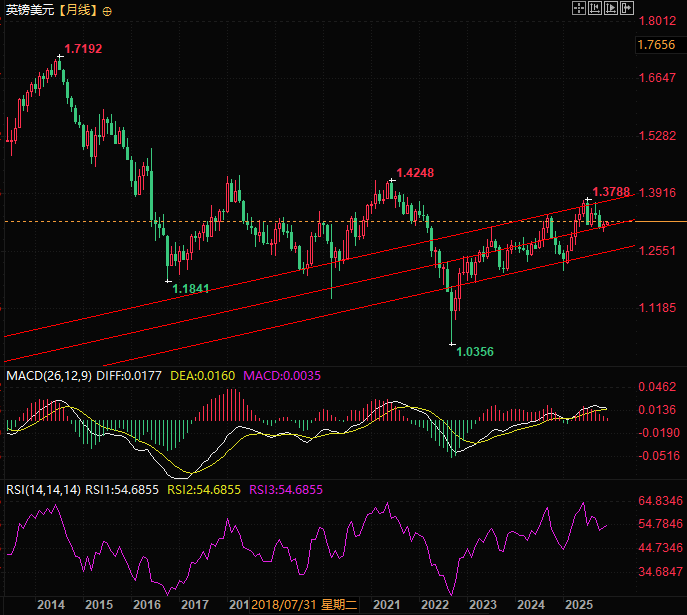
(GBP/USD monthly chart)
Daily chart: Supported by a double bottom pattern, with a clear target. The daily chart indicates that the exchange rate is expected to continue its rebound based on the double bottom pattern, with a measured upside target around 1.3366.
In the short term, the first resistance level is located in the previous orange resistance zone. A breakout will lead to an attack on 1.3366, with further resistance at 1.3450. On the support side, the 1.3200 level forms a key support. If this level can be held, the rebound will continue.
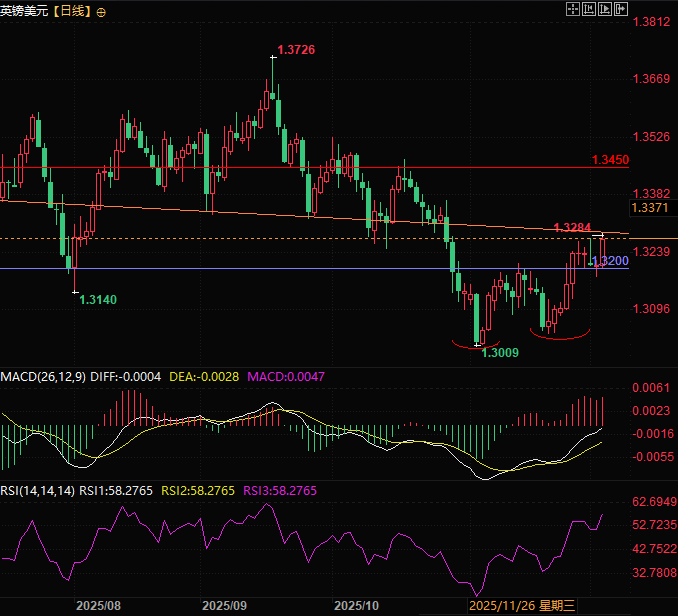
(GBP/USD daily chart, source: FX678)
At 18:01 Beijing time, the British pound was trading at 1.3276/77 against the US dollar.
Despite rising market expectations for an interest rate cut by the Bank of England at its December 18 monetary policy meeting, the pound still managed to rise, demonstrating its strength in the short term, supported by multiple positive factors.
Fiscal policy sends positive signals
One of the core domestic reasons for the pound's rise stems from the aftermath of the UK budget. Chancellor of the Exchequer Rachel Reeves announced an annual tax increase of £26 billion in the budget, with the funds to be used to fill fiscal gaps and reserve funds for contingency buffers. This move highlights the government's proactive approach to high debt and strengthens market confidence in the UK's fiscal sustainability.
Economic growth expectations and PMI data resonate with each other.
The UK's Office for Budget Responsibility (OBR) has raised its 2025 economic growth forecast to 1.5%, significantly higher than the previous forecast of 1%, providing fundamental support for the pound.
More importantly, the UK's November SPGI services PMI unexpectedly came in at 51.3, exceeding market expectations of 50.5. This not only continued the expansionary momentum from October's 52.3, but also confirmed the resilience of the service sector, which accounts for more than 80% of GDP, in a high-interest-rate environment.
Meanwhile, the manufacturing PMI rose to 50.2, marking the first expansion in fourteen months, indicating an initial trend of coordinated recovery in the public and private sectors, adding important leverage for a "soft landing" of the UK economy.
The Bank of England warned of financial risks, but this did not prevent a rebound.
It is worth noting that the Bank of England warned in its semi-annual Financial Stability Report released on Tuesday that the UK financial system faces increased threats this year due to inflated valuations of companies in the artificial intelligence sector, high-risk lending, and high debt levels in many countries.
Governor Andrew Bailey further emphasized the importance of financial stability, but this warning did not stop the pound's rebound, with the market focusing more on positive signs of economic recovery and fiscal improvement.
Employment and inflation data show divergence
Latest data shows that in the three months to September, the UK's ILO unemployment rate climbed to 5%, a four-year high; while the October CPI showed a moderate upward trend.
The divergence between employment and inflation has not disrupted the pound's rebound; instead, it has made market expectations for the Bank of England's policy adjustments more rational, preventing excessively loose expectations from suppressing the exchange rate.
Speculation about the Fed chair candidate triggered a sell-off in the dollar.
The strong rise of the pound against the dollar also benefited from the passive weakening of the dollar.
The growing speculation that White House economic advisor Kevin Hassett might replace Jerome Powell as the next Federal Reserve chairman became the core trigger for the dollar sell-off.
On Tuesday, during a White House event, US President Trump, responding to a question, stated that he had narrowed down his choices for the Federal Reserve Chair to one candidate, to be announced in early 2026, and hinted that this person was Hassett. Given Hassett's repeated public statements supporting interest rate cuts, her election would be a clear negative for the US dollar. Coupled with current market expectations of further easing by the Fed, this would exacerbate selling pressure on the dollar, creating favorable conditions for a rise in the pound against the dollar.
US ADP and ISM Non-Manufacturing PMI to be Key Indicators
On Wednesday, market attention will be focused on the US November ADP employment change and ISM non-manufacturing PMI data to be released during the North American session. Given the government shutdown which delayed the release of non-farm payrolls (NFP) data to December 16, the ADP data will be particularly crucial in influencing expectations for Federal Reserve policy.
Economists expect the U.S. private sector to add only 5,000 jobs in November, a sharp decline from 42,000 in October; the ISM non-manufacturing PMI is also expected to fall slightly to 52.1 from 52.4 in October. Several FOMC members have recently expressed concern about weak employment demand and are inclined to expand easing measures. If the data falls short of expectations, it will further strengthen expectations of a Fed rate cut, likely pushing the pound higher against the dollar.
Technical Analysis: The bullish trend in GBP/USD remains unchanged, with a clear rebound target.
Monthly chart: The GBP/USD pair is rebounding from a bottoming area, with the upward channel providing effective support. The monthly chart shows the pair remains in a long-term bottoming zone and has consistently traded within an upward channel. The recent pullback to the middle line of the upward channel and subsequent rapid rebound indicates that bullish control remains strong, and the long-term upward trend remains intact.
(GBP/USD monthly chart)
Daily chart: Supported by a double bottom pattern, with a clear target. The daily chart indicates that the exchange rate is expected to continue its rebound based on the double bottom pattern, with a measured upside target around 1.3366.
In the short term, the first resistance level is located in the previous orange resistance zone. A breakout will lead to an attack on 1.3366, with further resistance at 1.3450. On the support side, the 1.3200 level forms a key support. If this level can be held, the rebound will continue.
(GBP/USD daily chart, source: FX678)
At 18:01 Beijing time, the British pound was trading at 1.3276/77 against the US dollar.
- Risk Warning and Disclaimer
- The market involves risk, and trading may not be suitable for all investors. This article is for reference only and does not constitute personal investment advice, nor does it take into account certain users’ specific investment objectives, financial situation, or other needs. Any investment decisions made based on this information are at your own risk.