The seasonal weakening trend of the US dollar has been established.
2025-12-03 19:52:44
December is typically a seasonally weak month for the US dollar, and with market expectations for aggressive easing by the Federal Reserve rising, the divergence in monetary policy is providing support for the Japanese yen and the Australian dollar.
The beginning is always the hardest! Since the start of winter, the dollar's decline has accelerated, a trend that closely matches seasonal patterns. December has historically been a "bear market month" for the dollar—it has fallen in that month as many as 18 times in the past 25 years. Non-residents need to sell dollars to repatriate profits from their investments in US stocks and bonds, and given the historically high demand for US securities from foreign investors, this process could inject new momentum into the euro's rise against the dollar.
Typically, the US dollar weakens most against the Swiss franc and Swedish krona in December, while its movements against the Japanese yen and Canadian dollar also intensify. This time, the yen is poised to be the biggest winner, with the market anticipating a rate hike by the Bank of Japan in December. As the probability of the Bank of Japan raising its benchmark interest rate from 0.5% to 0.75% on December 19th continues to rise, the decline in the US dollar against the yen is gaining momentum.
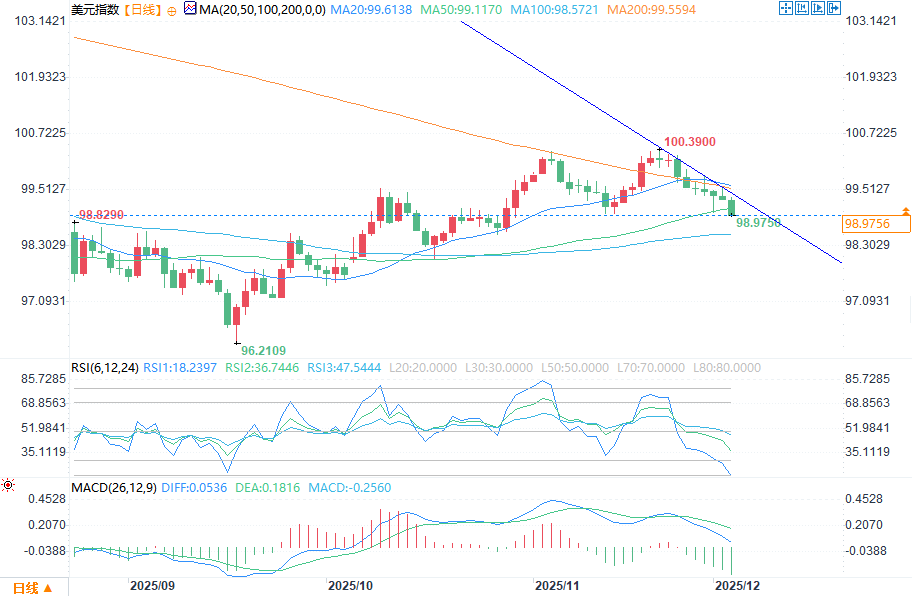
(US Dollar Index Daily Chart Source: FX678)
Investors are positioning themselves around the divergence in monetary policy. The market expects the Federal Reserve to cut interest rates to 3% in 2026, while the Bank of Japan is expected to raise rates to 1.25%. The narrowing yield spread between the two countries' bonds is expected to drive funds towards the yen in the foreign exchange market next year.
"The agony of waiting is even greater." Donald Trump's earlier statement that the new Federal Reserve Chairman would be announced in early 2026, rather than before Christmas as predicted by Scott Bessant, failed to support the dollar. Coupled with market expectations that Kevin Hassett will become Fed Chairman, and the continued rise in expectations for the scale of monetary easing, this is undoubtedly negative news for the dollar.
Other currencies are taking advantage of the window of opportunity presented by the weaker dollar. Driven by accelerating inflation, market expectations for a rate hike by the Reserve Bank of Australia next year have risen, pushing the Australian dollar to a five-week high against the US dollar. Rising US stock indices and improved global risk appetite have also provided support for the Australian dollar.
The beginning is always the hardest! Since the start of winter, the dollar's decline has accelerated, a trend that closely matches seasonal patterns. December has historically been a "bear market month" for the dollar—it has fallen in that month as many as 18 times in the past 25 years. Non-residents need to sell dollars to repatriate profits from their investments in US stocks and bonds, and given the historically high demand for US securities from foreign investors, this process could inject new momentum into the euro's rise against the dollar.
Typically, the US dollar weakens most against the Swiss franc and Swedish krona in December, while its movements against the Japanese yen and Canadian dollar also intensify. This time, the yen is poised to be the biggest winner, with the market anticipating a rate hike by the Bank of Japan in December. As the probability of the Bank of Japan raising its benchmark interest rate from 0.5% to 0.75% on December 19th continues to rise, the decline in the US dollar against the yen is gaining momentum.
(US Dollar Index Daily Chart Source: FX678)
Investors are positioning themselves around the divergence in monetary policy. The market expects the Federal Reserve to cut interest rates to 3% in 2026, while the Bank of Japan is expected to raise rates to 1.25%. The narrowing yield spread between the two countries' bonds is expected to drive funds towards the yen in the foreign exchange market next year.
"The agony of waiting is even greater." Donald Trump's earlier statement that the new Federal Reserve Chairman would be announced in early 2026, rather than before Christmas as predicted by Scott Bessant, failed to support the dollar. Coupled with market expectations that Kevin Hassett will become Fed Chairman, and the continued rise in expectations for the scale of monetary easing, this is undoubtedly negative news for the dollar.
Other currencies are taking advantage of the window of opportunity presented by the weaker dollar. Driven by accelerating inflation, market expectations for a rate hike by the Reserve Bank of Australia next year have risen, pushing the Australian dollar to a five-week high against the US dollar. Rising US stock indices and improved global risk appetite have also provided support for the Australian dollar.
- Risk Warning and Disclaimer
- The market involves risk, and trading may not be suitable for all investors. This article is for reference only and does not constitute personal investment advice, nor does it take into account certain users’ specific investment objectives, financial situation, or other needs. Any investment decisions made based on this information are at your own risk.