The US dollar fluctuated slightly, while the British pound rebounded modestly against the dollar from a three-week low, awaiting the release of US CPI data.
2026-01-13 10:26:16
The pound rose slightly against the dollar for the second consecutive trading day on Tuesday, continuing its recovery from around 1.3390 (a three-week low). The pair is currently trading around 1.3475, with a daily gain of nearly 0.10%.
The weaker-than-expected dollar provided major support for the exchange rate. The core factor pressuring the dollar was rising market concerns about the independence of the Federal Reserve. Previously, US prosecutors launched a criminal investigation into the Fed chairman, triggering heightened attention in financial markets regarding the central bank's policy independence.
In a rare public statement, the Federal Reserve Chairman emphasized that the allegations stemmed from the central bank's commitment to setting interest rate policies based on public interest rather than political preferences.
This statement weakened market confidence in the dollar in the short term. However, the downside for the dollar remains limited. The recent decline in the US unemployment rate largely offset the impact of weaker-than-expected non-farm payroll data, reinforcing market expectations that the Federal Reserve will maintain policy stability in the first quarter.
Meanwhile, investors are awaiting the upcoming release of US consumer inflation data, and dollar bears are relatively cautious ahead of the key data release.
From the perspective of the pound itself, market expectations for further interest rate cuts by the Bank of England in 2026 are rising, which is limiting the pound's rebound momentum to some extent. The US Producer Price Index and the UK's monthly GDP data, to be released later this week, may provide new directional guidance for the exchange rate.
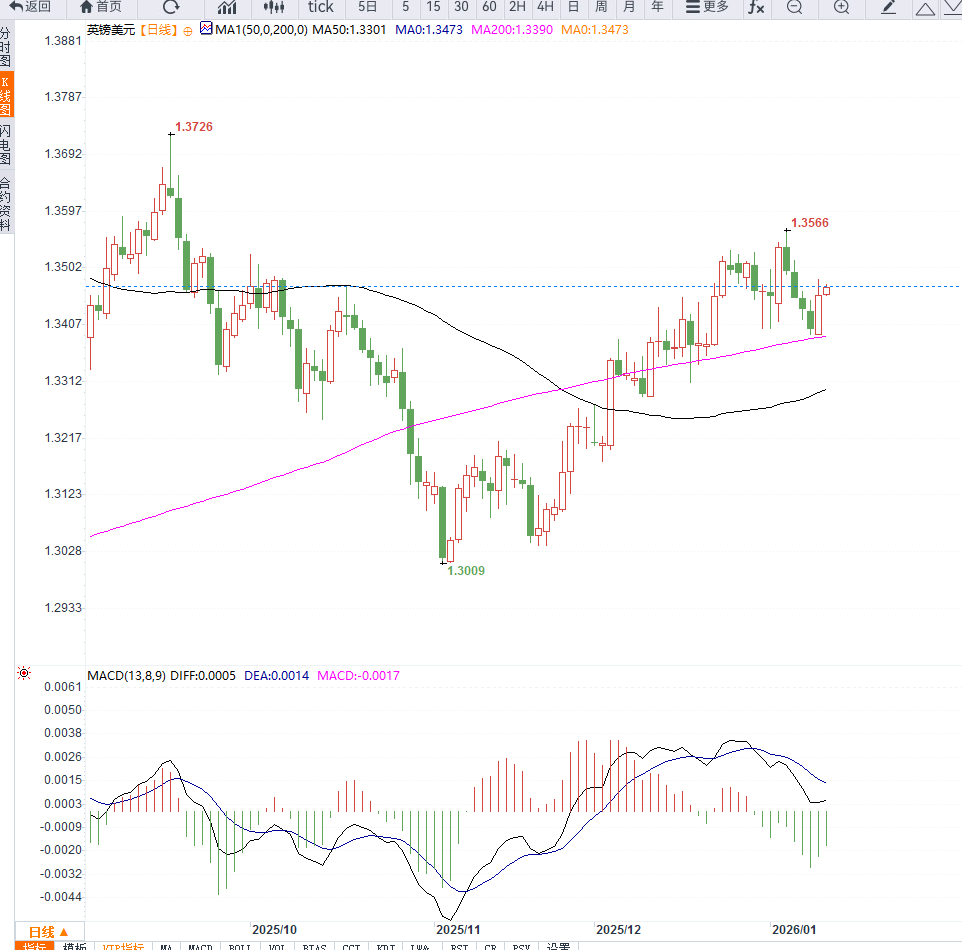
From the daily chart, the British pound rebounded technically after finding support near 1.3390 against the US dollar, returning to the vicinity of the short-term moving average, indicating that downward momentum has eased. However, it remains within the previous correction structure, with the 1.3500-1.3550 area forming significant resistance, while the 1.3400 level is the short-term dividing line between bullish and bearish sentiment.
Before a decisive breakout above key resistance levels, the exchange rate is more likely to maintain a range-bound, corrective trend.
Editor's Note:
Overall, the current rebound in the pound against the dollar is more due to the weakening of the dollar than to a significant improvement in the pound's fundamentals. Given the uncertain outlook for the Federal Reserve's policy and the continued expectation of a Bank of England rate cut, the exchange rate is unlikely to form a one-sided trend in the short term.
The key to future trends still depends on whether US inflation data and UK economic data can change market expectations regarding the monetary policy paths of the two countries.
The weaker-than-expected dollar provided major support for the exchange rate. The core factor pressuring the dollar was rising market concerns about the independence of the Federal Reserve. Previously, US prosecutors launched a criminal investigation into the Fed chairman, triggering heightened attention in financial markets regarding the central bank's policy independence.
In a rare public statement, the Federal Reserve Chairman emphasized that the allegations stemmed from the central bank's commitment to setting interest rate policies based on public interest rather than political preferences.
This statement weakened market confidence in the dollar in the short term. However, the downside for the dollar remains limited. The recent decline in the US unemployment rate largely offset the impact of weaker-than-expected non-farm payroll data, reinforcing market expectations that the Federal Reserve will maintain policy stability in the first quarter.
Meanwhile, investors are awaiting the upcoming release of US consumer inflation data, and dollar bears are relatively cautious ahead of the key data release.
From the perspective of the pound itself, market expectations for further interest rate cuts by the Bank of England in 2026 are rising, which is limiting the pound's rebound momentum to some extent. The US Producer Price Index and the UK's monthly GDP data, to be released later this week, may provide new directional guidance for the exchange rate.
From the daily chart, the British pound rebounded technically after finding support near 1.3390 against the US dollar, returning to the vicinity of the short-term moving average, indicating that downward momentum has eased. However, it remains within the previous correction structure, with the 1.3500-1.3550 area forming significant resistance, while the 1.3400 level is the short-term dividing line between bullish and bearish sentiment.
Before a decisive breakout above key resistance levels, the exchange rate is more likely to maintain a range-bound, corrective trend.
Editor's Note:
Overall, the current rebound in the pound against the dollar is more due to the weakening of the dollar than to a significant improvement in the pound's fundamentals. Given the uncertain outlook for the Federal Reserve's policy and the continued expectation of a Bank of England rate cut, the exchange rate is unlikely to form a one-sided trend in the short term.
The key to future trends still depends on whether US inflation data and UK economic data can change market expectations regarding the monetary policy paths of the two countries.
- Risk Warning and Disclaimer
- The market involves risk, and trading may not be suitable for all investors. This article is for reference only and does not constitute personal investment advice, nor does it take into account certain users’ specific investment objectives, financial situation, or other needs. Any investment decisions made based on this information are at your own risk.