The US denied replenishing its oil reserves; over the weekend, safe-haven demand and oversupply combined, with geopolitical disturbances becoming "short-term noise" for oil prices.
2026-01-17 06:06:39
Oil prices rose on Friday as investors covered short positions ahead of the long U.S. weekend while continuing to monitor the potential impact of U.S.-Iran tensions on oil supplies.

Brent crude oil settled at $64.13 a barrel, up 0.58%; WTI crude oil futures settled at $59.44 a barrel, up 0.42%. Market analysts pointed out that the day's gains were mainly due to investors adjusting their positions to avoid risks from unforeseen geopolitical events during the holiday period.
Despite earlier hints from US President Trump about potential military action over protests in Iran, which pushed oil prices to multi-month highs, his subsequent statement that the situation had eased led to a significant drop in prices on Thursday. The market remains concerned that an escalation could result in Iran blocking the Strait of Hormuz, a vital global oil shipping route. Meanwhile, anticipated increases in supply from Venezuela partially offset the downward pressure on prices, but the actual supply has not entered the market as significantly as expected.
The U.S. Department of Energy on Friday denied reports that the government was considering replenishing its Strategic Petroleum Reserve (SPR) by exchanging Venezuelan crude for U.S. crude. A Department of Energy spokesperson stated unequivocally, "This is untrue. We are not currently considering using Venezuelan oil to replenish our SPR."
Previous reports, citing sources, indicated that the Trump administration intended to exchange Venezuelan heavy crude oil for U.S. medium-sulfur crude oil to bolster its reserves. The reports suggested the government hoped to first transfer the Venezuelan crude oil to storage tanks at the Louisiana offshore oil port before transporting it to refineries.
The U.S. Strategic Petroleum Reserve currently holds approximately 414 million barrels, only 60% of its total capacity. Limited by insufficient funding and facility maintenance, the government's plans to replenish the reserve face challenges. The Energy Secretary previously stated that the government is exploring alternatives that do not directly use government funds, including reaching supply agreements with private companies. Last year, related legislation provided approximately $171 million in funding for the SPR, far less than the initial draft's $13 billion.
According to data released by Baker Hughes, the number of active oil drilling rigs in the United States increased by one this week compared to the previous week, bringing the total to 410, but is still 68 fewer than the same period last year.
In its latest outlook, the U.S. Energy Information Administration (EIA) projects that U.S. oil production this year will remain largely flat compared to 2025, at approximately 13.6 million barrels per day (bpd), but could decline by 340,000 bpd by 2027 due to a continued slowdown in drilling activity. Although the number of drilling rigs declined by 13% last year, improved productivity per well drove total production to record levels. However, the EIA states that persistently low oil prices over the next two years could lead to reduced drilling and completion activity, an impact that would outweigh the positive effects of continued productivity improvements.
According to a report by Phillip Nova analyst Priyanka Sachdeva, oil prices are expected to continue fluctuating within a range unless two key drivers emerge: a significant recovery in demand and a “substantial bottleneck” in actual supply from Russia and the Middle East. She notes that current market sentiment largely dominates price movements, but the impact of oil-related headlines is often short-lived.
The analyst cited an example of oil prices briefly rising due to unrest in Iran and news of supply risks in Venezuela, but quickly falling back. She added that multiple major forecasting agencies and industry data indicate a worsening oversupply in the oil market, which could continue to limit upside potential. Therefore, sanctions and news events are more likely to cause short-term fluctuations than to create a genuine physical supply shortage.
Fitch Ratings released a report stating that due to ample global oil supply, the risk premium for oil prices due to geopolitical factors will continue to be limited. The report argues that even if there is a potential supply disruption from Iran, the existing global surplus is sufficient to absorb the impact, and the potential increase in supply from Venezuela in the short term is also relatively limited.
Fitch forecasts that global supply will increase by a further 2.5 million barrels per day this year, on top of an increase of approximately 3 million barrels per day in 2025. Demand, on the other hand, is expected to increase by only about 800,000 barrels per day annually. Based on this supply and demand dynamic, Fitch assumes a Brent crude oil price of $63 per barrel for 2026.
The report also points out that while significant disruptions to Iranian oil production could still push up oil prices, the impact is expected to be limited given the current overall oversupply.
Regarding the situation with Iran, although Trump stated at the White House on January 16th local time that he had "convinced" himself to postpone military action against Iran, vigilance is still needed over the weekend to monitor geopolitical uncertainties. Barclays indicated that a limited U.S. strike on Iran could quickly erase the $3-4 per barrel geopolitical premium in oil prices.
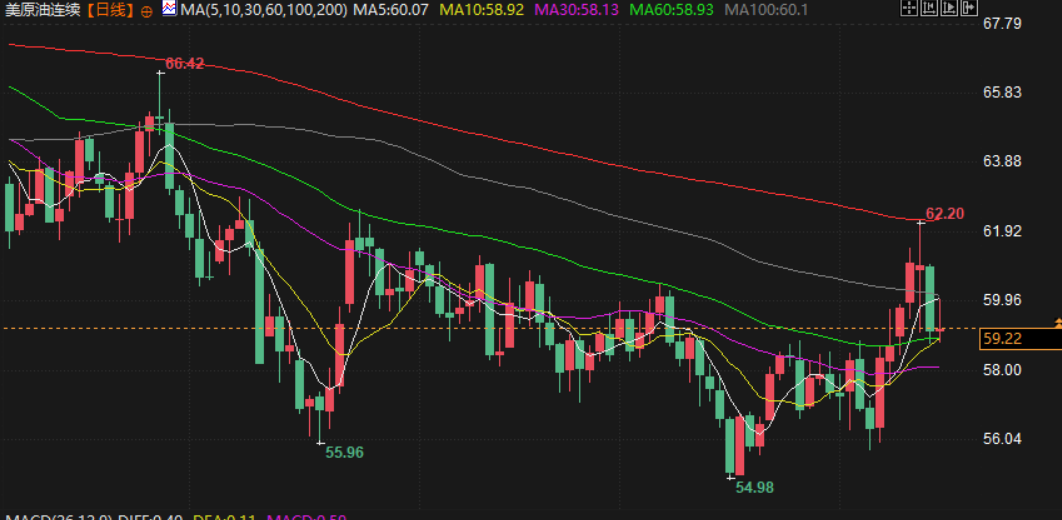
Brent crude oil settled at $64.13 a barrel, up 0.58%; WTI crude oil futures settled at $59.44 a barrel, up 0.42%. Market analysts pointed out that the day's gains were mainly due to investors adjusting their positions to avoid risks from unforeseen geopolitical events during the holiday period.
Despite earlier hints from US President Trump about potential military action over protests in Iran, which pushed oil prices to multi-month highs, his subsequent statement that the situation had eased led to a significant drop in prices on Thursday. The market remains concerned that an escalation could result in Iran blocking the Strait of Hormuz, a vital global oil shipping route. Meanwhile, anticipated increases in supply from Venezuela partially offset the downward pressure on prices, but the actual supply has not entered the market as significantly as expected.
The U.S. Department of Energy on Friday denied reports that the government was considering replenishing its Strategic Petroleum Reserve (SPR) by exchanging Venezuelan crude for U.S. crude. A Department of Energy spokesperson stated unequivocally, "This is untrue. We are not currently considering using Venezuelan oil to replenish our SPR."
Previous reports, citing sources, indicated that the Trump administration intended to exchange Venezuelan heavy crude oil for U.S. medium-sulfur crude oil to bolster its reserves. The reports suggested the government hoped to first transfer the Venezuelan crude oil to storage tanks at the Louisiana offshore oil port before transporting it to refineries.
The U.S. Strategic Petroleum Reserve currently holds approximately 414 million barrels, only 60% of its total capacity. Limited by insufficient funding and facility maintenance, the government's plans to replenish the reserve face challenges. The Energy Secretary previously stated that the government is exploring alternatives that do not directly use government funds, including reaching supply agreements with private companies. Last year, related legislation provided approximately $171 million in funding for the SPR, far less than the initial draft's $13 billion.
According to data released by Baker Hughes, the number of active oil drilling rigs in the United States increased by one this week compared to the previous week, bringing the total to 410, but is still 68 fewer than the same period last year.
In its latest outlook, the U.S. Energy Information Administration (EIA) projects that U.S. oil production this year will remain largely flat compared to 2025, at approximately 13.6 million barrels per day (bpd), but could decline by 340,000 bpd by 2027 due to a continued slowdown in drilling activity. Although the number of drilling rigs declined by 13% last year, improved productivity per well drove total production to record levels. However, the EIA states that persistently low oil prices over the next two years could lead to reduced drilling and completion activity, an impact that would outweigh the positive effects of continued productivity improvements.
According to a report by Phillip Nova analyst Priyanka Sachdeva, oil prices are expected to continue fluctuating within a range unless two key drivers emerge: a significant recovery in demand and a “substantial bottleneck” in actual supply from Russia and the Middle East. She notes that current market sentiment largely dominates price movements, but the impact of oil-related headlines is often short-lived.
The analyst cited an example of oil prices briefly rising due to unrest in Iran and news of supply risks in Venezuela, but quickly falling back. She added that multiple major forecasting agencies and industry data indicate a worsening oversupply in the oil market, which could continue to limit upside potential. Therefore, sanctions and news events are more likely to cause short-term fluctuations than to create a genuine physical supply shortage.
Fitch Ratings released a report stating that due to ample global oil supply, the risk premium for oil prices due to geopolitical factors will continue to be limited. The report argues that even if there is a potential supply disruption from Iran, the existing global surplus is sufficient to absorb the impact, and the potential increase in supply from Venezuela in the short term is also relatively limited.
Fitch forecasts that global supply will increase by a further 2.5 million barrels per day this year, on top of an increase of approximately 3 million barrels per day in 2025. Demand, on the other hand, is expected to increase by only about 800,000 barrels per day annually. Based on this supply and demand dynamic, Fitch assumes a Brent crude oil price of $63 per barrel for 2026.
The report also points out that while significant disruptions to Iranian oil production could still push up oil prices, the impact is expected to be limited given the current overall oversupply.
Regarding the situation with Iran, although Trump stated at the White House on January 16th local time that he had "convinced" himself to postpone military action against Iran, vigilance is still needed over the weekend to monitor geopolitical uncertainties. Barclays indicated that a limited U.S. strike on Iran could quickly erase the $3-4 per barrel geopolitical premium in oil prices.
- Risk Warning and Disclaimer
- The market involves risk, and trading may not be suitable for all investors. This article is for reference only and does not constitute personal investment advice, nor does it take into account certain users’ specific investment objectives, financial situation, or other needs. Any investment decisions made based on this information are at your own risk.