The prospect of a strong US agenda at Davos has drawn international attention.
2026-01-19 16:47:06
US President Trump will attend the 2026 World Economic Forum in Davos, the largest forum ever held, which will bring together 65 heads of state and government, Ukrainian President Zelensky and most of the G7 leaders, 850 top global business executives and numerous technology pioneers to discuss global cooperation and business issues. However, Trump’s “America First” stance stands in stark contrast to the forum’s theme.
Trump returns to the Davos stage for the first time in six years, leading the largest delegation in U.S. history to the snow-capped mountain resort. Trump's policies and rhetoric, including his territorial ambitions for Greenland, will generate global attention and controversy at the forum.
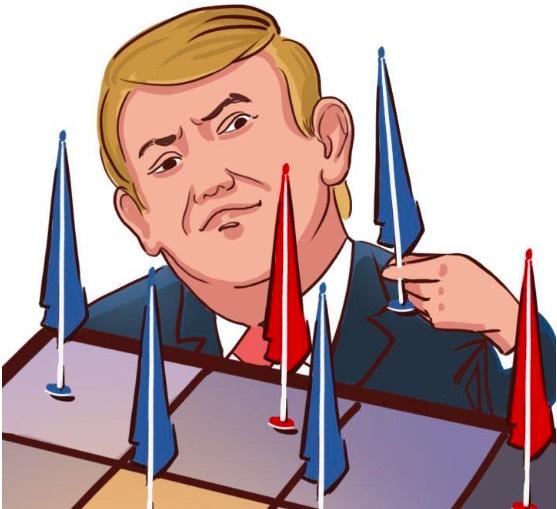
The impressive lineup of the U.S. delegation underscores its ambition to dominate the forum, including key figures such as Secretary of State Marco Rubio, Treasury Secretary Scott Bessant, Commerce Secretary Howard Lutnick, Special Envoy Steve Vitkov, and Jared Kushner, a core advisor to the president, covering multiple core areas such as diplomacy, economics, and geostrategy.
This setup continues the Trump administration's tough style—last year, after taking office for his second term, he delivered a tough speech via video link in Davos, threatening to impose comprehensive tariffs, urging NATO countries to increase defense spending, and calling on the Federal Reserve to "immediately" cut interest rates sharply. These remarks subsequently set the tone for a year of global turmoil.
The U.S. government has asked the forum to downplay its typical environmental, global development, and "awakening bank" agenda and instead focus on pragmatic business issues.
Trump's agenda for this meeting combines domestic demands with global ambitions.
According to White House officials, his keynote address on Wednesday will focus on the domestic economy and people's livelihoods, with plans to announce a "package of measures to lower housing costs" and tout the role of his economic agenda as an engine for U.S. economic growth, in order to offset political pressure on domestic affordability.
At the international level, however, he will directly convey a tough policy message to European allies, emphasizing that the US and Europe need to "get out of the quagmire of economic stagnation and abandon inefficient policies." Behind this message is a series of controversial geopolitical moves by the US recently.
On the eve of the Davos Forum, Trump shocked European leaders by threatening to impose punitive tariffs on allies such as the UK that did not support his plan to annex Greenland.
In a speech last year, Trump expressed territorial ambitions for Canada and Greenland and threatened to impose tariffs on imported goods. Trump’s attempt to force Europe to sell Greenland through economic means has been met with skepticism from other world leaders and business executives.
This attempt to seize control of strategic locations in the Arctic is seen by outsiders as a risky move that undermines the foundation of the NATO alliance and jeopardizes the trust of transatlantic allies.
In addition, the United States recently sent troops to arrest Venezuelan President Nicolás Maduro, and after initially planning military intervention in the Iranian regime's crackdown on protests, it suddenly canceled the intervention. These policy reversals and hardline interventions have triggered sharp fluctuations in assets in the relevant regions, making the Davos Forum a key venue for all parties to seek answers.
The United States is ubiquitous in geopolitical hotspots.
The Trump administration is eager to push for a resolution to the Russia-Ukraine conflict in order to reshape the geopolitical agenda. Although the White House has not publicly arranged a bilateral meeting, the participation of key figures in the Ukraine issue, such as Kushner and Vitkov, has led the market to anticipate that Trump and Ukrainian President Zelensky may sign a phase-one agreement in Davos. This development will directly affect the prices of safe-haven assets such as global energy and precious metals.
Meanwhile, Trump also plans to hold the first meeting of the Gaza Peace Committee during the forum. This mechanism, which he led, stipulates that a donation of $1 billion can obtain a permanent seat. Critics question whether it is a geopolitical tool to try to create a "parallel United Nations." Several countries, including Hungary, Jordan, and Canada, have already confirmed their invitation.
The official theme is "the spirit of dialogue," but Trump's "America First" policy conflicts with the forum's aim of global cooperation, and a series of actions by the United States are accelerating the collapse of the rules-based global order.
Trump's policies have been described as "great global destruction," and he himself has been regarded as the "chief destroyer." Critics such as Florida Governor Ron DeSantis have said that the Davos agenda "dies as soon as it arrives," meaning that the Davos elites' claims are out of touch with reality and destined to fail in practice.
UN Secretary-General António Guterres stated bluntly that it was the actions of the United States that truly pushed the post-war international order to the brink of collapse, adding that "the erosion of international law did not happen in secret."
A survey by the World Economic Forum shows that "geoeconomic confrontation" has become the most pressing global risk in the next two years, and the United States is the main driver of this trend. Its defense budget for fiscal year 2026 has exceeded a historical peak of $1.01 trillion, with a focus on cutting-edge technology, nuclear weapons upgrades and the Indo-Pacific frontier, directly pushing global military spending to $2.7 trillion, with an annual growth rate of 9.4%, the largest increase since the Cold War.
Faced with the unilateral offensive by the United States, the international community is forming a counterattack force.
Central bank governors, who are usually silent, issued a rare joint statement to intervene in the controversy over the independence of the Federal Reserve Chair; NATO Secretary General Mark Rutte, European Commission President Ursula von der Leyen and other leaders flew to Davos to strongly advocate free trade and transatlantic cooperation;
Despite Trump’s attempts to force Ukraine to accept a peace deal favorable to Russia, this effort has failed due to unanimous resistance from European countries.
Trump's trip to Davos was not only a stage for him to showcase American hegemony, but also highlighted the deep divisions in the global landscape.
The United States' move to establish two core venues in Davos, using "American House" to demonstrate its dominant position, is consistent with its global strategy of "security as the absolute priority." Major American companies were asked to create "American House" in a church to celebrate the World Cup and the 250th anniversary of American independence.
However, it is worth noting that despite the United States' strong power, the share of China and other developing countries in the global economy continues to rise, and the long-term global balance of power is slowly shifting.
Whether this dialogue in the snow-capped mountains is a declaration of strengthening American hegemony or a new starting point for the reconstruction of the global order will gradually become clear as Trump's agenda advances and various parties engage in power struggles.
This year's Davos Forum has become a central stage for observing the clash between US unilateralism and the global multilateral system. This highly uncertain political environment is the dominant narrative for the market in the next two years.
In response, investors should be wary of the suddenness of its policies and the asset volatility caused by escalating geopolitical conflicts, including the impact of tariff threats against allies and diplomatic reversals on the foreign exchange, bond and stock markets.
New US-led mechanisms such as the Gaza Peace Committee will also affect Middle East risk premiums. We should also focus on structural trends. Although the US is trying to maintain its hegemony with a strong stance, the rising proportion of developing countries is driving a shift in the global power structure. Long-term investors should pay attention to the resulting supply chain restructuring, monetary system diversification, and strategic allocation opportunities in emerging markets.
In short, Davos reflects not only the cracks in the international order, but also the new landscape that global capital must navigate in future turmoil—trading strategies need to guard against the turbulent waves of short-term Trump risks (including Trump TACO) while keeping an eye on whether geopolitical risks will escalate.
Trump returns to the Davos stage for the first time in six years, leading the largest delegation in U.S. history to the snow-capped mountain resort. Trump's policies and rhetoric, including his territorial ambitions for Greenland, will generate global attention and controversy at the forum.
The strongest delegation in history: The United States demonstrates its ambition for dominance.
The impressive lineup of the U.S. delegation underscores its ambition to dominate the forum, including key figures such as Secretary of State Marco Rubio, Treasury Secretary Scott Bessant, Commerce Secretary Howard Lutnick, Special Envoy Steve Vitkov, and Jared Kushner, a core advisor to the president, covering multiple core areas such as diplomacy, economics, and geostrategy.
This setup continues the Trump administration's tough style—last year, after taking office for his second term, he delivered a tough speech via video link in Davos, threatening to impose comprehensive tariffs, urging NATO countries to increase defense spending, and calling on the Federal Reserve to "immediately" cut interest rates sharply. These remarks subsequently set the tone for a year of global turmoil.
The U.S. government has asked the forum to downplay its typical environmental, global development, and "awakening bank" agenda and instead focus on pragmatic business issues.
A two-track agenda: focusing on domestic demands while sending a strong global signal.
Trump's agenda for this meeting combines domestic demands with global ambitions.
According to White House officials, his keynote address on Wednesday will focus on the domestic economy and people's livelihoods, with plans to announce a "package of measures to lower housing costs" and tout the role of his economic agenda as an engine for U.S. economic growth, in order to offset political pressure on domestic affordability.
At the international level, however, he will directly convey a tough policy message to European allies, emphasizing that the US and Europe need to "get out of the quagmire of economic stagnation and abandon inefficient policies." Behind this message is a series of controversial geopolitical moves by the US recently.
A series of controversies precede the meeting: unilateral actions by the United States are stirring up global tensions.
On the eve of the Davos Forum, Trump shocked European leaders by threatening to impose punitive tariffs on allies such as the UK that did not support his plan to annex Greenland.
In a speech last year, Trump expressed territorial ambitions for Canada and Greenland and threatened to impose tariffs on imported goods. Trump’s attempt to force Europe to sell Greenland through economic means has been met with skepticism from other world leaders and business executives.
This attempt to seize control of strategic locations in the Arctic is seen by outsiders as a risky move that undermines the foundation of the NATO alliance and jeopardizes the trust of transatlantic allies.
In addition, the United States recently sent troops to arrest Venezuelan President Nicolás Maduro, and after initially planning military intervention in the Iranian regime's crackdown on protests, it suddenly canceled the intervention. These policy reversals and hardline interventions have triggered sharp fluctuations in assets in the relevant regions, making the Davos Forum a key venue for all parties to seek answers.
Geopolitical issues dominate: The US presence permeates the core game.
The United States is ubiquitous in geopolitical hotspots.
The Trump administration is eager to push for a resolution to the Russia-Ukraine conflict in order to reshape the geopolitical agenda. Although the White House has not publicly arranged a bilateral meeting, the participation of key figures in the Ukraine issue, such as Kushner and Vitkov, has led the market to anticipate that Trump and Ukrainian President Zelensky may sign a phase-one agreement in Davos. This development will directly affect the prices of safe-haven assets such as global energy and precious metals.
Meanwhile, Trump also plans to hold the first meeting of the Gaza Peace Committee during the forum. This mechanism, which he led, stipulates that a donation of $1 billion can obtain a permanent seat. Critics question whether it is a geopolitical tool to try to create a "parallel United Nations." Several countries, including Hungary, Jordan, and Canada, have already confirmed their invitation.
The disruption to the global order intensifies: the United States becomes the core of global division.
The official theme is "the spirit of dialogue," but Trump's "America First" policy conflicts with the forum's aim of global cooperation, and a series of actions by the United States are accelerating the collapse of the rules-based global order.
Trump's policies have been described as "great global destruction," and he himself has been regarded as the "chief destroyer." Critics such as Florida Governor Ron DeSantis have said that the Davos agenda "dies as soon as it arrives," meaning that the Davos elites' claims are out of touch with reality and destined to fail in practice.
UN Secretary-General António Guterres stated bluntly that it was the actions of the United States that truly pushed the post-war international order to the brink of collapse, adding that "the erosion of international law did not happen in secret."
A survey by the World Economic Forum shows that "geoeconomic confrontation" has become the most pressing global risk in the next two years, and the United States is the main driver of this trend. Its defense budget for fiscal year 2026 has exceeded a historical peak of $1.01 trillion, with a focus on cutting-edge technology, nuclear weapons upgrades and the Indo-Pacific frontier, directly pushing global military spending to $2.7 trillion, with an annual growth rate of 9.4%, the largest increase since the Cold War.
Escalating tensions: The international community says "no" to US unilateralism.
Faced with the unilateral offensive by the United States, the international community is forming a counterattack force.
Central bank governors, who are usually silent, issued a rare joint statement to intervene in the controversy over the independence of the Federal Reserve Chair; NATO Secretary General Mark Rutte, European Commission President Ursula von der Leyen and other leaders flew to Davos to strongly advocate free trade and transatlantic cooperation;
Despite Trump’s attempts to force Ukraine to accept a peace deal favorable to Russia, this effort has failed due to unanimous resistance from European countries.
Trump's trip to Davos was not only a stage for him to showcase American hegemony, but also highlighted the deep divisions in the global landscape.
The United States' move to establish two core venues in Davos, using "American House" to demonstrate its dominant position, is consistent with its global strategy of "security as the absolute priority." Major American companies were asked to create "American House" in a church to celebrate the World Cup and the 250th anniversary of American independence.
However, it is worth noting that despite the United States' strong power, the share of China and other developing countries in the global economy continues to rise, and the long-term global balance of power is slowly shifting.
Whether this dialogue in the snow-capped mountains is a declaration of strengthening American hegemony or a new starting point for the reconstruction of the global order will gradually become clear as Trump's agenda advances and various parties engage in power struggles.
Summary and Trading Tips:
This year's Davos Forum has become a central stage for observing the clash between US unilateralism and the global multilateral system. This highly uncertain political environment is the dominant narrative for the market in the next two years.
In response, investors should be wary of the suddenness of its policies and the asset volatility caused by escalating geopolitical conflicts, including the impact of tariff threats against allies and diplomatic reversals on the foreign exchange, bond and stock markets.
New US-led mechanisms such as the Gaza Peace Committee will also affect Middle East risk premiums. We should also focus on structural trends. Although the US is trying to maintain its hegemony with a strong stance, the rising proportion of developing countries is driving a shift in the global power structure. Long-term investors should pay attention to the resulting supply chain restructuring, monetary system diversification, and strategic allocation opportunities in emerging markets.
In short, Davos reflects not only the cracks in the international order, but also the new landscape that global capital must navigate in future turmoil—trading strategies need to guard against the turbulent waves of short-term Trump risks (including Trump TACO) while keeping an eye on whether geopolitical risks will escalate.
- Risk Warning and Disclaimer
- The market involves risk, and trading may not be suitable for all investors. This article is for reference only and does not constitute personal investment advice, nor does it take into account certain users’ specific investment objectives, financial situation, or other needs. Any investment decisions made based on this information are at your own risk.