Unexpectedly strong UK inflation boosted the pound, but the dollar rebounded in tandem, resulting in a narrow range for GBP/USD.
2026-01-22 14:32:25
On Thursday morning in Europe, the British pound continued its volatile trading against the US dollar (GBP/USD), rising to around 1.3430. The pound's strength was directly driven by better-than-expected UK inflation data, reinforcing market expectations that the Bank of England would maintain a cautious stance on monetary policy.
Data from the UK Office for National Statistics shows that the Consumer Price Index (CPI) rose 3.4% year-on-year in December, higher than November's 3.2% and exceeding market expectations of 3.3%. On a month-on-month basis, the CPI rose 0.4% in December, reversing the 0.2% decline in November and in line with market expectations.

Signs of renewed inflation have dampened market bets on a rapid shift to easing policy by the Bank of England in the near term, providing support for the pound. However, the upside potential for the pound remains constrained by external factors.
US President Trump recently stated that he will withdraw his previous threat to impose tariffs on some European countries, which has eased geopolitical and trade concerns to some extent and helped boost the overall performance of the US dollar.
In addition, Trump said the United States had reached a "framework agreement" with NATO on the Greenland issue. Although the specific details are still unclear, the market interpreted this as a temporary easing of tensions, which also weakened the support for non-US currencies.
Looking ahead, market focus will gradually shift to US economic data. Later that day, the final reading of US third-quarter GDP, weekly initial jobless claims, and the Personal Consumption Expenditures (PCE) price index will be released. These data will provide important clues for assessing the resilience of the US economy and the trend of inflation.
If the data is stronger than expected, it could strengthen the dollar again, thus putting downward pressure on the pound against the dollar.
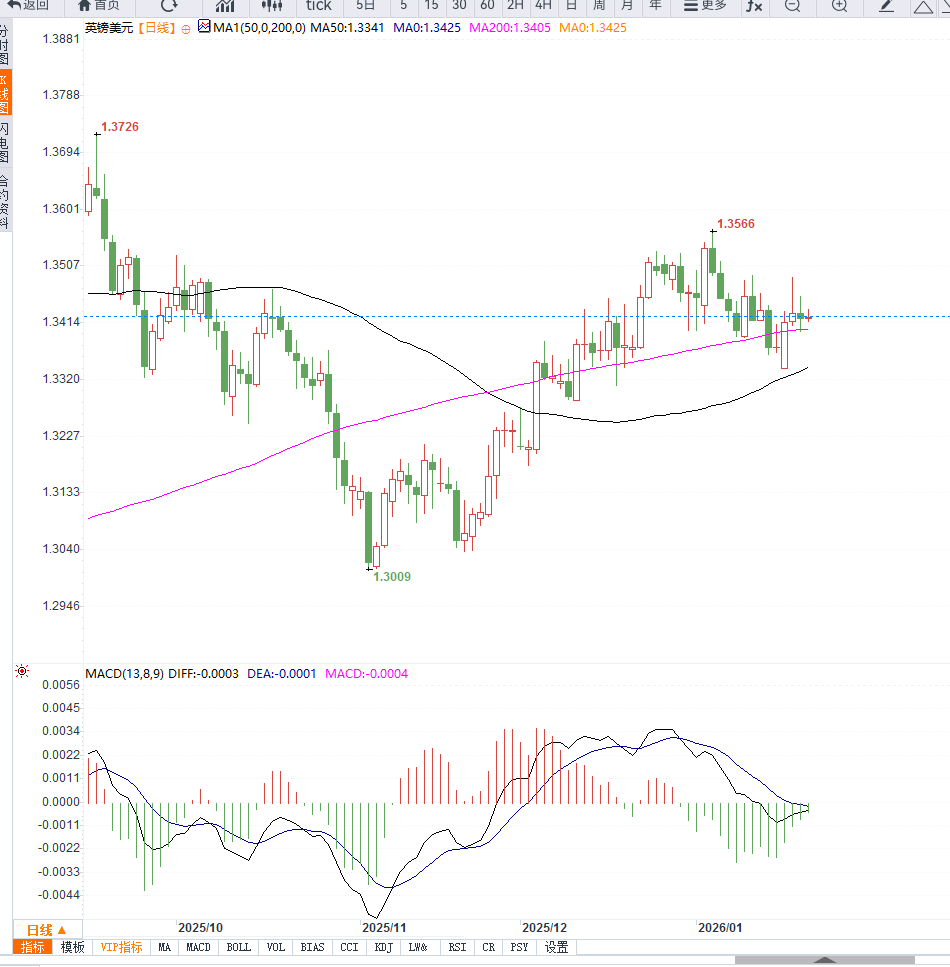
From a technical perspective, GBP/USD has stabilized above the 1.3400 level, indicating a short-term bullish bias, but further confirmation of upward momentum is needed. Initial resistance is seen in the 1.3470–1.3500 range; failure to break through this area could lead to a return to high-level consolidation.
The support level is around 1.3370; a break below this level could trigger a more significant pullback. Overall, the exchange rate remains in a slightly bullish, oscillating pattern, with the direction depending on macroeconomic data.
Editor's Note:
Better-than-expected UK inflation provided a short-term boost to the pound, but it's not enough to drive a sustained upward trend. Currently, the core variable for GBP/USD remains the US dollar; US economic data and inflation performance will directly influence market expectations regarding the Federal Reserve's policy path.
Before there is a clear divergence in policy expectations between the Bank of England and the Federal Reserve, the pound is more likely to remain volatile at high levels against the dollar rather than move in a one-sided direction.
Data from the UK Office for National Statistics shows that the Consumer Price Index (CPI) rose 3.4% year-on-year in December, higher than November's 3.2% and exceeding market expectations of 3.3%. On a month-on-month basis, the CPI rose 0.4% in December, reversing the 0.2% decline in November and in line with market expectations.
Signs of renewed inflation have dampened market bets on a rapid shift to easing policy by the Bank of England in the near term, providing support for the pound. However, the upside potential for the pound remains constrained by external factors.
US President Trump recently stated that he will withdraw his previous threat to impose tariffs on some European countries, which has eased geopolitical and trade concerns to some extent and helped boost the overall performance of the US dollar.
In addition, Trump said the United States had reached a "framework agreement" with NATO on the Greenland issue. Although the specific details are still unclear, the market interpreted this as a temporary easing of tensions, which also weakened the support for non-US currencies.
Looking ahead, market focus will gradually shift to US economic data. Later that day, the final reading of US third-quarter GDP, weekly initial jobless claims, and the Personal Consumption Expenditures (PCE) price index will be released. These data will provide important clues for assessing the resilience of the US economy and the trend of inflation.
If the data is stronger than expected, it could strengthen the dollar again, thus putting downward pressure on the pound against the dollar.
From a technical perspective, GBP/USD has stabilized above the 1.3400 level, indicating a short-term bullish bias, but further confirmation of upward momentum is needed. Initial resistance is seen in the 1.3470–1.3500 range; failure to break through this area could lead to a return to high-level consolidation.
The support level is around 1.3370; a break below this level could trigger a more significant pullback. Overall, the exchange rate remains in a slightly bullish, oscillating pattern, with the direction depending on macroeconomic data.
Editor's Note:
Better-than-expected UK inflation provided a short-term boost to the pound, but it's not enough to drive a sustained upward trend. Currently, the core variable for GBP/USD remains the US dollar; US economic data and inflation performance will directly influence market expectations regarding the Federal Reserve's policy path.
Before there is a clear divergence in policy expectations between the Bank of England and the Federal Reserve, the pound is more likely to remain volatile at high levels against the dollar rather than move in a one-sided direction.
- Risk Warning and Disclaimer
- The market involves risk, and trading may not be suitable for all investors. This article is for reference only and does not constitute personal investment advice, nor does it take into account certain users’ specific investment objectives, financial situation, or other needs. Any investment decisions made based on this information are at your own risk.