Not a rebound, but a climb: The true pace of the European economy in 2026 revealed.
2026-01-22 21:49:05
Looking ahead to 2026, analysts generally believe that the European economy will be in a phase of moderate recovery and structural divergence. In terms of output growth, production expansion in most sectors is expected to fall between 1% and 1.5%, meaning that overall economic activity will be more of a slow climb than a strong rebound. In this environment, economic growth will not be driven by explosive demand, but rather by policy support, technological investment, and localized optimization of the industrial chain.
For capital markets, this context often means limited directional returns, with real opportunities lying more in the relative performance of different industries. Investors are more focused on the certainty of earnings, the quality of cash flow, and a company's bargaining power in the industrial chain, rather than simply a macroeconomic recovery. At the same time, the risk premium brought about by external frictions and policy changes will continue to rise in stages, making the market highly sensitive to uncertainty.
Therefore, analysts believe that future excess returns are unlikely to come from a "broad-based price increase," but are more likely to be concentrated in niche sectors with stable orders, clear policy paths, and strong cost control. Those who can maintain a more stable pace in this "slow-speed race" are more likely to stand out.
Among all industries, the technology sector is undoubtedly the most clearly dominant performer in 2026. Its output growth is projected to reach around 4.5%, far exceeding other sectors. Behind this high growth is the major trend of enterprises continuously increasing their investment in digitalization—IT spending maintains double-digit growth, with investment focusing not only on software and cloud services but also extending to hardware infrastructure such as data center systems, especially with a surge in demand for servers optimized for artificial intelligence.
At the EU level, research incentive programs and industry support policies are continuously being introduced, providing a more favorable environment for technology research and development, project implementation, and cross-enterprise collaboration. However, high growth does not equate to easy success. Because capital expenditures in sectors such as data centers are extremely sensitive to financing costs, the market rigorously examines a company's order visibility, gross margin stability, and capital recovery cycle when evaluating related companies.
In other words, the excess returns in the technology sector are more likely to be captured by a few leading companies with economies of scale, customer loyalty, and ecosystem barriers, rather than the entire sector rising in tandem. Companies that lack pricing power, rely on short-term orders, or have high debt levels may face greater pressure in a high-interest-rate environment. Therefore, even in a high-growth sector, careful selection is necessary to avoid pitfalls.
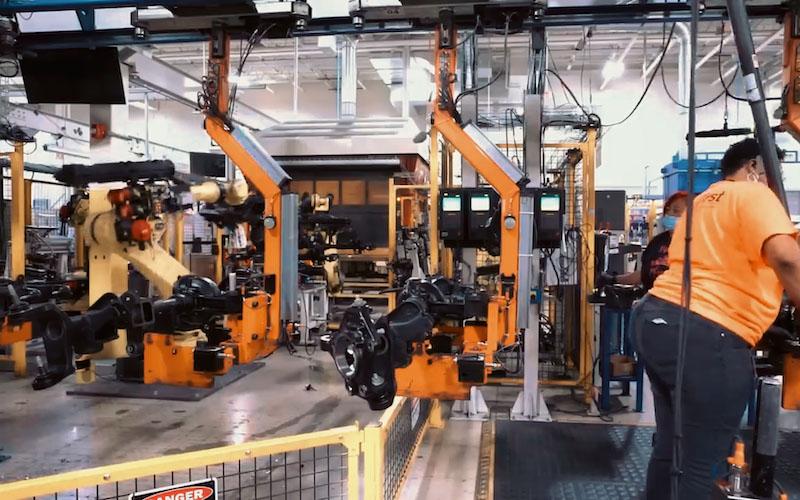
The manufacturing sector is projected to see its second consecutive year of output growth in 2026, but internal disparities will widen further. Traditional energy-intensive industries will remain hampered by high costs and weak demand, while high-end manufacturing and technology-driven sub-sectors will become the main growth engines. Demand spillover from sectors such as defense, artificial intelligence, electrification, biotechnology, aerospace, and pharmaceuticals is driving some companies to accelerate capacity upgrades.
Meanwhile, the EU Recovery and Resilience Fund continues to support manufacturing investment, improving some companies' willingness to invest in capital expenditures and their expectations for medium- and long-term orders. However, trade frictions remain a key variable affecting pricing. Faced with US tariffs, European exporters have passed on almost all costs to the US, preserving profit margins in the short term but pushing up end-market prices, which may suppress long-term sales volume and market share.
As a result, many companies have begun to shift some production processes to the United States and are actively exploring other export markets. This trend signifies that the global supply chain is shifting from a "efficiency-first" approach to one that prioritizes both security and compliance. The cost structure of cross-border operations is being recalculated, and the discount on uncertainty in industry valuations may persist for a long time. Furthermore, the advancement of new policies such as carbon border adjustment mechanisms will further alter the competitive landscape for businesses.
The closely related construction industry is expected to shift from stagnation to growth, becoming one of the sectors with the most significant improvement. The outlook for residential construction is relatively optimistic, with new permits steadily increasing, providing a leading indicator for future construction starts and demand for building materials. Regarding infrastructure, thanks to the final round of funding from the EU fund and the gradual implementation of Germany's €500 billion climate and infrastructure investment plan, financial support is expected to show its first results by the end of 2026.
For building material manufacturers, a recovery in the construction industry not only brings an increase in orders but also reduces unit costs and enhances profit elasticity by improving capacity utilization. In the credit market, the performance of interest rate spreads in these industries depends more on cash flow stability and refinancing pressure; against the backdrop of moderate growth, the fundamentals of leading companies are more resilient.
Consumer-facing industries are more likely to see a slight recovery than a significant improvement in 2026. Previously high inflation prompted residents to reduce consumption and increase savings, leading to a more cautious overall demand structure. Even if purchasing power recovers somewhat and inflation falls slightly, businesses are likely to see only a slow rebound in demand, rather than a strong reversal.
Food manufacturing and retail sectors face moderate sales growth pressure, while the recovery of catering services remains lagging. In non-food retail, durable goods such as electronics and furniture may see some increase, as the demand from concentrated purchases during the pandemic has been absorbed, and a replacement and replenishment cycle will gradually begin in 2026. However, the strength of this recovery will depend on real income growth, employment expectations, and financing costs, exhibiting a moderate and phased characteristic.
In the service sector, air travel has performed relatively well. Whether for leisure travel or business trips, residents are more willing to spend on experiential consumption, driving the aviation industry's growth rate higher than the average level of the transportation and logistics industry. However, because the industry is highly sensitive to oil prices, exchange rates, and capacity deployment, its profitability is highly volatile. Traders are focusing more on companies with strong cost control capabilities, reasonable route structures, and sound debt levels to avoid misinterpreting a short-term recovery as a long-term boom.
Meanwhile, marginal improvements in manufacturing and construction will also spill over into the human resources services sector. Demand for temporary staff is expected to gradually recover; this sector is often seen as a coincident indicator of business confidence—when orders increase and capacity utilization rises, companies tend to opt for flexible staffing to cope with uncertainty. Therefore, the recovery in the labor market can be seen as a mild confirmation of the cycle bottoming out, but its sustainability still depends on order visibility in downstream industries and overall assessments of external risks.
In conclusion, the European industrial landscape in 2026 may resemble a picture of "moderate growth + deep differentiation": most industries will progress slowly, with technology leading the way at 4.5% growth; high-end manufacturing and technology-driven growth will contribute to the increase; construction and employment will see a turnaround from a low base; and consumption will mainly see marginal recovery. The real winners will be those companies that can maintain cash flow amidst uncertainty, seize opportunities amidst policy changes, and occupy a favorable position in the industrial chain.
For capital markets, this context often means limited directional returns, with real opportunities lying more in the relative performance of different industries. Investors are more focused on the certainty of earnings, the quality of cash flow, and a company's bargaining power in the industrial chain, rather than simply a macroeconomic recovery. At the same time, the risk premium brought about by external frictions and policy changes will continue to rise in stages, making the market highly sensitive to uncertainty.
Therefore, analysts believe that future excess returns are unlikely to come from a "broad-based price increase," but are more likely to be concentrated in niche sectors with stable orders, clear policy paths, and strong cost control. Those who can maintain a more stable pace in this "slow-speed race" are more likely to stand out.
Technological leadership is key, but not all companies can ride this wave.
Among all industries, the technology sector is undoubtedly the most clearly dominant performer in 2026. Its output growth is projected to reach around 4.5%, far exceeding other sectors. Behind this high growth is the major trend of enterprises continuously increasing their investment in digitalization—IT spending maintains double-digit growth, with investment focusing not only on software and cloud services but also extending to hardware infrastructure such as data center systems, especially with a surge in demand for servers optimized for artificial intelligence.
At the EU level, research incentive programs and industry support policies are continuously being introduced, providing a more favorable environment for technology research and development, project implementation, and cross-enterprise collaboration. However, high growth does not equate to easy success. Because capital expenditures in sectors such as data centers are extremely sensitive to financing costs, the market rigorously examines a company's order visibility, gross margin stability, and capital recovery cycle when evaluating related companies.
In other words, the excess returns in the technology sector are more likely to be captured by a few leading companies with economies of scale, customer loyalty, and ecosystem barriers, rather than the entire sector rising in tandem. Companies that lack pricing power, rely on short-term orders, or have high debt levels may face greater pressure in a high-interest-rate environment. Therefore, even in a high-growth sector, careful selection is necessary to avoid pitfalls.
Manufacturing and Construction: A Tale of Two Extremes, Differentiating into the Main Theme
The manufacturing sector is projected to see its second consecutive year of output growth in 2026, but internal disparities will widen further. Traditional energy-intensive industries will remain hampered by high costs and weak demand, while high-end manufacturing and technology-driven sub-sectors will become the main growth engines. Demand spillover from sectors such as defense, artificial intelligence, electrification, biotechnology, aerospace, and pharmaceuticals is driving some companies to accelerate capacity upgrades.
Meanwhile, the EU Recovery and Resilience Fund continues to support manufacturing investment, improving some companies' willingness to invest in capital expenditures and their expectations for medium- and long-term orders. However, trade frictions remain a key variable affecting pricing. Faced with US tariffs, European exporters have passed on almost all costs to the US, preserving profit margins in the short term but pushing up end-market prices, which may suppress long-term sales volume and market share.
As a result, many companies have begun to shift some production processes to the United States and are actively exploring other export markets. This trend signifies that the global supply chain is shifting from a "efficiency-first" approach to one that prioritizes both security and compliance. The cost structure of cross-border operations is being recalculated, and the discount on uncertainty in industry valuations may persist for a long time. Furthermore, the advancement of new policies such as carbon border adjustment mechanisms will further alter the competitive landscape for businesses.
The closely related construction industry is expected to shift from stagnation to growth, becoming one of the sectors with the most significant improvement. The outlook for residential construction is relatively optimistic, with new permits steadily increasing, providing a leading indicator for future construction starts and demand for building materials. Regarding infrastructure, thanks to the final round of funding from the EU fund and the gradual implementation of Germany's €500 billion climate and infrastructure investment plan, financial support is expected to show its first results by the end of 2026.
For building material manufacturers, a recovery in the construction industry not only brings an increase in orders but also reduces unit costs and enhances profit elasticity by improving capacity utilization. In the credit market, the performance of interest rate spreads in these industries depends more on cash flow stability and refinancing pressure; against the backdrop of moderate growth, the fundamentals of leading companies are more resilient.
Consumption and Human Resources: Slow Recovery, Experience First
Consumer-facing industries are more likely to see a slight recovery than a significant improvement in 2026. Previously high inflation prompted residents to reduce consumption and increase savings, leading to a more cautious overall demand structure. Even if purchasing power recovers somewhat and inflation falls slightly, businesses are likely to see only a slow rebound in demand, rather than a strong reversal.
Food manufacturing and retail sectors face moderate sales growth pressure, while the recovery of catering services remains lagging. In non-food retail, durable goods such as electronics and furniture may see some increase, as the demand from concentrated purchases during the pandemic has been absorbed, and a replacement and replenishment cycle will gradually begin in 2026. However, the strength of this recovery will depend on real income growth, employment expectations, and financing costs, exhibiting a moderate and phased characteristic.
In the service sector, air travel has performed relatively well. Whether for leisure travel or business trips, residents are more willing to spend on experiential consumption, driving the aviation industry's growth rate higher than the average level of the transportation and logistics industry. However, because the industry is highly sensitive to oil prices, exchange rates, and capacity deployment, its profitability is highly volatile. Traders are focusing more on companies with strong cost control capabilities, reasonable route structures, and sound debt levels to avoid misinterpreting a short-term recovery as a long-term boom.
Meanwhile, marginal improvements in manufacturing and construction will also spill over into the human resources services sector. Demand for temporary staff is expected to gradually recover; this sector is often seen as a coincident indicator of business confidence—when orders increase and capacity utilization rises, companies tend to opt for flexible staffing to cope with uncertainty. Therefore, the recovery in the labor market can be seen as a mild confirmation of the cycle bottoming out, but its sustainability still depends on order visibility in downstream industries and overall assessments of external risks.
In conclusion, the European industrial landscape in 2026 may resemble a picture of "moderate growth + deep differentiation": most industries will progress slowly, with technology leading the way at 4.5% growth; high-end manufacturing and technology-driven growth will contribute to the increase; construction and employment will see a turnaround from a low base; and consumption will mainly see marginal recovery. The real winners will be those companies that can maintain cash flow amidst uncertainty, seize opportunities amidst policy changes, and occupy a favorable position in the industrial chain.
- Risk Warning and Disclaimer
- The market involves risk, and trading may not be suitable for all investors. This article is for reference only and does not constitute personal investment advice, nor does it take into account certain users’ specific investment objectives, financial situation, or other needs. Any investment decisions made based on this information are at your own risk.