US-Venezuela "ice-breaking" talks remove geopolitical risks, causing gold to lose its safe-haven appeal.
2026-02-02 10:55:46
Senior diplomats from the United States and Venezuela have resumed negotiations in Caracas, marking a gradual shift towards structured interaction and a possible return to formal diplomatic channels after years of tension.
This diplomatic development could have a negative impact on gold in the short term, as it represents a potential de-escalation of tensions on the global geopolitical landscape, weakening some of the rationale for safe-haven buying. Spot gold traded lower in Asian trading on Monday (February 2nd), currently hovering around $4730 per ounce, down about 2.6% on the day, following a nearly 10% drop in the previous trading day.

Last Saturday (January 31), U.S. Chargé d'Affaires to Venezuela, Laura Dogu, traveled to Caracas for a direct meeting with Venezuelan Foreign Minister Iván Gir. The focus of their discussions was identifying concrete steps to improve relations and resolve long-standing differences . This meeting, held at a time when bilateral tensions between the U.S. and Venezuela appeared to be easing, marks a shift from a long-standing diplomatic estrangement to more open channels of communication .
According to the Venezuelan Foreign Ministry, these negotiations are part of a broader effort by Caracas to develop a clear roadmap for issues involving common interests. The focus is on resolving differences through diplomatic mechanisms rather than unilateral actions .
Foreign Minister Ivan Gir emphasized that the dialogue is based on mutual respect and adherence to international law, regarding these principles as fundamental conditions for sustainable interaction. This statement reflects the correlation between respect for sovereignty and the sustainability of diplomatic negotiations, rather than an automatic guarantee of policy convergence.
On social media, Laura Dogu stated that she and her team were ready to work in Venezuela, reinforcing Washington's message of a desire to maintain a diplomatic presence on the ground. Her previous experience as U.S. ambassador to Nicaragua and Honduras adds institutional continuity to the current engagement. As chargé d'affaires, she leads the U.S. mission during the absence of a formally appointed ambassador, a role that often carries significant practical importance during transitions in bilateral relations.
Officials from both sides confirmed that Washington has dispatched a working group to Caracas to assess the phased reopening of the U.S. Embassy in Venezuela, which has been largely shut down since the two countries severed diplomatic ties in 2019. This assessment process demonstrates that, in practice, diplomatic dialogue and institutional presence often complement each other, reflecting relevance rather than an immediate policy shift. Any reopening process is likely to be gradual, reflecting both political prudence and practical logistical considerations .
Venezuelan authorities stated that the two countries are exploring a more substantive framework for cooperation, covering political, diplomatic, and economic issues of mutual concern. Caracas reiterated that all exchanges will be conducted on the basis of dialogue and respect for national sovereignty, and that these principles will form the foundation for future improvements in bilateral relations. While the current discussions have not resolved structural differences, they indicate adjustments in tone and procedure that, if maintained in the long term, could shape future interactions .
Reports indicate that the US and Venezuela are shifting from "diplomatic distancing" to "open communication," emphasizing "resolving differences through diplomacy rather than unilateral action." If this trend continues, it could mean a easing of future US pressure on Venezuela (including severe sanctions). This would reduce short-term safe-haven demand in the market, putting negative pressure on gold.
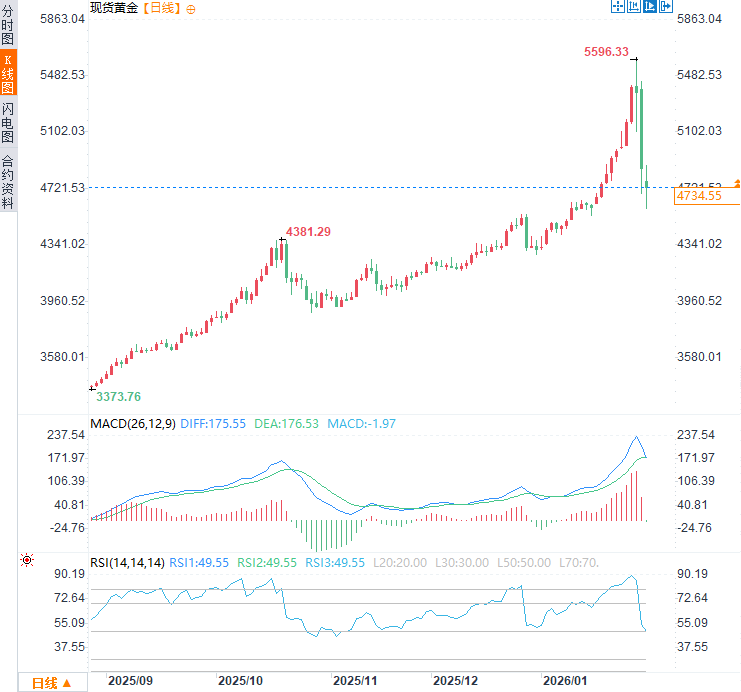
(Spot gold daily chart, source: FX678)
At 10:55 Beijing time, spot gold is trading at $4,726.77 per ounce.
This diplomatic development could have a negative impact on gold in the short term, as it represents a potential de-escalation of tensions on the global geopolitical landscape, weakening some of the rationale for safe-haven buying. Spot gold traded lower in Asian trading on Monday (February 2nd), currently hovering around $4730 per ounce, down about 2.6% on the day, following a nearly 10% drop in the previous trading day.
Reshaping bilateral cooperation through dialogue
Last Saturday (January 31), U.S. Chargé d'Affaires to Venezuela, Laura Dogu, traveled to Caracas for a direct meeting with Venezuelan Foreign Minister Iván Gir. The focus of their discussions was identifying concrete steps to improve relations and resolve long-standing differences . This meeting, held at a time when bilateral tensions between the U.S. and Venezuela appeared to be easing, marks a shift from a long-standing diplomatic estrangement to more open channels of communication .
According to the Venezuelan Foreign Ministry, these negotiations are part of a broader effort by Caracas to develop a clear roadmap for issues involving common interests. The focus is on resolving differences through diplomatic mechanisms rather than unilateral actions .
Foreign Minister Ivan Gir emphasized that the dialogue is based on mutual respect and adherence to international law, regarding these principles as fundamental conditions for sustainable interaction. This statement reflects the correlation between respect for sovereignty and the sustainability of diplomatic negotiations, rather than an automatic guarantee of policy convergence.
Signals from Washington and Diplomatic Continuity
On social media, Laura Dogu stated that she and her team were ready to work in Venezuela, reinforcing Washington's message of a desire to maintain a diplomatic presence on the ground. Her previous experience as U.S. ambassador to Nicaragua and Honduras adds institutional continuity to the current engagement. As chargé d'affaires, she leads the U.S. mission during the absence of a formally appointed ambassador, a role that often carries significant practical importance during transitions in bilateral relations.
Officials from both sides confirmed that Washington has dispatched a working group to Caracas to assess the phased reopening of the U.S. Embassy in Venezuela, which has been largely shut down since the two countries severed diplomatic ties in 2019. This assessment process demonstrates that, in practice, diplomatic dialogue and institutional presence often complement each other, reflecting relevance rather than an immediate policy shift. Any reopening process is likely to be gradual, reflecting both political prudence and practical logistical considerations .
Venezuelan authorities stated that the two countries are exploring a more substantive framework for cooperation, covering political, diplomatic, and economic issues of mutual concern. Caracas reiterated that all exchanges will be conducted on the basis of dialogue and respect for national sovereignty, and that these principles will form the foundation for future improvements in bilateral relations. While the current discussions have not resolved structural differences, they indicate adjustments in tone and procedure that, if maintained in the long term, could shape future interactions .
Marginal weakening of geopolitical risk premium
Reports indicate that the US and Venezuela are shifting from "diplomatic distancing" to "open communication," emphasizing "resolving differences through diplomacy rather than unilateral action." If this trend continues, it could mean a easing of future US pressure on Venezuela (including severe sanctions). This would reduce short-term safe-haven demand in the market, putting negative pressure on gold.
(Spot gold daily chart, source: FX678)
At 10:55 Beijing time, spot gold is trading at $4,726.77 per ounce.
- Risk Warning and Disclaimer
- The market involves risk, and trading may not be suitable for all investors. This article is for reference only and does not constitute personal investment advice, nor does it take into account certain users’ specific investment objectives, financial situation, or other needs. Any investment decisions made based on this information are at your own risk.