Trump's "deal for peace" is met with widespread pessimism! The postponement of Russia-Ukraine peace talks causes a rebound in safe-haven gold.
2026-02-03 09:14:43
The Trump administration's strategy to ensure peace in the Russia-Ukraine conflict relied on a core belief: that restoring economic ties between the US and Russia could both prevent future conflict and benefit American investors. This vision viewed trade as the ultimate guarantee of stability.
However, those with a deep understanding of Russia's complex economic landscape are highly skeptical. They warn that the assumption that trade guarantees peace is a familiar but flawed one, and that viewing Russia as an untapped economic goldmine is a dangerous miscalculation.
Chris Weaver, an executive focused on Russian operations, said: "The investment environment in Russia will be very, very difficult for a long time."
The "trade for peace" approach faces numerous difficulties, and the slim prospect of peace provides upward momentum for safe-haven gold. On Tuesday (February 3rd) in early Asian trading, spot gold fluctuated upwards, currently trading around $4800 per ounce, with a daily gain of approximately 3.1%.
For months, the United States, Ukraine, and Russia have been engaged in peace talks. Despite Russia's opposition to key Ukrainian demands, the United States remains optimistic. The latest round of talks, originally scheduled for February 1, has been postponed to later this week .
The key figure driving this process is Steve Vitkov, a real estate developer, a friend of US President Donald Trump, and the US's chief special envoy regarding the Russia-Ukraine conflict. He has publicly argued that a peace deal would create a powerful deterrent against future hostile actions.
In an interview, Vitkov said, "If everyone prospers and participates, and everyone benefits, it will naturally become a barrier to prevent future conflicts in the region."
The government also appears to be attracted by the potential profits. "Russia has such abundant resources and such a vast territory," Vitkov noted. President Trump echoed this optimism, stating a year ago that he and Russian President Vladimir Putin were discussing "major economic development deals" between the two countries.
Despite this confidence, analysts believe that economic incentives are unlikely to supersede the Kremlin's core security concerns . Tatiana Stanovaya, a senior fellow at the Carnegie Eurasia Center for Russia, explains that any U.S. action perceived as a threat by Moscow—from deploying troops in the Baltic to deploying a missile defense system in Romania—will still provoke a strong reaction, regardless of the nature of the deal.
For those who have witnessed Russia’s economic evolution in the 1990s and the first decade of the 21st century, the Trump administration’s approach feels like history repeating itself.
“We’re once again assuming that business can change political relations,” said Charles Hecker, a geopolitical risk consultant. “I think the answer to that assumption is, actually, no, it can’t.”
According to data from the U.S. Department of Commerce, after the collapse of the Soviet Union, U.S. direct investment in Russia surged from $1.7 billion in 1999 to $20.8 billion in 2009. The European Union's involvement is even deeper; in 2021, Russia was one of its top five trading partners.
But as Putin's foreign policy hardened, investor sentiment deteriorated. Russia's 2014 annexation of Crimea was a turning point. "It changed our perception of Russia—although many of us should have recognized that much sooner," said Ed Verona, former chairman of the U.S.-Russia Business Council.
The vision of viewing Russia as a major investment opportunity may be exaggerated. Before the outbreak of the Russia-Ukraine conflict, Russia's GDP in 2021 was approximately $1.83 trillion, lower than Italy's in the same year. Dragged down by massive military spending, low oil prices, and Western sanctions, the Russian economy is projected to grow by only 1% in 2026.
Weaver pointed out that even if a peace agreement is signed tomorrow, Russia's high military spending is likely to continue as it needs to compensate for the huge losses in equipment and personnel. He said, "National resources will only be very slowly redirected to economic recovery."
Experts believe that Russia will most welcome companies in sectors vital to the nation's economy, such as oil, fuel, nuclear energy, key minerals, and agriculture. As the world's second-largest fuel producer and third-largest oil producer, Russia offers substantial investment opportunities in these areas. Weaver points out that investing in these sectors is often safer because it involves dealing directly with the Russian government, rather than private partners.
Energy companies are accustomed to operating in high-risk political environments. "They're used to playing the game at a very high geopolitical level," Hecker observed. In August 2025, on the same day as the peace conference with Trump, Putin signed a law that could help ExxonMobil regain a stake in a large fuel fee project.
However, many large U.S. companies are likely to be extremely cautious. Verona points out that there are significant reputational risks involved in doing business in Russia. He says, "I don't think companies will risk their reputation just to gain some good trade opportunities, especially with sanctions still in effect, if not from the U.S., then from the EU."
Weaver added, "Most businesses will wait until they are certain that the risk of further conflict is minimal before taking action."
While many established companies may hesitate, some businessmen allied with Trump have begun exploring deals. Reports indicate that at least two Trump allies have already held investment talks with Russia. Glenn Beach, a friend of Donald Trump's youngest son, has discussed acquiring a stake in a Russian Arctic gas development project. Trump donor Stephen P. Lynch, who has a history of investing in Russia, is reportedly seeking to acquire the Nord Stream 2 pipeline.
This dynamic may resonate with the Kremlin, where the economy is dominated by business leaders with personal ties to Putin. Verona points out that Moscow may protect investors associated with Trump from predatory local partners, making a peace agreement a potentially lucrative opportunity for a select few .
The text's tone expresses deep skepticism about the feasibility of a "trade for peace" approach. Therefore, a more probable path is one of prolonged and structural geopolitical friction, creating a sustained demand environment for gold. Every pullback in gold prices could be a build-up of energy for the next round of price increases triggered by "irreconcilable contradictions."
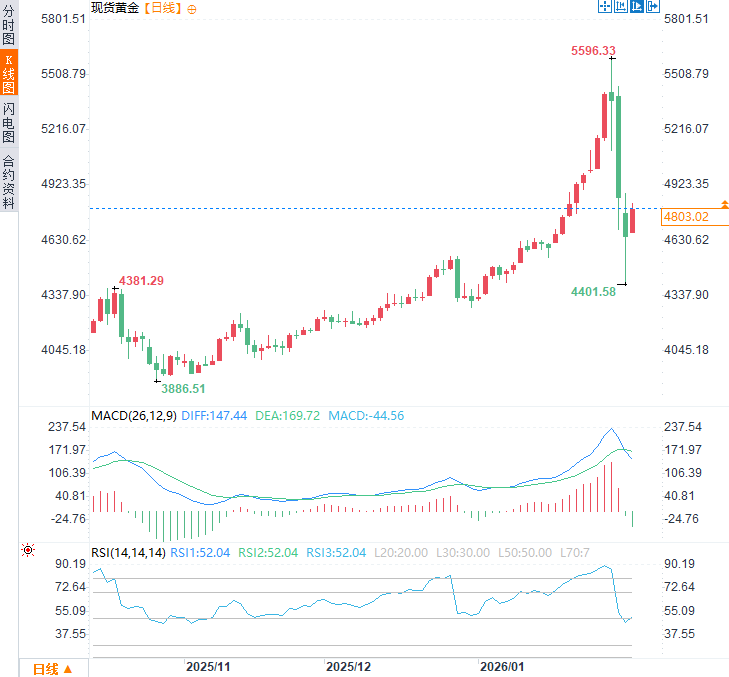
(Spot gold daily chart, source: FX678)
At 9:14 AM Beijing time, spot gold was trading at $4,822.46 per ounce.
However, those with a deep understanding of Russia's complex economic landscape are highly skeptical. They warn that the assumption that trade guarantees peace is a familiar but flawed one, and that viewing Russia as an untapped economic goldmine is a dangerous miscalculation.
Chris Weaver, an executive focused on Russian operations, said: "The investment environment in Russia will be very, very difficult for a long time."
The "trade for peace" approach faces numerous difficulties, and the slim prospect of peace provides upward momentum for safe-haven gold. On Tuesday (February 3rd) in early Asian trading, spot gold fluctuated upwards, currently trading around $4800 per ounce, with a daily gain of approximately 3.1%.
The stakes: Trade as a bulwark against conflict
For months, the United States, Ukraine, and Russia have been engaged in peace talks. Despite Russia's opposition to key Ukrainian demands, the United States remains optimistic. The latest round of talks, originally scheduled for February 1, has been postponed to later this week .
The key figure driving this process is Steve Vitkov, a real estate developer, a friend of US President Donald Trump, and the US's chief special envoy regarding the Russia-Ukraine conflict. He has publicly argued that a peace deal would create a powerful deterrent against future hostile actions.
In an interview, Vitkov said, "If everyone prospers and participates, and everyone benefits, it will naturally become a barrier to prevent future conflicts in the region."
The government also appears to be attracted by the potential profits. "Russia has such abundant resources and such a vast territory," Vitkov noted. President Trump echoed this optimism, stating a year ago that he and Russian President Vladimir Putin were discussing "major economic development deals" between the two countries.
A familiar story: Why experts are cautious
Despite this confidence, analysts believe that economic incentives are unlikely to supersede the Kremlin's core security concerns . Tatiana Stanovaya, a senior fellow at the Carnegie Eurasia Center for Russia, explains that any U.S. action perceived as a threat by Moscow—from deploying troops in the Baltic to deploying a missile defense system in Romania—will still provoke a strong reaction, regardless of the nature of the deal.
For those who have witnessed Russia’s economic evolution in the 1990s and the first decade of the 21st century, the Trump administration’s approach feels like history repeating itself.
“We’re once again assuming that business can change political relations,” said Charles Hecker, a geopolitical risk consultant. “I think the answer to that assumption is, actually, no, it can’t.”
According to data from the U.S. Department of Commerce, after the collapse of the Soviet Union, U.S. direct investment in Russia surged from $1.7 billion in 1999 to $20.8 billion in 2009. The European Union's involvement is even deeper; in 2021, Russia was one of its top five trading partners.
But as Putin's foreign policy hardened, investor sentiment deteriorated. Russia's 2014 annexation of Crimea was a turning point. "It changed our perception of Russia—although many of us should have recognized that much sooner," said Ed Verona, former chairman of the U.S.-Russia Business Council.
Russian Economy: Not the Gold Rush You Imagine
The vision of viewing Russia as a major investment opportunity may be exaggerated. Before the outbreak of the Russia-Ukraine conflict, Russia's GDP in 2021 was approximately $1.83 trillion, lower than Italy's in the same year. Dragged down by massive military spending, low oil prices, and Western sanctions, the Russian economy is projected to grow by only 1% in 2026.
Weaver pointed out that even if a peace agreement is signed tomorrow, Russia's high military spending is likely to continue as it needs to compensate for the huge losses in equipment and personnel. He said, "National resources will only be very slowly redirected to economic recovery."
Opportunities and Risks for American Companies
Experts believe that Russia will most welcome companies in sectors vital to the nation's economy, such as oil, fuel, nuclear energy, key minerals, and agriculture. As the world's second-largest fuel producer and third-largest oil producer, Russia offers substantial investment opportunities in these areas. Weaver points out that investing in these sectors is often safer because it involves dealing directly with the Russian government, rather than private partners.
Energy companies are accustomed to operating in high-risk political environments. "They're used to playing the game at a very high geopolitical level," Hecker observed. In August 2025, on the same day as the peace conference with Trump, Putin signed a law that could help ExxonMobil regain a stake in a large fuel fee project.
However, many large U.S. companies are likely to be extremely cautious. Verona points out that there are significant reputational risks involved in doing business in Russia. He says, "I don't think companies will risk their reputation just to gain some good trade opportunities, especially with sanctions still in effect, if not from the U.S., then from the EU."
Weaver added, "Most businesses will wait until they are certain that the risk of further conflict is minimal before taking action."
Special access for Trump's allies?
While many established companies may hesitate, some businessmen allied with Trump have begun exploring deals. Reports indicate that at least two Trump allies have already held investment talks with Russia. Glenn Beach, a friend of Donald Trump's youngest son, has discussed acquiring a stake in a Russian Arctic gas development project. Trump donor Stephen P. Lynch, who has a history of investing in Russia, is reportedly seeking to acquire the Nord Stream 2 pipeline.
This dynamic may resonate with the Kremlin, where the economy is dominated by business leaders with personal ties to Putin. Verona points out that Moscow may protect investors associated with Trump from predatory local partners, making a peace agreement a potentially lucrative opportunity for a select few .
Gold Market Outlook
The text's tone expresses deep skepticism about the feasibility of a "trade for peace" approach. Therefore, a more probable path is one of prolonged and structural geopolitical friction, creating a sustained demand environment for gold. Every pullback in gold prices could be a build-up of energy for the next round of price increases triggered by "irreconcilable contradictions."
(Spot gold daily chart, source: FX678)
At 9:14 AM Beijing time, spot gold was trading at $4,822.46 per ounce.
- Risk Warning and Disclaimer
- The market involves risk, and trading may not be suitable for all investors. This article is for reference only and does not constitute personal investment advice, nor does it take into account certain users’ specific investment objectives, financial situation, or other needs. Any investment decisions made based on this information are at your own risk.