The pound has failed to break through 1.37 three times. Can it make a comeback this time?
2026-02-03 17:52:28
The British pound has rebounded slightly against the US dollar recently, trading around 1.3680 during the European session on Tuesday, February 3. Although the gains were modest, the pound has shown some resilience compared to other major currencies. This relative strength is primarily driven by high levels of attention to the upcoming Bank of England policy meeting (February 5). The market widely expects the benchmark interest rate to remain unchanged at 3.75%, with the real focus not on whether there will be a rate cut, but on whether the policy statement and Governor Bailey's remarks will lean hawkish. Current market pricing indicates that traders still believe there may be a 25 basis point rate cut by June, but bets on earlier or deeper easing have clearly cooled. This shift has provided support for the pound.
Another key aspect of this meeting is the voting structure. In the previous two meetings, policymakers were significantly divided, with some splits reaching 5-4 or even more, weakening the clarity of policy signals. However, current market predictions suggest a more unanimous 7-2 result this time. This greater consensus would boost market confidence in the policy path, thus benefiting the pound. If this happens, it will signal the central bank's unwavering commitment to combating inflation and suppress expectations of overly rapid interest rate cuts.
At the post-meeting press conference, Governor Andrew Bailey's remarks will be the focus of attention. Traders are particularly interested in his comments regarding the resilience of the labor market and the sustainability of the decline in inflation. If he reiterates that inflation will return to the 2% target in the second quarter of 2026, while emphasizing that wage growth and service inflation remain sticky, the market's pricing in the number of rate cuts this year may remain restrained, and the pound is expected to gain further upward momentum. Conversely, if his tone shifts to concerns about an economic downturn and weak demand, it could stimulate expectations of rate cuts, putting downward pressure on the pound.
Externally, the US dollar's recent volatile movements have become a significant variable influencing the GBP/USD exchange rate. After rebounding for two trading days, the US dollar index has slightly retreated, currently trading around 97.50, a pullback from Monday's high of 97.73. This decline is partly due to the uncertainty caused by the partial shutdown of the US federal government, leading to delays in data releases and cautious market sentiment. However, not all signals are bearish for the dollar—the ISM Manufacturing Purchasing Managers' Index unexpectedly jumped to 52.6 in January, far exceeding the previous value of 47.9, returning above the 50-point threshold separating expansion from contraction, indicating a recovery in manufacturing activity, which provided some support for the dollar.
Next, market attention will turn to the US January private sector employment data and services PMI. Due to the uncertainty surrounding the release date of the official non-farm payroll data, the importance of the private sector employment report has been significantly amplified. If the data shows a continued strong labor market, coupled with robust service sector activity, the US dollar may regain some momentum, thus limiting the upside potential of the pound against the dollar. Conversely, if the data is weak or highly volatile, the dollar may give back its gains, opening a window for the pound to rise. However, analysts point out that even with a weaker dollar, the pound's continued strength will require support from the Bank of England's policy guidance; external assistance alone is unlikely to create a trend-driven breakout.
From a cross-currency perspective, the pound's performance against the euro appears more cautious. The euro is currently in a wait-and-see mode against the pound, as the European Central Bank will also announce its interest rate decision on the same day, and the market expects it to remain unchanged. The pound's movement against the euro will depend more on the strength of its own central bank's stance. In other words, if the Bank of England releases a slightly hawkish signal, the pound is likely to gain the upper hand in the European currency pairings.
From a technical chart perspective, the GBP/USD pair is at a crucial directional decision point. The 60-minute chart shows that the price previously attempted to break higher twice, failing each time: once reaching 1.3714 before falling back, and the other time encountering resistance near 1.3706, indicating strong short-term supply pressure around 1.3710. If it can effectively break through and hold this level, upside potential may open up, challenging higher resistance levels. Support on the downside is concentrated around 1.3660; a break below this level could lead to further testing of the defensive zone near the previous low of 1.3622.
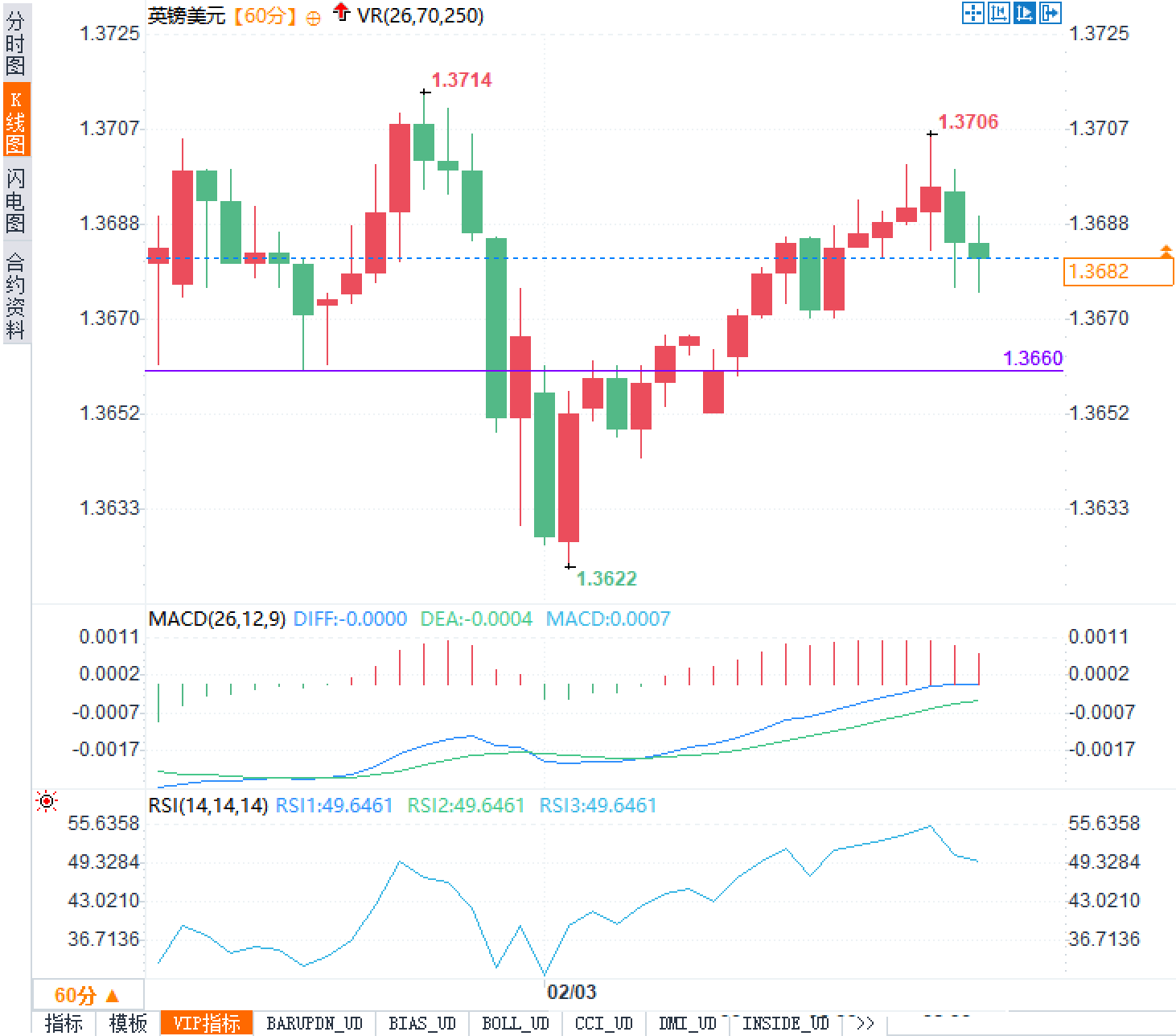
In terms of technical indicators, the Relative Strength Index (RSI) is currently at 49.6461, close to the midline, indicating a relatively balanced force between buyers and sellers, with no clear dominant trend yet. The MACD indicator is also showing a mild recovery, with the DIFF around -0.0000, the DEA around -0.0004, and the histogram slightly rising to 0.0007. While there are signs of stabilization, the momentum is not strong. Overall, the technical picture is in a "waiting for the right moment" state—neither conditions for chasing the rally are present, nor are there any signs of a breakdown. A true directional breakout will likely only become clear after the Bank of England's meeting results are released.
In summary, if the Bank of England maintains its interest rate unchanged and adopts a positive tone, coupled with a relatively consistent vote, the pound is likely to retest the 1.3710 resistance level; a breakout with significant volume would activate further upside potential. Conversely, if policy communication is dovish, emphasizing economic risks and the possibility of rate cuts, the market will quickly adjust its interest rate expectations, and the pound may fall back to 1.3660 or even test the 1.3622 support zone.
Another key aspect of this meeting is the voting structure. In the previous two meetings, policymakers were significantly divided, with some splits reaching 5-4 or even more, weakening the clarity of policy signals. However, current market predictions suggest a more unanimous 7-2 result this time. This greater consensus would boost market confidence in the policy path, thus benefiting the pound. If this happens, it will signal the central bank's unwavering commitment to combating inflation and suppress expectations of overly rapid interest rate cuts.
At the post-meeting press conference, Governor Andrew Bailey's remarks will be the focus of attention. Traders are particularly interested in his comments regarding the resilience of the labor market and the sustainability of the decline in inflation. If he reiterates that inflation will return to the 2% target in the second quarter of 2026, while emphasizing that wage growth and service inflation remain sticky, the market's pricing in the number of rate cuts this year may remain restrained, and the pound is expected to gain further upward momentum. Conversely, if his tone shifts to concerns about an economic downturn and weak demand, it could stimulate expectations of rate cuts, putting downward pressure on the pound.
The US dollar is volatile, and data-driven speculation will influence the pound's direction.
Externally, the US dollar's recent volatile movements have become a significant variable influencing the GBP/USD exchange rate. After rebounding for two trading days, the US dollar index has slightly retreated, currently trading around 97.50, a pullback from Monday's high of 97.73. This decline is partly due to the uncertainty caused by the partial shutdown of the US federal government, leading to delays in data releases and cautious market sentiment. However, not all signals are bearish for the dollar—the ISM Manufacturing Purchasing Managers' Index unexpectedly jumped to 52.6 in January, far exceeding the previous value of 47.9, returning above the 50-point threshold separating expansion from contraction, indicating a recovery in manufacturing activity, which provided some support for the dollar.
Next, market attention will turn to the US January private sector employment data and services PMI. Due to the uncertainty surrounding the release date of the official non-farm payroll data, the importance of the private sector employment report has been significantly amplified. If the data shows a continued strong labor market, coupled with robust service sector activity, the US dollar may regain some momentum, thus limiting the upside potential of the pound against the dollar. Conversely, if the data is weak or highly volatile, the dollar may give back its gains, opening a window for the pound to rise. However, analysts point out that even with a weaker dollar, the pound's continued strength will require support from the Bank of England's policy guidance; external assistance alone is unlikely to create a trend-driven breakout.
From a cross-currency perspective, the pound's performance against the euro appears more cautious. The euro is currently in a wait-and-see mode against the pound, as the European Central Bank will also announce its interest rate decision on the same day, and the market expects it to remain unchanged. The pound's movement against the euro will depend more on the strength of its own central bank's stance. In other words, if the Bank of England releases a slightly hawkish signal, the pound is likely to gain the upper hand in the European currency pairings.
Technically, the market is poised for a breakout; a directional move is just one step away.
From a technical chart perspective, the GBP/USD pair is at a crucial directional decision point. The 60-minute chart shows that the price previously attempted to break higher twice, failing each time: once reaching 1.3714 before falling back, and the other time encountering resistance near 1.3706, indicating strong short-term supply pressure around 1.3710. If it can effectively break through and hold this level, upside potential may open up, challenging higher resistance levels. Support on the downside is concentrated around 1.3660; a break below this level could lead to further testing of the defensive zone near the previous low of 1.3622.
In terms of technical indicators, the Relative Strength Index (RSI) is currently at 49.6461, close to the midline, indicating a relatively balanced force between buyers and sellers, with no clear dominant trend yet. The MACD indicator is also showing a mild recovery, with the DIFF around -0.0000, the DEA around -0.0004, and the histogram slightly rising to 0.0007. While there are signs of stabilization, the momentum is not strong. Overall, the technical picture is in a "waiting for the right moment" state—neither conditions for chasing the rally are present, nor are there any signs of a breakdown. A true directional breakout will likely only become clear after the Bank of England's meeting results are released.
In summary, if the Bank of England maintains its interest rate unchanged and adopts a positive tone, coupled with a relatively consistent vote, the pound is likely to retest the 1.3710 resistance level; a breakout with significant volume would activate further upside potential. Conversely, if policy communication is dovish, emphasizing economic risks and the possibility of rate cuts, the market will quickly adjust its interest rate expectations, and the pound may fall back to 1.3660 or even test the 1.3622 support zone.
- Risk Warning and Disclaimer
- The market involves risk, and trading may not be suitable for all investors. This article is for reference only and does not constitute personal investment advice, nor does it take into account certain users’ specific investment objectives, financial situation, or other needs. Any investment decisions made based on this information are at your own risk.