Copper prices rebounded sharply by 4%! A crucial battle is underway, keep an eye on this level.
2026-02-03 17:40:48
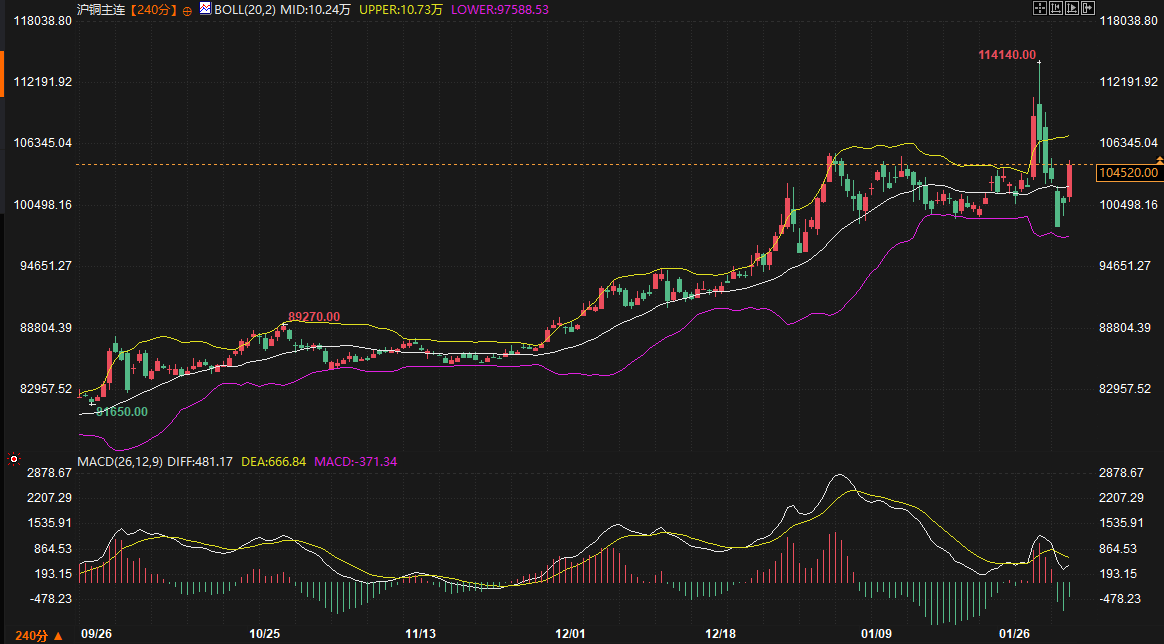
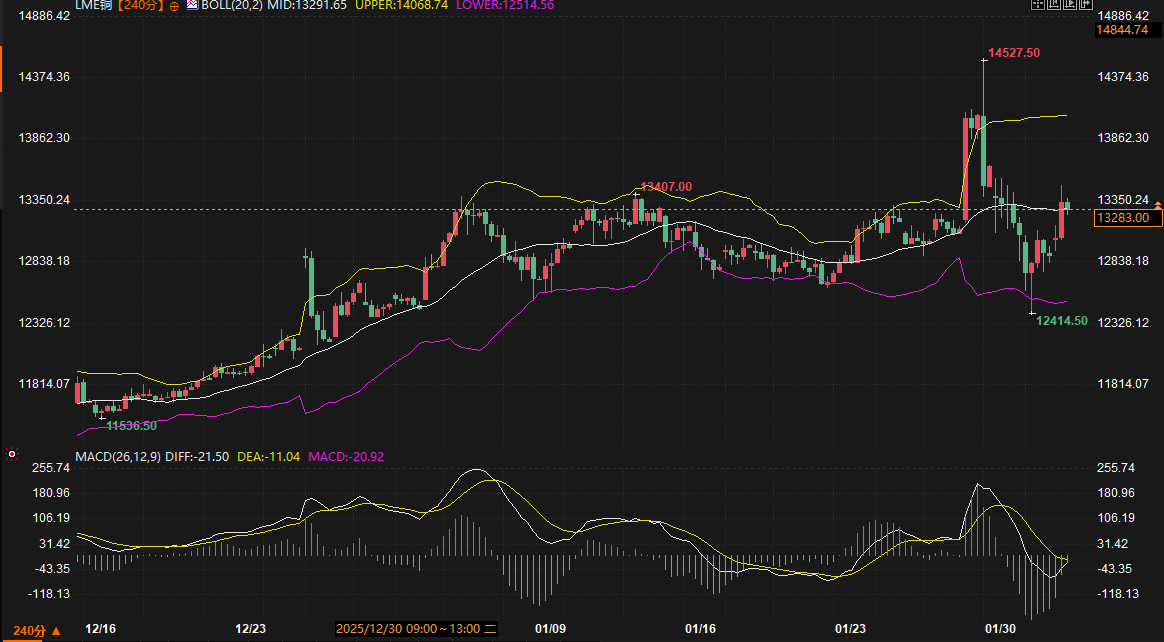
On Tuesday (February 3), copper prices both domestically and internationally rebounded significantly after several days of sharp corrections. Three-month copper prices on the London Metal Exchange (LME) surged over 4%, returning above $13,400 per tonne; the most active copper contract on the Shanghai Futures Exchange closed up 2.60% at 104,500 yuan per tonne. This rebound corrected some of the losses from the previous decline from historical highs, with the market attempting to find a new equilibrium, supported by supply concerns and long-term demand prospects.

The recent sharp fluctuations in copper prices have attracted considerable attention. Since last Friday, the market has experienced a "hard correction," with Shanghai copper prices falling as much as 13.65% from their record high of 114,160 yuan, and LME copper prices also dropping more than 14% from their peak of $14,527.50. This pullback was driven by multiple factors, including profit-taking by some long positions and short-term fluctuations in macroeconomic sentiment. However, the simultaneous rebound in the prices of precious metals such as gold and silver on Tuesday boosted overall metals market sentiment. More importantly, the core fundamental logic supporting copper prices has not fundamentally changed.
Supply-side disruptions continue to support the market. Mine production interruptions and the risk of regional trade flow disruptions triggered by US tariff rhetoric keep supply concerns alive. Meanwhile, the long-term demand story remains solid. Copper's central role in the global energy transition, electrification, and the construction of AI data centers lays the foundation for strong long-term demand. Analysts from well-known institutions point out that although short-term volatility may persist, the core narrative of the copper market remains intact, and once the macroeconomic environment stabilizes, price corrections are expected to attract new buying.
The dynamics of the Chinese market are key to observing recent trends. Although the Chinese New Year holiday is approaching, typically a time of slow market activity, the price decline has actually stimulated some actual demand. Analysts point out that some manufacturers who were absent during the copper price surge are now buying during the price correction to replenish their pre-holiday inventories. This phenomenon is evidenced by the rapid rebound in the Yangshan copper premium, which has risen significantly from its low point in a short period, indicating a recovery in import demand. Furthermore, the latest statement from the China Nonferrous Metals Industry Association has also provided support for market sentiment. The association stated that it will improve the copper resource reserve system, including expanding the national strategic copper reserve and exploring the establishment of a commercial reserve mechanism. These measures are interpreted by the market as helping to improve the medium- and long-term supply and demand structure, thus supporting prices .
From a technical perspective, LME copper prices rebounded strongly on Tuesday after a rapid decline, and are currently consolidating around key moving average levels. On the 240-minute chart, the SHFE copper main contract rebounded to near the Bollinger Band middle line. The MACD indicator shows that bearish momentum has weakened, but the overall trend remains one of consolidation. In the short term, the initial resistance area for SHFE copper is expected to be around 107,300-108,000 yuan, which coincides with the upper Bollinger Band and some previous areas of high trading volume. Support is initially seen at 102,400 yuan (Bollinger Band middle line); a break below this level could lead to a retest of the 100,000 yuan psychological level and lower support levels. For LME copper, the current rebound has temporarily moved it out of the extremely oversold zone, but whether it can continue to rise remains to be seen. Initial resistance is seen in the 13,800-14,000 USD area, a technical resistance level from the previous decline; support is located around 13,200 USD and 12,800 USD. During trading, it is necessary to closely monitor the sustainability of the price rebound, the trading volume, and whether any new macroeconomic news or industry policies will be introduced to affect market sentiment.
Looking ahead, copper prices are expected to enter a period of high-level fluctuation. Short-term movements will be significantly influenced by macroeconomic sentiment, dollar volatility, and pre-holiday capital flows. In the medium to long term, the structural imbalance between supply and demand—namely, limited supply growth versus broad prospects for green demand—remains the core logic driving price levels. China's policy direction regarding capacity management and resource reserves, as well as the actual performance of manufacturing activity in major global economies, will be key areas to monitor. After digesting the risks of a rapid price increase, the market may continue its long-term themes with greater resilience. Investors should note that with the Spring Festival holiday approaching, market liquidity may change, and volatility may increase.
The recent sharp fluctuations in copper prices have attracted considerable attention. Since last Friday, the market has experienced a "hard correction," with Shanghai copper prices falling as much as 13.65% from their record high of 114,160 yuan, and LME copper prices also dropping more than 14% from their peak of $14,527.50. This pullback was driven by multiple factors, including profit-taking by some long positions and short-term fluctuations in macroeconomic sentiment. However, the simultaneous rebound in the prices of precious metals such as gold and silver on Tuesday boosted overall metals market sentiment. More importantly, the core fundamental logic supporting copper prices has not fundamentally changed.
Supply-side disruptions continue to support the market. Mine production interruptions and the risk of regional trade flow disruptions triggered by US tariff rhetoric keep supply concerns alive. Meanwhile, the long-term demand story remains solid. Copper's central role in the global energy transition, electrification, and the construction of AI data centers lays the foundation for strong long-term demand. Analysts from well-known institutions point out that although short-term volatility may persist, the core narrative of the copper market remains intact, and once the macroeconomic environment stabilizes, price corrections are expected to attract new buying.
The dynamics of the Chinese market are key to observing recent trends. Although the Chinese New Year holiday is approaching, typically a time of slow market activity, the price decline has actually stimulated some actual demand. Analysts point out that some manufacturers who were absent during the copper price surge are now buying during the price correction to replenish their pre-holiday inventories. This phenomenon is evidenced by the rapid rebound in the Yangshan copper premium, which has risen significantly from its low point in a short period, indicating a recovery in import demand. Furthermore, the latest statement from the China Nonferrous Metals Industry Association has also provided support for market sentiment. The association stated that it will improve the copper resource reserve system, including expanding the national strategic copper reserve and exploring the establishment of a commercial reserve mechanism. These measures are interpreted by the market as helping to improve the medium- and long-term supply and demand structure, thus supporting prices .
From a technical perspective, LME copper prices rebounded strongly on Tuesday after a rapid decline, and are currently consolidating around key moving average levels. On the 240-minute chart, the SHFE copper main contract rebounded to near the Bollinger Band middle line. The MACD indicator shows that bearish momentum has weakened, but the overall trend remains one of consolidation. In the short term, the initial resistance area for SHFE copper is expected to be around 107,300-108,000 yuan, which coincides with the upper Bollinger Band and some previous areas of high trading volume. Support is initially seen at 102,400 yuan (Bollinger Band middle line); a break below this level could lead to a retest of the 100,000 yuan psychological level and lower support levels. For LME copper, the current rebound has temporarily moved it out of the extremely oversold zone, but whether it can continue to rise remains to be seen. Initial resistance is seen in the 13,800-14,000 USD area, a technical resistance level from the previous decline; support is located around 13,200 USD and 12,800 USD. During trading, it is necessary to closely monitor the sustainability of the price rebound, the trading volume, and whether any new macroeconomic news or industry policies will be introduced to affect market sentiment.
Looking ahead, copper prices are expected to enter a period of high-level fluctuation. Short-term movements will be significantly influenced by macroeconomic sentiment, dollar volatility, and pre-holiday capital flows. In the medium to long term, the structural imbalance between supply and demand—namely, limited supply growth versus broad prospects for green demand—remains the core logic driving price levels. China's policy direction regarding capacity management and resource reserves, as well as the actual performance of manufacturing activity in major global economies, will be key areas to monitor. After digesting the risks of a rapid price increase, the market may continue its long-term themes with greater resilience. Investors should note that with the Spring Festival holiday approaching, market liquidity may change, and volatility may increase.
- Risk Warning and Disclaimer
- The market involves risk, and trading may not be suitable for all investors. This article is for reference only and does not constitute personal investment advice, nor does it take into account certain users’ specific investment objectives, financial situation, or other needs. Any investment decisions made based on this information are at your own risk.