The pound held steady above 1.3600, with focus on UK employment and inflation data for direction.
2026-02-17 10:32:52
On Tuesday during the Asian session, GBP/USD remained weak for the second consecutive trading day, but lacked significant bearish momentum, and the exchange rate held steady above the 1.3600 level.
Market sentiment was relatively cautious, with investors reluctant to make large bets ahead of key UK data releases. The UK Office for National Statistics is about to release its latest monthly employment report.
The market widely expects the UK labor market to continue softening in early 2026. The number of people claiming unemployment benefits in January is projected to rise to 22.8K, up from 17.9K in January; the unemployment rate for the three months to December is expected to remain at a near two-year high of 5.1%.
In addition, salary growth data is also attracting much attention – both regular salaries (excluding bonuses) and total salaries (including bonuses) are expected to show signs of slowing down.
If employment and wage data weaken further, it will reinforce market concerns about a slowdown in the UK economy and increase expectations of a 25 basis point rate cut in March, thus putting pressure on the pound.
Following closely is the UK consumer inflation data released on Wednesday. If inflation continues to decline, it will provide the Bank of England with more room to cut interest rates; conversely, if prices remain sticky, it may postpone expectations of easing.
Regarding the US dollar, the market is also focused on the FOMC meeting minutes to be released on Wednesday, looking for more signals about the Fed's future interest rate path. Last week's weak US inflation data increased market bets on a June rate cut.
Meanwhile, the market has already priced in the possibility of at least two rate cuts in 2026, and the discussions surrounding central bank independence have somewhat dampened bullish sentiment towards the US dollar.
Later this week, UK retail sales data and preliminary PMI figures from both the UK and the US could exacerbate market volatility. Overall, the pound's short-term trajectory will depend on whether UK data confirms an economic slowdown, while the dollar will be constrained by changes in the Federal Reserve's policy outlook.
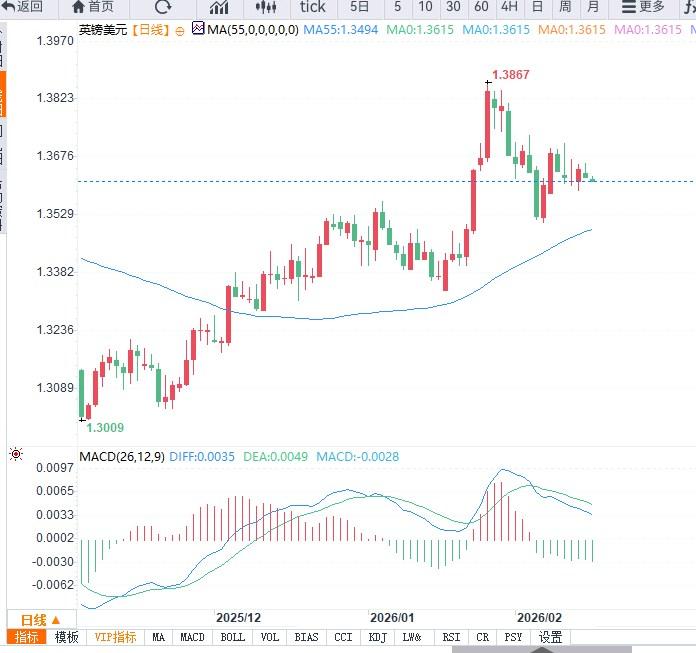
From the daily chart, GBP/USD maintains an overall medium-term upward trend, but recently encountered resistance near 1.3700 and experienced a technical pullback. The price is currently trading near the 20-day moving average, and short-term momentum has weakened.
If the price breaks below the 1.3600 level and effectively falls below the 1.3560 support, it may further decline to the 1.3500 area; conversely, if it stabilizes and rebounds and breaks through the 1.3680 resistance level, it may retest the 1.3700–1.3750 range.
The 4-hour chart shows that the exchange rate is maintaining a range-bound trading pattern, with short-term moving averages trending flat, MACD histogram shortening, and RSI hovering around 50, indicating that the market lacks a clear direction.
The overall technical structure indicates that GBP/USD is consolidating above a key support level, and short-term volatility may increase as data is released.
Editor's Note:
The core issue facing the pound right now is whether the UK economy shows signs of a more pronounced slowdown. If employment and wage data weaken while inflation falls, it will strengthen expectations of interest rate cuts, potentially putting downward pressure on the pound.
However, the US dollar is also constrained by bets on a Fed rate cut. Against this backdrop, GBP/USD is more likely to exhibit a volatile but slightly bullish pattern, but a true trend breakout will require guidance from UK inflation and the Fed minutes.
Market sentiment was relatively cautious, with investors reluctant to make large bets ahead of key UK data releases. The UK Office for National Statistics is about to release its latest monthly employment report.
The market widely expects the UK labor market to continue softening in early 2026. The number of people claiming unemployment benefits in January is projected to rise to 22.8K, up from 17.9K in January; the unemployment rate for the three months to December is expected to remain at a near two-year high of 5.1%.
In addition, salary growth data is also attracting much attention – both regular salaries (excluding bonuses) and total salaries (including bonuses) are expected to show signs of slowing down.
If employment and wage data weaken further, it will reinforce market concerns about a slowdown in the UK economy and increase expectations of a 25 basis point rate cut in March, thus putting pressure on the pound.
Following closely is the UK consumer inflation data released on Wednesday. If inflation continues to decline, it will provide the Bank of England with more room to cut interest rates; conversely, if prices remain sticky, it may postpone expectations of easing.
Regarding the US dollar, the market is also focused on the FOMC meeting minutes to be released on Wednesday, looking for more signals about the Fed's future interest rate path. Last week's weak US inflation data increased market bets on a June rate cut.
Meanwhile, the market has already priced in the possibility of at least two rate cuts in 2026, and the discussions surrounding central bank independence have somewhat dampened bullish sentiment towards the US dollar.
Later this week, UK retail sales data and preliminary PMI figures from both the UK and the US could exacerbate market volatility. Overall, the pound's short-term trajectory will depend on whether UK data confirms an economic slowdown, while the dollar will be constrained by changes in the Federal Reserve's policy outlook.
From the daily chart, GBP/USD maintains an overall medium-term upward trend, but recently encountered resistance near 1.3700 and experienced a technical pullback. The price is currently trading near the 20-day moving average, and short-term momentum has weakened.
If the price breaks below the 1.3600 level and effectively falls below the 1.3560 support, it may further decline to the 1.3500 area; conversely, if it stabilizes and rebounds and breaks through the 1.3680 resistance level, it may retest the 1.3700–1.3750 range.
The 4-hour chart shows that the exchange rate is maintaining a range-bound trading pattern, with short-term moving averages trending flat, MACD histogram shortening, and RSI hovering around 50, indicating that the market lacks a clear direction.
The overall technical structure indicates that GBP/USD is consolidating above a key support level, and short-term volatility may increase as data is released.
Editor's Note:
The core issue facing the pound right now is whether the UK economy shows signs of a more pronounced slowdown. If employment and wage data weaken while inflation falls, it will strengthen expectations of interest rate cuts, potentially putting downward pressure on the pound.
However, the US dollar is also constrained by bets on a Fed rate cut. Against this backdrop, GBP/USD is more likely to exhibit a volatile but slightly bullish pattern, but a true trend breakout will require guidance from UK inflation and the Fed minutes.
- Risk Warning and Disclaimer
- The market involves risk, and trading may not be suitable for all investors. This article is for reference only and does not constitute personal investment advice, nor does it take into account certain users’ specific investment objectives, financial situation, or other needs. Any investment decisions made based on this information are at your own risk.