Is the crude oil surplus a smokescreen? Trump's overt strategy lies behind the V-shaped oil price drop.
2026-02-17 14:15:08
The market generally believes that the rise in oil prices is due to the sharp contrast between the geopolitical tensions that defy conventional logic and the structural oversupply that continues to suppress oil prices, which directly leads to the typical oscillating characteristics of "fundamental pressure and event-driven rebound".
Despite the International Energy Agency's (IEA) clear warning that global crude oil will face a massive surplus of 3.73 million to 3.84 million barrels per day in fiscal year 2026 (accounting for about 4% of global demand), the "war premium" generated by the escalation of the US's "maximum pressure" campaign against Iran and the tightening of sanctions on Russian energy exports has stubbornly supported crude oil prices, preventing Brent crude from falling below key support levels.
However, there may be other reasons that are actually driving the continued rise in crude oil prices. This article summarizes the mainstream reasons in the market, as well as the actual reasons that the author believes there are.
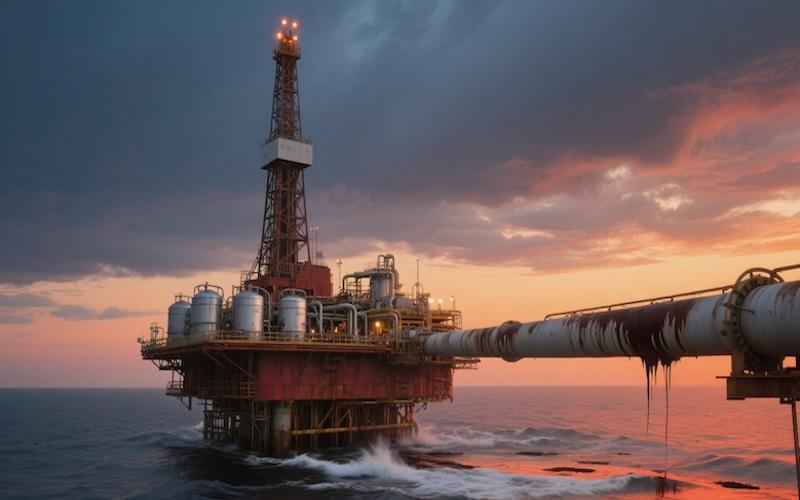
The Trump administration has taken a clear negative stance toward new energy sources and wind power. Its policy revolves around "revitalizing traditional energy and suppressing clean energy." It has repeatedly claimed that we have the world's richest oil and gas reserves, yet we are foolishly pursuing expensive and unstable wind power, which is a betrayal of America's energy independence.
On the one hand, citing "national security risks" and "legal deficiencies," all large-scale offshore wind power projects under construction, as well as the Lava Ridge wind power project approved during the Biden administration, were halted, with the argument that wind power facilities would interfere with radar detection and harm rural communities. On the other hand, the "Magnificent Act" completely eliminated federal tax credits for electric vehicles, gradually terminated investment and production tax credits for wind and solar energy, opened federal land and waters to oil and gas drilling, reduced extraction royalties, and strongly supported traditional energy industries with policy inclinations. Furthermore, the US expanded its control over the world's existing resources through means such as sending troops to Venezuela.
This strategy of seizing and selling energy runs counter to the global trend of green transformation, but it has created a key disruption to the bullish and bearish game in the crude oil market in 2026.
From a market impact perspective, on the supply side, the policy subsidies and deregulation of traditional energy sources have further strengthened the production resilience of US shale oil, promoted the continuous expansion of crude oil supply from the "G5 Americas," provided policy support for the 4 million barrels per day oversupply situation warned by the IEA, and made the "downward pull" that suppresses the central oil price more robust in the medium to long term.
On the demand side, the cancellation of new energy subsidies has hindered clean energy projects in the United States, slowed down technology transfer, and delayed the promotion of electric vehicles and wind power. The substitution effect of crude oil demand, which could have been accelerated, has been weakened, indirectly alleviating the pressure of stagnant crude oil demand and becoming a key factor supporting the continued rebound of oil prices under the narrative of oversupply.
The IEA's major report in February 2026 quantified the oversupply as a clear bearish factor for trading—this is the largest crude oil oversupply in history outside of the pandemic, becoming the core "gravitational field" suppressing the central level of oil prices.
From the demand side, global crude oil demand growth has stalled substantially: the rapid increase in the penetration rate of electric vehicles in China and the accelerated shift of global demand to liquefied natural gas (LNG) power infrastructure to meet the electricity needs of the artificial intelligence industry have led to a slowdown in crude oil demand growth to less than 930,000 barrels per day, further exacerbating the supply-demand mismatch.
The bearish fundamental logic is constantly being disrupted by sudden geopolitical events in the Persian Gulf and Eastern Europe, becoming the core variable for short-term trading.
In early February, the United States deployed its second aircraft carrier to the Middle East, marking a substantial escalation of its hardline stance against Tehran. Despite ongoing diplomatic negotiations in Geneva, market risk appetite remained tight.
Bloomberg New Energy Finance's calculations show that if Iran's 3.3 million barrels per day production capacity were completely disrupted, it would instantly wipe out the global supply glut and push oil prices straight up to the key resistance level of $91 per barrel. This extreme scenario provides profit opportunities for short-term breakout trading.
It should be noted that geopolitical changes in the Strait of Hormuz could instantly shift the market narrative from "oversupply" to "scarcity." While the release of strategic petroleum reserves (SPR) is intended to mitigate volatility, its capacity for adjustment has been significantly limited after years of depletion. Therefore, we must be wary of liquidity risks under extreme market conditions.
By sending troops to Venezuela, holding talks with domestic oil companies, and using policies and geopolitical maneuvers to drive up oil prices, Trump's core objective is to revitalize the oil and shale gas industries, while simultaneously acquiring more energy resources through plunder, ultimately to gain more fiscal revenue and ensure domestic energy supply.
Meanwhile, due to the prolonged low oil prices and the new energy wave, the market has undergone significant clearing, with large-scale layoffs and mergers and acquisitions occurring in the oil industry. It is expected that oil prices will likely remain at a relatively bullish price level until oil companies commit to sufficient capital expenditures. In the short term, due to data disturbances such as oversupply, the low points in crude oil prices that coincide with oversupply data are actually worthwhile entry points.
From a technical perspective, US crude oil has rebounded continuously from the bottom, breaking through the trading range and rising. Currently, it is consolidating in the upper half of the range, with 62.37 as the recent support level and the resistance level around 64.58.
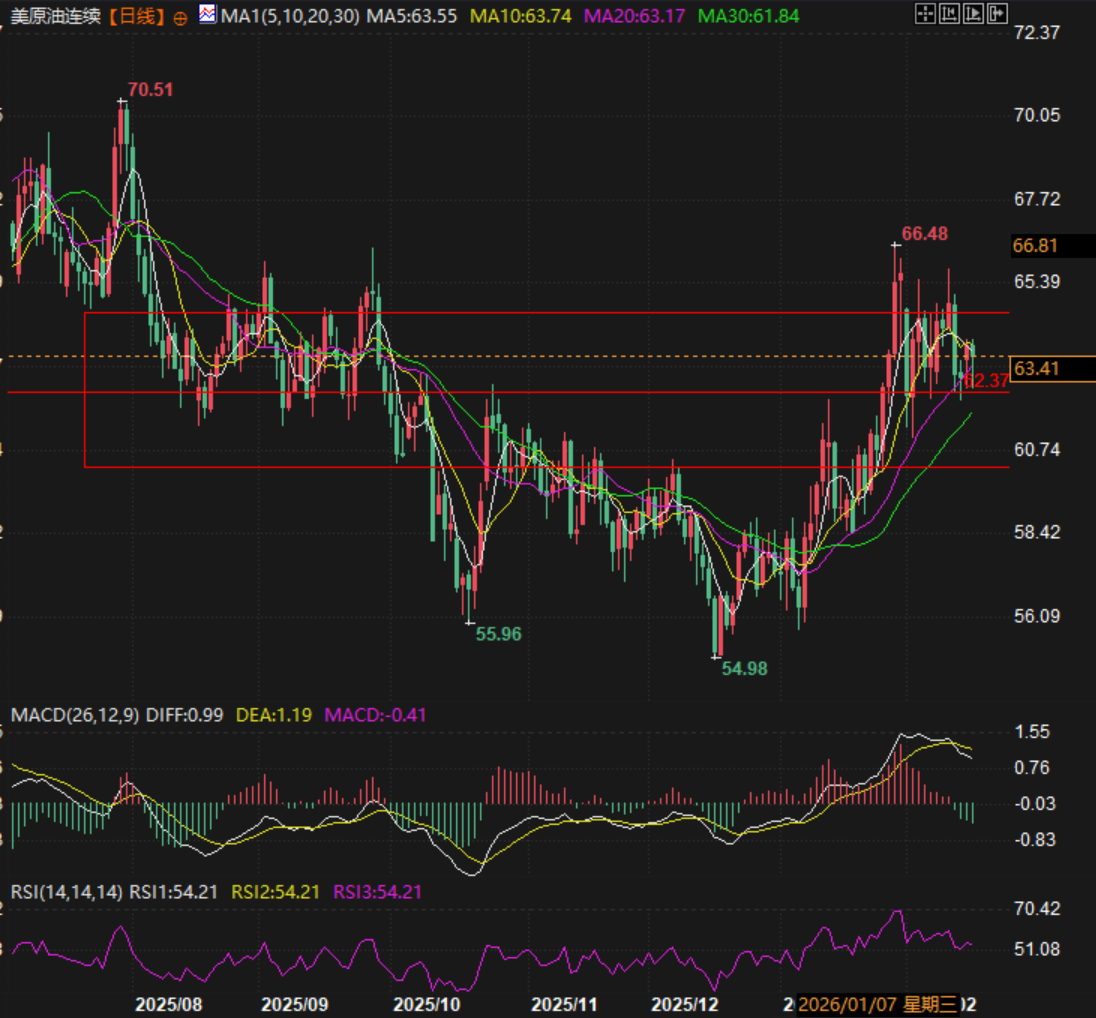
(US crude oil futures daily chart, source: FX678)
At 14:11 Beijing time, US crude oil futures were trading at $63.40 per barrel.
Despite the International Energy Agency's (IEA) clear warning that global crude oil will face a massive surplus of 3.73 million to 3.84 million barrels per day in fiscal year 2026 (accounting for about 4% of global demand), the "war premium" generated by the escalation of the US's "maximum pressure" campaign against Iran and the tightening of sanctions on Russian energy exports has stubbornly supported crude oil prices, preventing Brent crude from falling below key support levels.
However, there may be other reasons that are actually driving the continued rise in crude oil prices. This article summarizes the mainstream reasons in the market, as well as the actual reasons that the author believes there are.
The real reason: US energy policy leans towards: denying new energy sources and reviving oil hegemony.
The Trump administration has taken a clear negative stance toward new energy sources and wind power. Its policy revolves around "revitalizing traditional energy and suppressing clean energy." It has repeatedly claimed that we have the world's richest oil and gas reserves, yet we are foolishly pursuing expensive and unstable wind power, which is a betrayal of America's energy independence.
On the one hand, citing "national security risks" and "legal deficiencies," all large-scale offshore wind power projects under construction, as well as the Lava Ridge wind power project approved during the Biden administration, were halted, with the argument that wind power facilities would interfere with radar detection and harm rural communities. On the other hand, the "Magnificent Act" completely eliminated federal tax credits for electric vehicles, gradually terminated investment and production tax credits for wind and solar energy, opened federal land and waters to oil and gas drilling, reduced extraction royalties, and strongly supported traditional energy industries with policy inclinations. Furthermore, the US expanded its control over the world's existing resources through means such as sending troops to Venezuela.
This strategy of seizing and selling energy runs counter to the global trend of green transformation, but it has created a key disruption to the bullish and bearish game in the crude oil market in 2026.
From a market impact perspective, on the supply side, the policy subsidies and deregulation of traditional energy sources have further strengthened the production resilience of US shale oil, promoted the continuous expansion of crude oil supply from the "G5 Americas," provided policy support for the 4 million barrels per day oversupply situation warned by the IEA, and made the "downward pull" that suppresses the central oil price more robust in the medium to long term.
On the demand side, the cancellation of new energy subsidies has hindered clean energy projects in the United States, slowed down technology transfer, and delayed the promotion of electric vehicles and wind power. The substitution effect of crude oil demand, which could have been accelerated, has been weakened, indirectly alleviating the pressure of stagnant crude oil demand and becoming a key factor supporting the continued rebound of oil prices under the narrative of oversupply.
The prevailing view on oil price oversupply: a 4 million barrel surplus sets the tone for the medium- to long-term trend.
The IEA's major report in February 2026 quantified the oversupply as a clear bearish factor for trading—this is the largest crude oil oversupply in history outside of the pandemic, becoming the core "gravitational field" suppressing the central level of oil prices.
From the demand side, global crude oil demand growth has stalled substantially: the rapid increase in the penetration rate of electric vehicles in China and the accelerated shift of global demand to liquefied natural gas (LNG) power infrastructure to meet the electricity needs of the artificial intelligence industry have led to a slowdown in crude oil demand growth to less than 930,000 barrels per day, further exacerbating the supply-demand mismatch.
Support for mainstream oil prices: Geopolitical risks and opportunities
The bearish fundamental logic is constantly being disrupted by sudden geopolitical events in the Persian Gulf and Eastern Europe, becoming the core variable for short-term trading.
In early February, the United States deployed its second aircraft carrier to the Middle East, marking a substantial escalation of its hardline stance against Tehran. Despite ongoing diplomatic negotiations in Geneva, market risk appetite remained tight.
Bloomberg New Energy Finance's calculations show that if Iran's 3.3 million barrels per day production capacity were completely disrupted, it would instantly wipe out the global supply glut and push oil prices straight up to the key resistance level of $91 per barrel. This extreme scenario provides profit opportunities for short-term breakout trading.
It should be noted that geopolitical changes in the Strait of Hormuz could instantly shift the market narrative from "oversupply" to "scarcity." While the release of strategic petroleum reserves (SPR) is intended to mitigate volatility, its capacity for adjustment has been significantly limited after years of depletion. Therefore, we must be wary of liquidity risks under extreme market conditions.
Summary and Technical Analysis:
By sending troops to Venezuela, holding talks with domestic oil companies, and using policies and geopolitical maneuvers to drive up oil prices, Trump's core objective is to revitalize the oil and shale gas industries, while simultaneously acquiring more energy resources through plunder, ultimately to gain more fiscal revenue and ensure domestic energy supply.
Meanwhile, due to the prolonged low oil prices and the new energy wave, the market has undergone significant clearing, with large-scale layoffs and mergers and acquisitions occurring in the oil industry. It is expected that oil prices will likely remain at a relatively bullish price level until oil companies commit to sufficient capital expenditures. In the short term, due to data disturbances such as oversupply, the low points in crude oil prices that coincide with oversupply data are actually worthwhile entry points.
From a technical perspective, US crude oil has rebounded continuously from the bottom, breaking through the trading range and rising. Currently, it is consolidating in the upper half of the range, with 62.37 as the recent support level and the resistance level around 64.58.
(US crude oil futures daily chart, source: FX678)
At 14:11 Beijing time, US crude oil futures were trading at $63.40 per barrel.
- Risk Warning and Disclaimer
- The market involves risk, and trading may not be suitable for all investors. This article is for reference only and does not constitute personal investment advice, nor does it take into account certain users’ specific investment objectives, financial situation, or other needs. Any investment decisions made based on this information are at your own risk.