March 2nd Financial Breakfast: Tensions between the US and Iran are extremely high; over 40 key Iranian officials have been killed; gold prices may target $5500; oil prices rise by over 6%.
2026-03-02 07:16:59
On Monday (March 1, Beijing time) in early Asian trading, spot gold opened up as much as 1.5%, hitting a one-month high of $5,373.49 per ounce, as the weekend's US and Israeli attacks on Iran, which killed more than 40 key Iranian officials, escalated tensions in the Middle East and fueled safe-haven demand. Gold prices may target the $5,500 per ounce mark during the day. US crude oil opened up more than 6% on Monday. Although OPEC announced an increase in production in April over the weekend, short-term geopolitical tensions in the Middle East will dominate oil prices. Tensions between the US and Iran have exacerbated concerns about disruptions in the Strait of Hormuz. Oil tankers outside the Strait of Hormuz are full, with more than 250 ships anchored and waiting. US oil prices may test the $80 per barrel mark during the day.

U.S. stocks closed lower on Friday, with the Dow Jones Industrial Average down 1.05%, the S&P 500 down 0.43%, and the Nasdaq down 0.92%. Despite corporate earnings growth of over 14% in the fourth quarter, the market was still impacted by multiple uncertainties, resulting in the S&P 500 and Nasdaq indices posting their biggest monthly declines since March 2025.
Financial stocks were pressured by concerns that Barclays, Wells Fargo, and other British lenders might be dragged down by the collapse of those institutions, while chip and software stocks continued to decline due to concerns about the costs and business disruptions brought about by artificial intelligence (AI). Meanwhile, geopolitical tensions and a higher-than-expected producer price index (PPI) exacerbated market expectations that the Federal Reserve would postpone interest rate cuts.
Defensive sectors such as healthcare and utilities performed relatively well, highlighting market risk aversion. In terms of individual stocks, Netflix surged 13.8% after ending its acquisition of Warner Bros., Dell jumped 21.9% due to optimistic prospects for its AI server business, while Nvidia continued its downward trend despite strong earnings.
Gold prices rose to a near one-month high on Friday, with spot gold closing at $5,230.56 per ounce. Gold prices gained 7.6% in February, marking the seventh consecutive month of increases. This rally was primarily driven by geopolitical tensions. Tensions between the US and Iran triggered safe-haven demand, while US Treasury yields fell to a three-month low, reducing the opportunity cost of holding non-interest-bearing gold and further boosting prices.
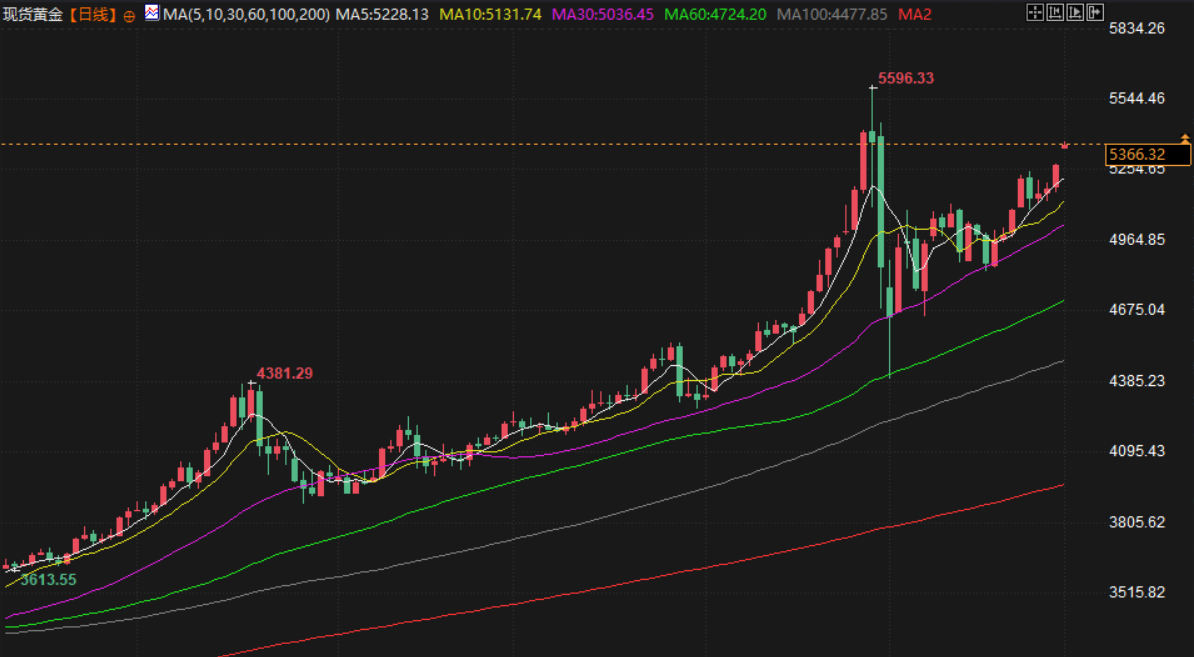
Meanwhile, a recovery in physical demand also provided support for gold prices. Analysts believe that if safe-haven demand persists, the next target for gold prices may be $5,450. The US and Israel's attacks on Iran on Saturday, which killed several officials including Iran's Supreme Leader Khamenei, and which could continue for weeks, exacerbated the volatility in gold prices this week. Silver and platinum also recorded monthly gains.
Oil prices rose about 2% on Friday as traders braced for supply disruptions ahead of the weekend, with Brent crude futures settling at $72.48 a barrel, up 2.45%, amid tensions between the U.S. and Iran. WTI crude futures settled at $67.02 a barrel, up 2.78%. The U.S. and Iran agreed last week to extend indirect negotiations into this week, but Saturday's preemptive strikes by the U.S. and Israel plunged the Middle East back into military confrontation. This followed the assassination of Iran's Supreme Leader Ayatollah Khamenei and the deaths of approximately 40 Iranian officials, including Defense Minister Aziz Nasirzadeh and Commander-in-Chief of the Islamic Revolutionary Guard Corps Mohammad Pakpour.
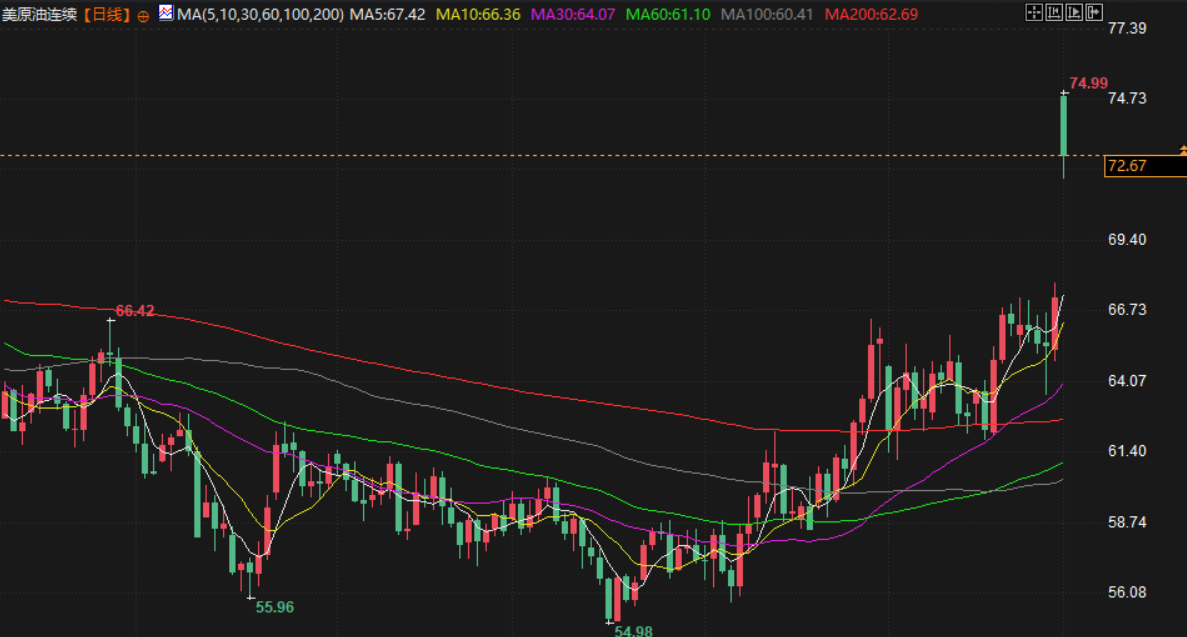
PVM brokerage oil analyst Tamas Varga points out that the current market is filled with uncertainty, and panic is pushing up oil prices.
Meanwhile, OPEC+ held an emergency meeting on March 1 and agreed to increase production slightly by 206,000 barrels per day starting in April to cope with the serious supply disruption caused by the US and Israel's attacks on Iran. The conflict has led to the complete disruption of the Strait of Hormuz, which carries more than 20% of the world's crude oil transportation, with hundreds of oil tankers anchored and stranded, leaving core oil-producing countries such as Saudi Arabia and the UAE facing the dilemma of "having oil but being unable to transport it".
Despite OPEC+'s attempts to stabilize the market by increasing production, analysts point out that, apart from Saudi Arabia and the UAE, other member countries have limited spare capacity, and oil cannot reach the market until shipping blockades are lifted. Therefore, this increase in production is far from sufficient to offset the impact of the war. As a result, oil prices have jumped 8%-10% to $80 per barrel in over-the-counter trading, and the market generally expects that if the conflict continues, oil prices may soon break through $100 per barrel.
The dollar index fell 0.12% to 97.61 on Friday, but recorded its first monthly gain since October in February, rising 0.47%, although the gains triggered by better-than-expected January producer price index (PPI) data had gradually faded as traders closed out positions ahead of the month and weekend.
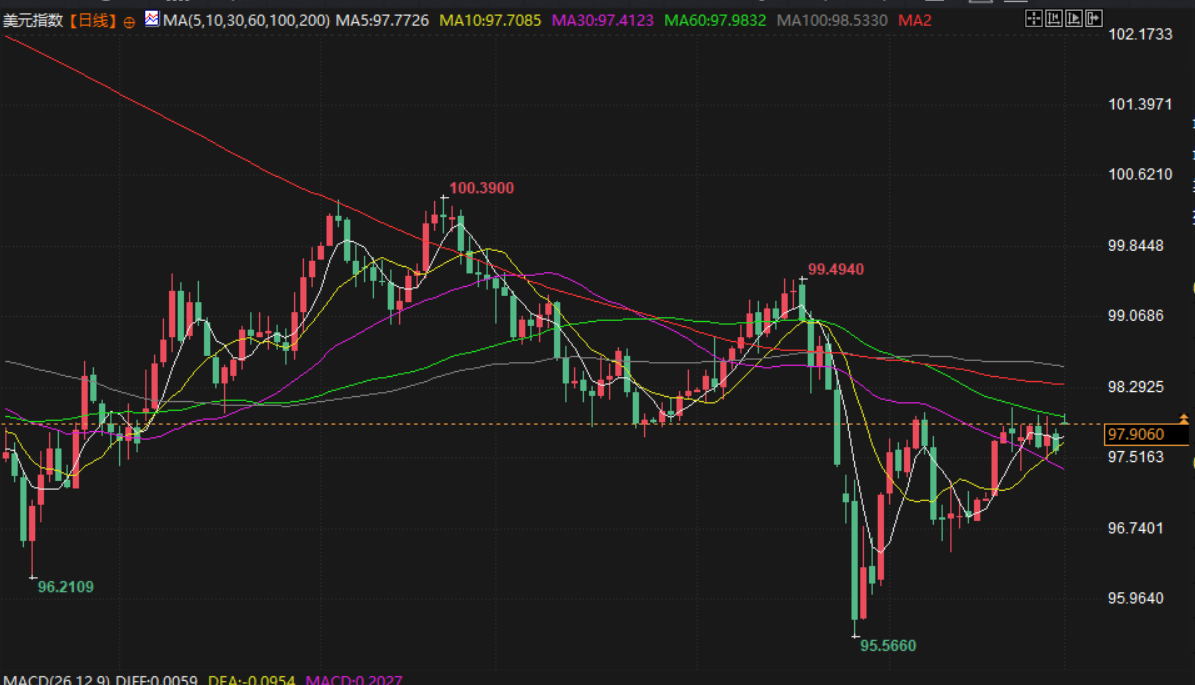
Data shows that the final demand producer price index (PPI) rose 0.5% last month, briefly boosting the US dollar. Adam Button, chief currency analyst at investingLive, said the market has deep concerns about the inflation and growth outlook so far into 2026. Although inflation is expected to slow, the data has not yet reflected this trend.
However, Chris Low, chief economist at FHN Financial, pointed out that there are signs of improvement behind the overall data. "Despite the astonishing PPI increase, the main pressure came from the trade services sector—the Bureau of Labor Statistics noted that the calculation method used in this category does not reflect real price changes in real time. Apart from this, other sectors showed signs of price stabilization."
The euro rose 0.18% against the dollar to $1.1818, marking its first monthly decline against the dollar in February since October. The dollar fell 0.1% against the yen to 155.95 yen, but still rose 0.78% against the yen in February.
Due to concerns about high inflation, the Federal Reserve is expected to keep interest rates unchanged until at least June. However, traders now expect a 62-basis-point rate cut by the end of the year, driven by concerns about a weak labor market.
The pound fell 0.02% to $1.3478, bringing its February decline to 1.53%, ending a three-month winning streak. While the pound is sensitive to domestic politics, its volatility has been tempered by risk events such as Chancellor Rachel Reeves' budget update this week.
The US-Israeli attack on Iran has ignited tensions in the Middle East, threatening to paralyze its energy lifeline.
On Saturday, the US and Israel launched a large-scale attack on Iran, directly targeting the Iranian leadership. Tehran swiftly responded by launching missiles at Israel. Oil-producing countries in the Persian Gulf are gripped by extreme anxiety, and the situation in the Middle East is on the verge of a dangerous spiral of escalation. Trump stated that the action was aimed at eliminating security threats and providing the Iranian people with an opportunity to overthrow their rulers. The Strait of Hormuz faces the risk of paralysis; approximately 20% of the world's oil and a significant amount of liquefied natural gas pass through it. Four trade sources revealed that several oil giants and top trading companies have suspended the transport of refined petroleum products and crude oil through the strait. The head of macro research at Mizuho Bank warned that if the strait is blocked, oil price premiums could approach 50%, becoming a game-changing event for the market.
Iranian Supreme Leader Ayatollah Khamenei was killed in an attack.
On March 1, local time, Iran's Supreme Leader Ayatollah Khamenei was assassinated. Ali Khamenei was born in Mashhad, Iran in 1939. He served as President of Iran from 1981 to 1989 and as Supreme Leader from 1989. Khamenei was targeted in an assassination attempt in June 1981, resulting in paralysis of his right arm. (CCTV)
The Iranian president and two others will temporarily assume the powers of the Supreme Leader.
According to a report by the Islamic Republic News Agency (IRNA) on the 1st, the Iranian president, the chief justice, and a member of the Guardian Council elected by the Council for the Determined National Interests will form an interim committee to act as regent for the Supreme Leader. The report cited a provision of the Iranian constitution stating, "If the Supreme Leader dies, resigns, or is removed from office, the Council of Experts must elect and appoint a new leader as soon as possible." The report said that during the period of acting Supreme Leader authority, if any member of the interim committee is unable to fulfill their duties, a majority of religious jurists on the Council for the Determined National Interests will appoint someone else in their place. The Council of Experts is the highest authority responsible for electing, supervising, and removing Iran's Supreme Leader. Elections for the Council of Experts are held every eight years, and its members are elected by voters from among religious jurists. (Xinhua)
Airspace closed by several Middle Eastern countries, forcing numerous flights to reroute.
Due to regional tensions, several Middle Eastern countries announced the closure of their airspace and the suspension of airport operations on February 28th, local time, resulting in the cancellation of numerous flights and disrupting travel for passengers. On February 28th, the airspace of Iran, Israel, the UAE, and southern Syria was closed. As a result, many flights to cities such as Tel Aviv, Israel, and Dubai, UAE, were required to divert or return earlier that day. Dubai Airports Company announced that afternoon that flights at Dubai International Airport and Al Maktoum International Airport were suspended indefinitely. Dubai Airports Company advised passengers not to go to the airport and to contact their airlines for the latest flight information. By the evening of February 28th, several airlines, including Lufthansa, Air France, and Air India, had announced the suspension of routes to and from several Middle Eastern countries. According to aviation data company Resair, more than 800 flights to Middle Eastern countries were cancelled that day, leaving many passengers stranded at airports or in transit cities, disrupting their travel plans. (CCTV Finance)
Major oil-producing countries announce increased production in April
The Organization of the Petroleum Exporting Countries (OPEC) issued a statement on April 1st, announcing that its eight major oil-producing nations have decided to increase daily production by 206,000 barrels in April. Representatives from Saudi Arabia, Russia, Iraq, the United Arab Emirates, Kuwait, Kazakhstan, Algeria, and Oman held an online meeting that day to discuss the situation and prospects of the international oil market. The statement said that given the current stable global economic outlook and low oil inventories, the eight countries decided to adjust production. To maintain oil market stability, the eight countries will flexibly adjust the pace of production increases according to market conditions. These eight countries announced a voluntary production cut of approximately 1.65 million barrels per day in April 2023, and a further voluntary production cut of 2.2 million barrels per day in November 2023. These two production cuts were subsequently extended multiple times. However, during this period, crude oil production increased in countries such as the United States and Canada. In March 2025, the eight countries decided to gradually increase crude oil production starting April 1st of that year. Thereafter, the eight countries will maintain monthly production increases until December. From January to March 2026, eight countries announced a suspension of increased production due to seasonal factors. (Xinhua)
South Korea to release 150,000 tons of rice reserves as rice prices rise
South Korean media reported on March 1 that due to the recent continuous rise in rice prices, the Ministry of Agriculture, Food and Rural Affairs decided to release 150,000 tons of government-reserved rice to alleviate supply shortages and stabilize prices. Since the beginning of the year, rice prices in South Korea have been steadily increasing. Government statistics show that at the end of February, the average retail price of a 20kg bag of rice in South Korea was 63,000 won (approximately 301 yuan), more than 15% higher than the same period in previous years. In response, the Ministry of Agriculture, Food and Rural Affairs convened a meeting of the Food Supply and Demand Stabilization Committee to discuss the rice supply and demand situation and countermeasures. Market trends and inventory surveys showed that the rice supply in the South Korean market was approximately 140,000 tons below the average level. Therefore, the Ministry of Agriculture, Food and Rural Affairs decided to release a total of 150,000 tons of government-reserved rice into the market in batches. The first batch will release 100,000 tons of reserve rice produced in 2025, with the remaining portion released depending on rice price trends and supply and demand. This release of reserve rice will be conducted in the form of a "loan." Relevant distributors must submit applications by the 5th of this month. Upon approval to sell the reserve rice, they will return an equivalent amount of rice to the government when the new rice harvest comes this year. (Xinhua)
Oil tankers are fully booked outside the Strait of Hormuz, with over 250 ships anchored and waiting.
According to shipping observers, at least 150 oil tankers (including crude oil tankers and product tankers) have been anchored in the high seas of the Gulf of Tonkin outside the Strait of Hormuz in recent times. Dozens of cargo ships have gathered in the waters off Iran, Iraq, Kuwait, and the UAE, while dozens more are anchored along the coast. At least another 100 oil tankers are anchored off the coasts of the UAE and Oman outside the Strait of Hormuz. The large number of stranded ships indicates that the Strait of Hormuz, a vital global energy transport artery, has been effectively paralyzed, and the risk of market supply disruptions has increased dramatically.
Global investors are leaving Goldman Sachs: US stocks have their worst start in over 30 years.
UBS Group released a report on February 27, downgrading its rating on US stocks to "baseline" while maintaining an "overweight" rating on emerging market equities. The report recommends that investors allocate more to other global equity assets rather than US stocks. Market fund flows this year also show that more and more investors are "leaving the US" and turning to more attractive emerging market equities. Data from Goldman Sachs shows that US stocks are experiencing their worst start since 1995. In early February, Goldman Sachs' analysis team stated that hedge funds had been net sellers of US stocks for four consecutive weeks, the fastest pace of selling since the US government imposed "reciprocal tariffs" last year. (CCTV Finance)
"Space butterfly" emerges from its pupa and spreads its wings; my country's space biological experiments achieve new progress.
The emergence of life on Earth in outer space has always been a frontier of scientific research. Not long ago, Chongqing University, relying on the "Di'er-5" spacecraft carried by the Kuaizhou-11 Y8 carrier rocket, successfully completed an in-orbit experiment, achieving fully autonomous hatching and wing spreading of a "space butterfly" within the payload. This experiment verified the adaptability of Earth life to the extreme environment of space. Photos transmitted back from space show that after emerging from its pupa, the newly hatched butterfly moved freely within the sealed cabin, sometimes resting on a leaf, sometimes flapping its wings and flying, its activity covering most of the cabin area, demonstrating a good adaptability to the microgravity environment of space. (CCTV News)
Key Focus Today
stock market
U.S. stocks closed lower on Friday, with the Dow Jones Industrial Average down 1.05%, the S&P 500 down 0.43%, and the Nasdaq down 0.92%. Despite corporate earnings growth of over 14% in the fourth quarter, the market was still impacted by multiple uncertainties, resulting in the S&P 500 and Nasdaq indices posting their biggest monthly declines since March 2025.
Financial stocks were pressured by concerns that Barclays, Wells Fargo, and other British lenders might be dragged down by the collapse of those institutions, while chip and software stocks continued to decline due to concerns about the costs and business disruptions brought about by artificial intelligence (AI). Meanwhile, geopolitical tensions and a higher-than-expected producer price index (PPI) exacerbated market expectations that the Federal Reserve would postpone interest rate cuts.
Defensive sectors such as healthcare and utilities performed relatively well, highlighting market risk aversion. In terms of individual stocks, Netflix surged 13.8% after ending its acquisition of Warner Bros., Dell jumped 21.9% due to optimistic prospects for its AI server business, while Nvidia continued its downward trend despite strong earnings.
Gold Market
Gold prices rose to a near one-month high on Friday, with spot gold closing at $5,230.56 per ounce. Gold prices gained 7.6% in February, marking the seventh consecutive month of increases. This rally was primarily driven by geopolitical tensions. Tensions between the US and Iran triggered safe-haven demand, while US Treasury yields fell to a three-month low, reducing the opportunity cost of holding non-interest-bearing gold and further boosting prices.
Meanwhile, a recovery in physical demand also provided support for gold prices. Analysts believe that if safe-haven demand persists, the next target for gold prices may be $5,450. The US and Israel's attacks on Iran on Saturday, which killed several officials including Iran's Supreme Leader Khamenei, and which could continue for weeks, exacerbated the volatility in gold prices this week. Silver and platinum also recorded monthly gains.
oil market
Oil prices rose about 2% on Friday as traders braced for supply disruptions ahead of the weekend, with Brent crude futures settling at $72.48 a barrel, up 2.45%, amid tensions between the U.S. and Iran. WTI crude futures settled at $67.02 a barrel, up 2.78%. The U.S. and Iran agreed last week to extend indirect negotiations into this week, but Saturday's preemptive strikes by the U.S. and Israel plunged the Middle East back into military confrontation. This followed the assassination of Iran's Supreme Leader Ayatollah Khamenei and the deaths of approximately 40 Iranian officials, including Defense Minister Aziz Nasirzadeh and Commander-in-Chief of the Islamic Revolutionary Guard Corps Mohammad Pakpour.
PVM brokerage oil analyst Tamas Varga points out that the current market is filled with uncertainty, and panic is pushing up oil prices.
Meanwhile, OPEC+ held an emergency meeting on March 1 and agreed to increase production slightly by 206,000 barrels per day starting in April to cope with the serious supply disruption caused by the US and Israel's attacks on Iran. The conflict has led to the complete disruption of the Strait of Hormuz, which carries more than 20% of the world's crude oil transportation, with hundreds of oil tankers anchored and stranded, leaving core oil-producing countries such as Saudi Arabia and the UAE facing the dilemma of "having oil but being unable to transport it".
Despite OPEC+'s attempts to stabilize the market by increasing production, analysts point out that, apart from Saudi Arabia and the UAE, other member countries have limited spare capacity, and oil cannot reach the market until shipping blockades are lifted. Therefore, this increase in production is far from sufficient to offset the impact of the war. As a result, oil prices have jumped 8%-10% to $80 per barrel in over-the-counter trading, and the market generally expects that if the conflict continues, oil prices may soon break through $100 per barrel.
Foreign exchange market
The dollar index fell 0.12% to 97.61 on Friday, but recorded its first monthly gain since October in February, rising 0.47%, although the gains triggered by better-than-expected January producer price index (PPI) data had gradually faded as traders closed out positions ahead of the month and weekend.
Data shows that the final demand producer price index (PPI) rose 0.5% last month, briefly boosting the US dollar. Adam Button, chief currency analyst at investingLive, said the market has deep concerns about the inflation and growth outlook so far into 2026. Although inflation is expected to slow, the data has not yet reflected this trend.
However, Chris Low, chief economist at FHN Financial, pointed out that there are signs of improvement behind the overall data. "Despite the astonishing PPI increase, the main pressure came from the trade services sector—the Bureau of Labor Statistics noted that the calculation method used in this category does not reflect real price changes in real time. Apart from this, other sectors showed signs of price stabilization."
The euro rose 0.18% against the dollar to $1.1818, marking its first monthly decline against the dollar in February since October. The dollar fell 0.1% against the yen to 155.95 yen, but still rose 0.78% against the yen in February.
Due to concerns about high inflation, the Federal Reserve is expected to keep interest rates unchanged until at least June. However, traders now expect a 62-basis-point rate cut by the end of the year, driven by concerns about a weak labor market.
The pound fell 0.02% to $1.3478, bringing its February decline to 1.53%, ending a three-month winning streak. While the pound is sensitive to domestic politics, its volatility has been tempered by risk events such as Chancellor Rachel Reeves' budget update this week.
International News
The US-Israeli attack on Iran has ignited tensions in the Middle East, threatening to paralyze its energy lifeline.
On Saturday, the US and Israel launched a large-scale attack on Iran, directly targeting the Iranian leadership. Tehran swiftly responded by launching missiles at Israel. Oil-producing countries in the Persian Gulf are gripped by extreme anxiety, and the situation in the Middle East is on the verge of a dangerous spiral of escalation. Trump stated that the action was aimed at eliminating security threats and providing the Iranian people with an opportunity to overthrow their rulers. The Strait of Hormuz faces the risk of paralysis; approximately 20% of the world's oil and a significant amount of liquefied natural gas pass through it. Four trade sources revealed that several oil giants and top trading companies have suspended the transport of refined petroleum products and crude oil through the strait. The head of macro research at Mizuho Bank warned that if the strait is blocked, oil price premiums could approach 50%, becoming a game-changing event for the market.
Iranian Supreme Leader Ayatollah Khamenei was killed in an attack.
On March 1, local time, Iran's Supreme Leader Ayatollah Khamenei was assassinated. Ali Khamenei was born in Mashhad, Iran in 1939. He served as President of Iran from 1981 to 1989 and as Supreme Leader from 1989. Khamenei was targeted in an assassination attempt in June 1981, resulting in paralysis of his right arm. (CCTV)
The Iranian president and two others will temporarily assume the powers of the Supreme Leader.
According to a report by the Islamic Republic News Agency (IRNA) on the 1st, the Iranian president, the chief justice, and a member of the Guardian Council elected by the Council for the Determined National Interests will form an interim committee to act as regent for the Supreme Leader. The report cited a provision of the Iranian constitution stating, "If the Supreme Leader dies, resigns, or is removed from office, the Council of Experts must elect and appoint a new leader as soon as possible." The report said that during the period of acting Supreme Leader authority, if any member of the interim committee is unable to fulfill their duties, a majority of religious jurists on the Council for the Determined National Interests will appoint someone else in their place. The Council of Experts is the highest authority responsible for electing, supervising, and removing Iran's Supreme Leader. Elections for the Council of Experts are held every eight years, and its members are elected by voters from among religious jurists. (Xinhua)
Airspace closed by several Middle Eastern countries, forcing numerous flights to reroute.
Due to regional tensions, several Middle Eastern countries announced the closure of their airspace and the suspension of airport operations on February 28th, local time, resulting in the cancellation of numerous flights and disrupting travel for passengers. On February 28th, the airspace of Iran, Israel, the UAE, and southern Syria was closed. As a result, many flights to cities such as Tel Aviv, Israel, and Dubai, UAE, were required to divert or return earlier that day. Dubai Airports Company announced that afternoon that flights at Dubai International Airport and Al Maktoum International Airport were suspended indefinitely. Dubai Airports Company advised passengers not to go to the airport and to contact their airlines for the latest flight information. By the evening of February 28th, several airlines, including Lufthansa, Air France, and Air India, had announced the suspension of routes to and from several Middle Eastern countries. According to aviation data company Resair, more than 800 flights to Middle Eastern countries were cancelled that day, leaving many passengers stranded at airports or in transit cities, disrupting their travel plans. (CCTV Finance)
Major oil-producing countries announce increased production in April
The Organization of the Petroleum Exporting Countries (OPEC) issued a statement on April 1st, announcing that its eight major oil-producing nations have decided to increase daily production by 206,000 barrels in April. Representatives from Saudi Arabia, Russia, Iraq, the United Arab Emirates, Kuwait, Kazakhstan, Algeria, and Oman held an online meeting that day to discuss the situation and prospects of the international oil market. The statement said that given the current stable global economic outlook and low oil inventories, the eight countries decided to adjust production. To maintain oil market stability, the eight countries will flexibly adjust the pace of production increases according to market conditions. These eight countries announced a voluntary production cut of approximately 1.65 million barrels per day in April 2023, and a further voluntary production cut of 2.2 million barrels per day in November 2023. These two production cuts were subsequently extended multiple times. However, during this period, crude oil production increased in countries such as the United States and Canada. In March 2025, the eight countries decided to gradually increase crude oil production starting April 1st of that year. Thereafter, the eight countries will maintain monthly production increases until December. From January to March 2026, eight countries announced a suspension of increased production due to seasonal factors. (Xinhua)
South Korea to release 150,000 tons of rice reserves as rice prices rise
South Korean media reported on March 1 that due to the recent continuous rise in rice prices, the Ministry of Agriculture, Food and Rural Affairs decided to release 150,000 tons of government-reserved rice to alleviate supply shortages and stabilize prices. Since the beginning of the year, rice prices in South Korea have been steadily increasing. Government statistics show that at the end of February, the average retail price of a 20kg bag of rice in South Korea was 63,000 won (approximately 301 yuan), more than 15% higher than the same period in previous years. In response, the Ministry of Agriculture, Food and Rural Affairs convened a meeting of the Food Supply and Demand Stabilization Committee to discuss the rice supply and demand situation and countermeasures. Market trends and inventory surveys showed that the rice supply in the South Korean market was approximately 140,000 tons below the average level. Therefore, the Ministry of Agriculture, Food and Rural Affairs decided to release a total of 150,000 tons of government-reserved rice into the market in batches. The first batch will release 100,000 tons of reserve rice produced in 2025, with the remaining portion released depending on rice price trends and supply and demand. This release of reserve rice will be conducted in the form of a "loan." Relevant distributors must submit applications by the 5th of this month. Upon approval to sell the reserve rice, they will return an equivalent amount of rice to the government when the new rice harvest comes this year. (Xinhua)
Oil tankers are fully booked outside the Strait of Hormuz, with over 250 ships anchored and waiting.
According to shipping observers, at least 150 oil tankers (including crude oil tankers and product tankers) have been anchored in the high seas of the Gulf of Tonkin outside the Strait of Hormuz in recent times. Dozens of cargo ships have gathered in the waters off Iran, Iraq, Kuwait, and the UAE, while dozens more are anchored along the coast. At least another 100 oil tankers are anchored off the coasts of the UAE and Oman outside the Strait of Hormuz. The large number of stranded ships indicates that the Strait of Hormuz, a vital global energy transport artery, has been effectively paralyzed, and the risk of market supply disruptions has increased dramatically.
Global investors are leaving Goldman Sachs: US stocks have their worst start in over 30 years.
UBS Group released a report on February 27, downgrading its rating on US stocks to "baseline" while maintaining an "overweight" rating on emerging market equities. The report recommends that investors allocate more to other global equity assets rather than US stocks. Market fund flows this year also show that more and more investors are "leaving the US" and turning to more attractive emerging market equities. Data from Goldman Sachs shows that US stocks are experiencing their worst start since 1995. In early February, Goldman Sachs' analysis team stated that hedge funds had been net sellers of US stocks for four consecutive weeks, the fastest pace of selling since the US government imposed "reciprocal tariffs" last year. (CCTV Finance)
Domestic News
"Space butterfly" emerges from its pupa and spreads its wings; my country's space biological experiments achieve new progress.
The emergence of life on Earth in outer space has always been a frontier of scientific research. Not long ago, Chongqing University, relying on the "Di'er-5" spacecraft carried by the Kuaizhou-11 Y8 carrier rocket, successfully completed an in-orbit experiment, achieving fully autonomous hatching and wing spreading of a "space butterfly" within the payload. This experiment verified the adaptability of Earth life to the extreme environment of space. Photos transmitted back from space show that after emerging from its pupa, the newly hatched butterfly moved freely within the sealed cabin, sometimes resting on a leaf, sometimes flapping its wings and flying, its activity covering most of the cabin area, demonstrating a good adaptability to the microgravity environment of space. (CCTV News)
- Risk Warning and Disclaimer
- The market involves risk, and trading may not be suitable for all investors. This article is for reference only and does not constitute personal investment advice, nor does it take into account certain users’ specific investment objectives, financial situation, or other needs. Any investment decisions made based on this information are at your own risk.