Gold ETFs attract a staggering $19 billion in a single month, fueled by safe-haven demand amid Middle East conflict.
2026-03-04 11:41:31
As the geopolitical conflict between the US and Iran continues to escalate, global investors' risk aversion has surged, leading to a massive influx of funds into gold ETFs. Latest data shows that in January 2026, global gold ETFs saw a net inflow of $19 billion, setting a new monthly record and maintaining a net inflow trend for several consecutive weeks. So far in 2026, gold funds have seen cumulative inflows exceeding $18 billion, far surpassing the level of the same period last year. In 2025, gold ETFs attracted a record $89 billion in inflows.
This surge in safe-haven demand stems from the direct threat posed by the Middle East conflict to global economic stability. Investors can hedge against inflation and geopolitical uncertainty through gold ETFs without incurring the storage costs of physical gold. Against the backdrop of expanding money supply, gold is seen as the ultimate store of value.
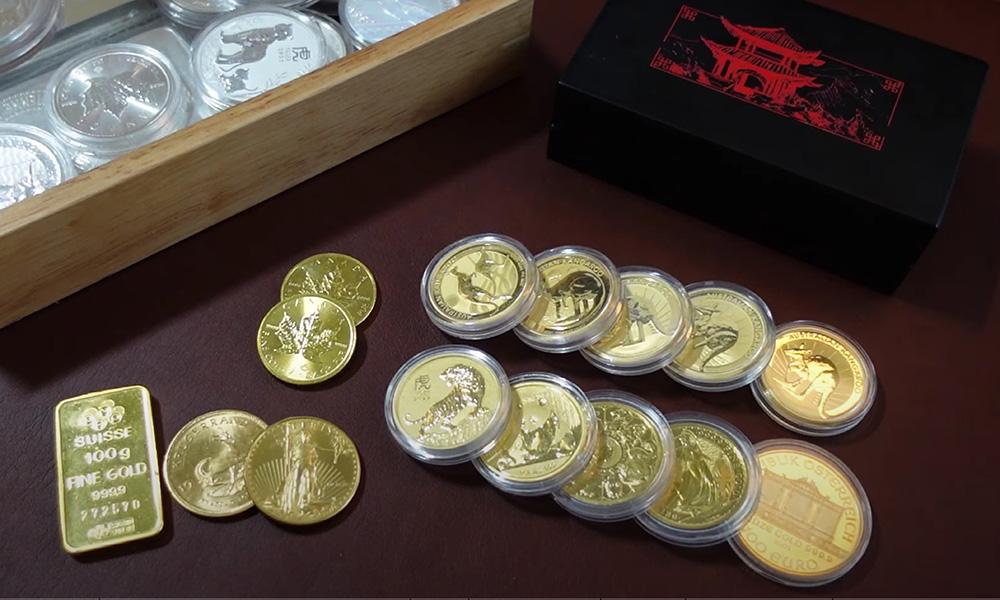
The ongoing geopolitical conflict between the US and Iran has been the most direct catalyst for the current surge in gold prices. The conflict has not only driven up energy prices but also exacerbated the risk of global supply chain disruptions, leading investors to seek protection in safe-haven assets. Compared to traditional stocks and bonds, gold has demonstrated greater resilience during crises and has attracted large-scale capital inflows for several consecutive months .
In the current environment of high debt and loose monetary policy, gold ETFs are particularly attractive, providing investors with a convenient hedging channel while effectively avoiding the transportation and storage challenges of physical gold. Data from multiple global institutions shows that this trend has expanded from Europe and the US to emerging markets, forming a global wave of safe-haven demand.
As the world's largest gold consumer market, Asia has played a key leading role in this round of risk aversion. Investors in many Asian countries have listed gold ETFs as their primary safe-haven asset, and trading volume of local products has surged. The combination of cultural traditions and economic uncertainty has led to a significant increase in the proportion of capital inflows into Asia.
Experts generally recommend allocating 10%-15% of an investment portfolio to precious metals ETFs, primarily gold. This proportion can significantly enhance portfolio stability while maintaining returns, making it particularly suitable for emerging market investors facing exchange rate volatility.
In his latest public statement in January 2026, hedge fund legend Ray Dalio emphasized that "gold is now the second largest currency," and investors should increase their allocation to it to 5%-15%, or even higher during periods of conflict or currency devaluation. He pointed out that gold is a core tool for protecting real purchasing power, especially under the current global capital wars and debt pressures.
However, experts also caution against complacency: while gold's annualized return over the past 30 years is approximately 8%, lower than the long-term average of the S&P 500, its hedging role during crises is irreplaceable. Diversification remains the core of investment; proper allocation can effectively buffer against the impact of economic uncertainty .
Since 2026, gold prices have consistently outperformed the stock market by a significant margin. The table below presents a clear comparison based on the latest data:
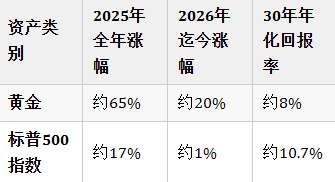
This comparison highlights gold's unique advantages during periods of high uncertainty. Compared to physical gold, gold ETFs, with their high liquidity and low cost, have become the preferred tool for most investors.
StoneX's head of market analysis pointed out that although geopolitical conflicts and fiscal factors continue to support gold and silver prices, both metals are at risk of being overbought and may need a correction in the short term. She emphasized that investors should be wary of short-term volatility but need not panic excessively; unless the conflict escalates further, the market will enter a normal consolidation period.
Overall, the medium- to long-term trend for gold remains upward, and investors are advised to adjust their positions flexibly in light of the macroeconomic environment.
Amid escalating geopolitical risks and mounting debt pressures in major economies, gold, as a traditional safe-haven asset, has once again demonstrated its strong appeal. The robust inflows into global gold ETFs not only reflect investor concerns about uncertainty but also highlight the dominant position of Asian markets in global gold demand.
While there may be short-term technical downward pressure, from a medium- to long-term perspective, a proper allocation to gold can help enhance the risk resistance and stability of an investment portfolio. Market participants should focus on diversification strategies, strictly controlling position risk while pursuing safe-haven benefits.
Q: Why do geopolitical conflicts directly drive up inflows into gold ETFs?
A: Geopolitical conflicts will rapidly amplify global economic uncertainty, prompting investors to shift heavily towards non-fiat currency assets such as gold to protect their assets. An escalation of the US-Iran conflict in 2026 would directly stimulate safe-haven demand, leading to net inflows into global gold ETFs for several consecutive weeks, reaching a peak of $19 billion in a single month, far exceeding historical averages.
Q: What are the core advantages of gold ETFs compared to physical gold?
A: Gold ETFs require no physical storage, custody, or insurance costs, have extremely low transaction costs, and are highly liquid, allowing for buying and selling at any time through a regular securities account. They accurately track international gold prices, making them suitable for large institutional and retail investors to quickly adjust their positions, far more convenient and efficient than physical gold.
This surge in safe-haven demand stems from the direct threat posed by the Middle East conflict to global economic stability. Investors can hedge against inflation and geopolitical uncertainty through gold ETFs without incurring the storage costs of physical gold. Against the backdrop of expanding money supply, gold is seen as the ultimate store of value.
The geopolitical conflict between the US and Iran has triggered a surge in demand for safe-haven assets.
The ongoing geopolitical conflict between the US and Iran has been the most direct catalyst for the current surge in gold prices. The conflict has not only driven up energy prices but also exacerbated the risk of global supply chain disruptions, leading investors to seek protection in safe-haven assets. Compared to traditional stocks and bonds, gold has demonstrated greater resilience during crises and has attracted large-scale capital inflows for several consecutive months .
In the current environment of high debt and loose monetary policy, gold ETFs are particularly attractive, providing investors with a convenient hedging channel while effectively avoiding the transportation and storage challenges of physical gold. Data from multiple global institutions shows that this trend has expanded from Europe and the US to emerging markets, forming a global wave of safe-haven demand.
Asian markets lead the gold ETF craze
As the world's largest gold consumer market, Asia has played a key leading role in this round of risk aversion. Investors in many Asian countries have listed gold ETFs as their primary safe-haven asset, and trading volume of local products has surged. The combination of cultural traditions and economic uncertainty has led to a significant increase in the proportion of capital inflows into Asia.
Experts generally recommend allocating 10%-15% of an investment portfolio to precious metals ETFs, primarily gold. This proportion can significantly enhance portfolio stability while maintaining returns, making it particularly suitable for emerging market investors facing exchange rate volatility.
Expert's golden allocation advice
In his latest public statement in January 2026, hedge fund legend Ray Dalio emphasized that "gold is now the second largest currency," and investors should increase their allocation to it to 5%-15%, or even higher during periods of conflict or currency devaluation. He pointed out that gold is a core tool for protecting real purchasing power, especially under the current global capital wars and debt pressures.
However, experts also caution against complacency: while gold's annualized return over the past 30 years is approximately 8%, lower than the long-term average of the S&P 500, its hedging role during crises is irreplaceable. Diversification remains the core of investment; proper allocation can effectively buffer against the impact of economic uncertainty .
Gold Price Performance Compared to Stock Market Analysis
Since 2026, gold prices have consistently outperformed the stock market by a significant margin. The table below presents a clear comparison based on the latest data:
This comparison highlights gold's unique advantages during periods of high uncertainty. Compared to physical gold, gold ETFs, with their high liquidity and low cost, have become the preferred tool for most investors.
Technical Overbought Risks and Outlook
StoneX's head of market analysis pointed out that although geopolitical conflicts and fiscal factors continue to support gold and silver prices, both metals are at risk of being overbought and may need a correction in the short term. She emphasized that investors should be wary of short-term volatility but need not panic excessively; unless the conflict escalates further, the market will enter a normal consolidation period.
Overall, the medium- to long-term trend for gold remains upward, and investors are advised to adjust their positions flexibly in light of the macroeconomic environment.
Editor's Summary
Amid escalating geopolitical risks and mounting debt pressures in major economies, gold, as a traditional safe-haven asset, has once again demonstrated its strong appeal. The robust inflows into global gold ETFs not only reflect investor concerns about uncertainty but also highlight the dominant position of Asian markets in global gold demand.
While there may be short-term technical downward pressure, from a medium- to long-term perspective, a proper allocation to gold can help enhance the risk resistance and stability of an investment portfolio. Market participants should focus on diversification strategies, strictly controlling position risk while pursuing safe-haven benefits.
Frequently Asked Questions
Q: Why do geopolitical conflicts directly drive up inflows into gold ETFs?
A: Geopolitical conflicts will rapidly amplify global economic uncertainty, prompting investors to shift heavily towards non-fiat currency assets such as gold to protect their assets. An escalation of the US-Iran conflict in 2026 would directly stimulate safe-haven demand, leading to net inflows into global gold ETFs for several consecutive weeks, reaching a peak of $19 billion in a single month, far exceeding historical averages.
Q: What are the core advantages of gold ETFs compared to physical gold?
A: Gold ETFs require no physical storage, custody, or insurance costs, have extremely low transaction costs, and are highly liquid, allowing for buying and selling at any time through a regular securities account. They accurately track international gold prices, making them suitable for large institutional and retail investors to quickly adjust their positions, far more convenient and efficient than physical gold.
- Risk Warning and Disclaimer
- The market involves risk, and trading may not be suitable for all investors. This article is for reference only and does not constitute personal investment advice, nor does it take into account certain users’ specific investment objectives, financial situation, or other needs. Any investment decisions made based on this information are at your own risk.