The closure of the Hormuz National Park has caused oil prices to fluctuate wildly at high levels! Trump warns Europe: If you don't send troops, you'll face oil cutoffs.
2026-03-16 09:07:28
US President Trump warned NATO allies that they would face a "very bad" future if they did not help reopen the Strait of Hormuz. Gulf oil-producing countries, facing saturated storage, were forced to cut production, and while oil prices experienced significant volatility, they remained at high levels. On Monday (March 16) in early Asian trading, US crude oil prices fluctuated and fell, currently trading around $97.70 per barrel, a daily decline of about 1%.
Trump emphasized that Europe is highly dependent on oil from the Gulf region, while the United States is more energy self-sufficient. Therefore, countries that directly benefit from the strait should shoulder more responsibility to jointly ensure the security and freedom of navigation in the region.
Trump pointed out that European countries are highly dependent on Middle Eastern oil, and a prolonged disruption of the Strait of Hormuz would lead to a severe energy crisis and economic shock. The United States, as a net energy exporter with ample shale oil production, has a relatively low dependence on the Strait; therefore, Europe should proactively assume more responsibility for its maintenance.
This statement continues Trump's consistent logic of "allies sharing the burden," aiming to shift security costs to Europe while alleviating high oil prices and inflationary pressures in the United States.
When asked what kind of assistance was needed, Trump said "anything necessary" was required, specifically mentioning that Europe should send minesweepers—because Europe has far more minesweepers than the United States. He also hinted that he hoped Europe would send commandos or other military forces to eliminate Iranian personnel who were using drones and mines to cause "trouble" in the Gulf.
This statement directly targets the "asymmetric threat" posed by the Iranian Revolutionary Guard in Hormuz, aiming to push NATO allies to shift from logistical support to substantive military involvement.
Trump warned that the United States is prepared to launch a new strike on Kharg Island, Iran’s largest oil export hub, and may target its oil infrastructure.
The US and Israel have previously struck Iranian nuclear facilities and military targets multiple times. This latest statement extends the scope of the strikes to Iran's energy lifeline, aiming to cut off Iran's funding for war. However, this move could also trigger a more intense Iranian retaliation, including a complete blockade of the Strait of Hormuz or expanded proxy attacks, further amplifying the risk of a global energy crisis.
Since the large-scale airstrikes launched by the US and Israel against Iran, shipping in the Strait of Hormuz has essentially come to a standstill, hindering the export of approximately 20% of global oil and a significant amount of LNG. Gulf oil-producing countries, with their oil reserves saturated, have been forced to reduce production, and while oil prices have experienced significant fluctuations, they remain at high levels.
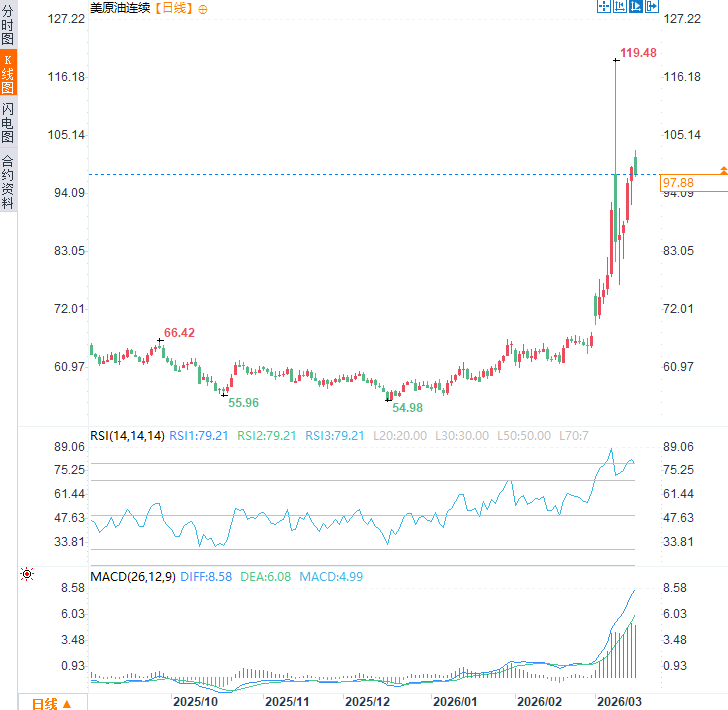
(US crude oil daily chart, source: FX678)
Iran's continued threats to block shipping lanes and attack oil tankers have created heightened tensions in the global energy market. Trump's pressure on NATO allies to jointly maintain security reflects the US's unwillingness to bear the full military and economic costs alone.
NATO allies face a dilemma: responding to Trump's request to send minesweepers and commandos would involve substantial involvement in the Middle East conflict, facing domestic political backlash and military risks; refusing to cooperate could result in Trump publicly accusing them of "free-riding," exacerbating the transatlantic rift. European countries, highly energy-dependent, have a real need for the restoration of navigation through the straits, but have limited willingness to directly intervene militarily.
Potential risks include: Iran viewing European involvement as hostile and expanding its attacks; further damage to NATO unity; and a prolonged global energy crisis, exacerbating inflationary and economic slowdown pressures. Trump's statement is both an attempt to exert pressure and a negotiating tactic to secure more allies to share the costs.
Trump warned NATO allies that they would face a "very bad" future if they did not help reopen the Strait of Hormuz. Europe is highly dependent on Gulf oil, and the United States has a high degree of energy self-sufficiency; therefore, beneficiary countries should bear more responsibility for its maintenance. Trump specifically named Europe to send minesweepers and strike teams to eliminate the threat of Iranian drones and mines. He also warned of a potential renewed attack on Iran's Kharg Island oil infrastructure, intended to cut off Iran's war funding.
The ongoing Hormuz conflict exacerbates the global energy crisis, and Trump's pressure on NATO allies to jointly maintain security reflects the US's unwillingness to bear the full military and economic costs alone. NATO allies face a dilemma: participation will draw them into conflict, while refusal will exacerbate the transatlantic rift. In the short term, the responses of allies and Iran will be key variables determining the course of the situation, leading to high uncertainty in the global energy market and economic outlook.
At 9:07 AM Beijing time, US crude oil futures were trading at $97.70 per barrel.
Trump emphasized that Europe is highly dependent on oil from the Gulf region, while the United States is more energy self-sufficient. Therefore, countries that directly benefit from the strait should shoulder more responsibility to jointly ensure the security and freedom of navigation in the region.
Europe is highly dependent on Gulf oil, while the United States has a high energy self-sufficiency rate.
Trump pointed out that European countries are highly dependent on Middle Eastern oil, and a prolonged disruption of the Strait of Hormuz would lead to a severe energy crisis and economic shock. The United States, as a net energy exporter with ample shale oil production, has a relatively low dependence on the Strait; therefore, Europe should proactively assume more responsibility for its maintenance.
This statement continues Trump's consistent logic of "allies sharing the burden," aiming to shift security costs to Europe while alleviating high oil prices and inflationary pressures in the United States.
Any necessary assistance is required, with a special mention of minesweepers and assault teams.
When asked what kind of assistance was needed, Trump said "anything necessary" was required, specifically mentioning that Europe should send minesweepers—because Europe has far more minesweepers than the United States. He also hinted that he hoped Europe would send commandos or other military forces to eliminate Iranian personnel who were using drones and mines to cause "trouble" in the Gulf.
This statement directly targets the "asymmetric threat" posed by the Iranian Revolutionary Guard in Hormuz, aiming to push NATO allies to shift from logistical support to substantive military involvement.
Preparing to strike again on Iran's Kharg Island oil infrastructure
Trump warned that the United States is prepared to launch a new strike on Kharg Island, Iran’s largest oil export hub, and may target its oil infrastructure.
The US and Israel have previously struck Iranian nuclear facilities and military targets multiple times. This latest statement extends the scope of the strikes to Iran's energy lifeline, aiming to cut off Iran's funding for war. However, this move could also trigger a more intense Iranian retaliation, including a complete blockade of the Strait of Hormuz or expanded proxy attacks, further amplifying the risk of a global energy crisis.
The Hormuz Interruption Continues, Exacerbating the Global Energy Crisis
Since the large-scale airstrikes launched by the US and Israel against Iran, shipping in the Strait of Hormuz has essentially come to a standstill, hindering the export of approximately 20% of global oil and a significant amount of LNG. Gulf oil-producing countries, with their oil reserves saturated, have been forced to reduce production, and while oil prices have experienced significant fluctuations, they remain at high levels.
(US crude oil daily chart, source: FX678)
Iran's continued threats to block shipping lanes and attack oil tankers have created heightened tensions in the global energy market. Trump's pressure on NATO allies to jointly maintain security reflects the US's unwillingness to bear the full military and economic costs alone.
Analysis of NATO allies' responses to pressure and potential risks
NATO allies face a dilemma: responding to Trump's request to send minesweepers and commandos would involve substantial involvement in the Middle East conflict, facing domestic political backlash and military risks; refusing to cooperate could result in Trump publicly accusing them of "free-riding," exacerbating the transatlantic rift. European countries, highly energy-dependent, have a real need for the restoration of navigation through the straits, but have limited willingness to directly intervene militarily.
Potential risks include: Iran viewing European involvement as hostile and expanding its attacks; further damage to NATO unity; and a prolonged global energy crisis, exacerbating inflationary and economic slowdown pressures. Trump's statement is both an attempt to exert pressure and a negotiating tactic to secure more allies to share the costs.
Editor's Summary
Trump warned NATO allies that they would face a "very bad" future if they did not help reopen the Strait of Hormuz. Europe is highly dependent on Gulf oil, and the United States has a high degree of energy self-sufficiency; therefore, beneficiary countries should bear more responsibility for its maintenance. Trump specifically named Europe to send minesweepers and strike teams to eliminate the threat of Iranian drones and mines. He also warned of a potential renewed attack on Iran's Kharg Island oil infrastructure, intended to cut off Iran's war funding.
The ongoing Hormuz conflict exacerbates the global energy crisis, and Trump's pressure on NATO allies to jointly maintain security reflects the US's unwillingness to bear the full military and economic costs alone. NATO allies face a dilemma: participation will draw them into conflict, while refusal will exacerbate the transatlantic rift. In the short term, the responses of allies and Iran will be key variables determining the course of the situation, leading to high uncertainty in the global energy market and economic outlook.
At 9:07 AM Beijing time, US crude oil futures were trading at $97.70 per barrel.
- Risk Warning and Disclaimer
- The market involves risk, and trading may not be suitable for all investors. This article is for reference only and does not constitute personal investment advice, nor does it take into account certain users’ specific investment objectives, financial situation, or other needs. Any investment decisions made based on this information are at your own risk.