How long will the gold market remain under pressure as the Russia-Ukraine peace talks give way to the "Middle East crisis"?
2026-03-16 09:25:58
Russian Presidential Press Secretary Dmitry Peskov stated last Sunday (March 15) that negotiations between Russia and Ukraine have been suspended due to the United States' priority on the Middle East situation. Russia emphasized that progress on the front lines is going smoothly, but remains open to resolving the issue through diplomatic channels.
This statement acknowledges that US strategic resources are severely constrained by the US-Israel conflict with Iran, and the Ukraine issue has been temporarily postponed. As long as the situation in the Middle East remains tense, Russia and Ukraine have limited diplomatic space. Analysts point out that a prolonged Middle East crisis will prolong high oil prices, solidify inflation expectations, and thus exert macroeconomic pressure on gold. On Monday in Asian trading, spot gold fluctuated lower, continuing the downward trend of the previous three trading days, currently trading around $5,000 per ounce, a daily decline of approximately 0.4%.

Russian Presidential Press Secretary Dmitry Peskov said on the 15th that negotiations on the Ukraine issue have been suspended because the United States must prioritize dealing with the situation in the Middle East.
This statement directly attributes the stagnation of Russia-Ukraine negotiations to the escalation of the conflict between the US and Israel over Iran, which has diverted international attention and highlights that the Middle East conflict has substantially affected the diplomatic process of another major geopolitical conflict in Europe.
In his statement, Peskov emphasized that the situation on the front lines of the Russia-Ukraine conflict is positive for Russia; the Russian military is making steady progress and gradually achieving its objectives; and Russia remains open to resolving the issue through diplomatic means.
This statement continues Russia's consistent stance: it has a clear advantage on the battlefield, but it will not close the door to negotiations, attempting to maintain a balance between military pressure and diplomatic posture.
Since the US and Israel launched a large-scale airstrike against Iran on February 28, the situation in the Middle East has escalated dramatically: shipping in the Strait of Hormuz has essentially come to a standstill, oil prices have fluctuated wildly, Iranian proxy networks have become active, and the risk of a global energy crisis has increased.
As the primary military actor and diplomatic coordinator, the United States faces severe constraints on its strategic resources and high-level attention.
Peskov's statement effectively acknowledges that Washington currently lacks the time and capacity to maintain high-intensity diplomatic mediation in two geopolitical conflicts simultaneously, and the Ukraine issue has been temporarily postponed.
Peskov emphasized that the Russian army is making "steady progress" on the front lines, which is consistent with recent battlefield updates released by Russia: the advance in the Donetsk and Luhansk directions is slow but steady, with a focus on striking Ukrainian supply lines and command nodes.
Russia believes the current situation is conducive to a protracted war of attrition, while also preserving a favorable position for any future negotiations. The statement that the diplomatic door is "not closed" also leaves room for Russia to resume contact at an appropriate time.
Russia attributed the suspension of negotiations directly to the US's Middle East priorities, implying that as long as the US-Israel conflict with Iran does not substantially de-escalate, the diplomatic process regarding Ukraine will be unlikely to make substantial progress.
The situation in the Middle East has become the "main battlefield" of current global geopolitics, and its intensity and duration will determine when and whether Washington has the energy to return to the negotiating table in Ukraine.
In the short term, the Russian military will continue to maintain battlefield pressure and accumulate bargaining chips. In the long term, if the Middle East conflict reaches a stalemate or the US is forced to be distracted, a new diplomatic window may open for the Russia-Ukraine issue, but this is on the premise that Russia maintains or expands its advantage on the battlefield.
The suspension of Russia-Ukraine negotiations → the protracted Middle East crisis → the prolonged period of high oil prices → further solidification of inflation expectations → a further postponement of the timing of interest rate cuts, thereby exerting sustained macroeconomic pressure on gold.
However, some analysts point out that if the conflict in the Middle East escalates further (such as Iran completely blocking the Straits of Hormuz or direct military confrontation between the US and Iran), gold's ultimate safe-haven attribute may be reactivated.
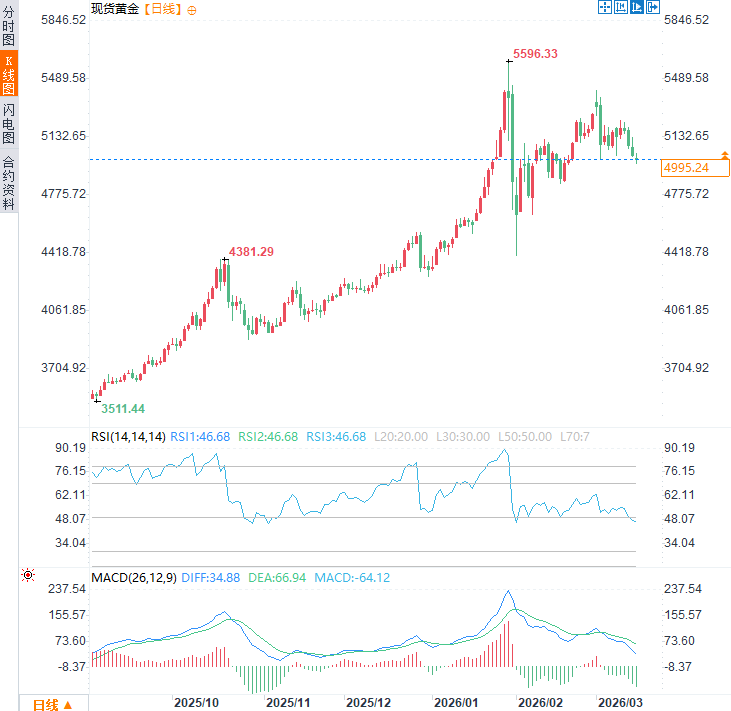
(Spot gold daily chart, source: FX678)
Russian Presidential Press Secretary Dmitry Peskov stated on the 15th that negotiations regarding Ukraine have been suspended due to the US's priority on the Middle East situation. Russia also emphasized a positive situation on the front lines and the steady advance of the Russian military, but remained open to resolving the issue through diplomatic channels. This statement directly attributes the stalled negotiations to the diversion of international attention caused by the escalation of the US-Israel conflict with Iran, highlighting that the Middle East conflict has substantially impacted the diplomatic process of another major geopolitical conflict in Europe.
In the short term, unless the situation in the Middle East substantially de-escalates, the diplomatic space for the Ukraine issue is limited. In the long term, the intensity and duration of the Middle East conflict will be the core variables determining the timing of the resumption of Russia-Ukraine negotiations. Russia's strategy of maintaining battlefield pressure while preserving diplomatic leeway demonstrates its balancing act between military and political maneuvering. Investors and observers need to pay close attention to the evolution of the Middle East situation, as its trajectory will directly impact the pace and prospects of another front in Europe.
At 9:25 AM Beijing time, spot gold was trading at $4,995.48 per ounce.
This statement acknowledges that US strategic resources are severely constrained by the US-Israel conflict with Iran, and the Ukraine issue has been temporarily postponed. As long as the situation in the Middle East remains tense, Russia and Ukraine have limited diplomatic space. Analysts point out that a prolonged Middle East crisis will prolong high oil prices, solidify inflation expectations, and thus exert macroeconomic pressure on gold. On Monday in Asian trading, spot gold fluctuated lower, continuing the downward trend of the previous three trading days, currently trading around $5,000 per ounce, a daily decline of approximately 0.4%.
Russia announced the suspension of negotiations with Ukraine, directly attributing it to the higher priority of the Middle East situation.
Russian Presidential Press Secretary Dmitry Peskov said on the 15th that negotiations on the Ukraine issue have been suspended because the United States must prioritize dealing with the situation in the Middle East.
This statement directly attributes the stagnation of Russia-Ukraine negotiations to the escalation of the conflict between the US and Israel over Iran, which has diverted international attention and highlights that the Middle East conflict has substantially affected the diplomatic process of another major geopolitical conflict in Europe.
Peskov: Russian troops are making good progress on the front lines, but the door to diplomacy remains open.
In his statement, Peskov emphasized that the situation on the front lines of the Russia-Ukraine conflict is positive for Russia; the Russian military is making steady progress and gradually achieving its objectives; and Russia remains open to resolving the issue through diplomatic means.
This statement continues Russia's consistent stance: it has a clear advantage on the battlefield, but it will not close the door to negotiations, attempting to maintain a balance between military pressure and diplomatic posture.
The escalating conflict between the US and Israel in Iran is diverting US attention, while the Ukraine issue is temporarily put on hold.
Since the US and Israel launched a large-scale airstrike against Iran on February 28, the situation in the Middle East has escalated dramatically: shipping in the Strait of Hormuz has essentially come to a standstill, oil prices have fluctuated wildly, Iranian proxy networks have become active, and the risk of a global energy crisis has increased.
As the primary military actor and diplomatic coordinator, the United States faces severe constraints on its strategic resources and high-level attention.
Peskov's statement effectively acknowledges that Washington currently lacks the time and capacity to maintain high-intensity diplomatic mediation in two geopolitical conflicts simultaneously, and the Ukraine issue has been temporarily postponed.
The Russian military continued its advance, gradually achieving its established objectives.
Peskov emphasized that the Russian army is making "steady progress" on the front lines, which is consistent with recent battlefield updates released by Russia: the advance in the Donetsk and Luhansk directions is slow but steady, with a focus on striking Ukrainian supply lines and command nodes.
Russia believes the current situation is conducive to a protracted war of attrition, while also preserving a favorable position for any future negotiations. The statement that the diplomatic door is "not closed" also leaves room for Russia to resume contact at an appropriate time.
The suspension of negotiations may be short-term or prolonged; the situation in the Middle East remains the decisive variable.
Russia attributed the suspension of negotiations directly to the US's Middle East priorities, implying that as long as the US-Israel conflict with Iran does not substantially de-escalate, the diplomatic process regarding Ukraine will be unlikely to make substantial progress.
The situation in the Middle East has become the "main battlefield" of current global geopolitics, and its intensity and duration will determine when and whether Washington has the energy to return to the negotiating table in Ukraine.
In the short term, the Russian military will continue to maintain battlefield pressure and accumulate bargaining chips. In the long term, if the Middle East conflict reaches a stalemate or the US is forced to be distracted, a new diplomatic window may open for the Russia-Ukraine issue, but this is on the premise that Russia maintains or expands its advantage on the battlefield.
Marginal impact of the suspension of Russia-Ukraine negotiations
The suspension of Russia-Ukraine negotiations → the protracted Middle East crisis → the prolonged period of high oil prices → further solidification of inflation expectations → a further postponement of the timing of interest rate cuts, thereby exerting sustained macroeconomic pressure on gold.
However, some analysts point out that if the conflict in the Middle East escalates further (such as Iran completely blocking the Straits of Hormuz or direct military confrontation between the US and Iran), gold's ultimate safe-haven attribute may be reactivated.
(Spot gold daily chart, source: FX678)
Editor's Summary
Russian Presidential Press Secretary Dmitry Peskov stated on the 15th that negotiations regarding Ukraine have been suspended due to the US's priority on the Middle East situation. Russia also emphasized a positive situation on the front lines and the steady advance of the Russian military, but remained open to resolving the issue through diplomatic channels. This statement directly attributes the stalled negotiations to the diversion of international attention caused by the escalation of the US-Israel conflict with Iran, highlighting that the Middle East conflict has substantially impacted the diplomatic process of another major geopolitical conflict in Europe.
In the short term, unless the situation in the Middle East substantially de-escalates, the diplomatic space for the Ukraine issue is limited. In the long term, the intensity and duration of the Middle East conflict will be the core variables determining the timing of the resumption of Russia-Ukraine negotiations. Russia's strategy of maintaining battlefield pressure while preserving diplomatic leeway demonstrates its balancing act between military and political maneuvering. Investors and observers need to pay close attention to the evolution of the Middle East situation, as its trajectory will directly impact the pace and prospects of another front in Europe.
At 9:25 AM Beijing time, spot gold was trading at $4,995.48 per ounce.
- Risk Warning and Disclaimer
- The market involves risk, and trading may not be suitable for all investors. This article is for reference only and does not constitute personal investment advice, nor does it take into account certain users’ specific investment objectives, financial situation, or other needs. Any investment decisions made based on this information are at your own risk.