Experts warn: Larijani's assassination "could prolong the war"! The door to energy peace has been shattered.
2026-03-18 13:42:20
Israel announced on Tuesday (March 17) that it had killed Ali Larijani, the secretary of Iran's Supreme National Security Council and considered the country's de facto leader, in an airstrike. The 67-year-old Larijani, along with his son and several security personnel, was killed, becoming a stark symbol of the Iranian regime's continued existence.
Hamidreza Azizi, a visiting researcher at the German Institute for International and Security Affairs, warned that Larijani's death could prolong the war .
Panic has resurfaced in global energy markets, and the risk of continued volatility in oil prices at high levels persists. During Wednesday's Asian trading session, US crude oil prices fluctuated and declined, but remained significantly above pre-conflict levels, currently trading around $92.40 per barrel, a daily drop of approximately 3.25%.
Experts point out that Larijani has decades of experience within the system, enjoys widespread credibility among various elite groups, and is a "true insider" who is difficult to replace.
His death deprives the Iranian leadership of its most astute and pragmatic conservative voice, making political governance more complex and any negotiations to end the war more difficult.
Larijani was adept at cooperating with different camps within the system, becoming Iran's main voice on the international stage. His death will amplify the uncertainty of decision-making within Iran and the influence of hardliners.
Larijani has held numerous important positions in his nearly 50-year political career, including commander of the Islamic Revolutionary Guard Corps, head of the national broadcasting agency, chief nuclear negotiator, and speaker of parliament for 12 years. He recently visited Moscow, Beirut, Abu Dhabi, and Muscat, and met with Russian President Vladimir Putin at the end of January.
His religious family background and scholarly identity further solidified his central position within the regime. Larijani was considered a rare "pragmatic bridge-type" figure within the Iranian system, and his assassination dealt a significant blow to the continuity of Iranian decision-making.
The Intercept, citing government sources, reported that a war between the United States and Iran could cost trillions of dollars.
In the short term (three to four weeks of conflict), the United States will lose approximately $50 billion. However, the total expenditure, including long-term costs such as ammunition consumption, carrier strike group deployment, and veterans' benefits, "could reach trillions of dollars."
Officials say these true costs are unknown to Americans and will never be heard from the White House or the Pentagon.
The unnamed official emphasized, "My children and grandchildren, and even their descendants, will pay the price." The high cost of the war was deliberately concealed to avoid triggering a larger backlash within the United States.
Long-term expenditures such as ammunition consumption, military deployments, and veterans' benefits will continue to weigh on the federal budget, crowding out social welfare and infrastructure investment. The war "dividend" (high oil prices benefiting energy companies) cannot cover the full economic costs, and the actual burden will ultimately be passed on to taxpayers and future generations.
Larijani's assassination has greatly angered the Iranian Revolutionary Guard and hardliners, potentially triggering extreme retaliation (such as large-scale missile attacks, a complete blockade of the Strait of Hormuz, and expanded proxy operations). With the loss of a key pragmatic leader, Iran is adopting a more hardline approach, making negotiations to end the war more difficult.
The US continues its military operations, making a short-term ceasefire highly unlikely. Panic is rising again in global energy markets, and the risk of oil prices fluctuating at high levels persists.
Investors should be wary of a new round of supply shocks triggered by Iran's "blood feud," pay attention to the resumption of navigation in the Taiwan Strait and the actual implementation of the G7/IEA reserve releases, and be aware of the increasing pressure on inflation and economic slowdown.
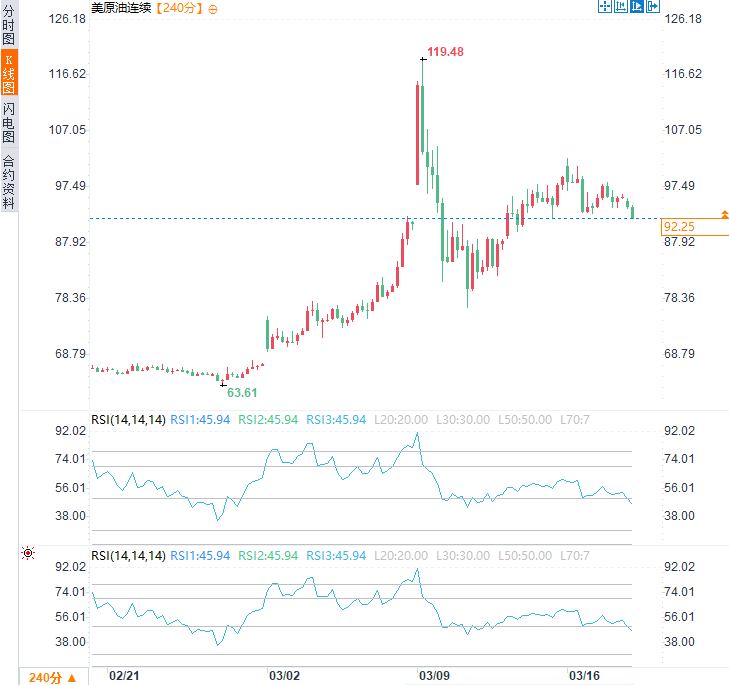
(US crude oil 4-hour chart, source: FX678)
Israeli airstrikes killed Ali Larijani, secretary of Iran's Supreme National Security Council, along with his son, deputy, and several bodyguards. Experts warn that Larijani's death could prolong the war; he was an irreplaceable pragmatic and conservative leader within the Iranian regime, and his passing complicates political management and makes ending the war more difficult through negotiations.
The US war in Iraq incurred short-term losses of approximately $50 billion, with total expenditures potentially reaching trillions of dollars, ultimately borne by future generations. Officials acknowledge that the true costs have been concealed, and the war's "profits" are insufficient to cover the full extent of the damage.
The assassination of a high-ranking official has exacerbated uncertainty, increasing the risk of extreme Iranian retaliation and significantly raising the probability of a prolonged conflict. Panic has reignited in global energy markets, with oil prices continuing to fluctuate at high levels. Investors need to be highly vigilant against a potential retaliatory attack that could further deteriorate supply, and should pay close attention to Iran's response, White House military plans, and progress in international coordination.
At 13:41 Beijing time, US crude oil futures were trading at $92.28 per barrel.
Hamidreza Azizi, a visiting researcher at the German Institute for International and Security Affairs, warned that Larijani's death could prolong the war .
Panic has resurfaced in global energy markets, and the risk of continued volatility in oil prices at high levels persists. During Wednesday's Asian trading session, US crude oil prices fluctuated and declined, but remained significantly above pre-conflict levels, currently trading around $92.40 per barrel, a daily drop of approximately 3.25%.
True insiders within the system are difficult to replace, and political management is even more complex.
Experts point out that Larijani has decades of experience within the system, enjoys widespread credibility among various elite groups, and is a "true insider" who is difficult to replace.
His death deprives the Iranian leadership of its most astute and pragmatic conservative voice, making political governance more complex and any negotiations to end the war more difficult.
Larijani was adept at cooperating with different camps within the system, becoming Iran's main voice on the international stage. His death will amplify the uncertainty of decision-making within Iran and the influence of hardliners.
From Revolutionary Guard to Speaker of Parliament: Key Milestones in Larijani's Nearly 50-Year Political Career
Larijani has held numerous important positions in his nearly 50-year political career, including commander of the Islamic Revolutionary Guard Corps, head of the national broadcasting agency, chief nuclear negotiator, and speaker of parliament for 12 years. He recently visited Moscow, Beirut, Abu Dhabi, and Muscat, and met with Russian President Vladimir Putin at the end of January.
His religious family background and scholarly identity further solidified his central position within the regime. Larijani was considered a rare "pragmatic bridge-type" figure within the Iranian system, and his assassination dealt a significant blow to the continuity of Iranian decision-making.
The US war in Iraq has resulted in short-term losses of approximately $50 billion, with total expenditures potentially reaching trillions of dollars.
The Intercept, citing government sources, reported that a war between the United States and Iran could cost trillions of dollars.
In the short term (three to four weeks of conflict), the United States will lose approximately $50 billion. However, the total expenditure, including long-term costs such as ammunition consumption, carrier strike group deployment, and veterans' benefits, "could reach trillions of dollars."
Officials say these true costs are unknown to Americans and will never be heard from the White House or the Pentagon.
The true cost is hidden, and future generations will pay the price.
The unnamed official emphasized, "My children and grandchildren, and even their descendants, will pay the price." The high cost of the war was deliberately concealed to avoid triggering a larger backlash within the United States.
Long-term expenditures such as ammunition consumption, military deployments, and veterans' benefits will continue to weigh on the federal budget, crowding out social welfare and infrastructure investment. The war "dividend" (high oil prices benefiting energy companies) cannot cover the full economic costs, and the actual burden will ultimately be passed on to taxpayers and future generations.
The assassination of a high-ranking official has exacerbated uncertainty and significantly increased the risk of prolonged conflict.
Larijani's assassination has greatly angered the Iranian Revolutionary Guard and hardliners, potentially triggering extreme retaliation (such as large-scale missile attacks, a complete blockade of the Strait of Hormuz, and expanded proxy operations). With the loss of a key pragmatic leader, Iran is adopting a more hardline approach, making negotiations to end the war more difficult.
The US continues its military operations, making a short-term ceasefire highly unlikely. Panic is rising again in global energy markets, and the risk of oil prices fluctuating at high levels persists.
Investors should be wary of a new round of supply shocks triggered by Iran's "blood feud," pay attention to the resumption of navigation in the Taiwan Strait and the actual implementation of the G7/IEA reserve releases, and be aware of the increasing pressure on inflation and economic slowdown.
(US crude oil 4-hour chart, source: FX678)
Editor's Summary
Israeli airstrikes killed Ali Larijani, secretary of Iran's Supreme National Security Council, along with his son, deputy, and several bodyguards. Experts warn that Larijani's death could prolong the war; he was an irreplaceable pragmatic and conservative leader within the Iranian regime, and his passing complicates political management and makes ending the war more difficult through negotiations.
The US war in Iraq incurred short-term losses of approximately $50 billion, with total expenditures potentially reaching trillions of dollars, ultimately borne by future generations. Officials acknowledge that the true costs have been concealed, and the war's "profits" are insufficient to cover the full extent of the damage.
The assassination of a high-ranking official has exacerbated uncertainty, increasing the risk of extreme Iranian retaliation and significantly raising the probability of a prolonged conflict. Panic has reignited in global energy markets, with oil prices continuing to fluctuate at high levels. Investors need to be highly vigilant against a potential retaliatory attack that could further deteriorate supply, and should pay close attention to Iran's response, White House military plans, and progress in international coordination.
At 13:41 Beijing time, US crude oil futures were trading at $92.28 per barrel.
- Risk Warning and Disclaimer
- The market involves risk, and trading may not be suitable for all investors. This article is for reference only and does not constitute personal investment advice, nor does it take into account certain users’ specific investment objectives, financial situation, or other needs. Any investment decisions made based on this information are at your own risk.