Natural gas shortage warning! A 3-5 year nightmare is beginning, and soaring oil prices are just the appetizer?
2026-03-20 09:49:00
The war between the US and Israel against Iran has entered its third week, with the conflict spreading from military targets to the heart of the global energy supply chain. Iran's retaliatory strike against Israel's bombing of the South Pars gas field directly targeted Qatar's Ras Raffan industrial city—a facility that processes about one-fifth of the world's liquefied natural gas (LNG), and the damage is expected to take three to five years to repair.
Iranian military spokesman Ebrahim Zolfaqari warned, "If attacks on Iranian energy facilities occur again, further attacks on the energy infrastructure of the United States and its allies will not stop until they are completely destroyed." This round of attacks marks a "new phase in the war," with energy assets becoming the primary target of retaliation, highlighting Iran's continued ability to retaliate.

The Iranian attack not only targeted Qatar, but also affected Saudi Arabia's main Red Sea port (used to circumvent the risk of the Strait of Hormuz being blocked), the UAE's Habshan gas facility, two oil refineries in Kuwait (causing fires), and oil facilities in Israel's Haifa port.
The CEO of Qatar Energy revealed that the attack crippled one-sixth of Qatar's LNG export capacity, resulting in an estimated annual revenue loss of $20 billion. Following the attack on the South Pars gas field (shared by Iran and Qatar), Qatar's natural gas production was severely damaged, and the global LNG supply faces a long-term shortage. These events expose the limitations of the Gulf region's air defense system in protecting strategic energy assets.
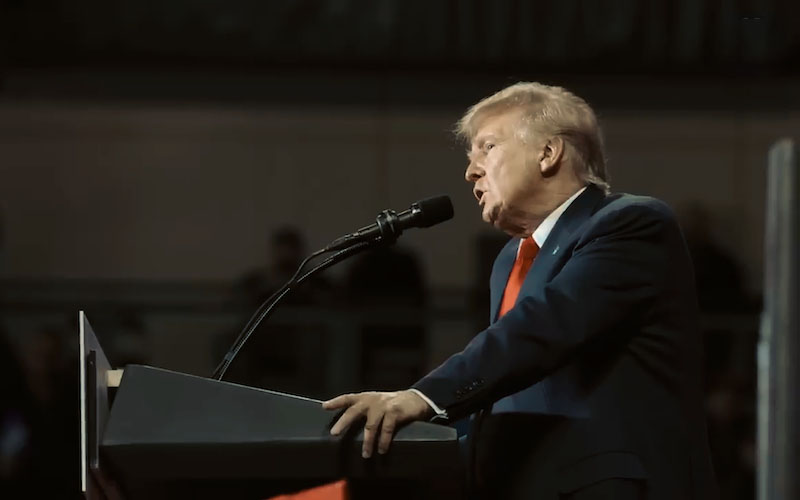
During a meeting with Japanese Prime Minister Sanae Takaichi, US President Donald Trump publicly stated that he had warned Israeli Prime Minister Benjamin Netanyahu "not to attack energy infrastructure again," adding, "I told him: Don't do that, and he won't." Trump emphasized that the US was "completely unaware" of Israel's bombing of the South Pars gas field, highlighting the differences in strategic coordination between the US and Israel.
He made it clear that he would not send additional ground troops to the Middle East: "I will not send troops anywhere." Although officials revealed that Trump was considering sending thousands more US troops, his public statement was intended to stabilize market sentiment. Netanyahu confirmed receiving a request to suspend attacks on energy facilities and stated that Iran had been "severely damaged" by the 20-day airstrikes, losing its uranium enrichment and ballistic missile capabilities, but ground action might be a future option.
The United Kingdom, Canada, France, Germany, Italy, the Netherlands, and Japan issued a joint statement pledging to "make an appropriate contribution to ensuring safe navigation in the Strait of Hormuz" and to cooperate with oil-producing countries to increase production. However, the statement lacked specific action details, and German Chancellor Merz reiterated that they would only participate after hostilities ended.
Allies are generally skeptical of the conflict, viewing it as having unclear objectives, being difficult to control, and unwilling to get involved. Trump criticized some allies for their cautious response to calls for security in the Strait of Hormuz, and rising oil prices are threatening support among his core voters.
Oil prices surged by about 10% intraday on Thursday (March 19), with Brent crude hitting $119.11 per barrel, near its three-and-a-half-year high reached on March 9. Prices then fluctuated and fell back due to news of easing sanctions on Russian oil. WTI crude closed at $94.59 per barrel, marking its largest discount to Brent in 11 years, reflecting heightened concerns about supply disruptions. On Friday, WTI crude prices trended downwards, currently trading around $92.80 per barrel, a daily decline of about 2.8%. The risk of a global energy crisis is rising, compounded by inflationary pressures and concerns about slowing growth.
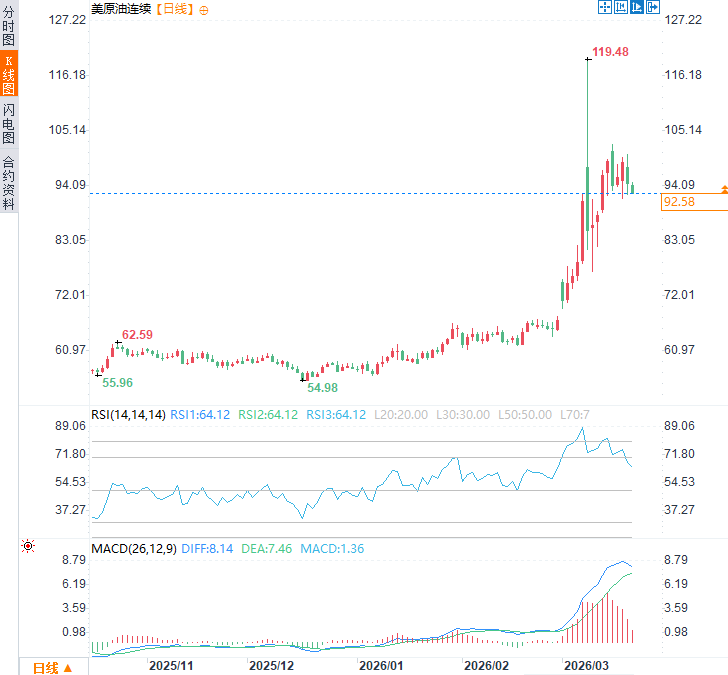
(US crude oil daily chart, source: FX678)
The Middle East conflict has evolved into an energy war. Iran's retaliation against Qatar's LNG facilities and energy assets in multiple countries has directly and severely damaged the stability of global natural gas and oil supplies. The recovery period will last for several years, which will amplify long-term price pressures.
Trump's public warning to Israel to avoid energy targets and his refusal to send additional troops indicate that the United States is trying to control the risk of escalation, but the rift between the US and Israel and the cautious attitude of its allies have complicated diplomatic efforts.
The sharp fluctuations in oil and gas prices have already impacted inflation expectations, threatening a repeat of the "oil shock" to the global economy. If navigation through the Strait of Hormuz is disrupted or more facilities are attacked, the energy crisis will shift from a short-term shock to a structural supply shortage, testing the response capabilities of central banks and governments worldwide.
At 9:48 AM Beijing time, US crude oil futures were trading at $92.68 per barrel.
Iranian military spokesman Ebrahim Zolfaqari warned, "If attacks on Iranian energy facilities occur again, further attacks on the energy infrastructure of the United States and its allies will not stop until they are completely destroyed." This round of attacks marks a "new phase in the war," with energy assets becoming the primary target of retaliation, highlighting Iran's continued ability to retaliate.
Iranian retaliation and attacks on energy facilities in multiple countries
The Iranian attack not only targeted Qatar, but also affected Saudi Arabia's main Red Sea port (used to circumvent the risk of the Strait of Hormuz being blocked), the UAE's Habshan gas facility, two oil refineries in Kuwait (causing fires), and oil facilities in Israel's Haifa port.
The CEO of Qatar Energy revealed that the attack crippled one-sixth of Qatar's LNG export capacity, resulting in an estimated annual revenue loss of $20 billion. Following the attack on the South Pars gas field (shared by Iran and Qatar), Qatar's natural gas production was severely damaged, and the global LNG supply faces a long-term shortage. These events expose the limitations of the Gulf region's air defense system in protecting strategic energy assets.
Trump warns Israel and refuses to send more troops.
During a meeting with Japanese Prime Minister Sanae Takaichi, US President Donald Trump publicly stated that he had warned Israeli Prime Minister Benjamin Netanyahu "not to attack energy infrastructure again," adding, "I told him: Don't do that, and he won't." Trump emphasized that the US was "completely unaware" of Israel's bombing of the South Pars gas field, highlighting the differences in strategic coordination between the US and Israel.
He made it clear that he would not send additional ground troops to the Middle East: "I will not send troops anywhere." Although officials revealed that Trump was considering sending thousands more US troops, his public statement was intended to stabilize market sentiment. Netanyahu confirmed receiving a request to suspend attacks on energy facilities and stated that Iran had been "severely damaged" by the 20-day airstrikes, losing its uranium enrichment and ballistic missile capabilities, but ground action might be a future option.
International allies respond cautiously to energy stability commitments
The United Kingdom, Canada, France, Germany, Italy, the Netherlands, and Japan issued a joint statement pledging to "make an appropriate contribution to ensuring safe navigation in the Strait of Hormuz" and to cooperate with oil-producing countries to increase production. However, the statement lacked specific action details, and German Chancellor Merz reiterated that they would only participate after hostilities ended.
Allies are generally skeptical of the conflict, viewing it as having unclear objectives, being difficult to control, and unwilling to get involved. Trump criticized some allies for their cautious response to calls for security in the Strait of Hormuz, and rising oil prices are threatening support among his core voters.
drastic fluctuations in the energy market and economic shocks
Oil prices surged by about 10% intraday on Thursday (March 19), with Brent crude hitting $119.11 per barrel, near its three-and-a-half-year high reached on March 9. Prices then fluctuated and fell back due to news of easing sanctions on Russian oil. WTI crude closed at $94.59 per barrel, marking its largest discount to Brent in 11 years, reflecting heightened concerns about supply disruptions. On Friday, WTI crude prices trended downwards, currently trading around $92.80 per barrel, a daily decline of about 2.8%. The risk of a global energy crisis is rising, compounded by inflationary pressures and concerns about slowing growth.
(US crude oil daily chart, source: FX678)
Editor's Summary
The Middle East conflict has evolved into an energy war. Iran's retaliation against Qatar's LNG facilities and energy assets in multiple countries has directly and severely damaged the stability of global natural gas and oil supplies. The recovery period will last for several years, which will amplify long-term price pressures.
Trump's public warning to Israel to avoid energy targets and his refusal to send additional troops indicate that the United States is trying to control the risk of escalation, but the rift between the US and Israel and the cautious attitude of its allies have complicated diplomatic efforts.
The sharp fluctuations in oil and gas prices have already impacted inflation expectations, threatening a repeat of the "oil shock" to the global economy. If navigation through the Strait of Hormuz is disrupted or more facilities are attacked, the energy crisis will shift from a short-term shock to a structural supply shortage, testing the response capabilities of central banks and governments worldwide.
At 9:48 AM Beijing time, US crude oil futures were trading at $92.68 per barrel.
- Risk Warning and Disclaimer
- The market involves risk, and trading may not be suitable for all investors. This article is for reference only and does not constitute personal investment advice, nor does it take into account certain users’ specific investment objectives, financial situation, or other needs. Any investment decisions made based on this information are at your own risk.