Israel bombs Tehran, Trump can't control it! Iranian missiles strike three countries, a critical moment for energy security.
2026-03-20 12:09:01
Just one day after Trump publicly called on Israel to avoid further attacks on Iranian energy infrastructure, the Israel Defense Forces announced on Friday (March 20) a new round of strikes on infrastructure in downtown Tehran, the Iranian capital.
An Israeli military spokesperson stated that the operation targeted "terrorist regimes" in Iran but did not provide specific details. This attack marks a further escalation of the US-Israel war against Iran. Since the conflict began on February 28 due to the breakdown of nuclear negotiations, it has resulted in thousands of deaths and spilled over into neighboring countries, severely disrupting the global economy and energy supply chains.
On Friday during Asian trading hours, US crude oil prices fluctuated and fell back, but remained significantly higher than pre-conflict levels, currently trading around $93.50 per barrel, down about 2.2% on the day.
On Thursday, Trump made it clear in the Oval Office that he had warned Israeli Prime Minister Netanyahu "not to do that," and stated that Israel had agreed to refrain from attacking energy facilities. However, Israel took further action on Friday, highlighting the strategic differences between the two sides . Netanyahu had previously admitted that the bombing of the South Pars gas field was a unilateral action and confirmed receiving a request for a stay of execution from the United States.
Three Israeli officials revealed that the Tehran attack was conducted in consultation with the United States, but a repeat is "unlikely." U.S. Director of National Intelligence Tulsi Gabbard testified before Congress, noting a clear divergence in U.S. and Israeli objectives: Israel focuses on weakening Iran's leadership, while Trump prioritizes destroying Iran's ballistic missiles, navy, and production capabilities . This rift makes coordination among allies more difficult.
Bahrain, Kuwait, and the United Arab Emirates confirmed Iranian missile attacks early Friday morning local time. These attacks, which followed several retaliatory strikes against regional energy facilities by Iran in recent days, further expanded the spillover effects of the conflict, impacting members of the Gulf Cooperation Council (GCC). Many of these countries are US allies, and the attacks have heightened regional tensions and may prompt more countries to reassess their neutral or cautious stances.
Iranian military spokesman Ibrahim Zolfakari warned that attacks on US and allied energy targets "will not stop until they are completely destroyed" if energy facilities are attacked again.
Iran’s attack on Qatar’s Ras Raffan industrial city has severely disrupted about one-fifth of the world’s liquefied natural gas (LNG) processing capacity. The CEO of Qatar Energy said that one-sixth of export capacity has been interrupted, resulting in a loss of $20 billion annually, and that it will take three to five years to recover.
Saudi Arabia's main Red Sea port (used to bypass the Strait of Hormuz) was also attacked. Israel's Haifa port oil facilities were similarly targeted in Iranian retaliation, suffering damage despite no casualties. These incidents expose the limitations of the Gulf's air defense system and highlight Iran's continued ability to impose heavy energy costs on the US and Israel.
The United Kingdom, Canada, France, Germany, Italy, the Netherlands, and Japan issued a joint statement pledging to "make an appropriate contribution to ensuring safe navigation in the Strait of Hormuz" and to consider cooperating with oil-producing countries to increase production.
However, the statement lacked details on immediate action, and German Chancellor Friedrich Merz reiterated that Germany would only participate if hostilities ended.
European leaders generally believe the conflict has unclear objectives, is not what they want, and is difficult to control, and are therefore unwilling to become deeply involved. Trump criticized allies for their cautious response, saying that rising fuel prices are putting political pressure on his core voters.
Israel's renewed airstrikes on Tehran, ignoring Trump's warnings, mark a escalation of the conflict, publicly exposing strategic differences between the US and Israel and bringing coordination mechanisms to the brink of collapse. Iran's repeated retaliatory attacks have spilled over into Bahrain, Kuwait, and the UAE, severely damaging Qatar's LNG and Saudi Arabia's Red Sea ports, leading to a long-term structural shortage of global energy supplies.
While the G7 has pledged to safeguard the Strait of Hormuz, its cautious actions and lack of substantial military commitments have made it difficult to quickly quell market panic. A "new phase" of the war has arrived, with energy infrastructure becoming the main battleground. The recovery process will be lengthy, and inflationary pressures will persist. Without a diplomatic breakthrough, the risk of a global "oil shock" will further amplify, testing the economic resilience and diplomatic wisdom of all nations.
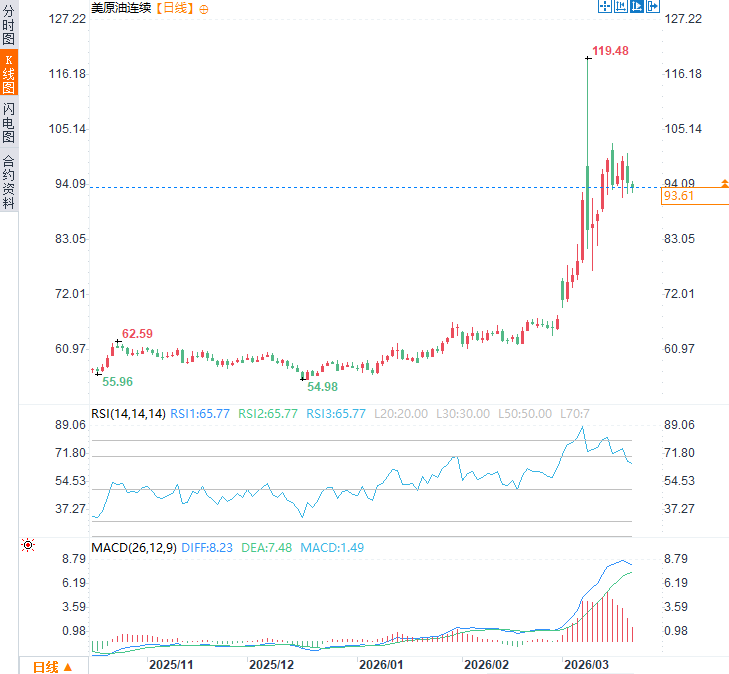
(US crude oil daily chart, source: FX678)
At 12:08 Beijing time, US crude oil futures were trading at $93.46 per barrel.
An Israeli military spokesperson stated that the operation targeted "terrorist regimes" in Iran but did not provide specific details. This attack marks a further escalation of the US-Israel war against Iran. Since the conflict began on February 28 due to the breakdown of nuclear negotiations, it has resulted in thousands of deaths and spilled over into neighboring countries, severely disrupting the global economy and energy supply chains.
On Friday during Asian trading hours, US crude oil prices fluctuated and fell back, but remained significantly higher than pre-conflict levels, currently trading around $93.50 per barrel, down about 2.2% on the day.
The rift between the US and Israel has deepened, and Trump was unaware of it beforehand.
On Thursday, Trump made it clear in the Oval Office that he had warned Israeli Prime Minister Netanyahu "not to do that," and stated that Israel had agreed to refrain from attacking energy facilities. However, Israel took further action on Friday, highlighting the strategic differences between the two sides . Netanyahu had previously admitted that the bombing of the South Pars gas field was a unilateral action and confirmed receiving a request for a stay of execution from the United States.
Three Israeli officials revealed that the Tehran attack was conducted in consultation with the United States, but a repeat is "unlikely." U.S. Director of National Intelligence Tulsi Gabbard testified before Congress, noting a clear divergence in U.S. and Israeli objectives: Israel focuses on weakening Iran's leadership, while Trump prioritizes destroying Iran's ballistic missiles, navy, and production capabilities . This rift makes coordination among allies more difficult.
Bahrain, Kuwait, and the UAE were attacked by Iranian missiles in the early hours of the morning.
Bahrain, Kuwait, and the United Arab Emirates confirmed Iranian missile attacks early Friday morning local time. These attacks, which followed several retaliatory strikes against regional energy facilities by Iran in recent days, further expanded the spillover effects of the conflict, impacting members of the Gulf Cooperation Council (GCC). Many of these countries are US allies, and the attacks have heightened regional tensions and may prompt more countries to reassess their neutral or cautious stances.
Iranian military spokesman Ibrahim Zolfakari warned that attacks on US and allied energy targets "will not stop until they are completely destroyed" if energy facilities are attacked again.
Qatari gas facilities and Saudi Red Sea ports continue to suffer damage.
Iran’s attack on Qatar’s Ras Raffan industrial city has severely disrupted about one-fifth of the world’s liquefied natural gas (LNG) processing capacity. The CEO of Qatar Energy said that one-sixth of export capacity has been interrupted, resulting in a loss of $20 billion annually, and that it will take three to five years to recover.
Saudi Arabia's main Red Sea port (used to bypass the Strait of Hormuz) was also attacked. Israel's Haifa port oil facilities were similarly targeted in Iranian retaliation, suffering damage despite no casualties. These incidents expose the limitations of the Gulf's air defense system and highlight Iran's continued ability to impose heavy energy costs on the US and Israel.
G7 Joint Statement and Cautious Stance from Allies
The United Kingdom, Canada, France, Germany, Italy, the Netherlands, and Japan issued a joint statement pledging to "make an appropriate contribution to ensuring safe navigation in the Strait of Hormuz" and to consider cooperating with oil-producing countries to increase production.
However, the statement lacked details on immediate action, and German Chancellor Friedrich Merz reiterated that Germany would only participate if hostilities ended.
European leaders generally believe the conflict has unclear objectives, is not what they want, and is difficult to control, and are therefore unwilling to become deeply involved. Trump criticized allies for their cautious response, saying that rising fuel prices are putting political pressure on his core voters.
Editor's Summary
Israel's renewed airstrikes on Tehran, ignoring Trump's warnings, mark a escalation of the conflict, publicly exposing strategic differences between the US and Israel and bringing coordination mechanisms to the brink of collapse. Iran's repeated retaliatory attacks have spilled over into Bahrain, Kuwait, and the UAE, severely damaging Qatar's LNG and Saudi Arabia's Red Sea ports, leading to a long-term structural shortage of global energy supplies.
While the G7 has pledged to safeguard the Strait of Hormuz, its cautious actions and lack of substantial military commitments have made it difficult to quickly quell market panic. A "new phase" of the war has arrived, with energy infrastructure becoming the main battleground. The recovery process will be lengthy, and inflationary pressures will persist. Without a diplomatic breakthrough, the risk of a global "oil shock" will further amplify, testing the economic resilience and diplomatic wisdom of all nations.
(US crude oil daily chart, source: FX678)
At 12:08 Beijing time, US crude oil futures were trading at $93.46 per barrel.
- Risk Warning and Disclaimer
- The market involves risk, and trading may not be suitable for all investors. This article is for reference only and does not constitute personal investment advice, nor does it take into account certain users’ specific investment objectives, financial situation, or other needs. Any investment decisions made based on this information are at your own risk.