Warning signs of runaway inflation expectations: Could the pound be facing its most bizarre turn of events?
2026-03-20 17:46:05
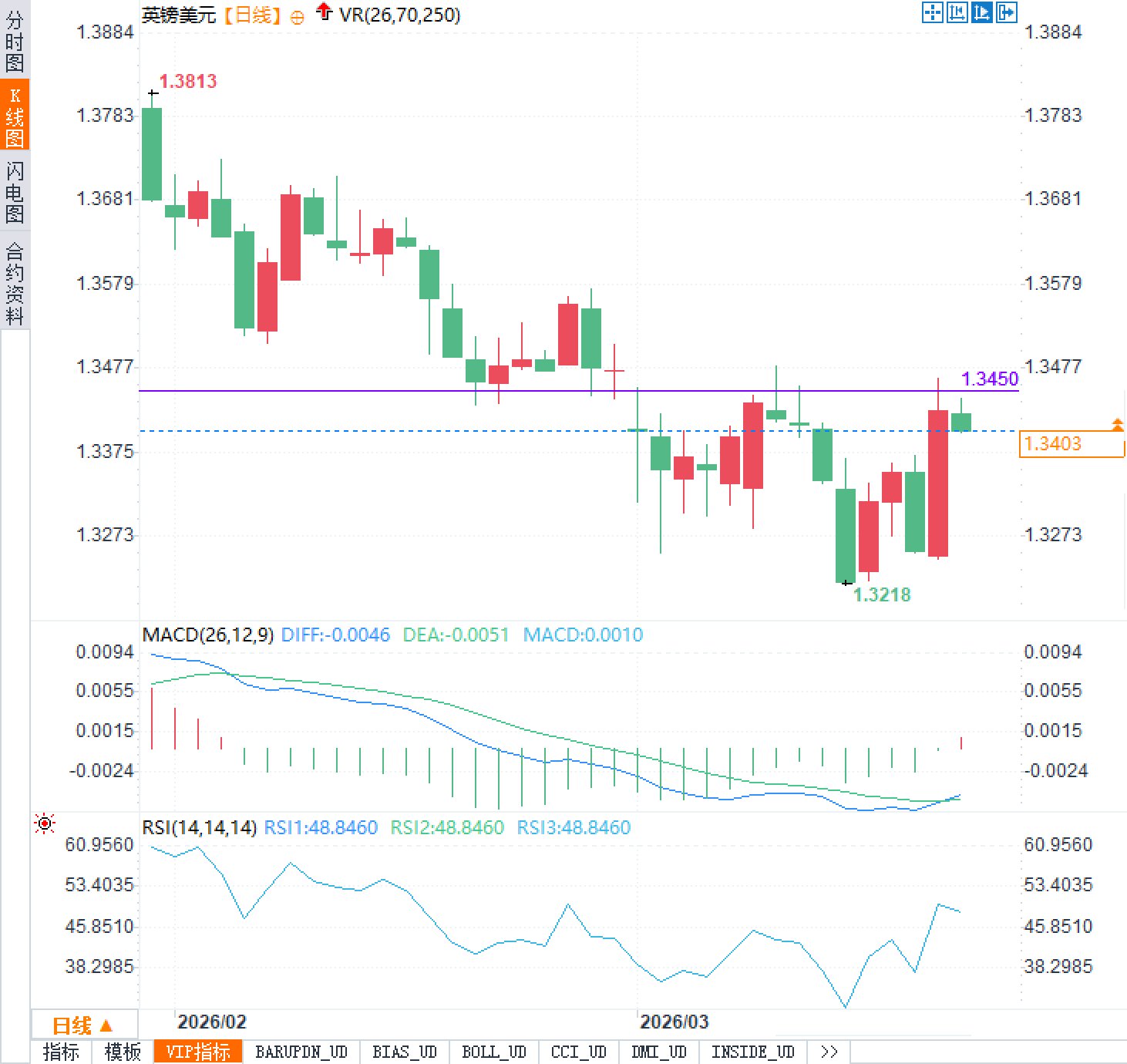
On Friday, March 20, the pound traded under pressure against the dollar, hovering around 1.3400. The pair had briefly strengthened after the Bank of England decided to keep its benchmark interest rate unchanged, but traders quickly shifted their focus from previously priced-in rate cuts to the potential impact of the Middle East conflict on energy prices and the path of inflation. With the benchmark rate remaining steady at 3.75%, increased consensus in policy decisions coupled with geopolitical uncertainty recalibrated monetary policy expectations.
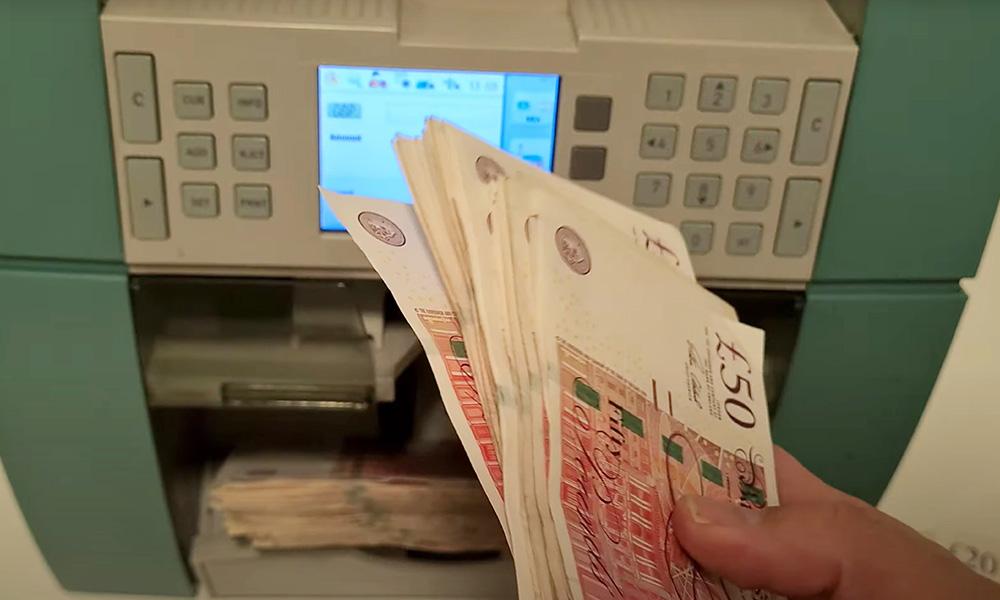
The Bank of England's Monetary Policy Committee unanimously voted 9-0 to keep interest rates unchanged, a stark contrast to the 5-4 split at the February meeting. This shift reflects the cautious stance taken by policymakers in a highly uncertain environment. Governor Andrew Bailey recently stated explicitly, "The Middle East wars have driven up global energy prices. You're already seeing this at gas stations, and if it continues, it will push up household energy bills later this year." He also warned the market, "I urge everyone not to draw any strong conclusions about rate hikes... the right place is to wait and see," but emphasized that the central bank is "ready to act" to maintain price stability.
Previously, the market had widely priced in multiple interest rate cuts, but rising energy costs have significantly altered this expectation. The Bank of England's assessment indicates that inflation may accelerate to around 3.5% in the coming quarters, increasing the risk of inflation expectation anchoring. Despite signs of slowing economic activity, geopolitical factors have become the dominant risk. Policymakers have clearly stated that the scope for policy easing is narrowing, providing some short-term support for the pound, but limiting its long-term upside potential. This unanimous signal indicates that the central bank is prioritizing external shocks over hastily easing monetary conditions.
The Middle East conflict has directly driven up global energy costs, with Brent crude oil prices climbing to around $110 per barrel, a significant increase from pre-conflict levels. This impact has been transmitted through the supply chain to the UK, with household fuel and utility spending increasing simultaneously, and businesses facing increased production costs. The Bank of England expects rising energy prices to push the Consumer Price Index (CPI) higher in the coming quarters, with the key risk being a second-round effect: a wage and price spiral that could solidify high inflation expectations.
The duration of the conflict has become a key variable. If shipping routes are disrupted, energy bills will further increase inflationary pressures in the second half of the year. In contrast, weak domestic demand could have curbed price increases, but current external shocks have dominated risk assessments. Policymakers emphasize that monetary policy cannot directly address energy supply issues, but must prevent runaway inflation through interest rate interventions. This dynamic has significantly narrowed the scope for interest rate cuts, and market expectations have shifted from accommodative to neutral or even slightly hawkish.
Energy price shocks have dominated the inflation narrative, prompting adjustments to policy flexibility.
Labor market data shows signs of an economic slowdown: the unemployment rate has stabilized at 5.2%, a near five-year high, and regular wage growth has slowed to its lowest level since the end of 2020, with an average income growth rate of about 3.8% over the three months to January. Employment is stabilizing, but wage pressures have eased significantly. Normally, such data would support a more dovish policy tone; however, the geopolitical environment and high energy prices have prioritized inflation risks.
The Bank of England has clearly stated that a weak labor market may limit price transmission, but the immediate priority is preventing inflation expectations from becoming unanchored. This trade-off highlights a policy dilemma: premature easing could exacerbate the impact of external shocks, while excessive tightening could amplify the economic slowdown. Policymakers are adopting a wait-and-see approach, closely monitoring the interaction between conflict developments and domestic data. While slower wages have eased some pressure, rising energy costs could trigger compensatory wage demands, creating a second round of inflation.
Labor data provided a buffer, but failed to reverse the geopolitically driven policy orientation.
A shift in the Bank of England's interest rate decision.
The Bank of England's Monetary Policy Committee unanimously voted 9-0 to keep interest rates unchanged, a stark contrast to the 5-4 split at the February meeting. This shift reflects the cautious stance taken by policymakers in a highly uncertain environment. Governor Andrew Bailey recently stated explicitly, "The Middle East wars have driven up global energy prices. You're already seeing this at gas stations, and if it continues, it will push up household energy bills later this year." He also warned the market, "I urge everyone not to draw any strong conclusions about rate hikes... the right place is to wait and see," but emphasized that the central bank is "ready to act" to maintain price stability.
Previously, the market had widely priced in multiple interest rate cuts, but rising energy costs have significantly altered this expectation. The Bank of England's assessment indicates that inflation may accelerate to around 3.5% in the coming quarters, increasing the risk of inflation expectation anchoring. Despite signs of slowing economic activity, geopolitical factors have become the dominant risk. Policymakers have clearly stated that the scope for policy easing is narrowing, providing some short-term support for the pound, but limiting its long-term upside potential. This unanimous signal indicates that the central bank is prioritizing external shocks over hastily easing monetary conditions.
Energy price shocks triggered by Middle East conflicts
The Middle East conflict has directly driven up global energy costs, with Brent crude oil prices climbing to around $110 per barrel, a significant increase from pre-conflict levels. This impact has been transmitted through the supply chain to the UK, with household fuel and utility spending increasing simultaneously, and businesses facing increased production costs. The Bank of England expects rising energy prices to push the Consumer Price Index (CPI) higher in the coming quarters, with the key risk being a second-round effect: a wage and price spiral that could solidify high inflation expectations.
The duration of the conflict has become a key variable. If shipping routes are disrupted, energy bills will further increase inflationary pressures in the second half of the year. In contrast, weak domestic demand could have curbed price increases, but current external shocks have dominated risk assessments. Policymakers emphasize that monetary policy cannot directly address energy supply issues, but must prevent runaway inflation through interest rate interventions. This dynamic has significantly narrowed the scope for interest rate cuts, and market expectations have shifted from accommodative to neutral or even slightly hawkish.
| index | Latest value | Previous value | change |
|---|---|---|---|
| Consumer Price Index (CPI) Annual Rate (January 2026) | 3.0% | 3.4% | Decreased by 0.4 percentage points |
| Peak expected in the next quarter | 3.5% | — | Up 0.5 percentage points |
Labor Market Slowdown and Policy Trade-offs
Labor market data shows signs of an economic slowdown: the unemployment rate has stabilized at 5.2%, a near five-year high, and regular wage growth has slowed to its lowest level since the end of 2020, with an average income growth rate of about 3.8% over the three months to January. Employment is stabilizing, but wage pressures have eased significantly. Normally, such data would support a more dovish policy tone; however, the geopolitical environment and high energy prices have prioritized inflation risks.
The Bank of England has clearly stated that a weak labor market may limit price transmission, but the immediate priority is preventing inflation expectations from becoming unanchored. This trade-off highlights a policy dilemma: premature easing could exacerbate the impact of external shocks, while excessive tightening could amplify the economic slowdown. Policymakers are adopting a wait-and-see approach, closely monitoring the interaction between conflict developments and domestic data. While slower wages have eased some pressure, rising energy costs could trigger compensatory wage demands, creating a second round of inflation.
| index | Latest value | Previous value | change |
|---|---|---|---|
| unemployment rate | 5.2% | 5.2% | flat |
| Regular wage growth rate | 3.8% | 4.1% | Decrease of 0.3 percentage points |
Frequently Asked Questions
Question 1: What are the underlying reasons for the Bank of England's decision to maintain interest rates unanimously this time?
A: The Middle East conflict has driven up energy prices, significantly increasing inflationary risks, and policymakers are prioritizing measures to mitigate price pressures. Despite a slowdown in the labor market, external shocks have dominated the assessment framework, leading to a shift from expectations of interest rate cuts to a more cautious wait-and-see approach.
Question 2: How do geopolitical factors reshape the path of the pound sterling exchange rate?
A: The conflict caused oil prices to surge to around $110 per barrel, reducing the scope for policy easing and providing short-term support for the pound, but limiting its upside potential. The direction of the exchange rate will depend on the balance between the duration of the conflict and the domestic economic slowdown.
Question 3: How much actual influence does labor market data have on central bank policy decisions?
A: Slowing wage growth to a recent low and an unemployment rate of 5.2% should have supported easing, but inflation expectations are anchored to risk, and the central bank has chosen a wait-and-see strategy, which has limited the path for interest rate cuts.
- Risk Warning and Disclaimer
- The market involves risk, and trading may not be suitable for all investors. This article is for reference only and does not constitute personal investment advice, nor does it take into account certain users’ specific investment objectives, financial situation, or other needs. Any investment decisions made based on this information are at your own risk.