The US dollar's feint attack of 100 points failed, and G10 central banks joined forces to "encircle and annihilate inflation," with bulls and bears exchanging hands in key positions.
2026-03-21 13:54:53
This week, global financial markets were dominated by intense geopolitical turmoil and soaring energy prices. Brent crude oil prices briefly broke through the $112 mark, influenced by the US-Israeli military action against Iran. This significant cost shock directly reshaped the monetary policy logic of global central banks. The US dollar index initially approached a high of 100.54 at the beginning of the week, supported by its safe-haven appeal and reduced expectations of a Fed rate cut. However, later in the week, significant profit-taking occurred as the central banks of the UK, Japan, and the Eurozone collectively signaled hawkish rate hikes to combat imported inflation, causing the index to fall back to around 99.5. Currently, the core market concern has shifted from "slowing growth" to "runaway inflation," and investors are beginning to reassess the peak of the global interest rate path.
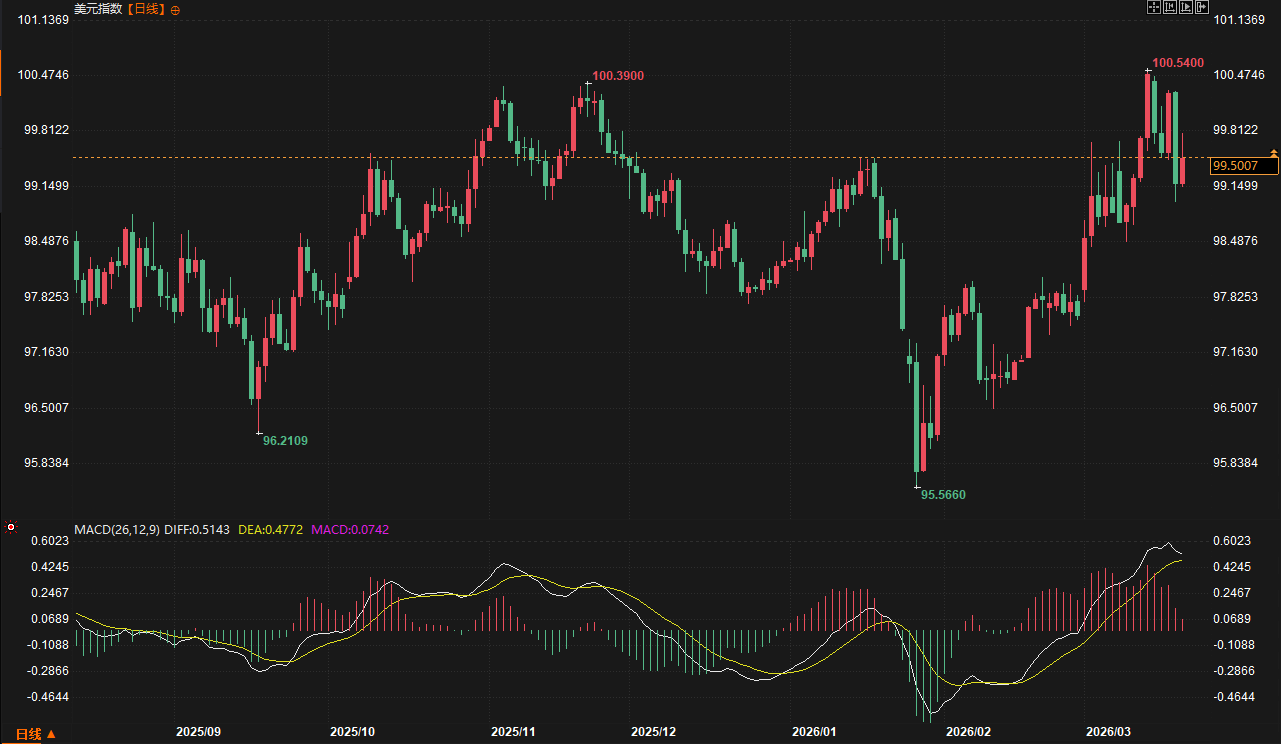
This Week's Market Recap : The US dollar index exhibited a significant "inverted V-shaped" trend this week. At the beginning of the week, driven by risk aversion, the index surged, reaching a high of 100.54, just shy of the November 2025 high. However, as market expectations for a Fed rate cut in 2026 plummeted, and other G10 currencies strengthened due to rising rate hike expectations, the dollar experienced a significant pullback on Friday, ultimately falling below the 100 mark and closing near 99.5. The long upper shadow on the weekly chart indicates extremely heavy resistance for the dollar above 100.
Economic Data/Event Summary : The Federal Reserve kept interest rates unchanged as expected at its policy meeting this week. Chairman Powell's remarks were extremely cautious, emphasizing that it was too early to assess the long-term economic impact of the war. However, the market has already priced in the reality: oil prices have risen by about 50% since the outbreak of the war, and rumors of a blockade of the Strait of Hormuz have exacerbated inflation concerns. The market's initial expectation of two rate cuts this year has now become "virtually impossible." This reshaping of expectations supported the dollar at the beginning of the week, but triggered a correction by the weekend as the positive news was fully priced in.
Summary of institutional viewpoints : Monex USA analysis points out that the signals from the Federal Reserve indicate its lack of interest in near-term rate cuts, reflecting policymakers' vigilance regarding rising inflation. Bank of America Global Research believes that the market had already priced in the move before the central banks' formal communication, and the collective hawkish turn of G10 central banks has eased the dollar's rise driven by oil prices, making it difficult for the dollar index to maintain a one-sided upward trend in the short term.
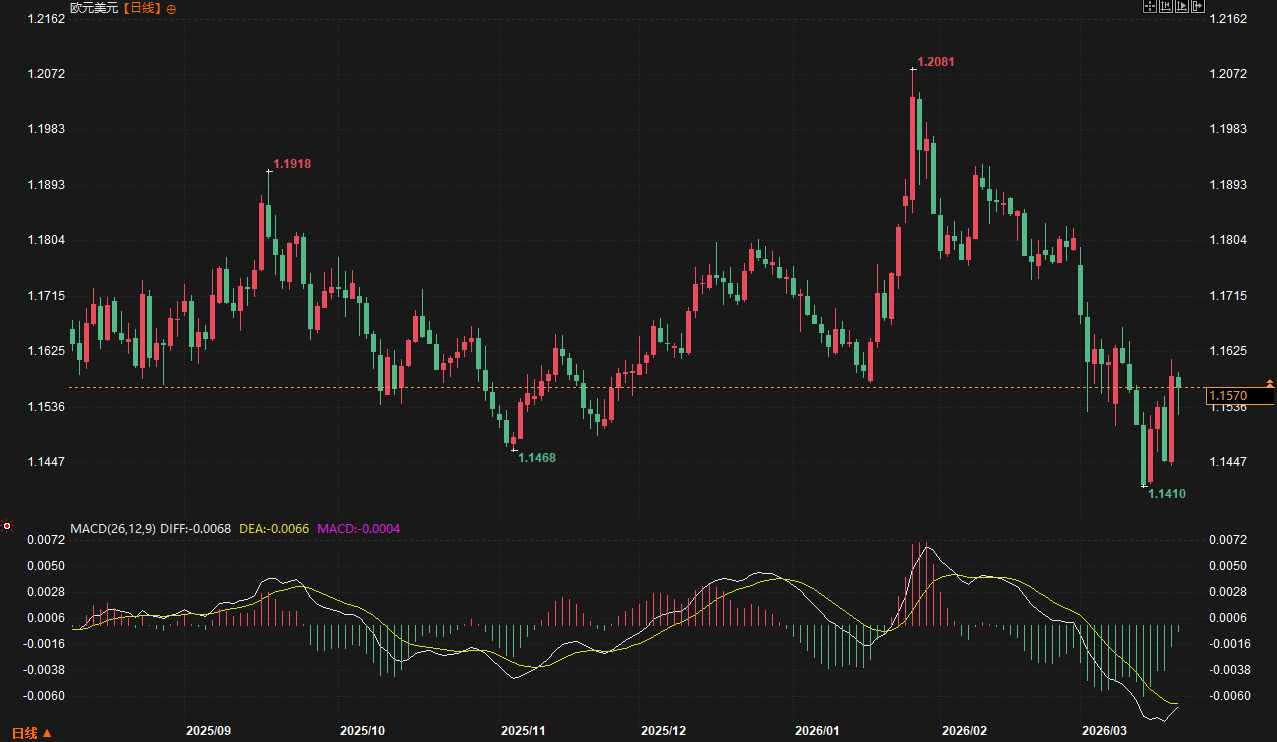
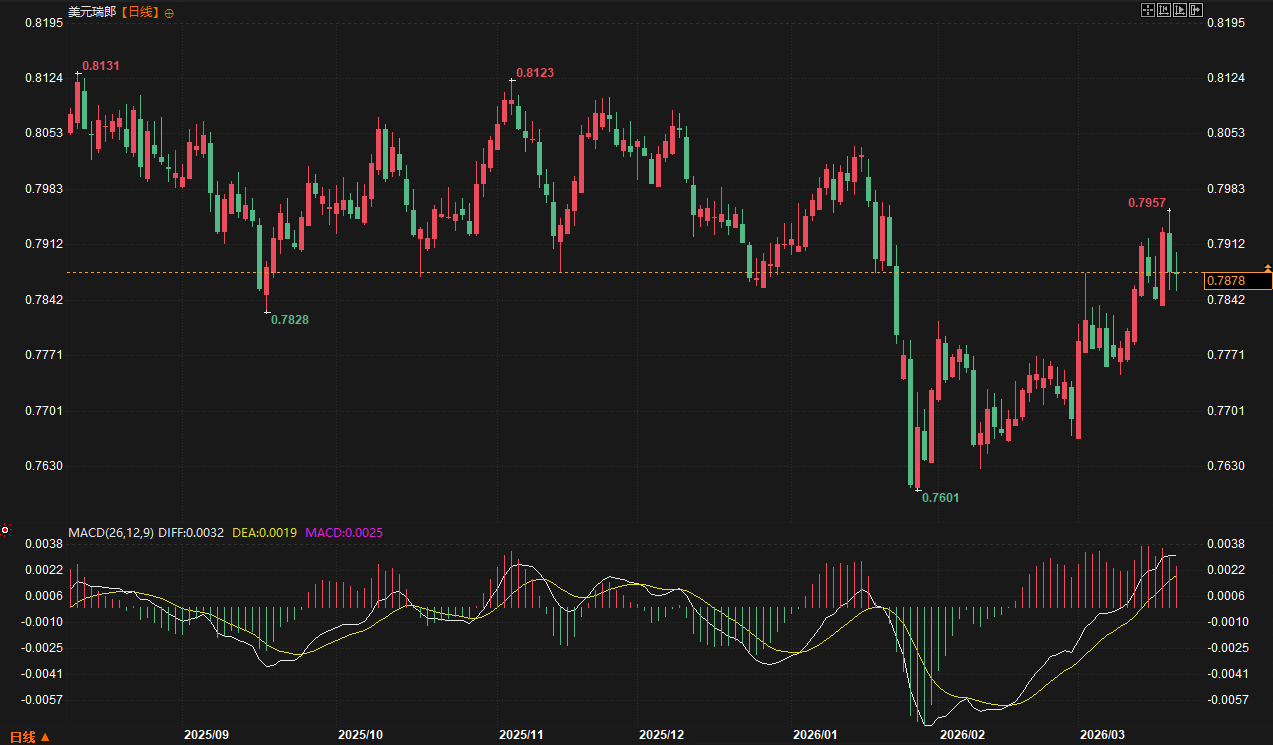
This Week's Market Recap : The euro experienced a decline followed by a rise against the US dollar this week. At the beginning of the week, pressured by a strong dollar, the exchange rate fell to a low of 1.1410. Subsequently, as the European Central Bank escalated its warnings about inflation risks, the euro rallied, recovering lost ground and rising to around 1.1570. The Swiss franc performed relatively strongly; the dollar/Swiss franc pair retreated slightly after reaching a high of 0.7957, closing at 0.7878, remaining within the upward channel that began in February.
Economic Data/Event Summary : The European Central Bank (ECB) chose to hold rates steady at its policy meeting on Thursday, but the tone of its post-meeting statement shifted significantly towards hawkishness. Lagarde explicitly warned that soaring energy prices are pushing up inflationary pressures. Meanwhile, while risk aversion triggered by the Middle East situation initially boosted the US dollar, it also stimulated defensive demand for the Swiss franc.
Summary of institutional views : Analysts point out that despite rising energy costs and growth pressures in the Eurozone, the European Central Bank (ECB) cannot ignore record inflation data. The market is currently pricing in the ECB potentially ending its observation period early and shifting towards interest rate hikes, which provides short-term support for the euro.
This Week's Market Recap : The British pound rebounded strongly against the US dollar this week, starting with a dip to 1.3218 before rising for four consecutive weeks, ultimately closing above 1.3340, indicating a strong bottoming signal. The US dollar maintained its upward trend against the Canadian dollar, closing the week near 1.3720, benefiting from the commodity currency characteristics boosted by the surge in oil prices.
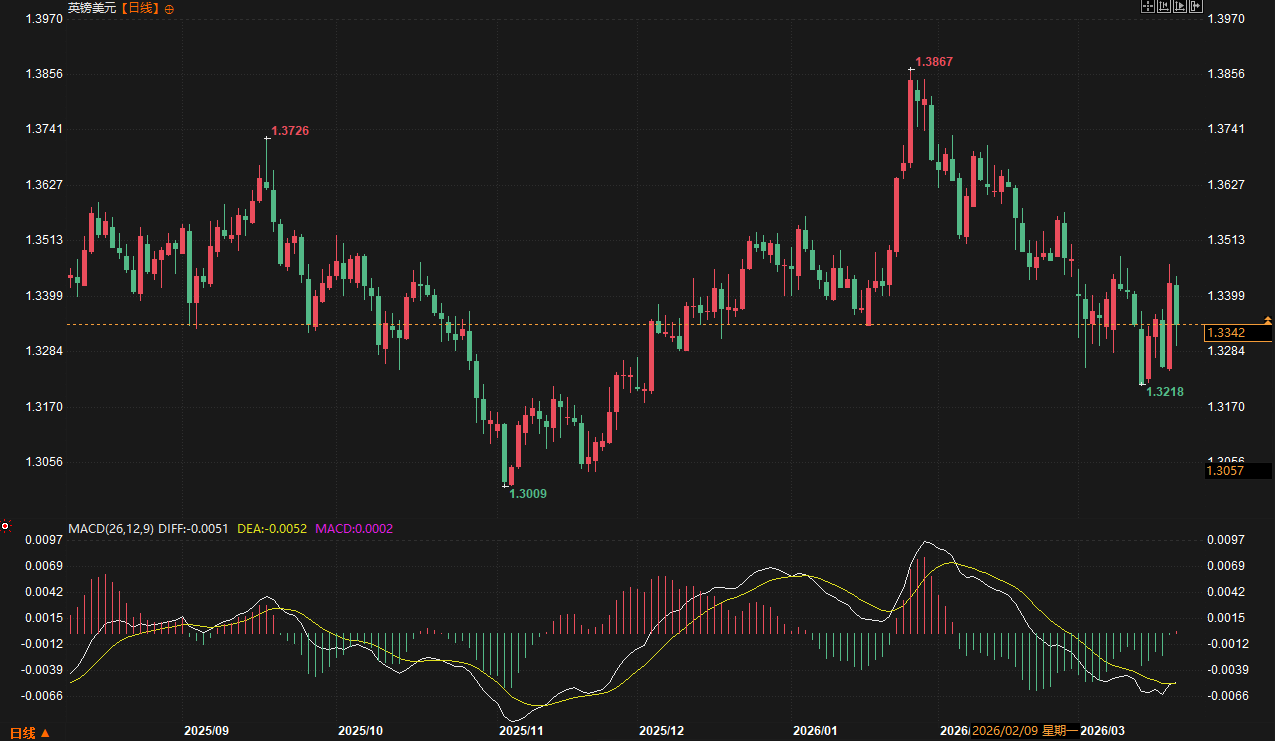
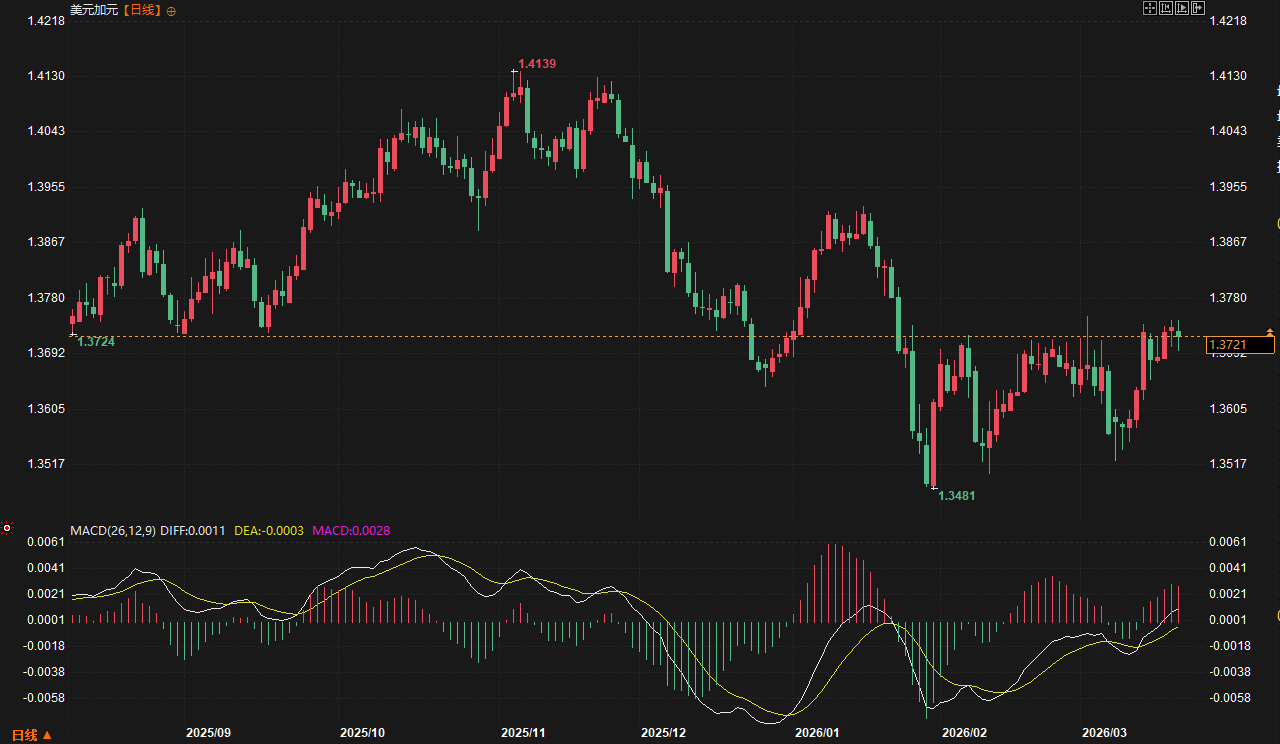
Economic Data/Event Summary : Although the Bank of England kept interest rates unchanged, its statement about being "prepared to act" triggered a sharp drop in UK government bond prices, and the surge in yields directly pushed up the pound's exchange rate. As for the Canadian dollar, the surge in oil prices provided key support, and although the strengthening US dollar provided some offset, the overall center of gravity for the Canadian dollar remained upward.
Summary of institutional views : The market generally believes that the Bank of England's tolerance for inflation has reached its limit. Regarding the Canadian dollar, analysts say that as long as the supply risks in the Strait of Hormuz remain, the Canadian dollar, as the currency of a major energy exporter, will continue to be favored by capital, with a short-term target of 1.38.
This Week's Market Recap : The USD/JPY pair experienced a dramatic week of volatility. At the start of the week, the pair surged to 159.896, just shy of the key 160 level. However, due to an unexpected hawkish signal from the Bank of Japan, the yen rebounded sharply, and the USD/JPY pair fell to around 159.2 on Friday.
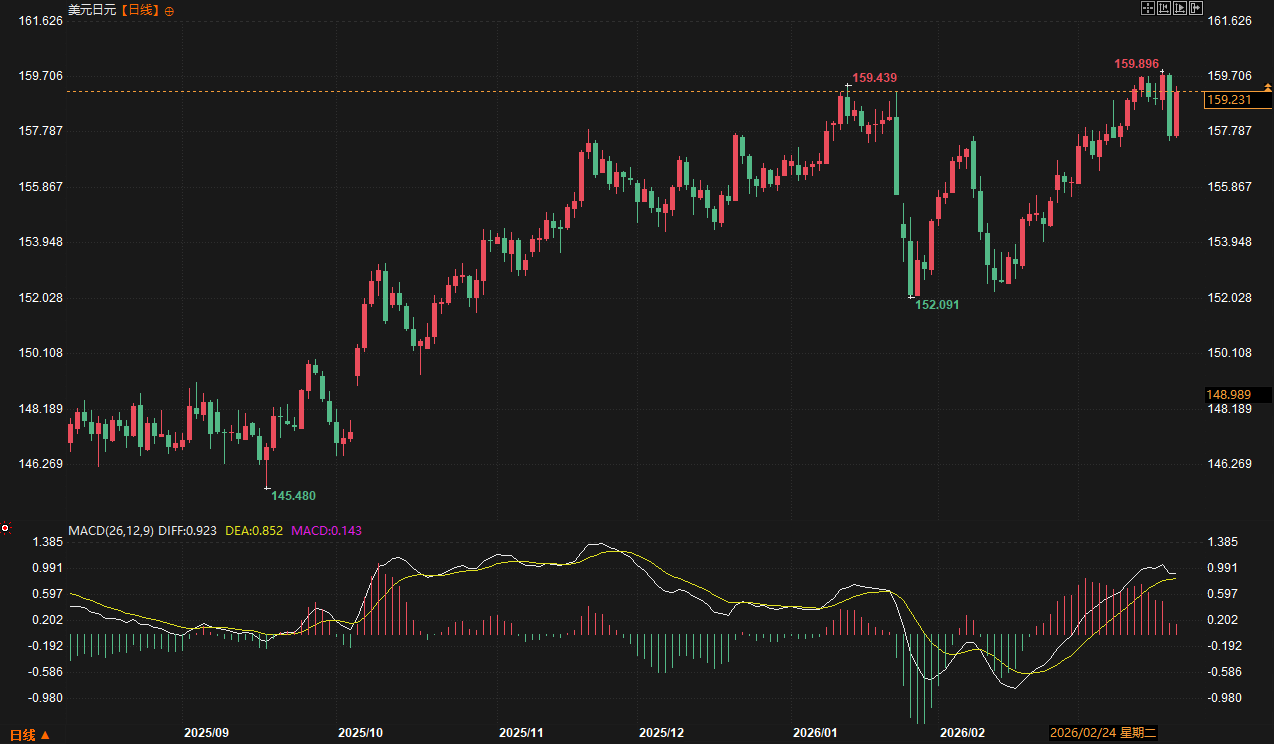
Economic Data/Event Summary : The Bank of Japan's move to raise interest rates as early as April caught carry traders who had been heavily shorting the yen off guard. The Reserve Bank of Australia raised interest rates for the second consecutive month on Tuesday, making it the "leader" among G10 central banks with its firm stance against inflation.
Summary of institutional views : Traders are generally wary of the risk of intervention by the Bank of Japan near the 160 level. The current market consensus is that with the restart of the global inflation cycle, Japan's long-standing negative or ultra-low interest rate policies are unsustainable, and the yen's "safe-haven" status is returning through policy tightening.
Looking ahead to next week, global markets will enter a period of "bipolar volatility" driven by data and geopolitical factors. The global PMI data released on March 24th will reveal the true impact of the energy crisis on manufacturing, while CPI data from Japan, the UK, and Australia will directly determine the urgency of interest rate hikes by central banks worldwide. Of particular note is the shift to daylight saving time in Europe next week, which could amplify volatility during periods of liquidity shortages. With no signs of de-escalation in the US-Iran conflict, oil prices will continue to act as a "guide" for the foreign exchange market. While the US dollar may see a short-term pullback, any volatility driven by risk aversion before the Federal Reserve officially shifts its stance could lead to another wave of "emotional risk aversion" in the market.
Q: The US dollar index retreated this week after hitting a high of 100.54. Does this mean that the long bull market for the US dollar has ended?
A: It's too early to declare the end of the dollar's long bull market. This pullback is more of a correction after technical overbuying and a hedge against selling pressure as positive news has been fully priced in. The dollar's strength at the beginning of the week stemmed from safe-haven demand due to the Middle East conflict and the pricing in the Fed's shattered hopes for rate cuts. However, as the index approached previous highs, the market noticed that other G10 central banks, such as the Bank of England and the Bank of Japan, were also forced to turn hawkish due to inflationary pressures, leading to a marginal weakening of the interest rate differential driving force. In the short term, the dollar is entering a period of consolidation. The strength of the support level at 99 needs to be monitored. If the US PMI data remains strong next week, the dollar still has the potential for a second upward surge.
Q: Why did the Japanese yen fail to exhibit its traditional safe-haven characteristics amidst the turmoil in the Middle East and soaring oil prices, instead approaching the 160 mark at one point?
A: The traditional logic of the yen as a safe haven is being suppressed by the logic of interest rate arbitrage. Due to the Bank of Japan's long-term ultra-loose monetary policy, the yen has become the funding currency with the lowest global liquidity cost. When war triggers inflation concerns, the market prefers the US dollar as a safe-haven asset, while simultaneously worrying that high oil prices will exacerbate Japan's trade deficit, thus selling off the yen. However, Friday's market movements show that the situation is undergoing a qualitative change. The Bank of Japan is beginning to use inflationary pressures as an opportunity to raise interest rates. Once this policy shift expectation is established, the yen's safe-haven attributes will be dramatically released through short covering, and the 160 level has become a red line that bulls dare not cross.
Q: What is the path of the surge in crude oil prices' impact on non-US dollar currencies? Why did the Canadian dollar and the euro perform so differently?
A: The impact of crude oil on currencies is mainly achieved through two dimensions: "terms of trade" and "inflation transmission." As a typical energy currency, the Canadian dollar benefits directly from rising oil prices, which improve its trade surplus and strengthen its fundamentals. Meanwhile, the Eurozone, a major energy importer, initially saw the surge in oil prices as a negative economic factor, causing the euro to depreciate. However, as oil prices drove inflation out of control, the market forced the European Central Bank to adopt a hawkish stance, and this expectation of "forced interest rate hikes" instead boosted the exchange rate. Therefore, the euro's performance this week was initially negatively impacted by cost pressures, but later benefited from the narrowing of interest rate hike expectations.
Q: With a flurry of global PMI data to be released next week, what "traps" should investors be wary of when interpreting this data?
A: Investors must distinguish between "nominal prosperity" and "real economic activity." Affected by the Middle East conflict, next week's manufacturing PMI may see a surge in the "input price index" due to rising energy prices, thus pushing up the composite PMI. However, this does not necessarily indicate strong demand; rather, it could be a signal of stagflation. Furthermore, the rise in PMIs in some countries may stem from a short-lived surge in military orders, a type of growth that lacks sustainability and fails to benefit the broader consumer market. If the strong PMI data is based on cost increases rather than order-driven growth, the market may experience the unusual phenomenon of "positive data, but currency depreciation."
US Dollar Index: Rises then falls back, momentum waning.
This Week's Market Recap : The US dollar index exhibited a significant "inverted V-shaped" trend this week. At the beginning of the week, driven by risk aversion, the index surged, reaching a high of 100.54, just shy of the November 2025 high. However, as market expectations for a Fed rate cut in 2026 plummeted, and other G10 currencies strengthened due to rising rate hike expectations, the dollar experienced a significant pullback on Friday, ultimately falling below the 100 mark and closing near 99.5. The long upper shadow on the weekly chart indicates extremely heavy resistance for the dollar above 100.
Economic Data/Event Summary : The Federal Reserve kept interest rates unchanged as expected at its policy meeting this week. Chairman Powell's remarks were extremely cautious, emphasizing that it was too early to assess the long-term economic impact of the war. However, the market has already priced in the reality: oil prices have risen by about 50% since the outbreak of the war, and rumors of a blockade of the Strait of Hormuz have exacerbated inflation concerns. The market's initial expectation of two rate cuts this year has now become "virtually impossible." This reshaping of expectations supported the dollar at the beginning of the week, but triggered a correction by the weekend as the positive news was fully priced in.
Summary of institutional viewpoints : Monex USA analysis points out that the signals from the Federal Reserve indicate its lack of interest in near-term rate cuts, reflecting policymakers' vigilance regarding rising inflation. Bank of America Global Research believes that the market had already priced in the move before the central banks' formal communication, and the collective hawkish turn of G10 central banks has eased the dollar's rise driven by oil prices, making it difficult for the dollar index to maintain a one-sided upward trend in the short term.
Euro and Swiss Franc: Deep in Inflation, Rebound Logic Shifts
This Week's Market Recap : The euro experienced a decline followed by a rise against the US dollar this week. At the beginning of the week, pressured by a strong dollar, the exchange rate fell to a low of 1.1410. Subsequently, as the European Central Bank escalated its warnings about inflation risks, the euro rallied, recovering lost ground and rising to around 1.1570. The Swiss franc performed relatively strongly; the dollar/Swiss franc pair retreated slightly after reaching a high of 0.7957, closing at 0.7878, remaining within the upward channel that began in February.
Economic Data/Event Summary : The European Central Bank (ECB) chose to hold rates steady at its policy meeting on Thursday, but the tone of its post-meeting statement shifted significantly towards hawkishness. Lagarde explicitly warned that soaring energy prices are pushing up inflationary pressures. Meanwhile, while risk aversion triggered by the Middle East situation initially boosted the US dollar, it also stimulated defensive demand for the Swiss franc.
Summary of institutional views : Analysts point out that despite rising energy costs and growth pressures in the Eurozone, the European Central Bank (ECB) cannot ignore record inflation data. The market is currently pricing in the ECB potentially ending its observation period early and shifting towards interest rate hikes, which provides short-term support for the euro.
British Pound and Canadian Dollar: Tightening Expectations Strengthen, Center of Gravity Shifts Upward
This Week's Market Recap : The British pound rebounded strongly against the US dollar this week, starting with a dip to 1.3218 before rising for four consecutive weeks, ultimately closing above 1.3340, indicating a strong bottoming signal. The US dollar maintained its upward trend against the Canadian dollar, closing the week near 1.3720, benefiting from the commodity currency characteristics boosted by the surge in oil prices.
Economic Data/Event Summary : Although the Bank of England kept interest rates unchanged, its statement about being "prepared to act" triggered a sharp drop in UK government bond prices, and the surge in yields directly pushed up the pound's exchange rate. As for the Canadian dollar, the surge in oil prices provided key support, and although the strengthening US dollar provided some offset, the overall center of gravity for the Canadian dollar remained upward.
Summary of institutional views : The market generally believes that the Bank of England's tolerance for inflation has reached its limit. Regarding the Canadian dollar, analysts say that as long as the supply risks in the Strait of Hormuz remain, the Canadian dollar, as the currency of a major energy exporter, will continue to be favored by capital, with a short-term target of 1.38.
Japanese Yen: Policy Turning Point Emerges, Safe-Haven Attribute Returns
This Week's Market Recap : The USD/JPY pair experienced a dramatic week of volatility. At the start of the week, the pair surged to 159.896, just shy of the key 160 level. However, due to an unexpected hawkish signal from the Bank of Japan, the yen rebounded sharply, and the USD/JPY pair fell to around 159.2 on Friday.
Economic Data/Event Summary : The Bank of Japan's move to raise interest rates as early as April caught carry traders who had been heavily shorting the yen off guard. The Reserve Bank of Australia raised interest rates for the second consecutive month on Tuesday, making it the "leader" among G10 central banks with its firm stance against inflation.
Summary of institutional views : Traders are generally wary of the risk of intervention by the Bank of Japan near the 160 level. The current market consensus is that with the restart of the global inflation cycle, Japan's long-standing negative or ultra-low interest rate policies are unsustainable, and the yen's "safe-haven" status is returning through policy tightening.
Looking ahead to next week, global markets will enter a period of "bipolar volatility" driven by data and geopolitical factors. The global PMI data released on March 24th will reveal the true impact of the energy crisis on manufacturing, while CPI data from Japan, the UK, and Australia will directly determine the urgency of interest rate hikes by central banks worldwide. Of particular note is the shift to daylight saving time in Europe next week, which could amplify volatility during periods of liquidity shortages. With no signs of de-escalation in the US-Iran conflict, oil prices will continue to act as a "guide" for the foreign exchange market. While the US dollar may see a short-term pullback, any volatility driven by risk aversion before the Federal Reserve officially shifts its stance could lead to another wave of "emotional risk aversion" in the market.
QA module
Q: The US dollar index retreated this week after hitting a high of 100.54. Does this mean that the long bull market for the US dollar has ended?
A: It's too early to declare the end of the dollar's long bull market. This pullback is more of a correction after technical overbuying and a hedge against selling pressure as positive news has been fully priced in. The dollar's strength at the beginning of the week stemmed from safe-haven demand due to the Middle East conflict and the pricing in the Fed's shattered hopes for rate cuts. However, as the index approached previous highs, the market noticed that other G10 central banks, such as the Bank of England and the Bank of Japan, were also forced to turn hawkish due to inflationary pressures, leading to a marginal weakening of the interest rate differential driving force. In the short term, the dollar is entering a period of consolidation. The strength of the support level at 99 needs to be monitored. If the US PMI data remains strong next week, the dollar still has the potential for a second upward surge.
Q: Why did the Japanese yen fail to exhibit its traditional safe-haven characteristics amidst the turmoil in the Middle East and soaring oil prices, instead approaching the 160 mark at one point?
A: The traditional logic of the yen as a safe haven is being suppressed by the logic of interest rate arbitrage. Due to the Bank of Japan's long-term ultra-loose monetary policy, the yen has become the funding currency with the lowest global liquidity cost. When war triggers inflation concerns, the market prefers the US dollar as a safe-haven asset, while simultaneously worrying that high oil prices will exacerbate Japan's trade deficit, thus selling off the yen. However, Friday's market movements show that the situation is undergoing a qualitative change. The Bank of Japan is beginning to use inflationary pressures as an opportunity to raise interest rates. Once this policy shift expectation is established, the yen's safe-haven attributes will be dramatically released through short covering, and the 160 level has become a red line that bulls dare not cross.
Q: What is the path of the surge in crude oil prices' impact on non-US dollar currencies? Why did the Canadian dollar and the euro perform so differently?
A: The impact of crude oil on currencies is mainly achieved through two dimensions: "terms of trade" and "inflation transmission." As a typical energy currency, the Canadian dollar benefits directly from rising oil prices, which improve its trade surplus and strengthen its fundamentals. Meanwhile, the Eurozone, a major energy importer, initially saw the surge in oil prices as a negative economic factor, causing the euro to depreciate. However, as oil prices drove inflation out of control, the market forced the European Central Bank to adopt a hawkish stance, and this expectation of "forced interest rate hikes" instead boosted the exchange rate. Therefore, the euro's performance this week was initially negatively impacted by cost pressures, but later benefited from the narrowing of interest rate hike expectations.
Q: With a flurry of global PMI data to be released next week, what "traps" should investors be wary of when interpreting this data?
A: Investors must distinguish between "nominal prosperity" and "real economic activity." Affected by the Middle East conflict, next week's manufacturing PMI may see a surge in the "input price index" due to rising energy prices, thus pushing up the composite PMI. However, this does not necessarily indicate strong demand; rather, it could be a signal of stagflation. Furthermore, the rise in PMIs in some countries may stem from a short-lived surge in military orders, a type of growth that lacks sustainability and fails to benefit the broader consumer market. If the strong PMI data is based on cost increases rather than order-driven growth, the market may experience the unusual phenomenon of "positive data, but currency depreciation."
- Risk Warning and Disclaimer
- The market involves risk, and trading may not be suitable for all investors. This article is for reference only and does not constitute personal investment advice, nor does it take into account certain users’ specific investment objectives, financial situation, or other needs. Any investment decisions made based on this information are at your own risk.