The US Department of Homeland Security shutdown lasts 37 days, a travel nightmare continues across the country, and the dollar is slowly bleeding.
2026-03-23 09:17:12
On Monday (March 23), the U.S. Department of Homeland Security (DHS) partially shut down for 37 days, making it one of the longest government shutdowns in recent years. The shutdown stems directly from a budget impasse and political wrangling in Congress, which has prevented the Department of Homeland Security from securing sufficient funding to maintain normal operations.
The Department of Homeland Security confirmed that airports across the United States are in unprecedented disarray due to this crisis, affecting both major hub airports and smaller airports.
The Transportation Security Administration (TSA), responsible for airport passenger security screening, has been hit hardest by the shutdown. Security check queues have stretched to several hours, with long lines forming at many airports, forcing passengers to queue in the early hours of the morning or causing them to miss their flights.
Under normal circumstances, TSA security checkpoints should be operating efficiently, but the current large number of vacant positions has led to a surge in the closure rate of checkpoints, resulting in a significant decline in passenger experience and social media being filled with videos and complaints of airport chaos.
As an agency under the Department of Homeland Security, the TSA is the most directly affected by the shutdown. Employees have not received their salaries for weeks, and many frontline security personnel have chosen to be absent, take leave, or resign to cope with the financial pressure.
The soaring absenteeism has directly weakened security personnel, and even with some employees continuing to work, it is difficult to cover all the needs of the checkpoints. Morale within the TSA is low, and the union has repeatedly called on Congress to pass an appropriations bill as soon as possible to restore normal payroll.
The shutdown has triggered a chain reaction that has affected the entire U.S. aviation system: widespread flight delays, increased cancellation rates, baggage handling lags, and gate congestion. Major hub airports such as Chicago O'Hare, Atlanta Hartsfield-Jackson, and Los Angeles International Airport have been most severely affected, with security check wait times exceeding 3-4 hours at times.
Airlines were forced to adjust their timetables and increase compensation measures, but overall operational efficiency declined sharply, and passengers' travel costs and time losses increased dramatically.
The root cause of the shutdown lies in the ongoing standoff between the two parties in Congress over the fiscal year 2026 budget, with the Department of Homeland Security (TSA) bearing the brunt as a key department. The TSA's annual budget is approximately $8-9 billion, primarily allocated to personnel salaries and equipment maintenance; a break in funding would paralyze its operations.
This crisis has already caused billions of dollars in direct economic losses to the aviation industry, and indirectly affected tourism, business, and logistics chains. A prolonged shutdown will also weaken national security and increase the risk of terrorism; public pressure is forcing Congress to accelerate negotiations.
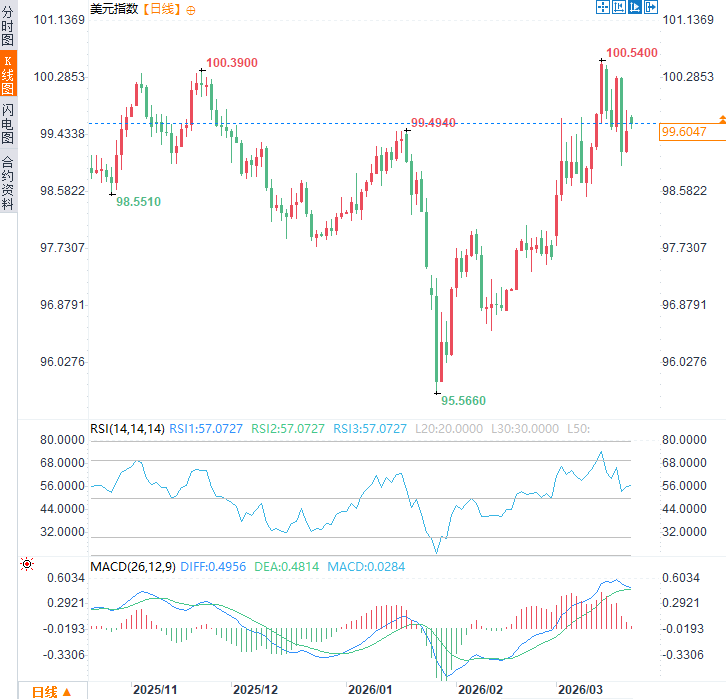
This shutdown constitutes a "chronic credit erosion" rather than an "acute shock" to the US dollar. In the short term, it may limit the dollar's upside potential by dragging down economic data and dampening confidence, but it is insufficient to reverse the trend determined by monetary policy and weak fundamentals. On Monday (March 23), the US dollar index fluctuated narrowly around 99.60 during the Asian session.
If the shutdown continues to expand into the spring travel peak and triggers a substantial deterioration in consumption or employment data, the market's risk pricing for the US dollar may be further revised upward.
(US Dollar Index Daily Chart, Source: FX678)
The Department of Homeland Security shutdown, lasting over a month, has spilled over into the civil aviation system. TSA employees have gone weeks without pay, leading to widespread absenteeism. Hours of waiting at security checkpoints and massive flight delays have become the norm at airports across the US. The fundamental causes are the congressional budget impasse and political maneuvering, which have severely impacted air travel efficiency and passenger experience in the short term, resulting in continued economic losses .
The crisis has exposed the fragility of the U.S. federal government . If the shutdown continues, the recovery momentum of the aviation industry will be severely disrupted, and national security and public confidence will face a double test. Congress needs to break the deadlock and restore funding as soon as possible; otherwise, the chaos will spread further into the spring travel peak.
At 9:16 AM Beijing time, the US dollar index is currently at 99.56.
The Department of Homeland Security confirmed that airports across the United States are in unprecedented disarray due to this crisis, affecting both major hub airports and smaller airports.
Severe congestion and delays at airport security checkpoints
The Transportation Security Administration (TSA), responsible for airport passenger security screening, has been hit hardest by the shutdown. Security check queues have stretched to several hours, with long lines forming at many airports, forcing passengers to queue in the early hours of the morning or causing them to miss their flights.
Under normal circumstances, TSA security checkpoints should be operating efficiently, but the current large number of vacant positions has led to a surge in the closure rate of checkpoints, resulting in a significant decline in passenger experience and social media being filled with videos and complaints of airport chaos.
Traffic safety department employee absenteeism and salary issues
As an agency under the Department of Homeland Security, the TSA is the most directly affected by the shutdown. Employees have not received their salaries for weeks, and many frontline security personnel have chosen to be absent, take leave, or resign to cope with the financial pressure.
The soaring absenteeism has directly weakened security personnel, and even with some employees continuing to work, it is difficult to cover all the needs of the checkpoints. Morale within the TSA is low, and the union has repeatedly called on Congress to pass an appropriations bill as soon as possible to restore normal payroll.
Chaos and chain reactions at airports across the United States
The shutdown has triggered a chain reaction that has affected the entire U.S. aviation system: widespread flight delays, increased cancellation rates, baggage handling lags, and gate congestion. Major hub airports such as Chicago O'Hare, Atlanta Hartsfield-Jackson, and Los Angeles International Airport have been most severely affected, with security check wait times exceeding 3-4 hours at times.
Airlines were forced to adjust their timetables and increase compensation measures, but overall operational efficiency declined sharply, and passengers' travel costs and time losses increased dramatically.
Causes of the shutdown and its impact on the aviation industry and the economy
The root cause of the shutdown lies in the ongoing standoff between the two parties in Congress over the fiscal year 2026 budget, with the Department of Homeland Security (TSA) bearing the brunt as a key department. The TSA's annual budget is approximately $8-9 billion, primarily allocated to personnel salaries and equipment maintenance; a break in funding would paralyze its operations.
This crisis has already caused billions of dollars in direct economic losses to the aviation industry, and indirectly affected tourism, business, and logistics chains. A prolonged shutdown will also weaken national security and increase the risk of terrorism; public pressure is forcing Congress to accelerate negotiations.
Analysis of the impact on the US dollar
This shutdown constitutes a "chronic credit erosion" rather than an "acute shock" to the US dollar. In the short term, it may limit the dollar's upside potential by dragging down economic data and dampening confidence, but it is insufficient to reverse the trend determined by monetary policy and weak fundamentals. On Monday (March 23), the US dollar index fluctuated narrowly around 99.60 during the Asian session.
If the shutdown continues to expand into the spring travel peak and triggers a substantial deterioration in consumption or employment data, the market's risk pricing for the US dollar may be further revised upward.
(US Dollar Index Daily Chart, Source: FX678)
Editor's Summary
The Department of Homeland Security shutdown, lasting over a month, has spilled over into the civil aviation system. TSA employees have gone weeks without pay, leading to widespread absenteeism. Hours of waiting at security checkpoints and massive flight delays have become the norm at airports across the US. The fundamental causes are the congressional budget impasse and political maneuvering, which have severely impacted air travel efficiency and passenger experience in the short term, resulting in continued economic losses .
The crisis has exposed the fragility of the U.S. federal government . If the shutdown continues, the recovery momentum of the aviation industry will be severely disrupted, and national security and public confidence will face a double test. Congress needs to break the deadlock and restore funding as soon as possible; otherwise, the chaos will spread further into the spring travel peak.
At 9:16 AM Beijing time, the US dollar index is currently at 99.56.
- Risk Warning and Disclaimer
- The market involves risk, and trading may not be suitable for all investors. This article is for reference only and does not constitute personal investment advice, nor does it take into account certain users’ specific investment objectives, financial situation, or other needs. Any investment decisions made based on this information are at your own risk.