European natural gas benchmark contracts surged over 5% in early trading as renewed US-Iran tensions caused wild volatility in futures markets.
2026-03-23 16:39:29
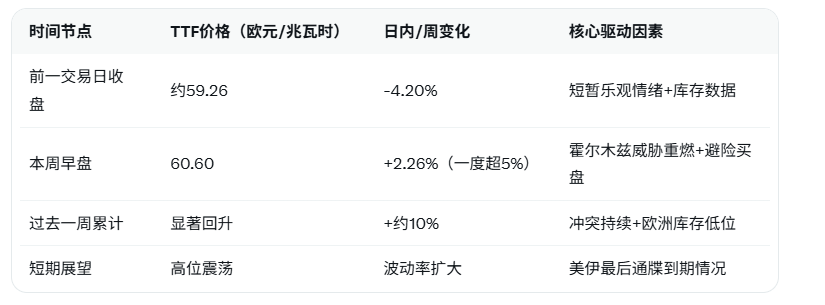
According to APP, the European benchmark natural gas contract rose more than 5% in early trading, erasing the previous day's losses. Latest futures market data shows that the TTF natural gas benchmark contract initially surged in early trading and is now stable around €60.60 per megawatt-hour, a significant rebound from the previous day's low. Traders are closely watching the mutual threats between the US and Iran over the Strait of Hormuz , further destabilizing an already volatile market.
The four-week-long conflict with Iran has effectively closed the Strait of Hormuz, disrupting approximately 20% of global liquefied natural gas (LNG) transport. As a major importer, Europe is once again facing supply shortages. Contracts had fallen 4.2% in the previous trading day due to brief optimism, but the latest escalation of US-Iran threats—Trump's 48-hour ultimatum and Iran's military retaliatory closure of the Strait—quickly reversed market sentiment, with traders rushing to buy to hedge against winter inventory risks. Energy analysts point out that this rebound is stronger than seasonal demand, primarily due to a rapid revaluation of geopolitical premiums.
Recent European natural gas price changes
This volatility once again highlights the high sensitivity of the European natural gas market to Middle Eastern shipping routes. The disruption of the Strait of Hormuz not only affects liquefied natural gas (LNG) but also indirectly pushes up crude oil prices, creating combined energy cost pressures. European industrial users and power generation companies are facing soaring procurement costs, and some companies have already initiated demand-side response measures.
Editor's Summary : Objectively speaking, the mutual threats between the US and Iran in the Strait of Hormuz have pushed the European natural gas market into a new period of high volatility. The over 5% increase in early trading is an immediate reflection of the reassessment of supply risks. Although short-term safe-haven buying provides support, price movements will ultimately depend on the pace of conflict easing and inventory replenishment. European energy security still faces long-term challenges, making diversified imports and accelerated development of renewable energy inevitable choices.
The four-week-long conflict with Iran has effectively closed the Strait of Hormuz, disrupting approximately 20% of global liquefied natural gas (LNG) transport. As a major importer, Europe is once again facing supply shortages. Contracts had fallen 4.2% in the previous trading day due to brief optimism, but the latest escalation of US-Iran threats—Trump's 48-hour ultimatum and Iran's military retaliatory closure of the Strait—quickly reversed market sentiment, with traders rushing to buy to hedge against winter inventory risks. Energy analysts point out that this rebound is stronger than seasonal demand, primarily due to a rapid revaluation of geopolitical premiums.
Recent European natural gas price changes
This volatility once again highlights the high sensitivity of the European natural gas market to Middle Eastern shipping routes. The disruption of the Strait of Hormuz not only affects liquefied natural gas (LNG) but also indirectly pushes up crude oil prices, creating combined energy cost pressures. European industrial users and power generation companies are facing soaring procurement costs, and some companies have already initiated demand-side response measures.
Editor's Summary : Objectively speaking, the mutual threats between the US and Iran in the Strait of Hormuz have pushed the European natural gas market into a new period of high volatility. The over 5% increase in early trading is an immediate reflection of the reassessment of supply risks. Although short-term safe-haven buying provides support, price movements will ultimately depend on the pace of conflict easing and inventory replenishment. European energy security still faces long-term challenges, making diversified imports and accelerated development of renewable energy inevitable choices.
- Risk Warning and Disclaimer
- The market involves risk, and trading may not be suitable for all investors. This article is for reference only and does not constitute personal investment advice, nor does it take into account certain users’ specific investment objectives, financial situation, or other needs. Any investment decisions made based on this information are at your own risk.