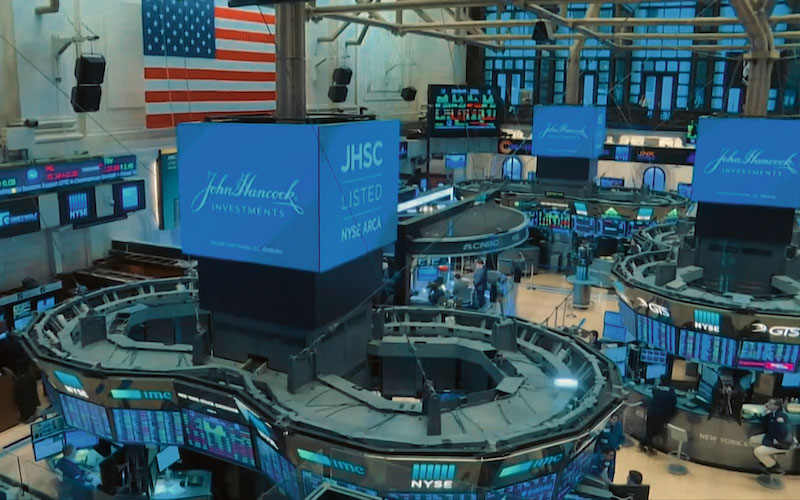
The US Energy Secretary himself has stated that current oil prices have not yet damaged demand, providing key support for the oil and gas sector.
2026-03-24 11:08:21
U.S. Energy Secretary Chris Wright stated clearly at the CERAWeek energy conference in Houston, Texas on March 23, 2026, that although the war between the U.S. and Israel and Iran has caused global oil prices to fluctuate and reach a high of $100 per barrel, the current price increase has not yet reached a level sufficient to trigger demand destruction .
This statement injected some stability into the market and also highlighted the US government's proactive stance in dealing with the energy crisis.
Chris Wright revealed that the United States is working in concert with other members of the International Energy Agency to stabilize the market by releasing strategic petroleum reserves.
He specifically pointed out that the United States plans to release 1 million to 1.5 million barrels of crude oil per day, eventually increasing to 3 million barrels per day. Previously, the United States had announced the phased release of 172 million barrels of crude oil as part of a coordinated release of 400 million barrels of total reserves with the 32 member countries of the International Energy Agency.
Chris Wright added that the U.S. wants to prioritize shipping oil to Asian refineries to minimize the decline in local refining activity. He emphasized that Asia is the region most severely affected by this market shock, and supplying oil to Asia has become a key priority for the Trump administration.
In addition, the U.S. Department of Energy has begun lending 45.2 million barrels of crude oil to energy companies through a "loan-swapping" program. These loans come with a premium of approximately 20%, and the companies will ultimately have to return even more crude oil. Chris Wright stated that through this mechanism, by the end of next year, the total amount of crude oil in the U.S. Strategic Petroleum Reserve will exceed the current level of approximately 415 million barrels, thus achieving a net increase in reserves.
Shortly after Chris Wright's remarks, Sultan Al Jaber, CEO of Abu Dhabi National Oil Company (ADNOC), warned that rising oil prices are significantly dragging down global economic growth. He added that no country should be allowed to block the Strait of Hormuz, a key strategic chokepoint. Currently, the strait is effectively blocked by Iran, and approximately 20% of global oil shipments rely on it.
When asked whether a U.S. victory over Iran meant the country would no longer control the Strait of Hormuz, Chris Wright said, "We need to ensure that Iran's ability to threaten the Strait of Hormuz is gone, or significantly weakened compared to the past few years or even decades."
Several global oil executives expressed growing concerns at the same meeting about the long-term impact of a war between the US, Israel, and Iran.
Total Energy CEO Patrick Pouyanne pointed out that the consequences will not only be high energy prices, but will also damage other supply chains, particularly disrupting helium transport in the Middle East, where helium is crucial for semiconductor and medical supply production.
He further stated that if energy supply disruptions last longer than three to four months, the global economy will face systemic risks. He specifically mentioned that the problem of global oil product supply disruptions is more serious than that of crude oil, and that export bans implemented by major Asian countries to ensure domestic fuel supplies have made it difficult to maintain fuel supplies in Southeast Asia.
Ben Marshall, president and CEO of trading firm Vitol Americas, warned that the world would face severe demand destruction if oil prices reached $120 a barrel. This followed a brief surge in Brent crude futures prices to $119 a barrel in early March.
Chevron CEO Mike Wirth also stated that it will take time to get out of the current predicament, and the energy market tensions caused by the closure of the Strait of Hormuz have not yet been fully reflected in forward oil prices.
Takehiko Matsuo, an official in charge of international affairs at Japan's Ministry of Economy, Trade and Industry, pointed out that the International Energy Agency's move to release a record 400 million barrels of strategic reserves is not enough to fully reassure the market.
Despite a brief sell-off in the market following news of possible talks between President Trump and Iranian officials, Brent crude oil prices still closed at around $100 a barrel on Monday, before rising further to around $104 on March 24.
At the meeting, Chris Wright emphasized that the United States had no choice but to go to war with Iran. He stated, "This is a conflict that we can no longer afford to delay."
Regarding the possibility of further releases of strategic petroleum reserves, Chris Wright stated, "There could certainly be (a new round of releases), but I think the likelihood is extremely low." He added that the U.S. is considering other measures, such as helping refineries improve efficiency and putting more diesel into the market.
The overall impact of this event on international oil and gas prices is bullish, but short-term volatility has increased significantly. The large-scale release of strategic petroleum reserves by the United States will increase market supply in the coming months, with the daily release expected to gradually expand to 3 million barrels. This will help alleviate the current supply shortage and put some downward pressure on oil prices. However, the Middle East conflict leading to a de facto blockade of the Strait of Hormuz, long-term damage to energy infrastructure, and severe shortages faced by Asian refineries together constitute strong supply-side support.
Brent crude oil prices have now stabilized above $100, and are likely to continue rising in the short term, driven by geopolitical risks. If the conflict continues or escalates, oil prices may further test the $110-$120 range; conversely, if the Trump administration makes progress in negotiations or the effects of reserve releases become significant, oil prices may face a correction. However, most executives believe that current price levels have not yet triggered large-scale demand destruction, and while global economic growth is being dragged down, energy demand remains resilient.
For the natural gas market, the conflict has indirectly exacerbated global energy tensions. Coupled with increased electricity demand from data centers and transportation electrification, and the expectation that the next-generation nuclear reactor project in the United States will begin generating heat by July 4th, this will be a long-term positive for natural gas's status as a transitional energy source. In the short term, oil shortages may drive up related natural gas-related demand.
Overall, the oil and gas sector is expected to maintain a high-level, volatile, and slightly bullish trend in the first half of 2026.
Investors need to closely monitor developments in the Strait of Hormuz, the actual progress of US reserve releases, and the recovery of Asian demand. Geopolitical risk premiums will be the core variable driving oil and gas prices, while US government intervention measures will provide an important buffer for market movements. In the long term, if the situation in the Middle East gradually eases, oil prices are expected to return to being driven by supply and demand fundamentals, but in the short term, high volatility and high oil prices will remain the main theme.
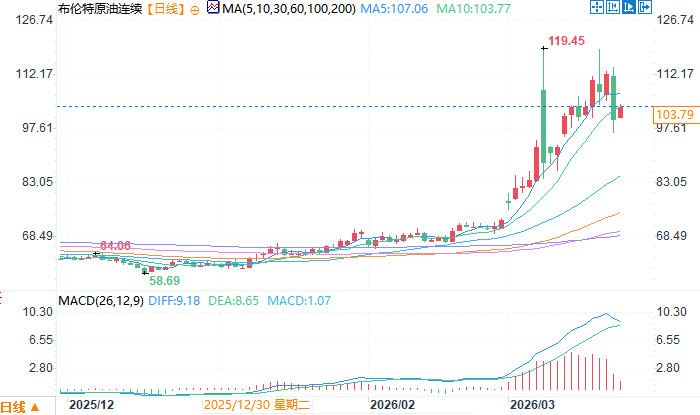
Brent crude oil daily chart source: EasyForex
At 11:07 AM Beijing time on March 24, Brent crude oil futures were trading at $103.81 per barrel.
This statement injected some stability into the market and also highlighted the US government's proactive stance in dealing with the energy crisis.
The United States plans to release a large amount of its strategic petroleum reserves, prioritizing supplies to Asia.
Chris Wright revealed that the United States is working in concert with other members of the International Energy Agency to stabilize the market by releasing strategic petroleum reserves.
He specifically pointed out that the United States plans to release 1 million to 1.5 million barrels of crude oil per day, eventually increasing to 3 million barrels per day. Previously, the United States had announced the phased release of 172 million barrels of crude oil as part of a coordinated release of 400 million barrels of total reserves with the 32 member countries of the International Energy Agency.
Chris Wright added that the U.S. wants to prioritize shipping oil to Asian refineries to minimize the decline in local refining activity. He emphasized that Asia is the region most severely affected by this market shock, and supplying oil to Asia has become a key priority for the Trump administration.
In addition, the U.S. Department of Energy has begun lending 45.2 million barrels of crude oil to energy companies through a "loan-swapping" program. These loans come with a premium of approximately 20%, and the companies will ultimately have to return even more crude oil. Chris Wright stated that through this mechanism, by the end of next year, the total amount of crude oil in the U.S. Strategic Petroleum Reserve will exceed the current level of approximately 415 million barrels, thus achieving a net increase in reserves.
ADNOC CEO issues stern warning: Rising oil prices are dragging down global economic growth.
Shortly after Chris Wright's remarks, Sultan Al Jaber, CEO of Abu Dhabi National Oil Company (ADNOC), warned that rising oil prices are significantly dragging down global economic growth. He added that no country should be allowed to block the Strait of Hormuz, a key strategic chokepoint. Currently, the strait is effectively blocked by Iran, and approximately 20% of global oil shipments rely on it.
When asked whether a U.S. victory over Iran meant the country would no longer control the Strait of Hormuz, Chris Wright said, "We need to ensure that Iran's ability to threaten the Strait of Hormuz is gone, or significantly weakened compared to the past few years or even decades."
Global oil executives collectively worry: War could cause long-term supply chain damage.
Several global oil executives expressed growing concerns at the same meeting about the long-term impact of a war between the US, Israel, and Iran.
Total Energy CEO Patrick Pouyanne pointed out that the consequences will not only be high energy prices, but will also damage other supply chains, particularly disrupting helium transport in the Middle East, where helium is crucial for semiconductor and medical supply production.
He further stated that if energy supply disruptions last longer than three to four months, the global economy will face systemic risks. He specifically mentioned that the problem of global oil product supply disruptions is more serious than that of crude oil, and that export bans implemented by major Asian countries to ensure domestic fuel supplies have made it difficult to maintain fuel supplies in Southeast Asia.
Ben Marshall, president and CEO of trading firm Vitol Americas, warned that the world would face severe demand destruction if oil prices reached $120 a barrel. This followed a brief surge in Brent crude futures prices to $119 a barrel in early March.
Chevron CEO Mike Wirth also stated that it will take time to get out of the current predicament, and the energy market tensions caused by the closure of the Strait of Hormuz have not yet been fully reflected in forward oil prices.
Takehiko Matsuo, an official in charge of international affairs at Japan's Ministry of Economy, Trade and Industry, pointed out that the International Energy Agency's move to release a record 400 million barrels of strategic reserves is not enough to fully reassure the market.
Chris Wright downplays the crisis: The U.S. has no choice but to deal with the Iranian threat.
Despite a brief sell-off in the market following news of possible talks between President Trump and Iranian officials, Brent crude oil prices still closed at around $100 a barrel on Monday, before rising further to around $104 on March 24.
At the meeting, Chris Wright emphasized that the United States had no choice but to go to war with Iran. He stated, "This is a conflict that we can no longer afford to delay."
Regarding the possibility of further releases of strategic petroleum reserves, Chris Wright stated, "There could certainly be (a new round of releases), but I think the likelihood is extremely low." He added that the U.S. is considering other measures, such as helping refineries improve efficiency and putting more diesel into the market.
Analysis of the impact on oil and gas market
The overall impact of this event on international oil and gas prices is bullish, but short-term volatility has increased significantly. The large-scale release of strategic petroleum reserves by the United States will increase market supply in the coming months, with the daily release expected to gradually expand to 3 million barrels. This will help alleviate the current supply shortage and put some downward pressure on oil prices. However, the Middle East conflict leading to a de facto blockade of the Strait of Hormuz, long-term damage to energy infrastructure, and severe shortages faced by Asian refineries together constitute strong supply-side support.
Brent crude oil prices have now stabilized above $100, and are likely to continue rising in the short term, driven by geopolitical risks. If the conflict continues or escalates, oil prices may further test the $110-$120 range; conversely, if the Trump administration makes progress in negotiations or the effects of reserve releases become significant, oil prices may face a correction. However, most executives believe that current price levels have not yet triggered large-scale demand destruction, and while global economic growth is being dragged down, energy demand remains resilient.
For the natural gas market, the conflict has indirectly exacerbated global energy tensions. Coupled with increased electricity demand from data centers and transportation electrification, and the expectation that the next-generation nuclear reactor project in the United States will begin generating heat by July 4th, this will be a long-term positive for natural gas's status as a transitional energy source. In the short term, oil shortages may drive up related natural gas-related demand.
Overall, the oil and gas sector is expected to maintain a high-level, volatile, and slightly bullish trend in the first half of 2026.
Investors need to closely monitor developments in the Strait of Hormuz, the actual progress of US reserve releases, and the recovery of Asian demand. Geopolitical risk premiums will be the core variable driving oil and gas prices, while US government intervention measures will provide an important buffer for market movements. In the long term, if the situation in the Middle East gradually eases, oil prices are expected to return to being driven by supply and demand fundamentals, but in the short term, high volatility and high oil prices will remain the main theme.
Brent crude oil daily chart source: EasyForex
At 11:07 AM Beijing time on March 24, Brent crude oil futures were trading at $103.81 per barrel.
- Risk Warning and Disclaimer
- The market involves risk, and trading may not be suitable for all investors. This article is for reference only and does not constitute personal investment advice, nor does it take into account certain users’ specific investment objectives, financial situation, or other needs. Any investment decisions made based on this information are at your own risk.