The cost of miscalculation! Trump suspends attacks on Iranian power plants, but Gulf allies pressure him to concede?
2026-03-25 10:49:46
According to regional sources and analysts, US President Trump abruptly suspended plans to strike Iranian power plants and energy infrastructure after threatening to "destroy" Iran's power grid if it did not reopen the Strait of Hormuz. This suspension stemmed from strong warnings from Gulf Arab states and concerns among regional officials that Washington had misjudged Iran's willingness to escalate.
This anticipated suspension pushed oil prices down. On Wednesday (March 25) during Asian trading hours, US crude oil prices fluctuated downwards and are currently trading around $88.40 per barrel, down about 4.2% from Tuesday's settlement price.
The conflict has entered its fourth week, with shipping in the Strait of Hormuz nearly at a standstill, and oil prices remaining high overall. Gulf states fear that further escalation would directly threaten the security of their energy facilities and desalination plants, prompting Trump to make concessions before the ultimatum expired.

According to three regional sources, Gulf Arab states have directly warned the Trump administration that if the United States attacks Iranian power plants, Iran will retaliate against key energy facilities and desalination plants in the Gulf states. These facilities are crucial to the livelihoods and economies of countries such as Saudi Arabia, the United Arab Emirates, Kuwait, Bahrain, and Qatar.
Officials in the Gulf states are increasingly concerned that Washington has underestimated Iran's resolve to further escalate the conflict. They believe the war has entered a more dangerous phase, and further escalation could trigger a chain reaction, damaging stability and oil export capacity throughout the region.
Two other regional sources indicated that Iran, through Arab mediators, has conveyed a clear message to Gulf governments: if the US attacks their power generation facilities, Iran will take "unrestricted retaliation." Iran has named power plants and desalination facilities in Bahrain, Jordan, Kuwait, Qatar, Saudi Arabia, and the UAE as potential targets.
Alex Vatanka, a senior analyst at the Middle East Institute, pointed out that what surprised Trump about Tehran was its sustained military capability and unbridled willingness to escalate. "They are reckless, without any restraint or backing down." Once Iran explicitly targets Gulf energy facilities, Trump is forced to make concessions.
Trump had originally planned to strike Iran's energy infrastructure after the ultimatum expired, but subsequently announced a five-day pause, stating that he had engaged in "very good and productive dialogue" with Iran. Regional sources believe this decision was a direct response to warnings from Gulf states, reflecting that the cost of war has outweighed the political gains and that the situation is slipping out of U.S. control .
The White House stated that Trump maintains close communication with Middle Eastern partners, but Iran's missile attacks on Gulf state facilities have caused real damage and further exacerbated regional tensions.
Alex Vatanka argues that the Gulf states are bearing the brunt of the consequences, and if Trump continues to escalate the situation, they risk failing to obtain consent. The Iranian regime, while facing internal pressure, has demonstrated remarkable resilience, forcing the United States to reassess its strategy.
The current situation has already resulted in damage to some facilities and casualties in the Gulf states. Any further escalation could trigger a larger-scale regional conflict, severely impacting the global energy supply chain and oil price stability.
In the short term, Trump's five-day pause will be a crucial window. If diplomatic negotiations make progress, the conflict is expected to ease, and oil prices may see a correction; conversely, if Iran insists on unlimited retaliation or Gulf states are forced to get involved, the risk of war will rise sharply.
In the medium to long term, rebuilding mutual trust between the Gulf states and Iran will be extremely difficult, and any miscalculation could trigger a chain of retaliation. Global markets need to be wary of escalating energy supply disruptions, and inflationary pressures and economic uncertainty will continue to impact major economies.
Trump's abrupt suspension of the planned strikes against Iranian power plants stemmed primarily from strong warnings from Gulf Arab states and Iran's threat of "unrestricted retaliation" conveyed through mediators. This decision reflects a misjudgment of Iran's willingness to escalate and deep concerns among regional countries regarding the security of their own facilities. Alex Vatanka, an analyst at the Middle East Institute, points out that Iran's unexpectedly strong resistance has rapidly increased the cost of war.
Overall, while the current pause provides room for diplomacy, the two sides have significant differences in their positions, and the risk of miscalculation remains high. Uncertainty in the global energy market and geopolitics will remain at a high level.
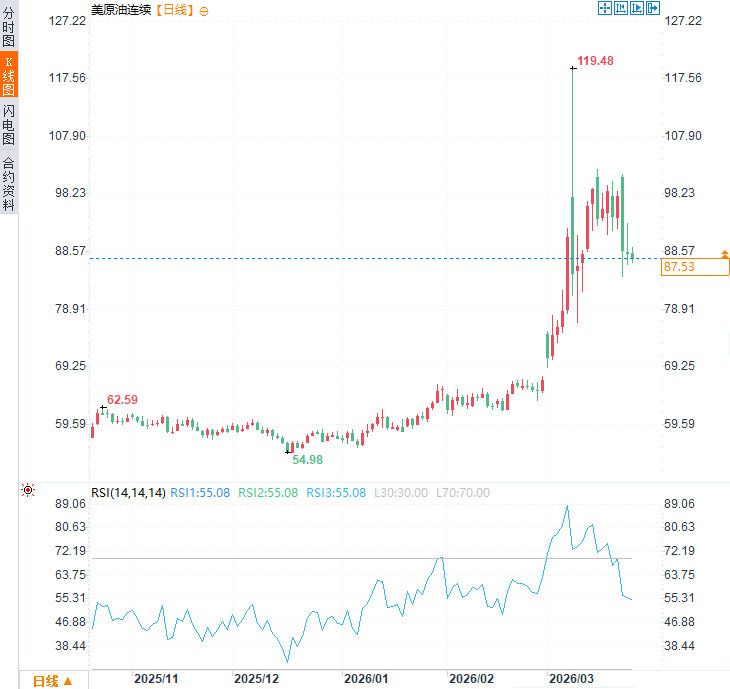
(US crude oil daily chart, source: FX678)
At 10:48 Beijing time, US crude oil futures were trading at $88.44 per barrel.
This anticipated suspension pushed oil prices down. On Wednesday (March 25) during Asian trading hours, US crude oil prices fluctuated downwards and are currently trading around $88.40 per barrel, down about 4.2% from Tuesday's settlement price.
The conflict has entered its fourth week, with shipping in the Strait of Hormuz nearly at a standstill, and oil prices remaining high overall. Gulf states fear that further escalation would directly threaten the security of their energy facilities and desalination plants, prompting Trump to make concessions before the ultimatum expired.
Gulf countries warn of details
According to three regional sources, Gulf Arab states have directly warned the Trump administration that if the United States attacks Iranian power plants, Iran will retaliate against key energy facilities and desalination plants in the Gulf states. These facilities are crucial to the livelihoods and economies of countries such as Saudi Arabia, the United Arab Emirates, Kuwait, Bahrain, and Qatar.
Officials in the Gulf states are increasingly concerned that Washington has underestimated Iran's resolve to further escalate the conflict. They believe the war has entered a more dangerous phase, and further escalation could trigger a chain reaction, damaging stability and oil export capacity throughout the region.
Iran's unlimited retaliation threat
Two other regional sources indicated that Iran, through Arab mediators, has conveyed a clear message to Gulf governments: if the US attacks their power generation facilities, Iran will take "unrestricted retaliation." Iran has named power plants and desalination facilities in Bahrain, Jordan, Kuwait, Qatar, Saudi Arabia, and the UAE as potential targets.
Alex Vatanka, a senior analyst at the Middle East Institute, pointed out that what surprised Trump about Tehran was its sustained military capability and unbridled willingness to escalate. "They are reckless, without any restraint or backing down." Once Iran explicitly targets Gulf energy facilities, Trump is forced to make concessions.
Reasons for Trump's suspension of action
Trump had originally planned to strike Iran's energy infrastructure after the ultimatum expired, but subsequently announced a five-day pause, stating that he had engaged in "very good and productive dialogue" with Iran. Regional sources believe this decision was a direct response to warnings from Gulf states, reflecting that the cost of war has outweighed the political gains and that the situation is slipping out of U.S. control .
The White House stated that Trump maintains close communication with Middle Eastern partners, but Iran's missile attacks on Gulf state facilities have caused real damage and further exacerbated regional tensions.
Expert Analysis and Impact
Alex Vatanka argues that the Gulf states are bearing the brunt of the consequences, and if Trump continues to escalate the situation, they risk failing to obtain consent. The Iranian regime, while facing internal pressure, has demonstrated remarkable resilience, forcing the United States to reassess its strategy.
The current situation has already resulted in damage to some facilities and casualties in the Gulf states. Any further escalation could trigger a larger-scale regional conflict, severely impacting the global energy supply chain and oil price stability.
Market Outlook and Risks
In the short term, Trump's five-day pause will be a crucial window. If diplomatic negotiations make progress, the conflict is expected to ease, and oil prices may see a correction; conversely, if Iran insists on unlimited retaliation or Gulf states are forced to get involved, the risk of war will rise sharply.
In the medium to long term, rebuilding mutual trust between the Gulf states and Iran will be extremely difficult, and any miscalculation could trigger a chain of retaliation. Global markets need to be wary of escalating energy supply disruptions, and inflationary pressures and economic uncertainty will continue to impact major economies.
Editor's Summary
Trump's abrupt suspension of the planned strikes against Iranian power plants stemmed primarily from strong warnings from Gulf Arab states and Iran's threat of "unrestricted retaliation" conveyed through mediators. This decision reflects a misjudgment of Iran's willingness to escalate and deep concerns among regional countries regarding the security of their own facilities. Alex Vatanka, an analyst at the Middle East Institute, points out that Iran's unexpectedly strong resistance has rapidly increased the cost of war.
Overall, while the current pause provides room for diplomacy, the two sides have significant differences in their positions, and the risk of miscalculation remains high. Uncertainty in the global energy market and geopolitics will remain at a high level.
(US crude oil daily chart, source: FX678)
At 10:48 Beijing time, US crude oil futures were trading at $88.44 per barrel.
- Risk Warning and Disclaimer
- The market involves risk, and trading may not be suitable for all investors. This article is for reference only and does not constitute personal investment advice, nor does it take into account certain users’ specific investment objectives, financial situation, or other needs. Any investment decisions made based on this information are at your own risk.