The Middle East conflict has boosted demand for the Swiss franc as a safe haven, prompting the Swiss National Bank to strengthen its intervention efforts.
2026-03-25 13:37:53
Martin Schlegel, president of the Swiss National Bank (SNB), said on Tuesday (March 24) that the SNB has further increased its preparedness to intervene in the foreign exchange market to alleviate upward pressure on the Swiss franc. This statement highlights the SNB's flexible use of monetary policy tools against the backdrop of heightened global geopolitical uncertainty.
Speaking at an event in Zurich, Schlegel noted that the Swiss franc is highly sought after as a traditional safe-haven asset during times of uncertainty. Since the escalation of the Middle East conflict, upward pressure on the franc has increased significantly. Trade-weighted exchange rates show that the Swiss franc has appreciated by approximately 2.5% since mid-December last year.
This rapid and excessive appreciation will depress import prices, thereby threatening Switzerland's price stability target, so the Swiss National Bank must take necessary measures to address it.
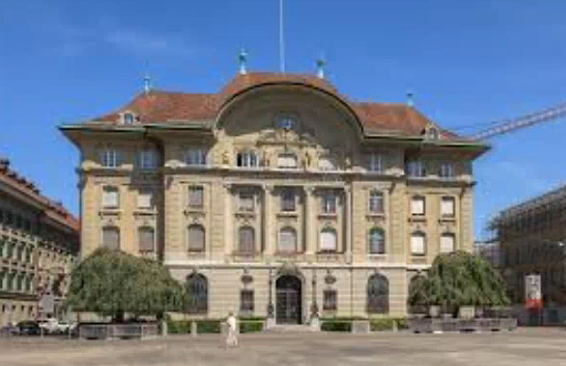
The Swiss National Bank (SNB) decided last week to keep its benchmark interest rate unchanged, marking the third consecutive week it has held steady. Against this backdrop, Schlegel explicitly emphasized that foreign exchange market intervention has become one of the most important policy tools. The SNB is willing to directly intervene in the market by selling Swiss francs and buying foreign currency to prevent the Swiss franc from appreciating too rapidly and negatively impacting its export-oriented economy. As a country highly dependent on exports, an excessively strong Swiss franc would weaken the international competitiveness of domestic companies, suppress economic growth, and could lead to inflation remaining below the target range (0%-2%) for an extended period.
Currently, the escalating conflict in the Middle East has become one of the main sources of risk in global financial markets. The conflict has not only driven up energy prices but also exacerbated investors' concerns about the global economic outlook. In this environment, funds naturally flow to safer assets, and the Swiss franc has become the preferred safe-haven currency due to Switzerland's political and economic stability, neutrality, and sound financial system.
Schlegel stated that the recent increase in upward pressure on the Swiss franc is precisely due to the deteriorating situation in the Middle East. This pressure stems not only from safe-haven inflows but also from the interest rate differential between Switzerland and other major economies. Currently, Swiss interest rates are significantly lower than those in the US and the Eurozone. While this low-interest-rate environment should weaken the franc's attractiveness, safe-haven demand remains dominant, leading to a real tightening of monetary conditions.
The Swiss National Bank president also cautioned that while a stronger Swiss franc could temporarily curb import inflation, excessive or rapid appreciation would significantly dampen domestic economic activity. Given Switzerland's highly open economy and the large proportion of exports in its GDP, every 1% appreciation of the franc could put visible pressure on manufacturing and tourism.
In his speech, Schlegel reiterated that the Swiss National Bank's primary mission is to maintain price stability. To achieve this goal, the central bank can utilize both interest rate policy and foreign exchange intervention tools simultaneously.
While negative interest rates, historically an effective tool, are no longer the first choice, they have not been completely ruled out. In the past, negative interest rate policies did effectively reduce the attractiveness of the Swiss franc and alleviate appreciation pressure, but they also brought side effects such as real estate bubbles and damaged bank profits. Therefore, central banks tend to prioritize achieving policy objectives through foreign exchange intervention .
It is worth noting that the Swiss National Bank has recently made it clear that its willingness to intervene in the foreign exchange market has significantly increased compared to before . This shift has been interpreted by the market as an adjustment in policy focus: with interest rates already close to the zero lower bound, foreign exchange intervention will become the main weapon to combat excessive appreciation of the Swiss franc.
For Switzerland, the Swiss National Bank's statement helps stabilize market expectations and prevent a runaway appreciation of the Swiss franc in the short term, thus providing breathing room for export companies. At the same time, the combination of low interest rates and potential intervention is expected to continue supporting domestic credit growth and economic recovery.
From a global perspective, the Swiss National Bank's intervention preparations also reflect the fragility of the current international financial environment. The Middle East conflict not only affects the energy market but also transmits to the currency market through risk aversion. The safe-haven properties of the Swiss franc are often amplified during crises, and the Swiss National Bank's role as a "buyer of last resort" helps to smooth out extreme volatility and maintain global financial stability.
However, analysts also caution that foreign exchange intervention is not a panacea. If the Middle East conflict drags on and oil prices remain high, the risk of a global economic slowdown will continue to put pressure on open economies, including Switzerland. The Swiss National Bank stated that it will continue to closely monitor developments and adjust monetary policy as necessary to ensure medium-term price stability.
The latest statement from Martin Schlegel, President of the Swiss National Bank, clearly conveys the central bank's firm resolve to maintain currency and price stability in the current complex environment. By increasing its foreign exchange intervention reserves, the Swiss National Bank aims to balance the conflict between safe-haven demand and economic competitiveness, providing strong support for the Swiss economy.
In today's world of rising global uncertainty, this policy signal is not only significant for the Swiss financial market, but also provides a reference for other small, open economies.
Looking ahead, the Swiss franc's trajectory will depend on developments in the Middle East, the global interest rate environment, and the actual intervention力度 (intensity/scale) of the Swiss National Bank (SNB). Market participants need to continuously monitor the SNB's subsequent actions to identify potential investment and risk management opportunities.
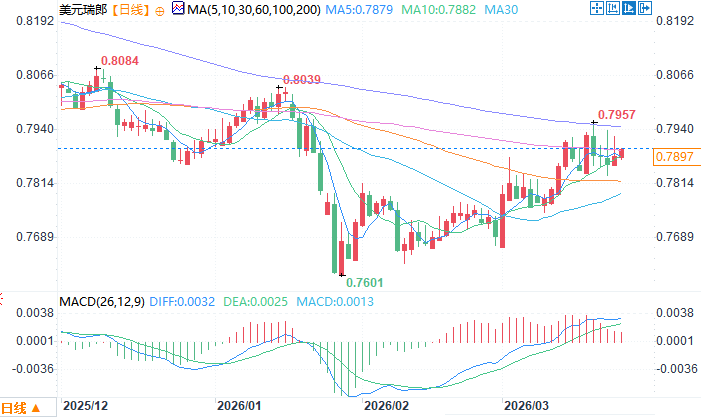
USD/CHF Daily Chart Source: EasyForex
At 13:37 Beijing time on March 25, the USD/CHF exchange rate was 0.7894/95.
Speaking at an event in Zurich, Schlegel noted that the Swiss franc is highly sought after as a traditional safe-haven asset during times of uncertainty. Since the escalation of the Middle East conflict, upward pressure on the franc has increased significantly. Trade-weighted exchange rates show that the Swiss franc has appreciated by approximately 2.5% since mid-December last year.
This rapid and excessive appreciation will depress import prices, thereby threatening Switzerland's price stability target, so the Swiss National Bank must take necessary measures to address it.
The Swiss National Bank (SNB) decided last week to keep its benchmark interest rate unchanged, marking the third consecutive week it has held steady. Against this backdrop, Schlegel explicitly emphasized that foreign exchange market intervention has become one of the most important policy tools. The SNB is willing to directly intervene in the market by selling Swiss francs and buying foreign currency to prevent the Swiss franc from appreciating too rapidly and negatively impacting its export-oriented economy. As a country highly dependent on exports, an excessively strong Swiss franc would weaken the international competitiveness of domestic companies, suppress economic growth, and could lead to inflation remaining below the target range (0%-2%) for an extended period.
The Middle East conflict exacerbates global uncertainty, highlighting the Swiss franc's safe-haven appeal.
Currently, the escalating conflict in the Middle East has become one of the main sources of risk in global financial markets. The conflict has not only driven up energy prices but also exacerbated investors' concerns about the global economic outlook. In this environment, funds naturally flow to safer assets, and the Swiss franc has become the preferred safe-haven currency due to Switzerland's political and economic stability, neutrality, and sound financial system.
Schlegel stated that the recent increase in upward pressure on the Swiss franc is precisely due to the deteriorating situation in the Middle East. This pressure stems not only from safe-haven inflows but also from the interest rate differential between Switzerland and other major economies. Currently, Swiss interest rates are significantly lower than those in the US and the Eurozone. While this low-interest-rate environment should weaken the franc's attractiveness, safe-haven demand remains dominant, leading to a real tightening of monetary conditions.
The Swiss National Bank president also cautioned that while a stronger Swiss franc could temporarily curb import inflation, excessive or rapid appreciation would significantly dampen domestic economic activity. Given Switzerland's highly open economy and the large proportion of exports in its GDP, every 1% appreciation of the franc could put visible pressure on manufacturing and tourism.
The Swiss National Bank has increased the flexibility of its policy tools, and the option of negative interest rates remains.
In his speech, Schlegel reiterated that the Swiss National Bank's primary mission is to maintain price stability. To achieve this goal, the central bank can utilize both interest rate policy and foreign exchange intervention tools simultaneously.
While negative interest rates, historically an effective tool, are no longer the first choice, they have not been completely ruled out. In the past, negative interest rate policies did effectively reduce the attractiveness of the Swiss franc and alleviate appreciation pressure, but they also brought side effects such as real estate bubbles and damaged bank profits. Therefore, central banks tend to prioritize achieving policy objectives through foreign exchange intervention .
It is worth noting that the Swiss National Bank has recently made it clear that its willingness to intervene in the foreign exchange market has significantly increased compared to before . This shift has been interpreted by the market as an adjustment in policy focus: with interest rates already close to the zero lower bound, foreign exchange intervention will become the main weapon to combat excessive appreciation of the Swiss franc.
Impact on the Swiss economy and global markets
For Switzerland, the Swiss National Bank's statement helps stabilize market expectations and prevent a runaway appreciation of the Swiss franc in the short term, thus providing breathing room for export companies. At the same time, the combination of low interest rates and potential intervention is expected to continue supporting domestic credit growth and economic recovery.
From a global perspective, the Swiss National Bank's intervention preparations also reflect the fragility of the current international financial environment. The Middle East conflict not only affects the energy market but also transmits to the currency market through risk aversion. The safe-haven properties of the Swiss franc are often amplified during crises, and the Swiss National Bank's role as a "buyer of last resort" helps to smooth out extreme volatility and maintain global financial stability.
However, analysts also caution that foreign exchange intervention is not a panacea. If the Middle East conflict drags on and oil prices remain high, the risk of a global economic slowdown will continue to put pressure on open economies, including Switzerland. The Swiss National Bank stated that it will continue to closely monitor developments and adjust monetary policy as necessary to ensure medium-term price stability.
Summary: Flexible intervention to maintain stability
The latest statement from Martin Schlegel, President of the Swiss National Bank, clearly conveys the central bank's firm resolve to maintain currency and price stability in the current complex environment. By increasing its foreign exchange intervention reserves, the Swiss National Bank aims to balance the conflict between safe-haven demand and economic competitiveness, providing strong support for the Swiss economy.
In today's world of rising global uncertainty, this policy signal is not only significant for the Swiss financial market, but also provides a reference for other small, open economies.
Looking ahead, the Swiss franc's trajectory will depend on developments in the Middle East, the global interest rate environment, and the actual intervention力度 (intensity/scale) of the Swiss National Bank (SNB). Market participants need to continuously monitor the SNB's subsequent actions to identify potential investment and risk management opportunities.
USD/CHF Daily Chart Source: EasyForex
At 13:37 Beijing time on March 25, the USD/CHF exchange rate was 0.7894/95.
- Risk Warning and Disclaimer
- The market involves risk, and trading may not be suitable for all investors. This article is for reference only and does not constitute personal investment advice, nor does it take into account certain users’ specific investment objectives, financial situation, or other needs. Any investment decisions made based on this information are at your own risk.