Iran rejects US negotiations and proposes five demands, reigniting a safe-haven gold rush.
2026-03-26 09:10:47
Iranian Foreign Minister Abbas Araghchi told Iranian state media on Wednesday (March 25) that Iran has no intention of holding direct negotiations with the United States, but the Supreme Authority is reviewing the US-proposed plan to end the war.
Araghchi emphasized that the message conveyed through the mediators "does not mean negotiating with the United States." Iranian state media also reported that Iran would reject the US ceasefire proposal and put forward its own five counter-proposals. This hardline stance poses a significant obstacle to US-Iranian diplomatic efforts, and the conflict has entered its fourth week.
On Thursday in Asian trading, spot gold fluctuated upwards, continuing the rebound of the previous two trading days, and is currently trading around $4,535 per ounce, with a daily increase of about 0.6%.

Araghchi explicitly stated that Iran harbors deep suspicion towards the United States, having previously suffered two attacks during high-level diplomatic exchanges, and that media leaks have further angered Tehran. He indicated that communication with the United States is limited to indirect information exchange through mediators and does not constitute formal negotiations.
Iran's state broadcaster Press TV, citing a senior political and security official, reported that Iran would not accept a ceasefire because it was "illogical" to proceed with such a process with a party that had violated the agreement. Iran will insist on achieving its strategic objectives, and will only consider ending the conflict after these objectives are met.
According to Iranian state media Press TV, Iran has proposed the following five counter-proposals in response to the US 15-point plan:
The enemy has completely ceased its acts of aggression and assassination;
Establish concrete mechanisms to ensure that war will not be imposed on the Islamic Republic again;
Guarantee clear payment of war damages;
End the war on all fronts and cover all resistance groups throughout the region;
Iran's exercise of sovereignty over the Strait of Hormuz is its natural and legitimate right, and it must be recognized as a guarantee for the other party to fulfill its commitments.
Iran's claim to sovereignty over the Strait of Hormuz is considered a "non-starting point" that is unacceptable to the United States. Iran also seeks war reparations and emphasizes that it will only consider ending the conflict after achieving its strategic objectives.
The 15-point proposal put forward by the United States requires Iran to dismantle its nuclear facilities, ban its domestic uranium enrichment, cease supporting regional proxy forces, limit its missile program, and ensure the Strait of Hormuz remains open. In exchange, the United States plans to offer a complete lifting of sanctions and support for its civilian nuclear program.
Iran responded with a five-point counter-proposal, the core of which demanded an cessation of aggression, reparations, and the maintenance of sovereign control over the Strait of Hormuz. Fundamental differences remain between the two sides regarding their nuclear programs, regional security, and control of the strait .
Iran's rejection of the US ceasefire proposal and its strong counter-proposals, particularly its emphasis on sovereignty over the Strait of Hormuz, have led to a stalemate in US-Iran negotiations. This situation has supported gold prices through two paths: heightened risk aversion and rising inflation expectations due to potential energy supply disruptions, prompting spot gold to continue its rebound.
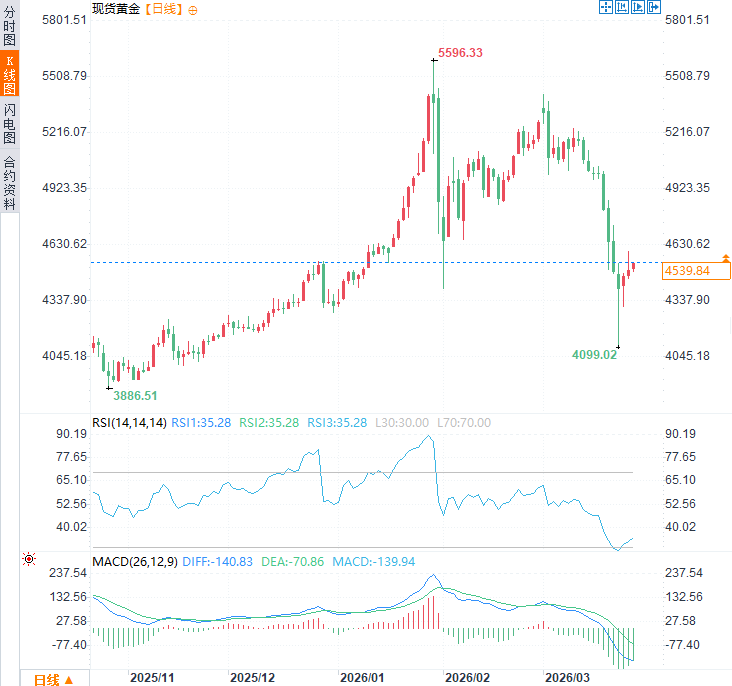
(Spot gold daily chart, source: FX678)
In the short term, Iran's strong response has dimmed the prospects for a meeting brokered by the mediators before Thursday. A significant trust deficit exists between the two sides; Iran insists on its strategic objectives while the United States is unwilling to concede on core interests, suggesting the negotiation deadlock may continue.
If Iran maintains de facto control of the Strait of Hormuz, the risk of global energy supply disruptions will persist, and oil price and inflationary pressures will be difficult to alleviate. Conversely, if a breakthrough is achieved through indirect channels, the conflict could gradually de-escalate. However, at present, diplomatic efforts still face significant obstacles.
Iranian Foreign Minister Araqchi made it clear that he had no intention of negotiating directly with the United States, and put forward five strong counter-proposals against Trump's 15-point ceasefire plan. The core demands included ceasing aggression, obtaining war reparations, and recognizing Iran's sovereignty over the Strait of Hormuz.
Iranian state media emphasized that ending the conflict would only be considered after strategic objectives were achieved. This stance contrasts sharply with Trump's optimistic statement that negotiations are underway, further complicating the mediation process.
Overall, the fundamental differences between the US and Iran on core interests make the prospects for a short-term ceasefire less than optimistic, and the continued blockade of the Strait of Hormuz will put long-term pressure on global energy markets and economic stability.
At 9:10 AM Beijing time, spot gold is trading at $4,536.28 per ounce.
Araghchi emphasized that the message conveyed through the mediators "does not mean negotiating with the United States." Iranian state media also reported that Iran would reject the US ceasefire proposal and put forward its own five counter-proposals. This hardline stance poses a significant obstacle to US-Iranian diplomatic efforts, and the conflict has entered its fourth week.
On Thursday in Asian trading, spot gold fluctuated upwards, continuing the rebound of the previous two trading days, and is currently trading around $4,535 per ounce, with a daily increase of about 0.6%.
Iranian Foreign Minister's Key Statement
Araghchi explicitly stated that Iran harbors deep suspicion towards the United States, having previously suffered two attacks during high-level diplomatic exchanges, and that media leaks have further angered Tehran. He indicated that communication with the United States is limited to indirect information exchange through mediators and does not constitute formal negotiations.
Iran's state broadcaster Press TV, citing a senior political and security official, reported that Iran would not accept a ceasefire because it was "illogical" to proceed with such a process with a party that had violated the agreement. Iran will insist on achieving its strategic objectives, and will only consider ending the conflict after these objectives are met.
Details of Iran's five counter-proposals
According to Iranian state media Press TV, Iran has proposed the following five counter-proposals in response to the US 15-point plan:
The enemy has completely ceased its acts of aggression and assassination;
Establish concrete mechanisms to ensure that war will not be imposed on the Islamic Republic again;
Guarantee clear payment of war damages;
End the war on all fronts and cover all resistance groups throughout the region;
Iran's exercise of sovereignty over the Strait of Hormuz is its natural and legitimate right, and it must be recognized as a guarantee for the other party to fulfill its commitments.
Iran's claim to sovereignty over the Strait of Hormuz is considered a "non-starting point" that is unacceptable to the United States. Iran also seeks war reparations and emphasizes that it will only consider ending the conflict after achieving its strategic objectives.
A Comparison of Trump's 15-Point Plan and Iran's Response
The 15-point proposal put forward by the United States requires Iran to dismantle its nuclear facilities, ban its domestic uranium enrichment, cease supporting regional proxy forces, limit its missile program, and ensure the Strait of Hormuz remains open. In exchange, the United States plans to offer a complete lifting of sanctions and support for its civilian nuclear program.
Iran responded with a five-point counter-proposal, the core of which demanded an cessation of aggression, reparations, and the maintenance of sovereign control over the Strait of Hormuz. Fundamental differences remain between the two sides regarding their nuclear programs, regional security, and control of the strait .
Analysis of the impact on the gold market
Iran's rejection of the US ceasefire proposal and its strong counter-proposals, particularly its emphasis on sovereignty over the Strait of Hormuz, have led to a stalemate in US-Iran negotiations. This situation has supported gold prices through two paths: heightened risk aversion and rising inflation expectations due to potential energy supply disruptions, prompting spot gold to continue its rebound.
(Spot gold daily chart, source: FX678)
Market Outlook and Risks
In the short term, Iran's strong response has dimmed the prospects for a meeting brokered by the mediators before Thursday. A significant trust deficit exists between the two sides; Iran insists on its strategic objectives while the United States is unwilling to concede on core interests, suggesting the negotiation deadlock may continue.
If Iran maintains de facto control of the Strait of Hormuz, the risk of global energy supply disruptions will persist, and oil price and inflationary pressures will be difficult to alleviate. Conversely, if a breakthrough is achieved through indirect channels, the conflict could gradually de-escalate. However, at present, diplomatic efforts still face significant obstacles.
Editor's Summary
Iranian Foreign Minister Araqchi made it clear that he had no intention of negotiating directly with the United States, and put forward five strong counter-proposals against Trump's 15-point ceasefire plan. The core demands included ceasing aggression, obtaining war reparations, and recognizing Iran's sovereignty over the Strait of Hormuz.
Iranian state media emphasized that ending the conflict would only be considered after strategic objectives were achieved. This stance contrasts sharply with Trump's optimistic statement that negotiations are underway, further complicating the mediation process.
Overall, the fundamental differences between the US and Iran on core interests make the prospects for a short-term ceasefire less than optimistic, and the continued blockade of the Strait of Hormuz will put long-term pressure on global energy markets and economic stability.
At 9:10 AM Beijing time, spot gold is trading at $4,536.28 per ounce.
- Risk Warning and Disclaimer
- The market involves risk, and trading may not be suitable for all investors. This article is for reference only and does not constitute personal investment advice, nor does it take into account certain users’ specific investment objectives, financial situation, or other needs. Any investment decisions made based on this information are at your own risk.